Lakpura
Lakpura®

Ayurveda

Ayurveda — from the Sanskrit words Ayuh (life) and Veda (knowledge) — is one of the world's oldest systems of medicine. Developed in South Asia more than 5,000 years ago, it predates the Greek tradition by millennia and remains a living practice rather than a historical curiosity. In Sri Lanka in particular, Ayurveda is not a wellness trend imported from abroad; it is a continuous cultural inheritance that has shaped how generations of islanders understand the body, diet, and the nature of health.

What Is Ayurveda and Where Does It Come From?

The earliest codified Ayurvedic texts — the Charaka Samhita and Sushruta Samhita — place the system's formal origins around 600 BCE, though oral traditions and herbal practices are considerably older. Ayurveda sees the human body not as a collection of isolated parts but as an integrated system in constant dialogue with its environment. Its central concern is not the suppression of symptoms but the restoration of the conditions under which the body can heal itself.

This philosophy has earned Ayurveda recognition from the World Health Organization as a traditional medicine system worthy of formal study and preservation, and it continues to attract serious clinical research alongside its long-established practice.

How Does the Tri Dosha System Work?

The conceptual engine of Ayurveda is the doctrine of Tri Dosha — three vital forces that govern all physiological and psychological processes. Understanding them is the starting point for any Ayurvedic consultation.

  • Vayu (Vata) — governs movement and transmission of energy within the body: nerve impulses, muscle contractions, breathing, and hormonal signalling. In modern terms it broadly corresponds to neurological and motor function.
  • Pita — governs metabolism and internal heat production: digestion, liver function, the regulation of body temperature, and the processing of sensory information. It is not simply bile but the entire thermal and transformative capacity of the organism.
  • Kapha — governs structure, lubrication, and protection: the mucous membranes that line and shield the body's internal surfaces, the fluid balance of tissues, and the stability of joints and organs.

When the three Doshas are in equilibrium, the individual is in good health. When that balance is disturbed — by poor diet, seasonal change, stress, or lifestyle — disease follows. An Ayurvedic practitioner's role is to identify the nature of the imbalance, trace it to its root cause, and prescribe a course of treatment that restores equilibrium rather than simply suppressing the presenting complaint.

What Is the History of Ayurveda in Sri Lanka?

Sri Lanka's relationship with Ayurveda spans at least 3,000 years. Ancient chronicles record that King Buddhadasa (4th century CE) was himself a skilled physician who wrote the Sarartha Sangrahaya, one of the earliest medical texts produced on the island. The ancient irrigation city of Polonnaruwa is known to have housed dedicated Ayurvedic hospitals — among the earliest purpose-built medical institutions in recorded history.

The island's extraordinary botanical diversity made it a natural laboratory for Ayurvedic pharmacology. Sri Lanka's forests and home gardens supply an unusually rich pharmacopoeia: Ceylon black pepper, considered one of Ayurveda's foundational spices; cloves; cinnamon; gotu kola; neem; and dozens of less widely known medicinal plants. The Sinharaja Forest Reserve and other lowland rainforests remain reservoirs of botanical species still used in traditional formulations.

Today, surveys consistently show that over 70 percent of Sri Lanka's population relies on traditional medicine — including Ayurveda — as a primary or supplementary healthcare option. The government maintains a dedicated Ministry of Indigenous Medicine, and Ayurvedic physicians are formally regulated and licensed.

What Treatments Does Ayurveda Offer?

Ayurvedic treatment is divided into two broad categories: Shodhana (purification and detoxification) and Shamana (palliative treatment). The most well-known Shodhana protocol is Panchakarma — a structured five-step purification programme designed to eliminate accumulated toxins (ama) from deep tissue.

Common therapeutic procedures include:

  • Abhyanga — full-body synchronised oil massage using medicated herbal oils, typically performed by two therapists simultaneously.
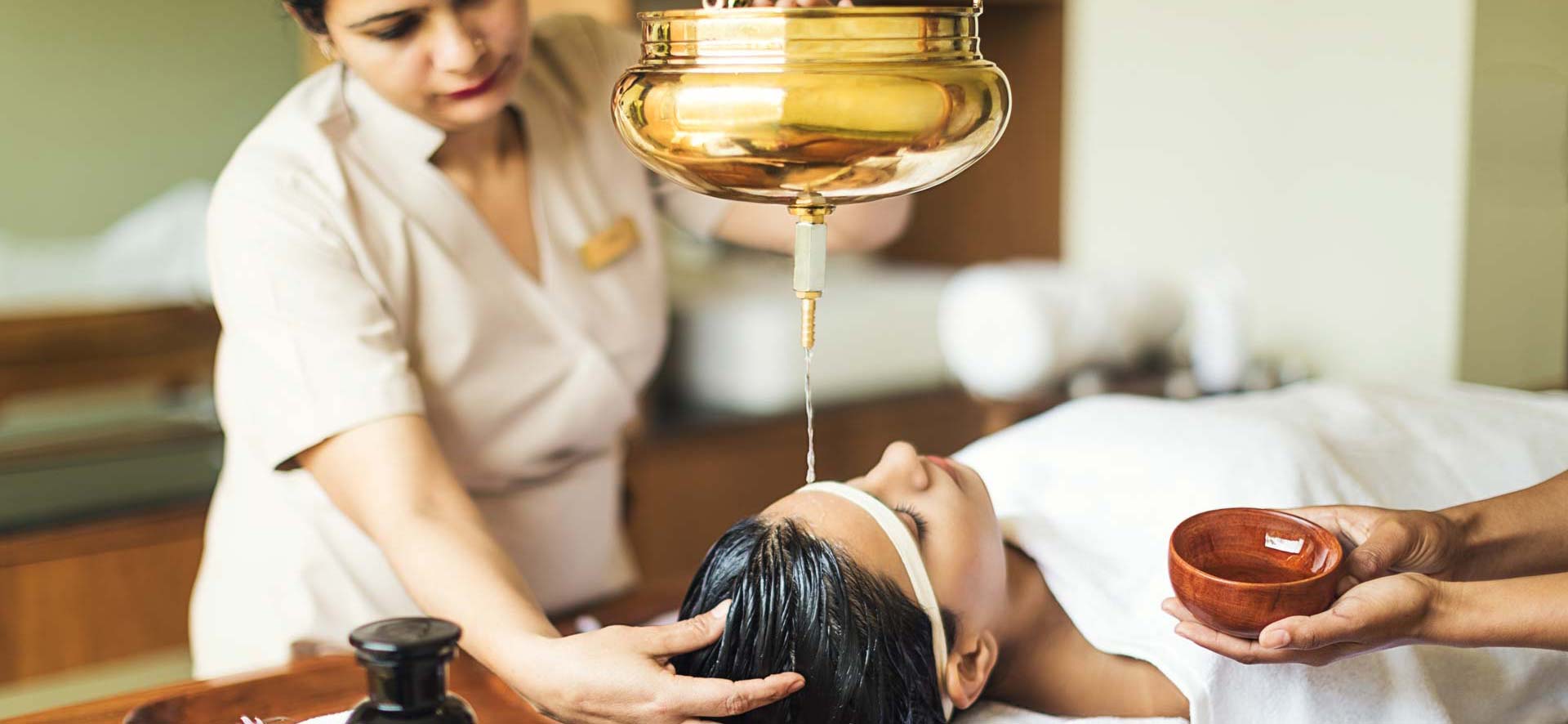
  • Shirodhara — a continuous stream of warm oil poured over the forehead, used for neurological complaints, anxiety, and insomnia.
  • Nasya — medicated oil or herbal preparations administered through the nasal passages to address sinus, head, and neck conditions.
  • Basti — medicated enema therapy, considered the most powerful Panchakarma procedure for Vata imbalances.
  • Pizhichil — a Sri Lankan speciality in which warm medicated oil is poured continuously over the body while being massaged; used for rheumatic and musculoskeletal complaints.

Alongside these procedures, Ayurvedic treatment always incorporates dietary guidance (Ahara), lifestyle recommendations (Vihara), and herbal medicine (Aushadha). The combination is tailored to the individual's constitution (Prakriti) and the nature of the presenting imbalance.

What Is the Role of Herbs and Diet in Ayurveda?

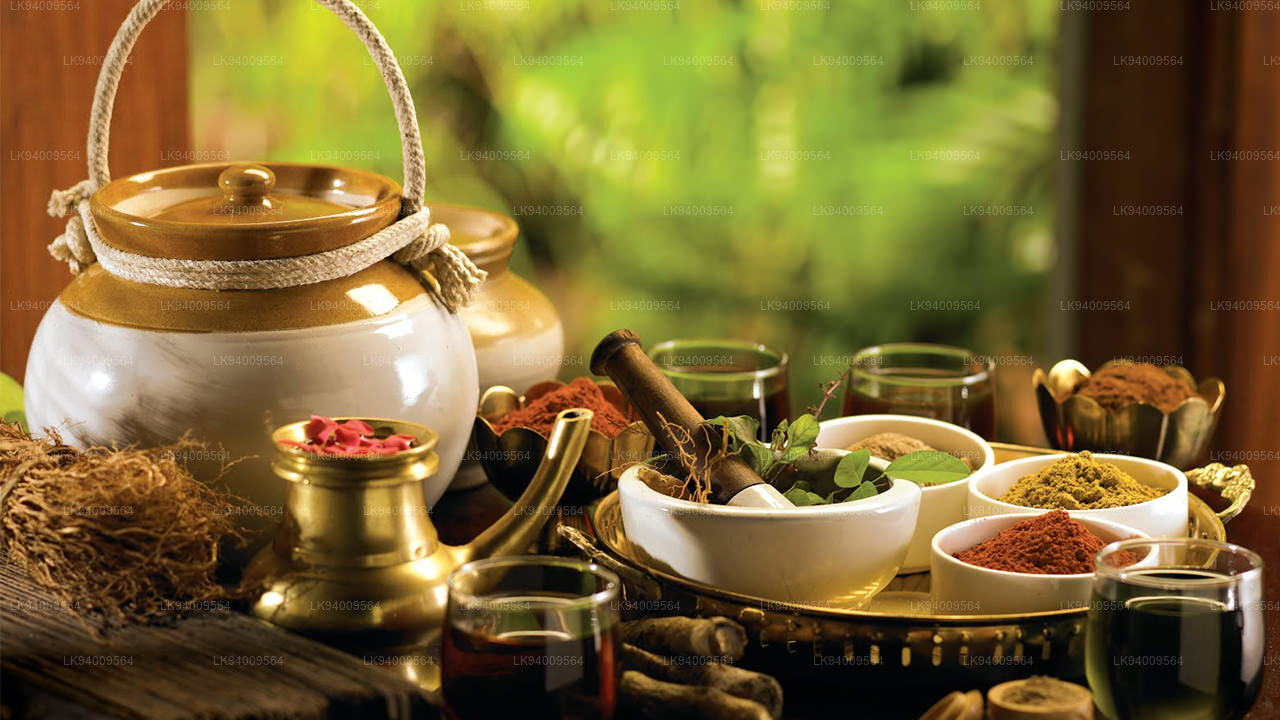
Ayurvedic pharmacology classifies plants, minerals, and animal products by their taste (Rasa), post-digestive effect (Vipaka), and energetic quality (Virya) — a system that allows practitioners to predict how a substance will interact with a patient's Dosha constitution. Sri Lanka's herbal landscape is particularly well-suited to this tradition.

Several plants central to Sri Lankan Ayurveda are also subjects of modern phytochemical research. Pongamia pinnata, for instance, has documented anti-inflammatory and antimicrobial properties, while Acacia chundra is used in classical formulations for wound healing and respiratory conditions. The Yogaraja Guggulu and Kaishore Guggulu are compound preparations used in Sri Lankan Ayurvedic practice for musculoskeletal and metabolic conditions respectively.

Diet in Ayurveda is not a one-size-fits-all prescription. Foods are categorised by their effect on the three Doshas, and a practitioner will advise different dietary patterns for different constitutional types. The emphasis, broadly, is on freshly prepared whole foods, the avoidance of incompatible combinations, and eating in accordance with seasonal rhythms.

How Does Ayurveda Differ from Modern Western Medicine?

The distinction is philosophical as much as practical. Modern biomedical practice identifies pathogens and devises interventions to eliminate or suppress them; Ayurveda classifies individuals and seeks to strengthen the host's own regulatory capacity. Both approaches have genuine value, and in Sri Lanka they coexist — many patients consult both a medical doctor and an Ayurvedic physician for the same condition.

Ayurveda is not a substitute for emergency or acute care, and reputable Ayurvedic practitioners in Sri Lanka are clear about the boundaries of their practice. Where it has shown consistent value is in the management of chronic conditions — arthritis, skin disorders, digestive disease, metabolic syndrome, and stress-related illness — and in preventive medicine and wellness maintenance.

Where Can Visitors Experience Authentic Ayurveda in Sri Lanka?

Sri Lanka has a well-developed network of Ayurvedic resorts and retreat centres, concentrated along the southwest coast and in the cultural interior. The southwest coast — particularly the stretch between Negombo and Bentota — has traditionally been the hub of wellness tourism, with dedicated Ayurvedic resorts offering programmes ranging from a single day of treatments to residential Panchakarma courses lasting several weeks.

For those combining wellness with cultural exploration, retreat centres near Sigiriya place guests within reach of the island's ancient heritage sites. Visitors interested in pairing Ayurveda with a broader wellness programme will find yoga tours in Sri Lanka that integrate both traditions.

When choosing an Ayurvedic centre, look for the involvement of qualified physicians (BAMS degree holders), personalised consultation before treatment commences, and transparency about the source and preparation of herbal medicines. Authentic Ayurvedic resorts will conduct an initial diagnostic consultation to determine your constitution before recommending any programme.

Book this experience with Lakpura

Curated by our local team. Direct booking, instant confirmation.

Ask Lakpura® Agent