Lakpura
Lakpura®

Dambulla City

Dambulla sits at the geographic heart of Sri Lanka, roughly 148 km north-east of Colombo in the North Central Province. What was a quiet village a generation ago has grown into one of the island's most strategically important towns — a busy road junction, a thriving agricultural market, and the gateway to Sri Lanka's greatest concentration of UNESCO World Heritage Sites.

Where exactly is Dambulla, and how do I get there?

The town occupies the point where the Colombo–Trincomalee highway meets the Kandy–Anuradhapura road, placing it at the centre of the Cultural Triangle. Kandy lies 72 km to the south, and Colombo is roughly three hours by road. Frequent inter-city buses connect Dambulla's well-organised central bus station to Kandy, Kurunagala, Habarana, Polonnaruwa, Anuradhapura, and Sigiriya, making it the easiest single base for touring the ancient cities without changing accommodation every night.

If you are travelling independently, private coaches and public buses both stop at the main junction. Hiring a private driver through a local DMC gives you the flexibility to visit multiple sites in a day without depending on infrequent rural bus services.

What is the Golden Rock Cave Temple, and why does it matter?

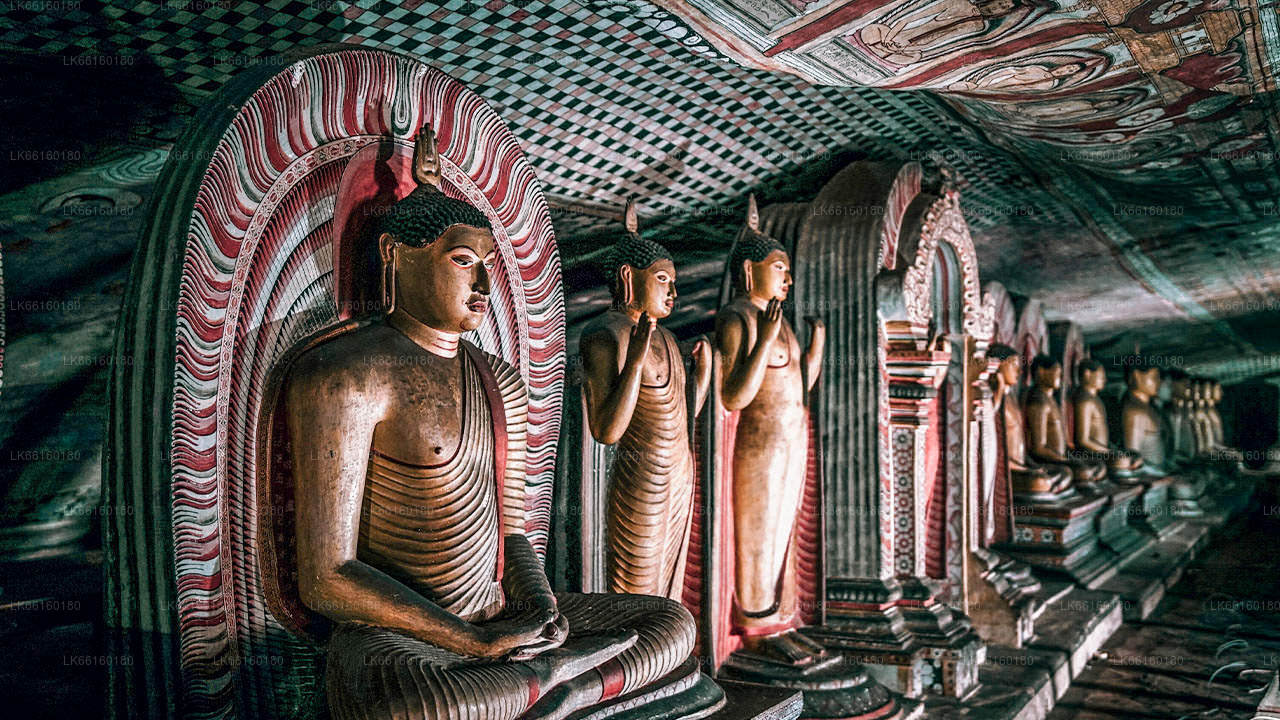
The Dambulla Cave Temple — formally inscribed on the UNESCO World Heritage List as the Golden Rock Temple of Dambulla — is the centrepiece of any visit. Located about 2 km south of the town centre, the complex is carved into a massive granite outcrop that rises more than 160 m above the surrounding plains. Five separate cave sanctuaries contain around 150 Buddha statues, paintings of Hindu deities, and murals covering nearly 2,100 sq m of ceiling and wall — the largest area of cave paintings in Sri Lanka.

The caves have been in continuous use as a place of worship since at least the 1st century BCE, when King Valagamba is said to have sheltered here during a period of exile before reclaiming his throne in Anuradhapura. The site's religious and artistic continuity across more than two millennia is what earned its World Heritage status in 1991.

  • Cave 1 (Devaraja Viharaya): A 15-metre reclining Buddha carved from solid rock, with Vishnu depicted in an adjacent niche.
  • Cave 2 (Maharaja Viharaya): The largest cave, containing over 50 statues and a fine ceiling mural depicting the life of the Buddha.
  • Cave 3 (Maha Alut Viharaya): Commissioned by King Kirti Sri Rajasinha in the 18th century; notably detailed Kandyan-period paintings.
  • Caves 4 & 5: Smaller chambers, still actively used for daily worship.

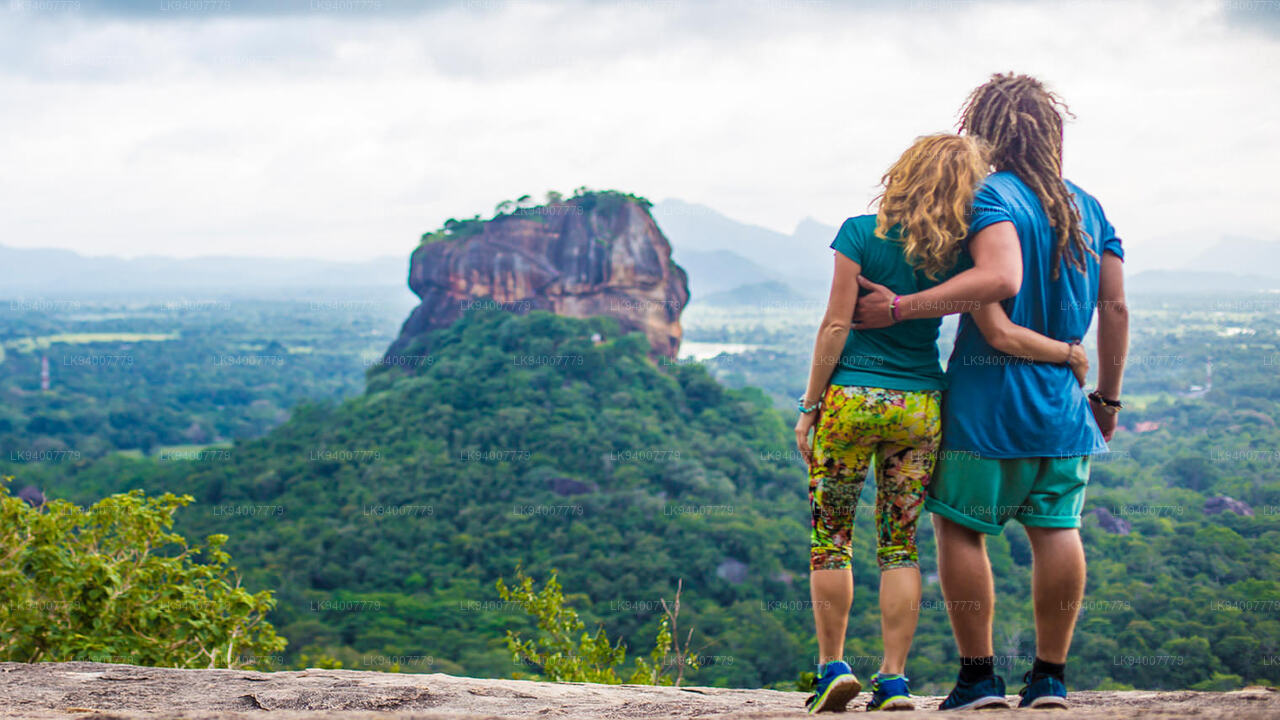
Visitors climb a broad rock staircase to reach the caves; the ascent takes around 20 minutes at a leisurely pace and rewards with sweeping views over the plains toward Sigiriya Rock in the distance. Modest dress (shoulders and knees covered) is required, and shoes must be removed before entering each cave.

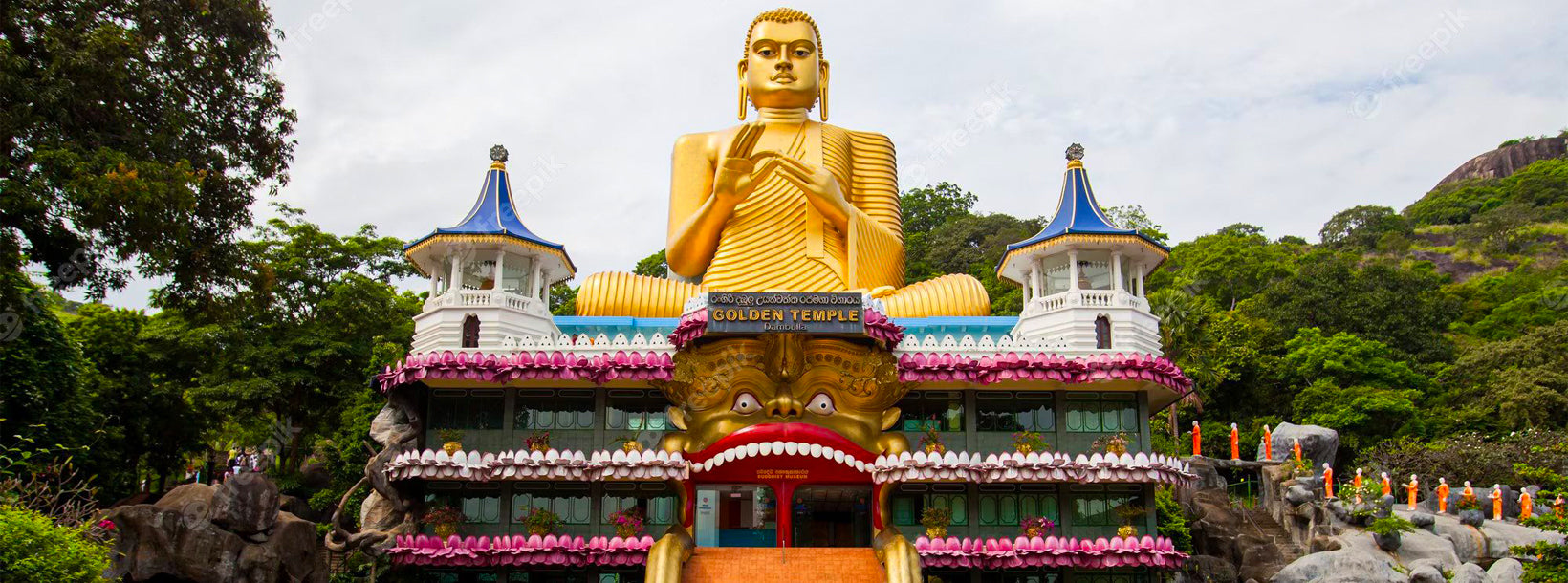
Directly below the temple entrance, the brightly painted golden façade of the modern Golden Temple museum and a large seated Buddha statue have become landmarks in their own right. The Dambulla Museum, situated about 100 m south of the cave entrance, provides useful context on the site's archaeology and regional history.

What else can I do in and around Dambulla?

Beyond the cave temple, Dambulla offers a range of experiences that suit travellers who want more than a single monument visit.

Dambulla Dedicated Economic Centre

One of the largest wholesale produce markets in South Asia operates on the edge of town. Early morning is the most atmospheric time to visit: hundreds of farmers arrive with produce ranging from chillies and tomatoes to tropical fruit, and the trading floor is a genuine window into Sri Lanka's agricultural economy. The region's farmers supply supermarkets across the country, and the market is a significant driver of Dambulla's modern prosperity.

Dambulla International Cricket Stadium

Overlooking the Dambulla reservoir, the Rangiri Dambulla International Cricket Stadium has hosted Test matches, one-day internationals, and Twenty20 fixtures. The setting — a floodlit ground fringed by rocky outcrops and water — is visually distinctive even when there is no match on. Check the Sri Lanka Cricket calendar before your trip if you want to catch a game.

Hiriwadunna Village Experience

Several operators run half-day village tours to nearby Hiriwadunna, combining a traditional bullock-cart ride, a boat trip on the ancient irrigation tank, and a home-cooked lunch. It is one of the more genuine rural experiences available close to the Cultural Triangle's main circuit, and connects well with a morning at the cave temple.

Hot-air ballooning

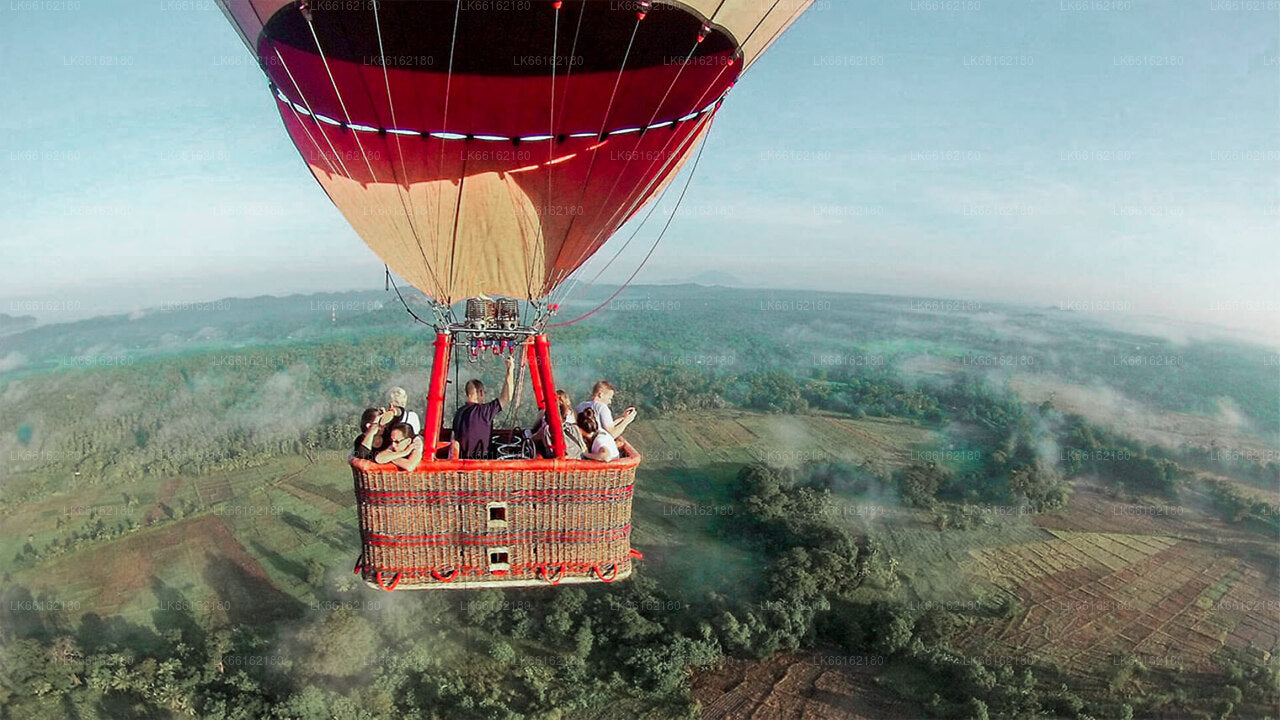
Hot-air ballooning over the Dambulla–Sigiriya plains has become one of the most popular sunrise activities in Sri Lanka. At altitude, the flat agricultural patchwork, ancient tanks, and the profile of Sigiriya Rock compose a panorama that is genuinely hard to match from the ground. Flights are weather-dependent and typically operate from around October to April.

Sigiriya Village Tour

The Sigiriya village area lies only about 20 km from Dambulla and is easily combined as a half-day excursion. Local guides lead walks through paddy fields, spice gardens, and traditional homesteads, giving cultural context that the major monuments alone do not provide.

When is the best time to visit Dambulla?

Dambulla sits in the dry zone and receives relatively predictable rainfall patterns. The most comfortable period for sightseeing is from December to April, when the north-east monsoon has eased and temperatures are warm but manageable — typically 27–33 °C during the day. The cave temple can be visited year-round; however, the exposed rock staircase becomes slippery and uncomfortable during heavy rain.

Peak tourist season (December to March) means the cave temple is busiest between 9 am and noon. Arriving at opening time or in the mid-afternoon reduces crowds noticeably. The shoulder months of May and September can be good-value periods if you are flexible about weather.

Where should I stay in Dambulla?

Accommodation around Dambulla ranges from boutique lakeside resorts to simple guesthouses. The most celebrated properties sit on or near the Kandalama and Dambulla reservoirs, where guests trade noise for scenery. Closer to town, a range of mid-range hotels cater to independent travellers who want easy access to the bus station and local restaurants.

Dambulla is well-positioned as a base for day trips: Sigiriya is around 20 minutes by road, Polonnaruwa is roughly 70 km east, and Anuradhapura is under 70 km to the north-west. Staying two or three nights avoids the common mistake of rushing the Cultural Triangle in a single exhausting day.

What practical information do I need before visiting?

Detail Information
Distance from Colombo ~148 km (approximately 3–3.5 hours by road)
Distance from Kandy ~72 km (approximately 1.5–2 hours by road)
Distance from Sigiriya ~20 km (approximately 30 minutes by road)
Cave Temple opening hours Typically 7:30 am – 5:30 pm daily (confirm locally)
Dress code Shoulders and knees covered; shoes removed at each cave
Best months December to April
Nearest airport Bandaranaike International Airport, Colombo (~3–3.5 hrs)

Photography inside the caves is permitted in most chambers, though flash photography near delicate murals is discouraged. A licensed guide at the entrance can provide context on the iconography that significantly enriches the visit, particularly for travellers unfamiliar with Theravada Buddhist art.

Book this experience with Lakpura

Curated by our local team. Direct booking, instant confirmation.

Ask Lakpura® Agent