Lakpura
Lakpura®

History

Sri Lanka's past stretches so far back that history and legend blur at the edges. A teardrop-shaped island positioned at the southern tip of India, it has been a crossroads of civilisations, trade routes, and religious traditions for more than two and a half millennia. Indians, Portuguese, Dutch, and British have each left their marks here — in the form of ancient reservoirs, crumbling forts, colonial-era churches, and a cultural fabric that is unlike anywhere else in Asia.

What are the origins of Sri Lanka's recorded history?

The oldest sustained written account of Sri Lanka is the Mahavamsa, or Great Chronicle, a Pali-language text composed by Buddhist monks. Its earliest entries reference events from around 543 BC, corresponding to the legendary arrival of Prince Vijaya — traditionally considered the founding figure of Sinhalese civilisation. Vijaya is said to have sailed from northern India with a band of followers and established the first settled kingdom on the island.

Before Vijaya, Sri Lanka was home to the Yaksha and Naga peoples, semi-mythologised communities whose presence underlies much of the island's pre-literate tradition. Archaeological evidence suggests human habitation going back tens of thousands of years, with cave sites in the north-central plains yielding some of the earliest remains.

What happened during the Anuradhapura period?

The Anuradhapura period, which ran roughly from the 4th century BC to the 11th century AD, represents the first great flowering of Sri Lankan civilisation. King Pandukabhaya, who reigned from around 337 BC, is credited with founding Anuradhapura as a planned capital. It would remain the political and spiritual heart of the island for more than a thousand years.

A pivotal moment came in the 3rd century BC, when King Devanampiya Tissa received an envoy from the Indian emperor Ashoka. Mahinda, Ashoka's son and a Buddhist monk, introduced Theravada Buddhism to the island — a defining event whose cultural consequences are still visible today in the ancient stupas that dot the landscape. The sacred Bo tree planted at Anuradhapura during this period is regarded as the oldest documented tree in the world.

The later Anuradhapura period was marked by repeated conflict with South Indian kingdoms, most notably the Cholas. It also produced one of the most dramatic episodes in island history: around 477 AD, King Kasyapa seized the throne by overthrowing his father, then retreated to a massive flat-topped rock in the north-central plains and built a fortified palace-complex upon it. That rock is Sigiriya, today a UNESCO World Heritage Site and one of the most visited monuments in South Asia.

What is the significance of the Polonnaruwa period?

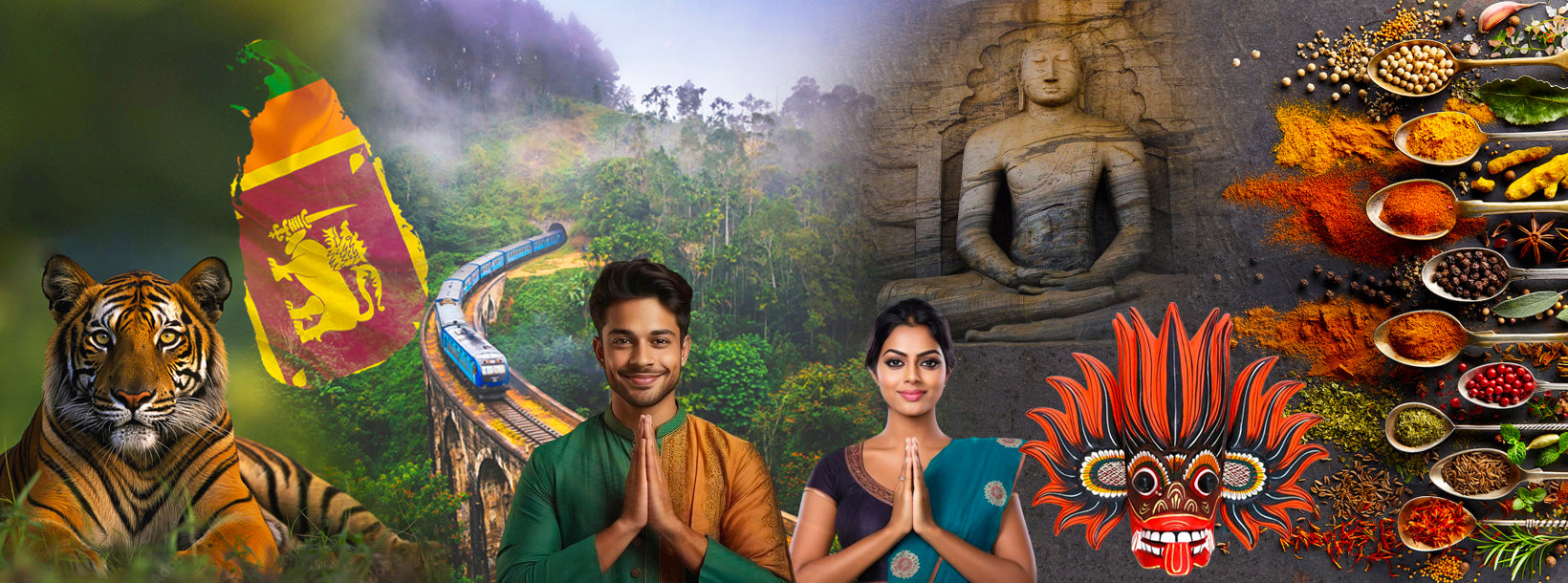
By the 10th century, repeated Chola invasions had made Anuradhapura untenable as a capital. The seat of power shifted south-east to Polonnaruwa, which reached its zenith under King Parakramabahu I in the 12th century. Parakramabahu oversaw the construction of vast irrigation networks, palaces, and temple complexes, and briefly unified the island under a single ruler. The Gal Vihara — four enormous Buddha figures carved directly into a granite face — dates from this era and remains one of the finest examples of rock sculpture in the Buddhist world.

The Polonnaruwa period ended in the early 13th century with the invasion of Magha of Kalinga, whose prolonged and destructive campaign effectively dismantled the northern hydraulic civilisation. Populations moved southward and westward, and a sequence of shorter-lived capitals followed.

How did the later medieval kingdoms shape Sri Lanka?

After Polonnaruwa's decline, the island entered a fragmented period during which the royal capital shifted multiple times. The Dambadeniya period (roughly 1232–1293 AD) saw efforts to reconsolidate Sinhalese rule under King Vijayabahu III and his successors, including the preservation of the Tooth Relic of the Buddha — an object of immense political and religious significance that was already being used to legitimise royal authority.

The Kurunegala period (1293–1341 AD) followed, and later the capitals moved to Gampola, Kotte, and ultimately Kandy. The Kotte Kingdom, which controlled the western coastal lowlands, became the dominant political entity on the island by the 15th century. It was at this point that Sri Lanka's trajectory was fundamentally altered by events originating far beyond the Indian Ocean.

How did European colonisation change Sri Lanka?

In 1505, a Portuguese fleet under Lourenço de Almeida arrived on the island's western coast, ostensibly blown off course. They established trade relations and gradually extended their control over the coastal cinnamon-producing regions. By the mid-16th century, the Portuguese had become a significant military and commercial force, constructing forts along the littoral and introducing Catholicism to a substantial portion of the coastal population.

The Dutch displaced the Portuguese in the mid-17th century, forging an alliance with the Kandyan Kingdom against their shared rival. The Dutch Fort at Negombo is one of the better-preserved reminders of this era. Dutch rule brought Roman-Dutch law, canal systems, and Reformed Christianity, and lasted until the end of the 18th century.

Britain acquired the coastal territories from the Dutch in 1796, and by 1815 had signed the Kandyan Convention with the island's chiefs — formally ending the last independent monarchy and bringing the entire island under a single colonial administration for the first time. The British period transformed the economy through plantation agriculture, most notably tea, which reshaped the central highlands and brought large numbers of Tamil workers from South India. The railway and road network built to service the estates opened the interior to movement and commerce on a scale previously impossible.

Sri Lanka — then called Ceylon — gained independence from Britain on 4 February 1948, a date still observed as National Independence Day.

What are the mythological threads woven through Sri Lankan history?

Alongside its documented history, Sri Lanka carries a rich layer of mythology that continues to shape how the island understands itself. Adam's Peak, the island's second-highest mountain, bears a large rock formation at its summit interpreted by different traditions as the footprint of Adam, the Buddha, Shiva, or St Thomas. The chain of limestone shoals linking Sri Lanka to the Indian mainland — known in English as Adam's Bridge — appears in the Hindu epic Ramayana as the causeway built by the god Hanuman. Rawana, the demon king said to have ruled Lanka, is a figure whose story resonates deeply in popular culture across South and South-East Asia.

These narratives are not mere folklore. They have historically motivated pilgrimage, influenced art and architecture, and shaped political rhetoric. Understanding them is part of understanding Sri Lanka.

What can visitors see that reflects Sri Lanka's history today?

The archaeological zones of the Cultural Triangle — centred on Anuradhapura, Polonnaruwa, and Sigiriya — hold the greatest concentration of monumental heritage. Kandy, the last royal capital, is home to the Temple of the Tooth and hosts the Esala Perahera, a procession with roots in ancient royal ritual. Galle, on the southern coast, preserves one of the best-maintained colonial fortifications in Asia within its UNESCO-listed fort walls.

Inland, colonial-era architecture survives in Colombo's Fort district and in the hill station of Nuwara Eliya, where British planters built homes modelled on the English countryside. A Colombo city tour threads together Dutch-period churches, Victorian-era public buildings, and contemporary landmarks. Further afield, a Kandy city tour brings visitors face to face with the living traditions of the last Kandyan kings.

History in Sri Lanka is rarely behind glass. It is worn into temple steps, embedded in village names, and carried forward in festivals, food, and daily practice. That continuity — between the ancient chronicle and the present moment — is what makes the island's past so immediately felt.

Book this experience with Lakpura

Curated by our local team. Direct booking, instant confirmation.

Ask Lakpura® Agent
