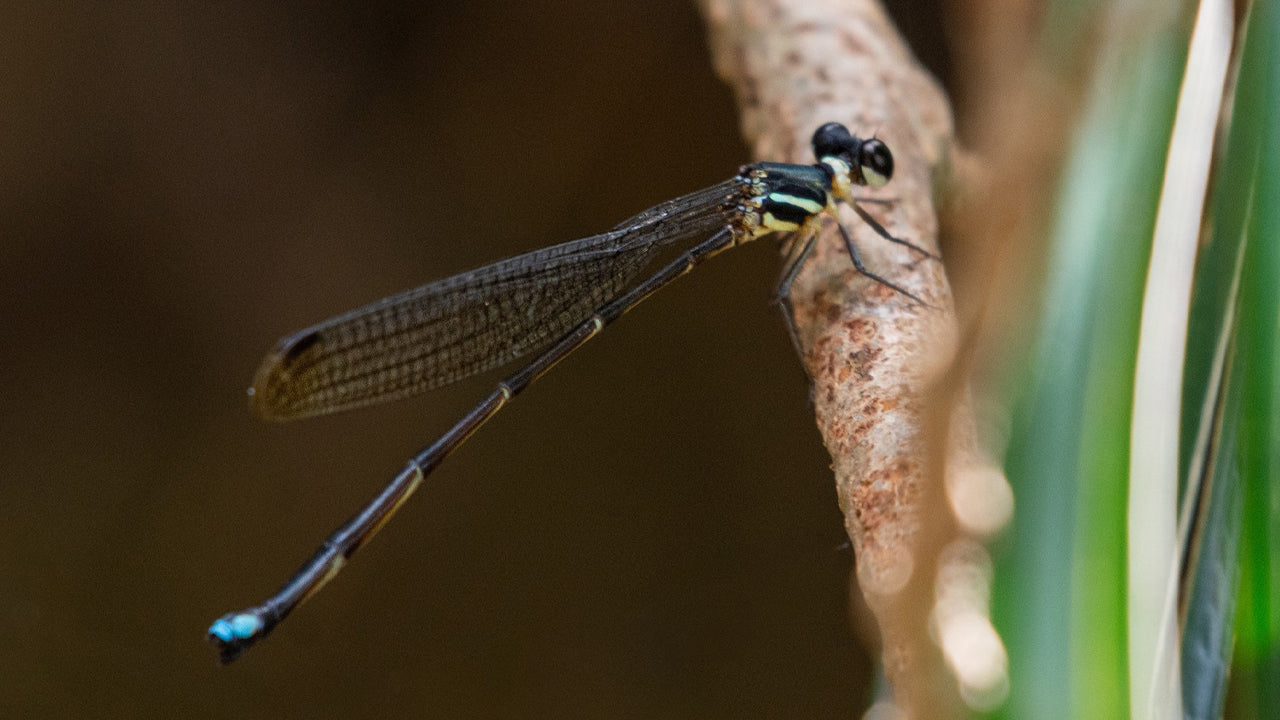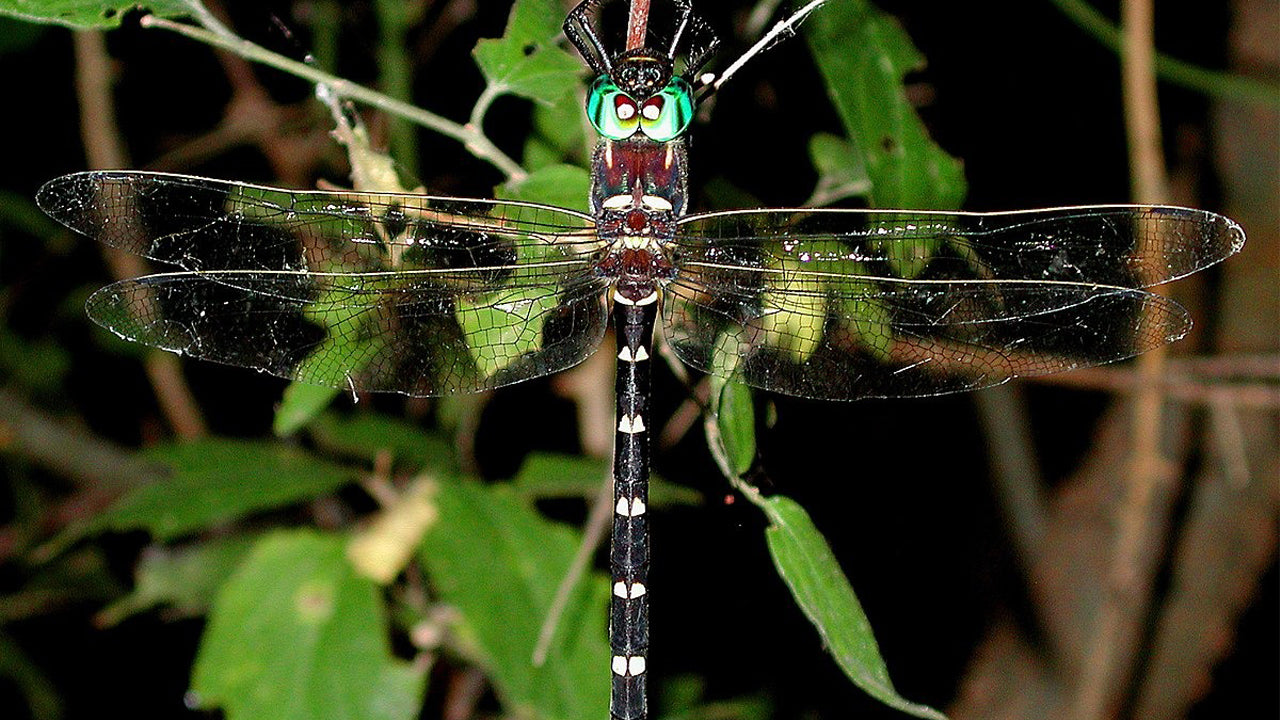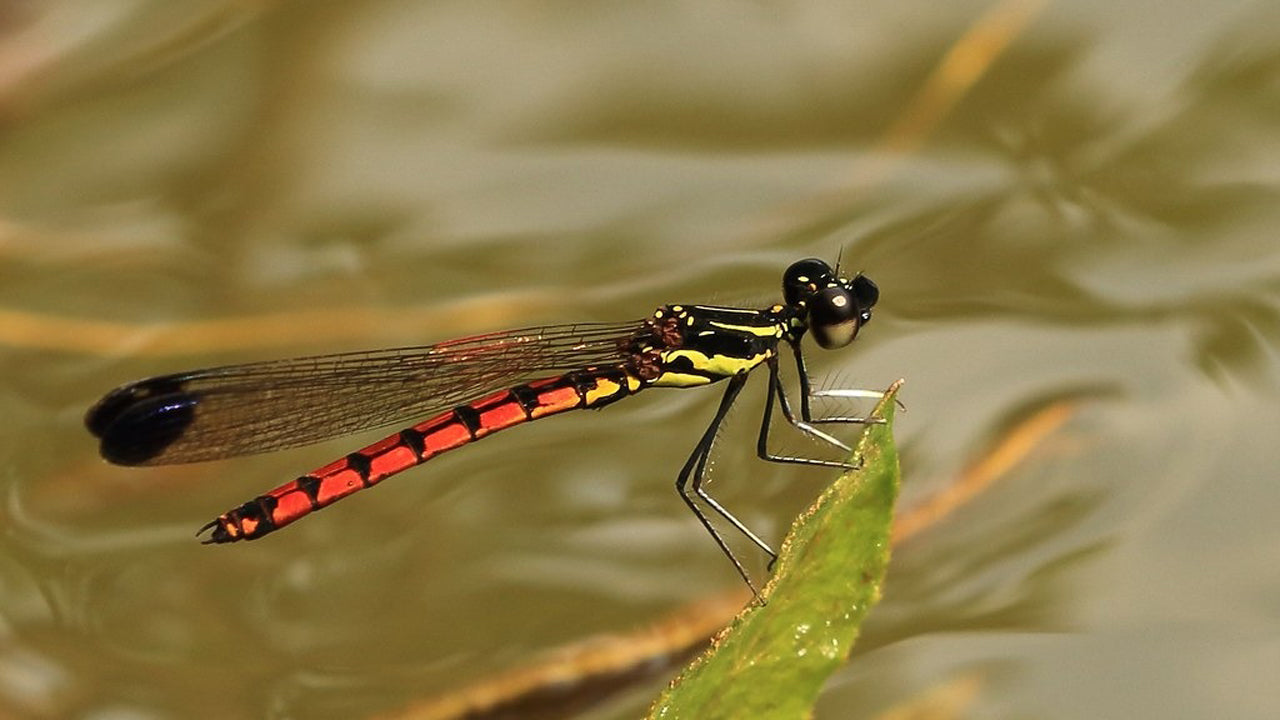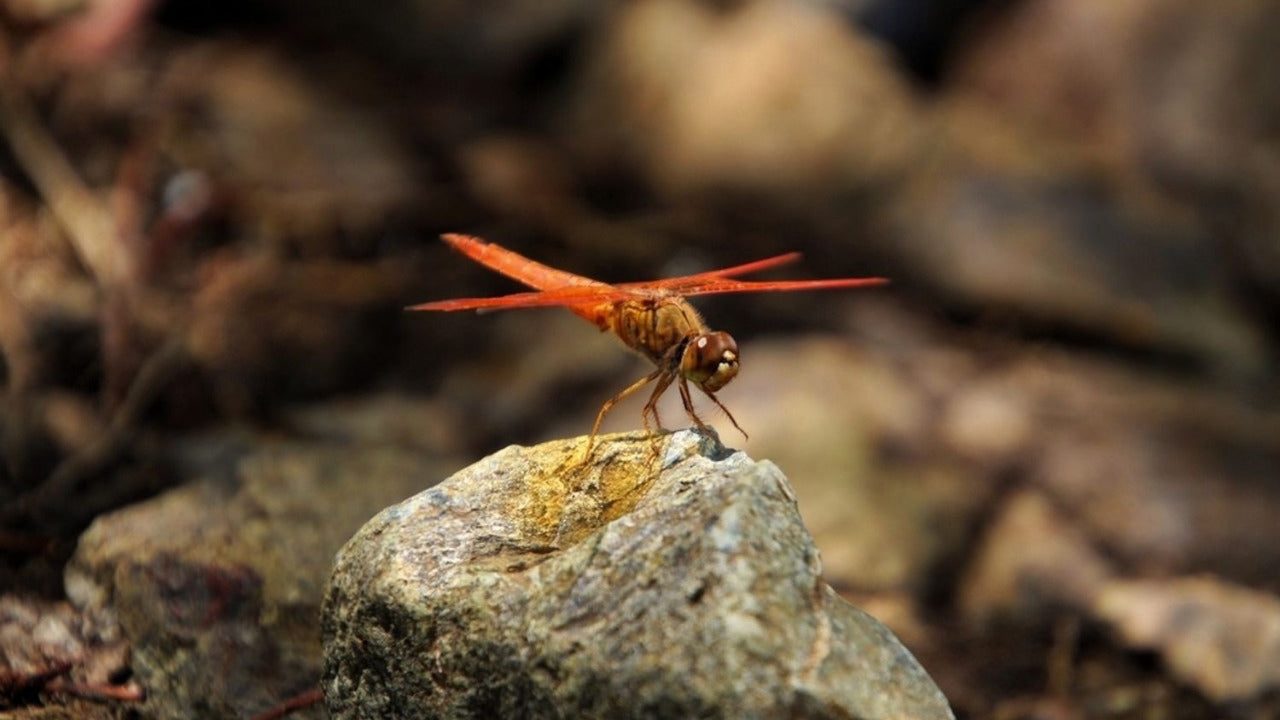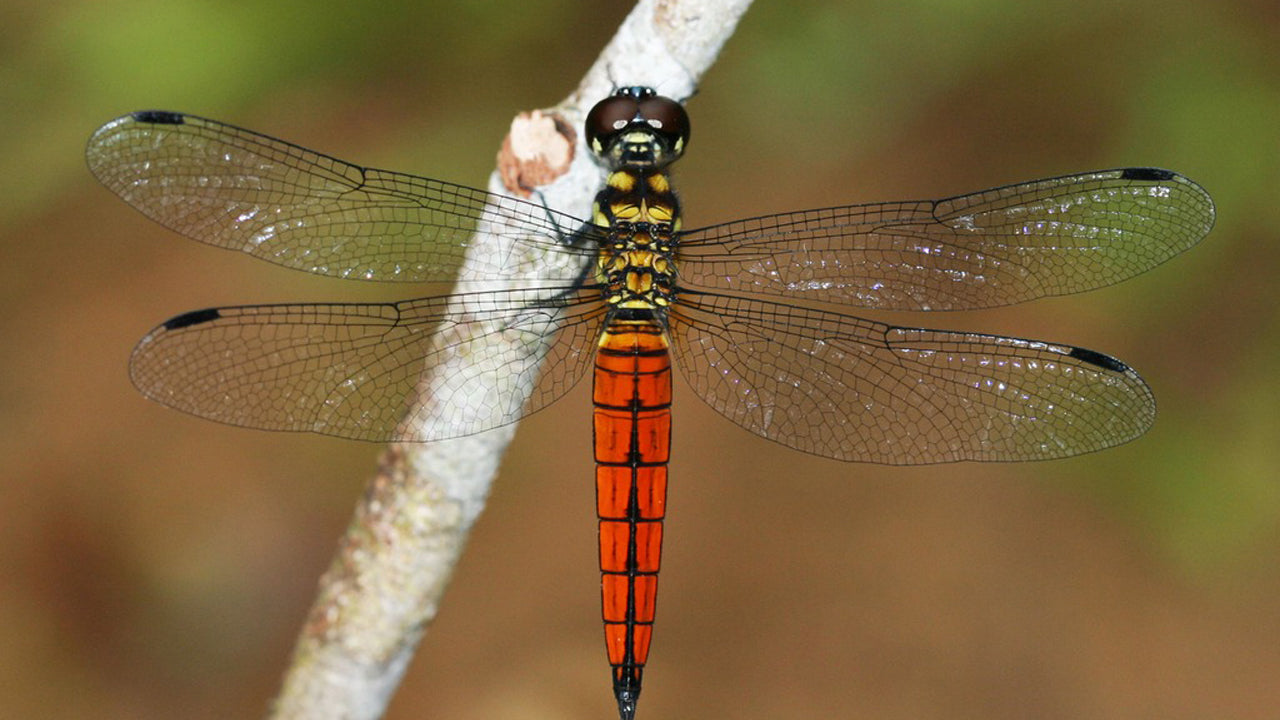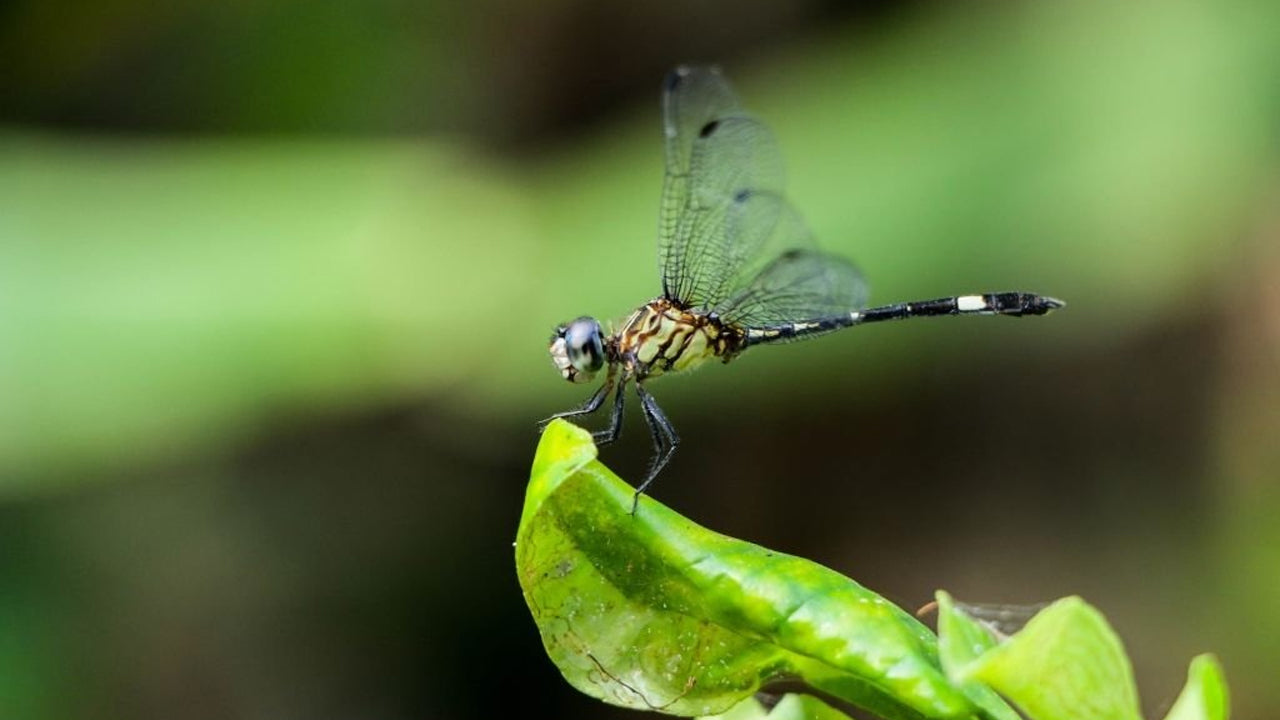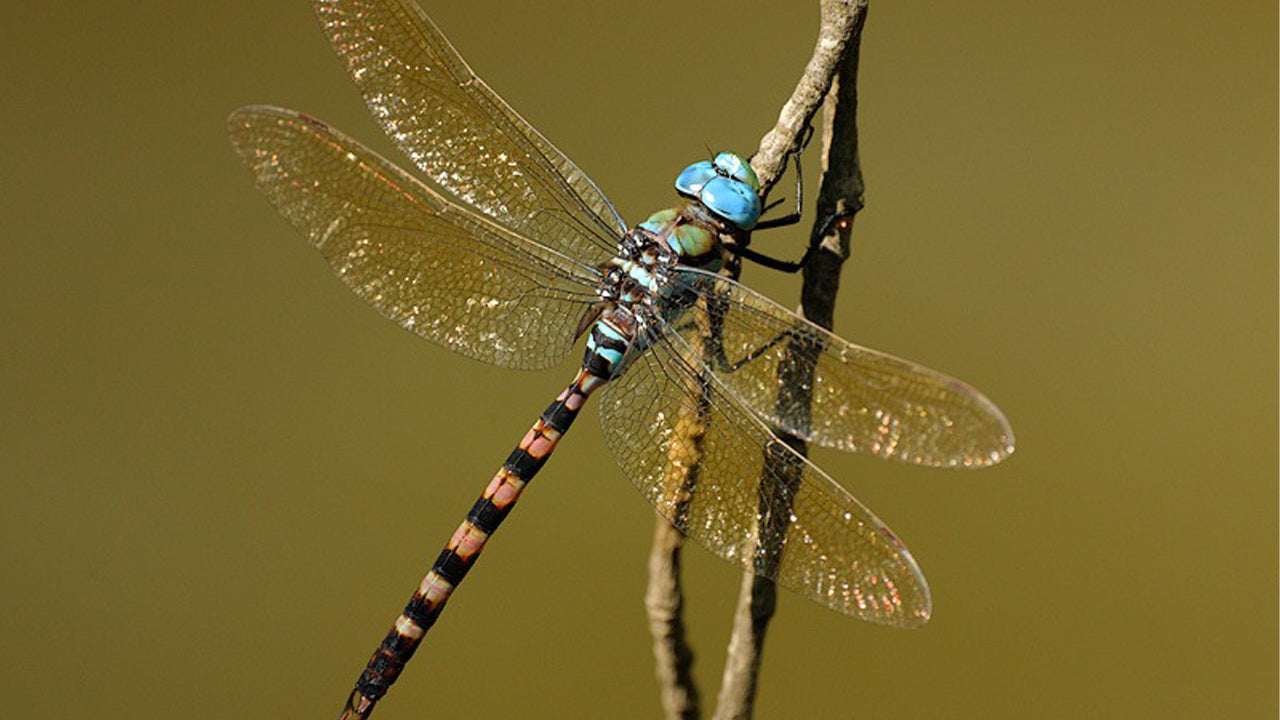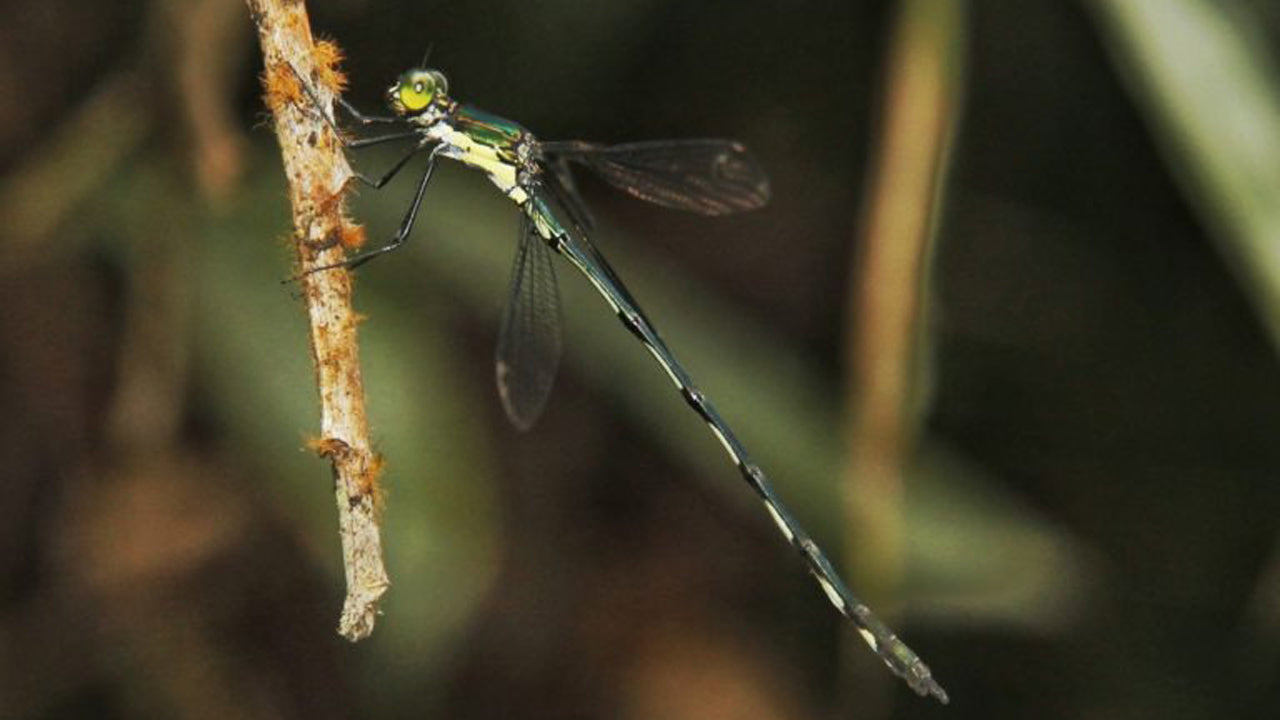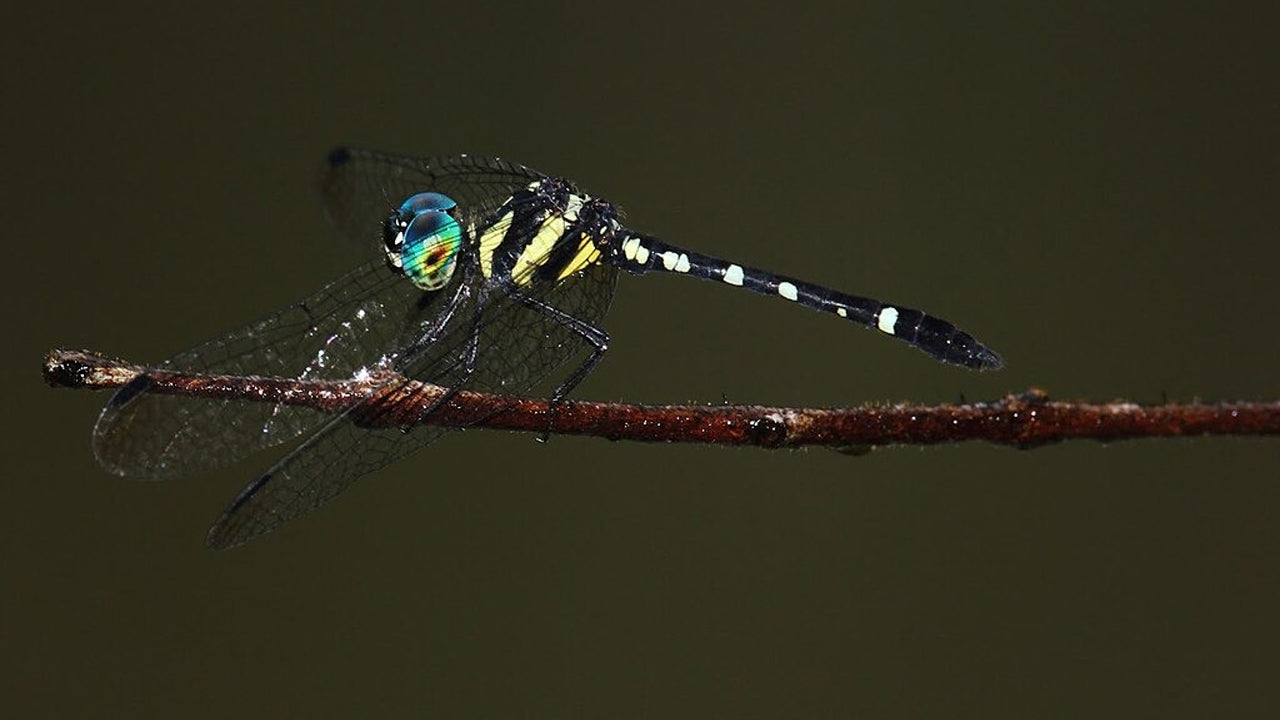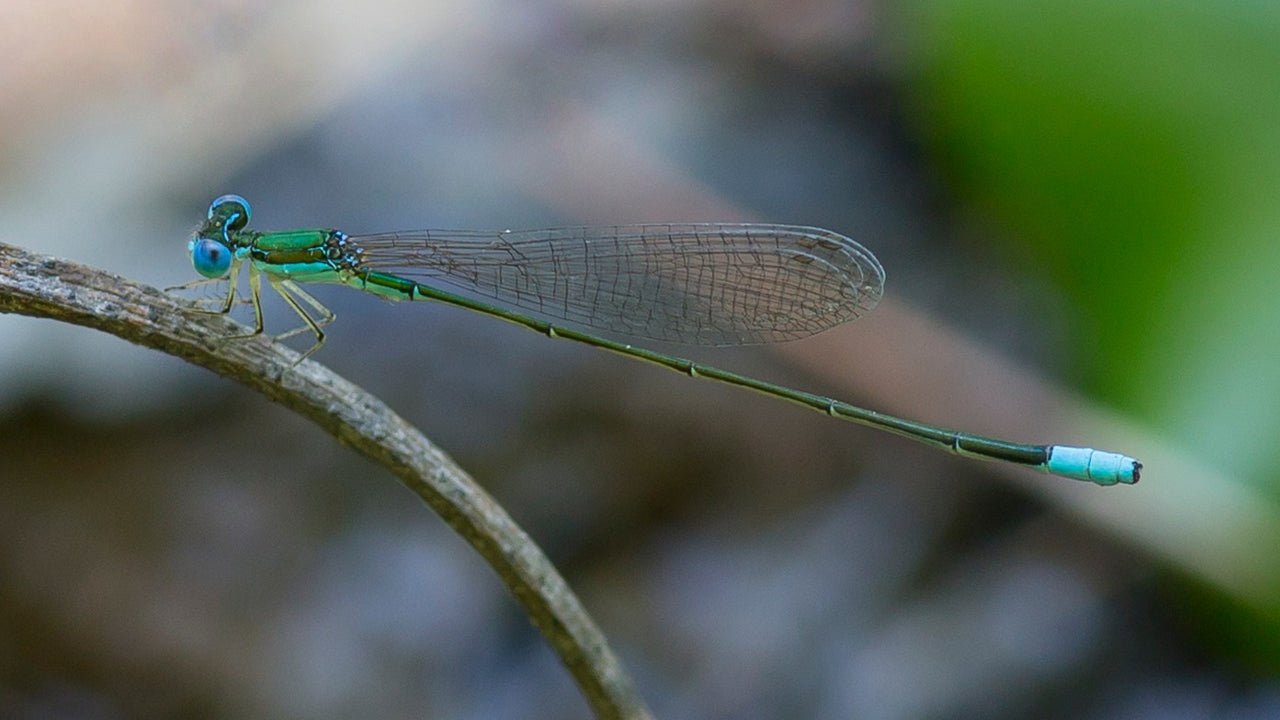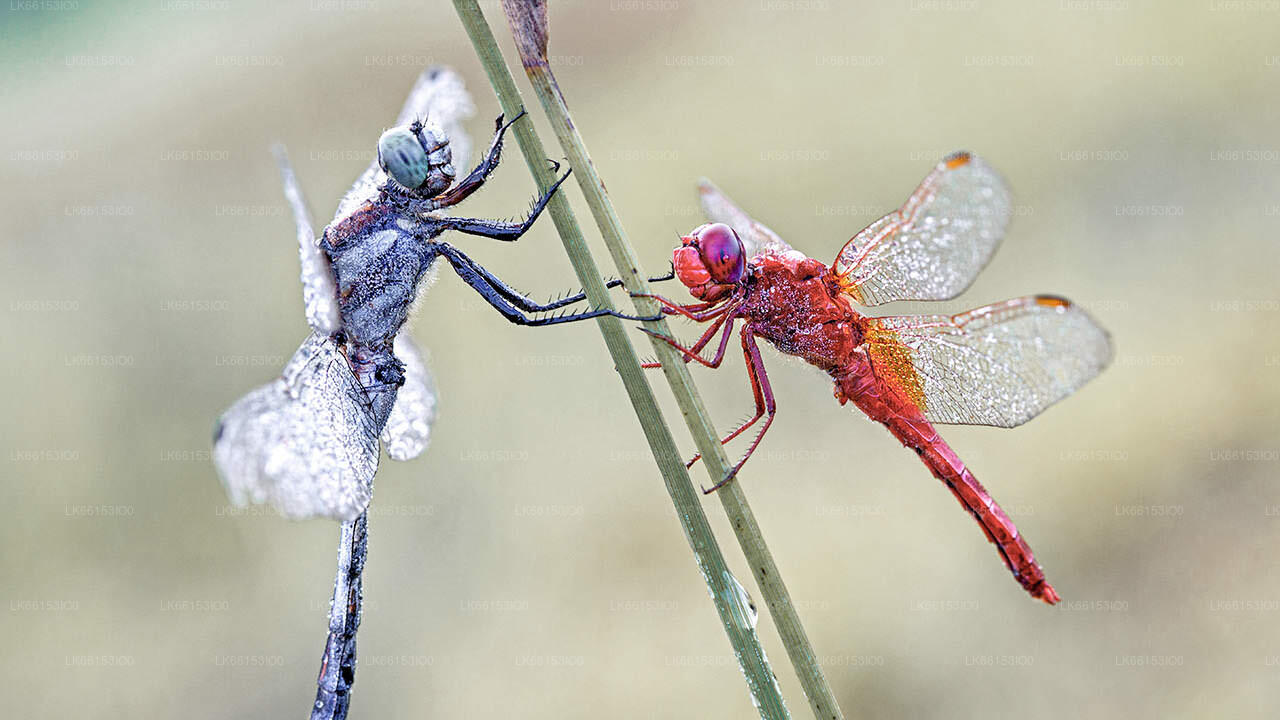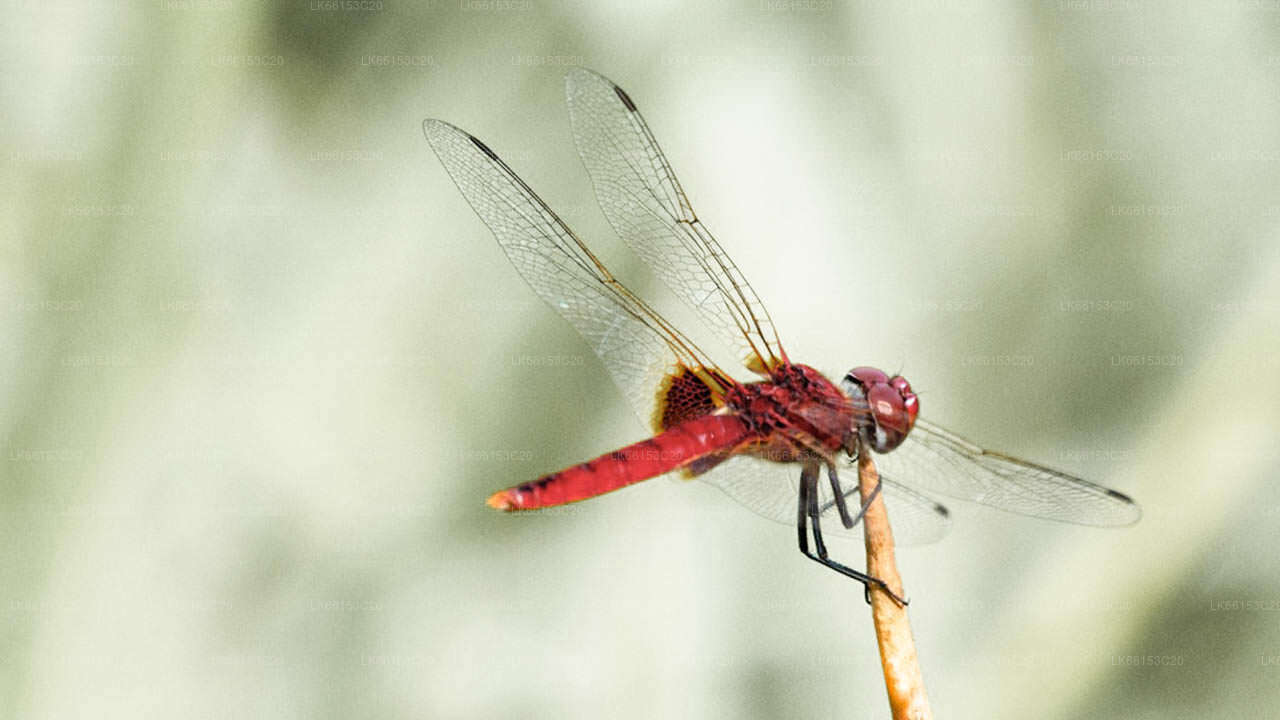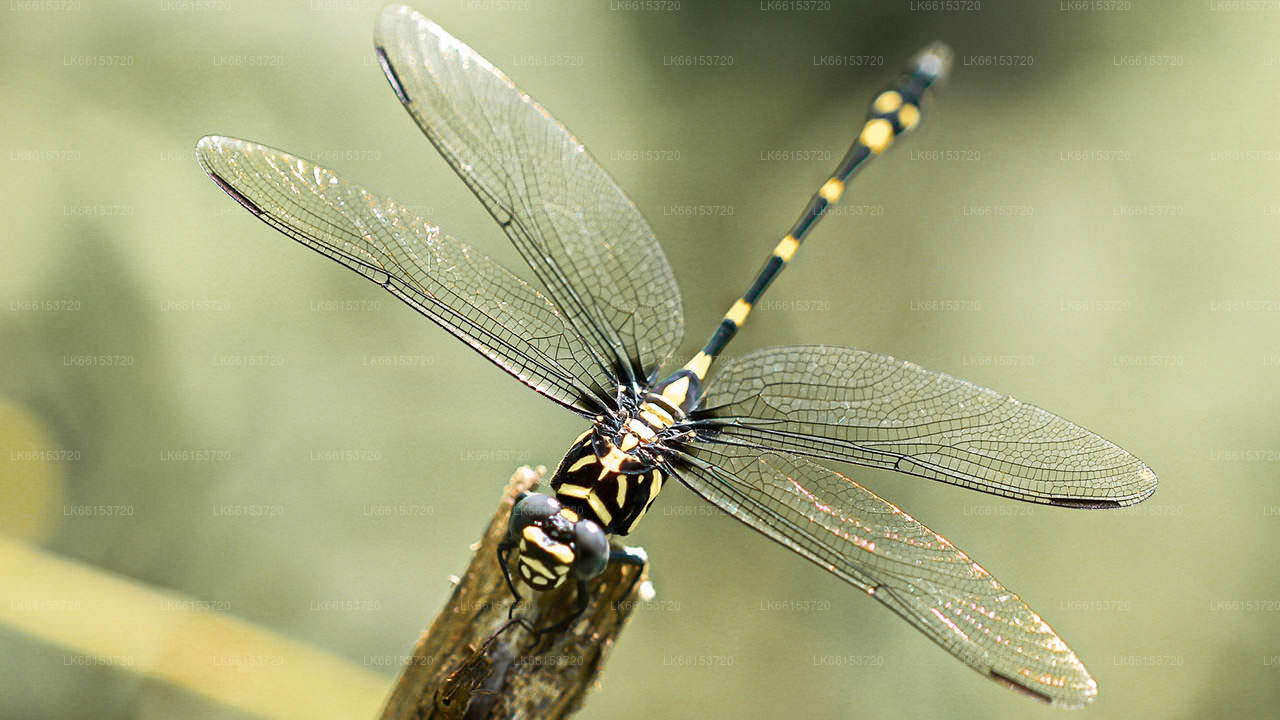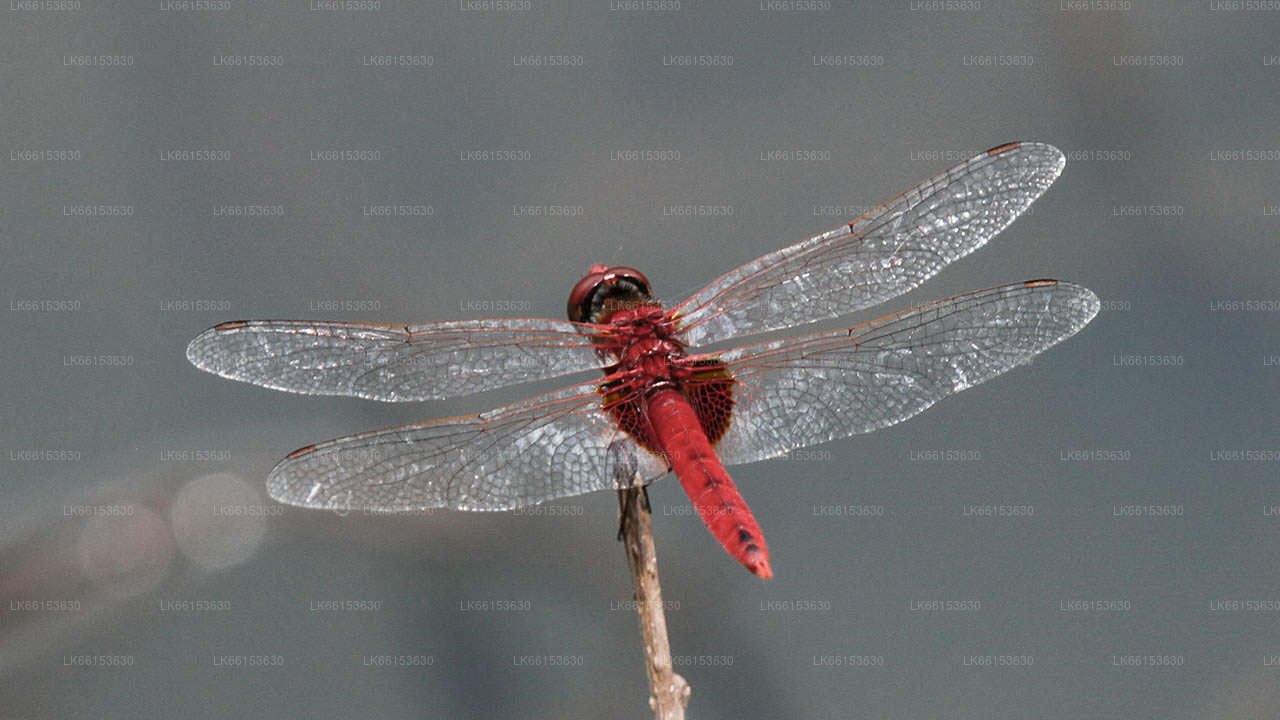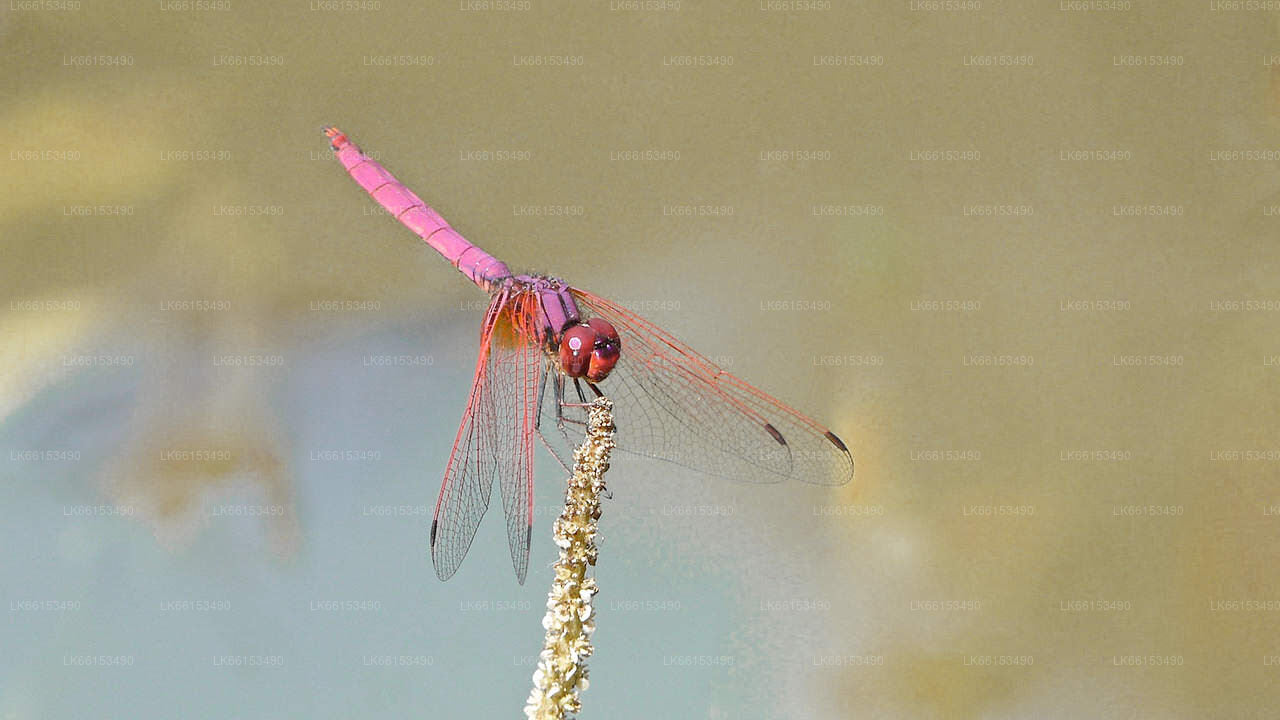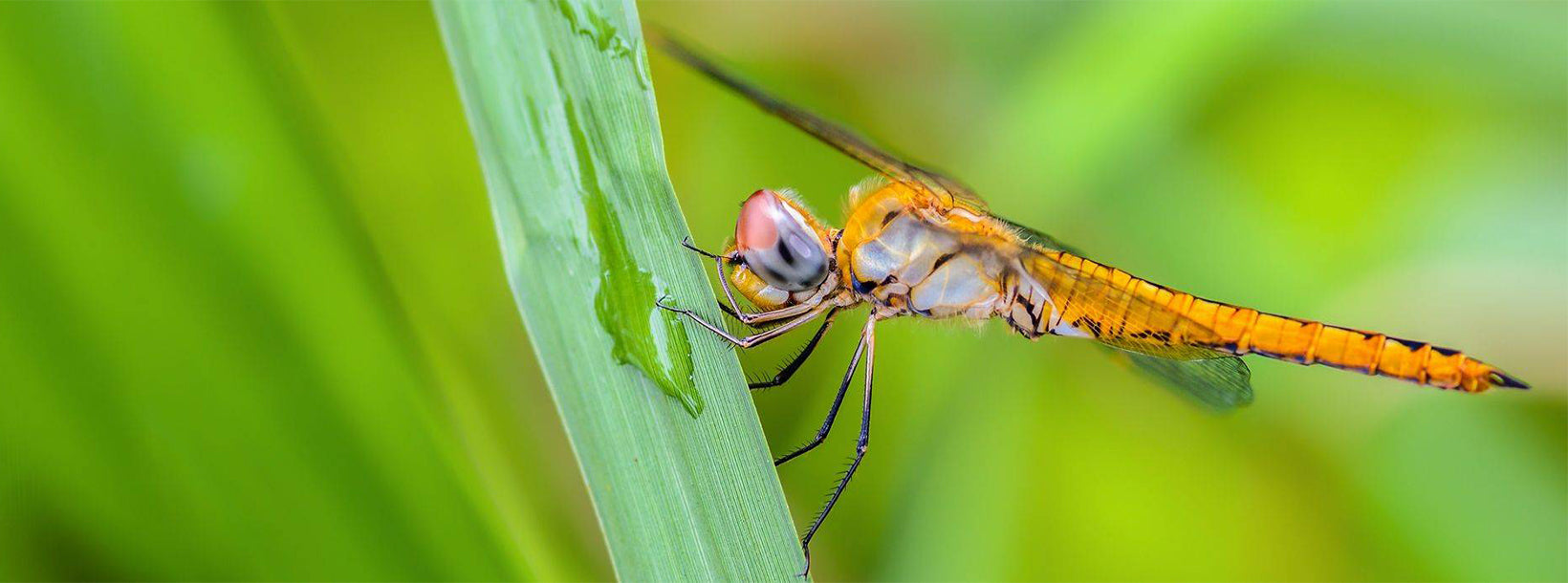
Few insects repay close attention as richly as dragonflies and their close relatives, the damselflies. Together they form the order Odonata — ancient, predatory, and finely engineered for aerial hunting. Sri Lanka, despite its modest size, holds an extraordinary share of global Odonata diversity: 132 species recorded as of 2024, more than half of them found nowhere else on earth.
What is the difference between dragonflies and damselflies?
The order Odonata is divided into two suborders. Dragonflies (Anisoptera) are typically robust, hold their wings horizontally at rest, and are powerful fliers. Damselflies (Zygoptera) are slender, fold their wings back along the body when perching, and tend to flutter close to the water surface. Both share the same three-stage life cycle — egg, larva, and adult — but the larvae are exclusively aquatic while adults are terrestrial and capable of sustained flight.
The larvae, sometimes called naiads or nymphs, can spend months or even years underwater before emerging. During that aquatic phase they are voracious predators in their own right, hunting invertebrates and, in larger species, small fish or tadpoles.
How many dragonfly species does Sri Lanka have?
Sri Lanka currently records 132 species of Odonata. Of these, 59 species and an additional eight subspecies are endemic to the island — a total endemism rate of around 51 percent. That figure is remarkable for an island of this size and places Sri Lanka among the most dragonfly-rich nations relative to its land area in the entire Indo-Pacific region.
New species continue to be described. Globally, over 6,400 Odonata species are known to science, and several dozen new ones are formally named each year, including occasional discoveries from Sri Lanka's still-underexplored hill-country streams.
Where in Sri Lanka are dragonflies found?
Odonata inhabit every elevation band on the island, from coastal lagoons and mangrove fringes to high-altitude streams above 2,000 metres. However, diversity and endemism peak sharply in two habitat types:
- Wet zone rainforests — The lowland and mid-elevation rainforests of the south-west hold the greatest concentration of endemic species. The Sinharaja Forest Reserve, a UNESCO World Heritage Site, is particularly productive for specialist stream-dwellers.
- Lower montane forests — Hill-country streams around areas such as Horton Plains and the Knuckles Range support species adapted to fast-flowing, cool, well-oxygenated water.
Generalist species — those tolerant of modified landscapes — are widespread across rice paddies, garden ponds, irrigation tanks, and slow rivers throughout the dry zone and coastal belt. Even urban water bodies in Colombo regularly host several common species.
Why are dragonflies important to Sri Lanka's ecosystems?
Both larval and adult Odonata are apex predators among invertebrates. Adults catch other insects on the wing with a success rate that rivals any predator on earth — laboratory studies suggest capture rates above 90 percent per hunting strike. Their prey includes mosquitoes, midges, agricultural pests, and other disease vectors, giving them measurable economic and public-health value.
Larvae play an equally important role underwater, regulating populations of aquatic invertebrates and small vertebrates. Because Odonata require clean, well-oxygenated water to complete their larval stage, their presence or absence functions as a reliable indicator of water quality and overall ecosystem health. This is why conservation scientists worldwide have designated dragonflies as "Guardians of the Watersheds" and use them as flagship taxa in freshwater biodiversity monitoring.
In Sri Lanka, where wetland habitats face pressure from agricultural runoff, sand mining, and land conversion, Odonata surveys are increasingly incorporated into environmental impact assessments as a practical proxy for aquatic ecosystem integrity.
What are the best habitats to observe dragonflies in Sri Lanka?
Choice of habitat determines which species you encounter. A few productive options:
- Lowland rainforest streams — Forest-interior streams with dappled canopy cover host endemic jewel-like species that rarely stray from shade. Early mornings, when males are territorial on exposed rocks or leaf tips, offer the best views.
- Irrigation tanks (wewas) — The ancient tank systems of the dry zone support large congregations of generalist species. Open water margins and floating vegetation attract dozens of species, especially during and after the north-east monsoon.
- Mangrove waterways — Brackish-water species and wide-ranging wanderers use mangrove channels as corridors. A boat trip along the Madu River gives good views of both Odonata and the broader wetland community.
- Montane grasslands — The patana grasslands of the central highlands, particularly around Horton Plains National Park, host high-altitude specialists not found in the lowlands.
When is the best time to look for dragonflies in Sri Lanka?
Adult Odonata are most active and most numerous during and shortly after the monsoon seasons, when standing and flowing water bodies are full and larval emergence peaks. In the wet zone this typically means the period from May through August (south-west monsoon) and again from November through January (north-east monsoon). The dry season months of February to April can be quieter at lower elevations but productive in the hills, where perennial streams maintain year-round populations.
Mid-morning, once air temperatures have risen enough for thermoregulation, is generally the most rewarding observation window. Overcast days often bring damselflies down to eye level, making identification easier.
How do I identify Sri Lankan dragonflies in the field?
Wing venation, body proportions, and colour pattern are the primary identification characters. Eye colour, wing-spot (pterostigma) shape, and the shape of the terminal abdominal segments (especially in males) are often diagnostic at species level. A hand lens or close-focus binoculars (minimum focus around 1.5 metres) make field identification far more tractable.
A dedicated field guide is essential for serious identification work. Lakpura stocks the Naturalist's Guide to the Butterflies and Dragonflies of Sri Lanka, which covers the most regularly encountered species with photographic plates and concise identification notes — a practical companion for any naturalist visiting the island.
Are Sri Lanka's dragonflies under threat?
Several endemic species are assessed as threatened or near-threatened on the IUCN Red List, primarily because they depend on intact forest streams that are shrinking in extent. Key pressures include forest clearance, stream sedimentation from upland agriculture, extraction of water for irrigation, and pesticide runoff that disrupts aquatic food webs.
Conservation efforts led by local researchers and NGOs focus on habitat protection, citizen-science monitoring programmes, and integrating Odonata data into national biodiversity databases. Responsible ecotourism that keeps visitors to established trails and discourages collection of specimens contributes meaningfully to this effort.