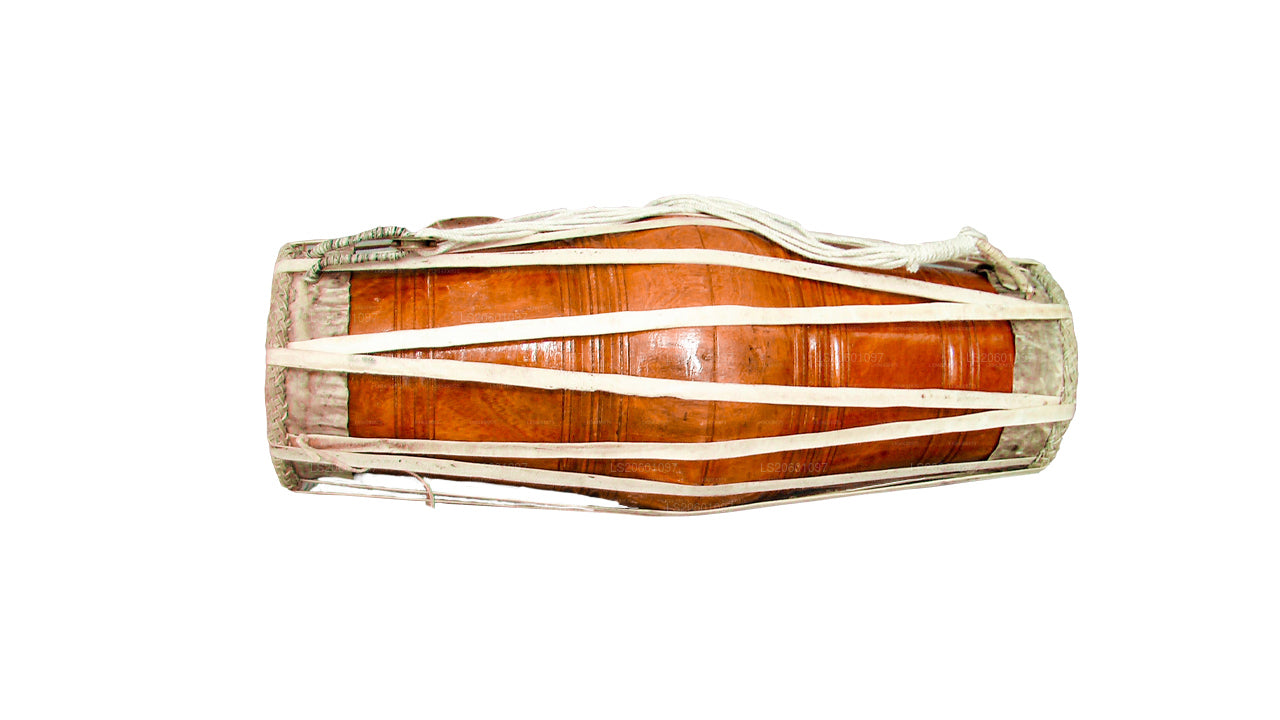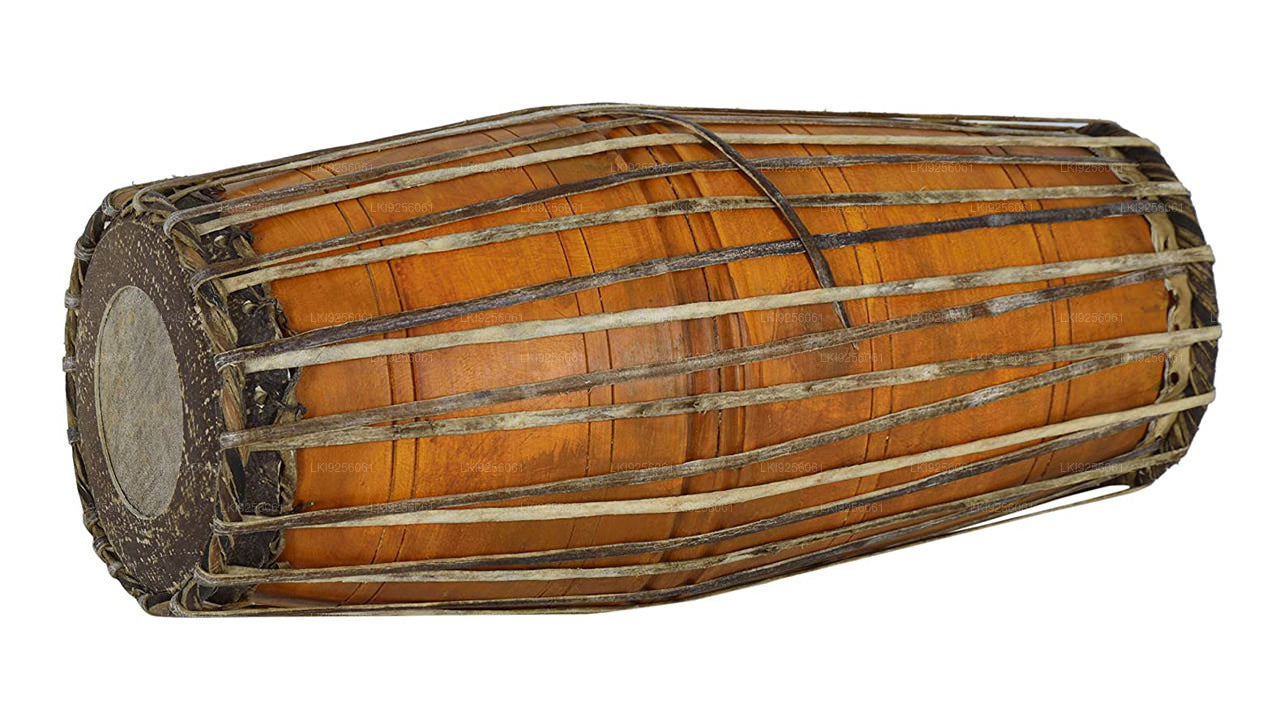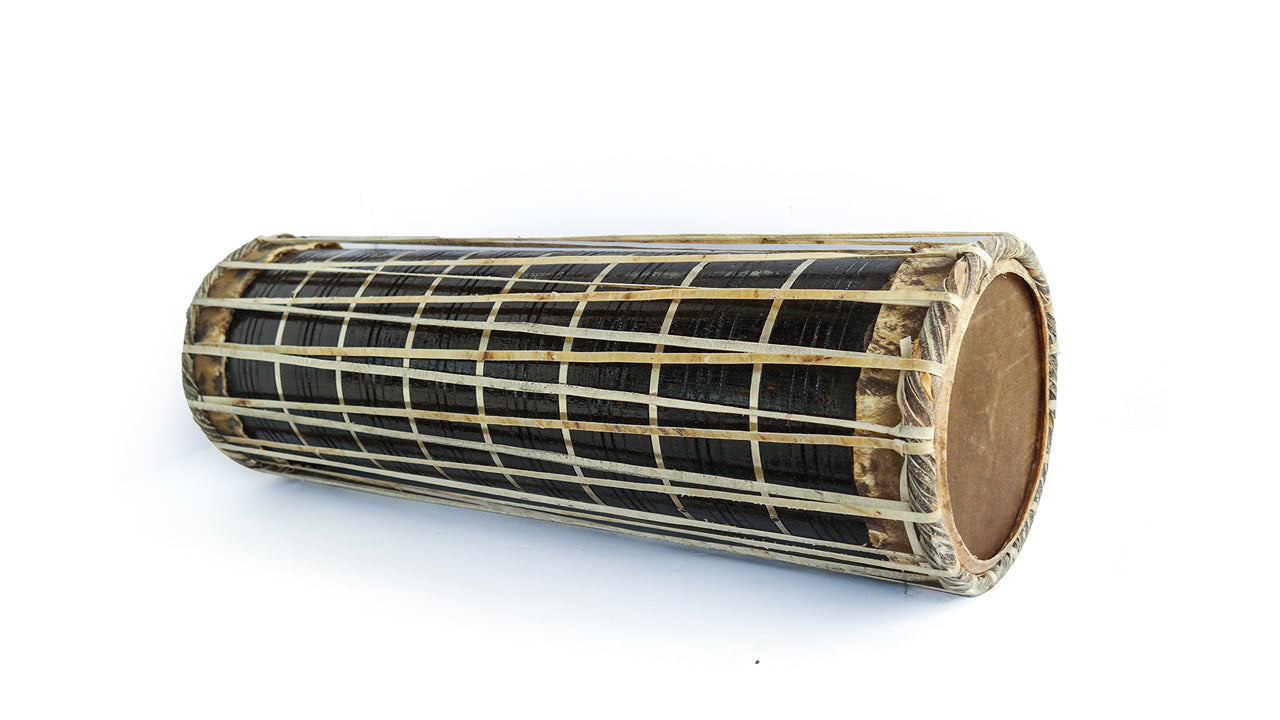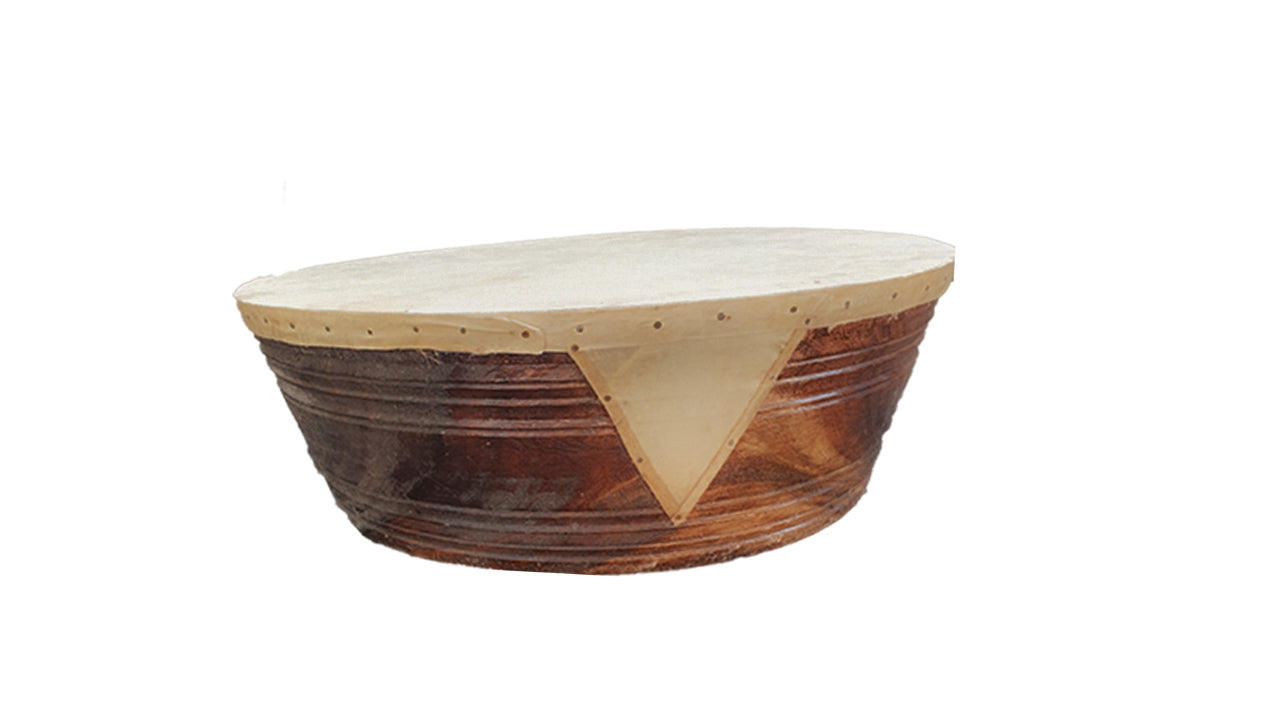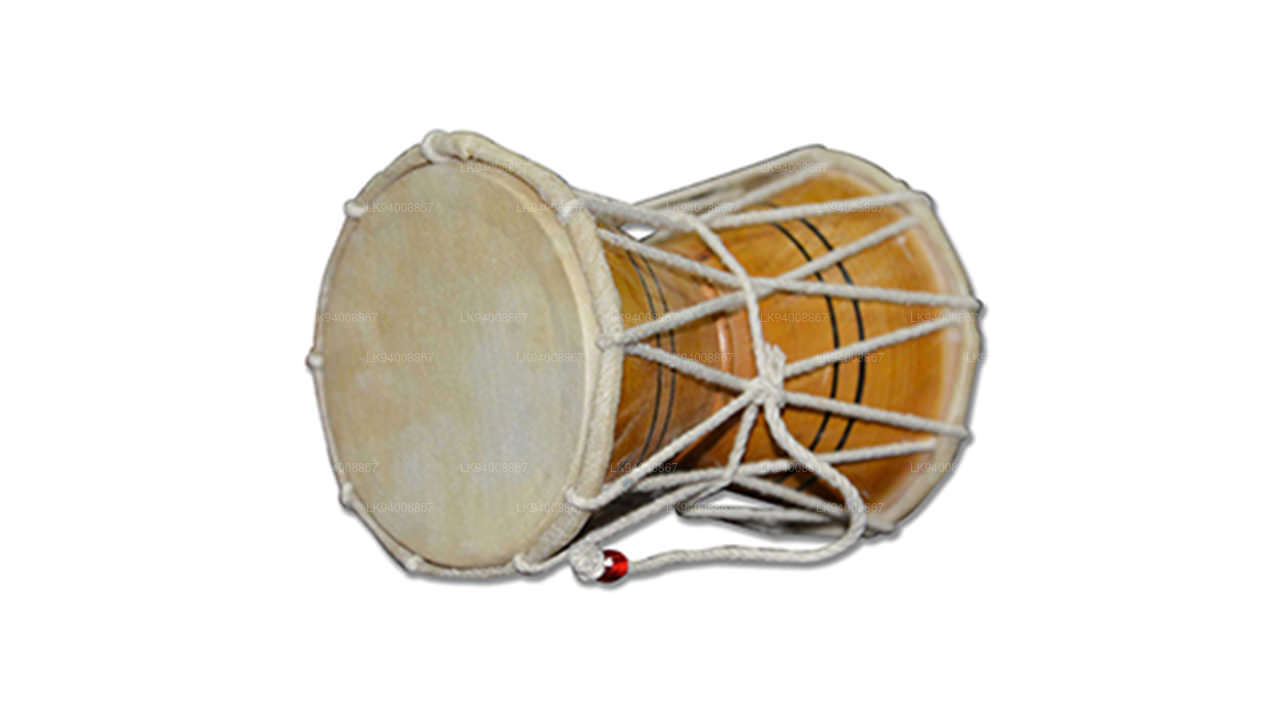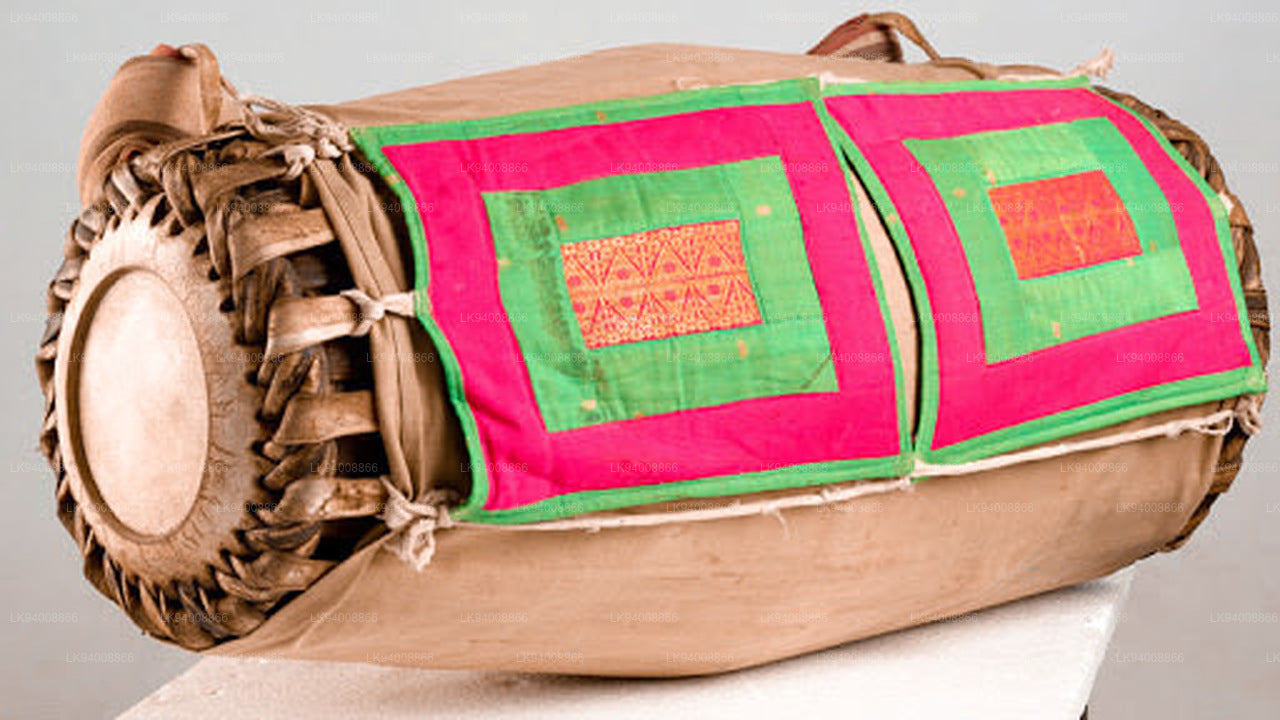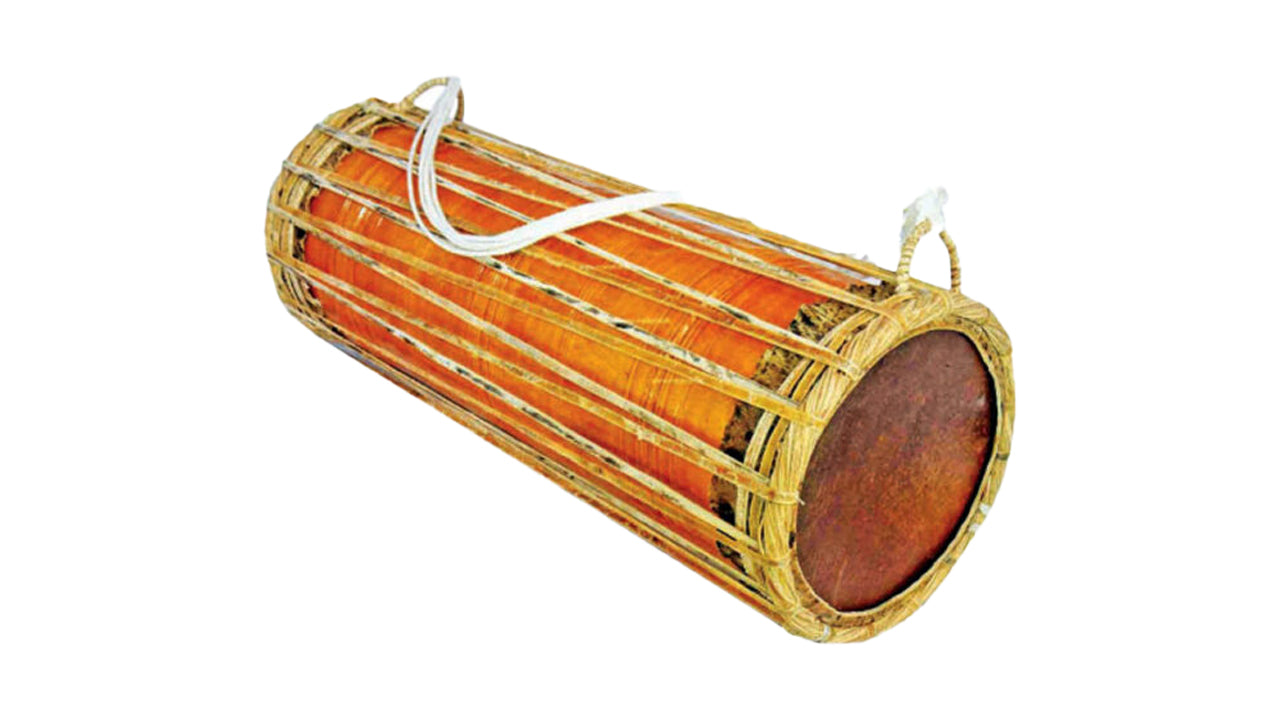
Few objects in Sri Lankan cultural life carry as much ritual weight as the Yak Beraya. Also known as the Ruhunu Beraya or Goshaka Beraya, this cylindrical drum is the primary percussion instrument of the low country performing arts tradition, a living thread connecting coastal Sri Lanka to centuries of ceremonial practice. Understanding it means understanding something essential about the island's southern identity.
What is the Yak Beraya and where does it come from?
The Yak Beraya belongs to the drumming heritage of the Pahatha Rata, the low country region that spans Sri Lanka's southern coastal belt. Its name links it directly to the yak tovil ritual tradition — a body of healing ceremonies and exorcism rites performed to propitiate yaksha spirits and restore balance between the human and supernatural worlds.
Sri Lanka has a long, layered history of drum-making. Earlier forms, such as the Dandu Beraya carved from bamboo, gave way over generations to more refined instruments suited to specific ceremonial contexts. The Yak Beraya represents one of the more sophisticated points in that evolution — built not merely to produce sound, but to produce the right sound for the right ritual moment.
How is a Yak Beraya made?
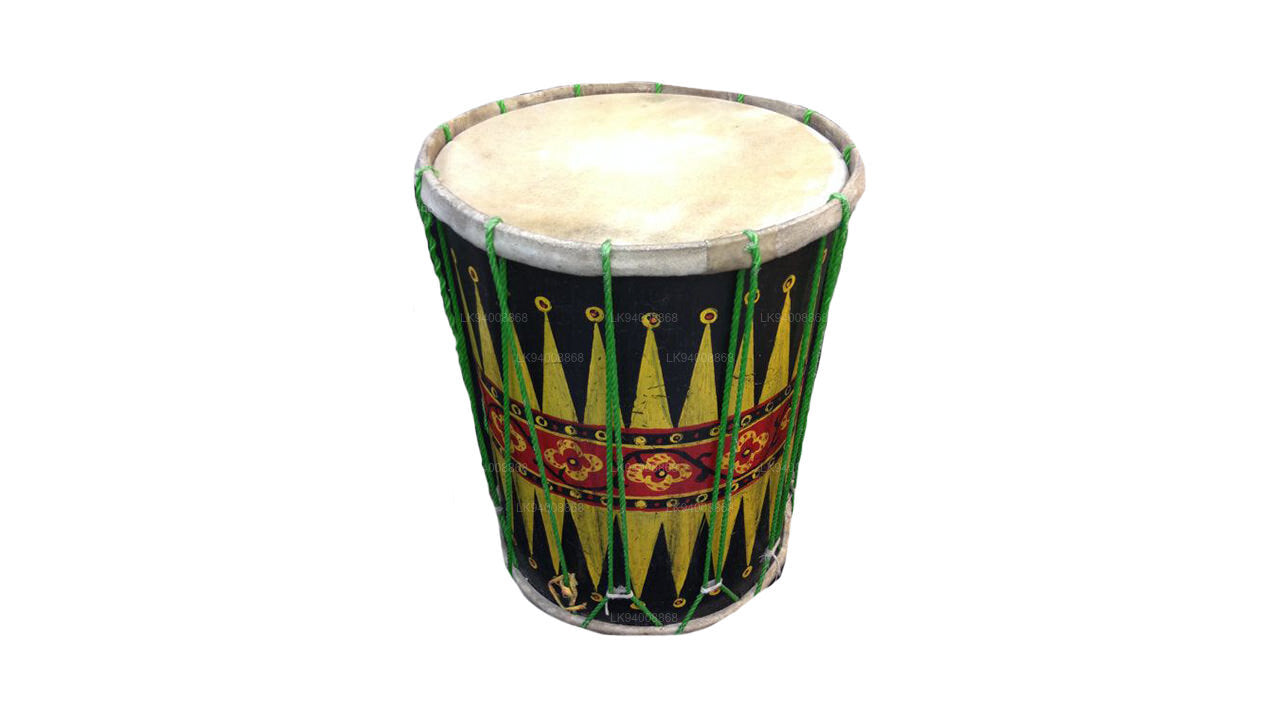
The drum body is turned from hardwoods traditionally found in Sri Lanka's forests and home gardens. Craftsmen work with timber from kitul, coconut, kohomba, ehela, and milla trees, each valued for its acoustic and structural properties. The choice of wood influences resonance, weight, and durability — qualities that matter when the instrument is played through long ceremonial sequences lasting into the early hours of the morning.
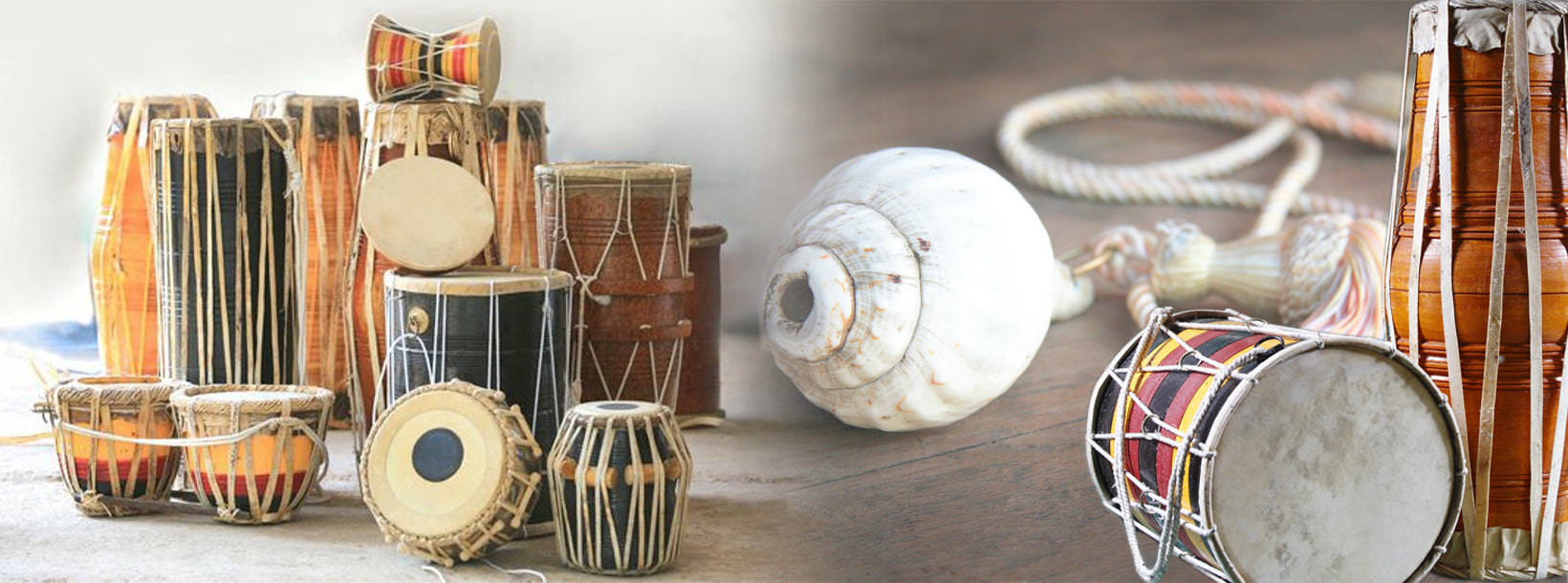
The drumhead is made from the stomach lining of cattle, stretched tightly across both ends of the cylindrical body and secured with lacing. This organic membrane is prized for its responsiveness to the bare hand, because the Yak Beraya is always played by hand — never with a stick or mallet. The drummer ties the drum around his waist, leaving both hands free to strike the two faces with different degrees of pressure, producing a wide tonal range from a single instrument.
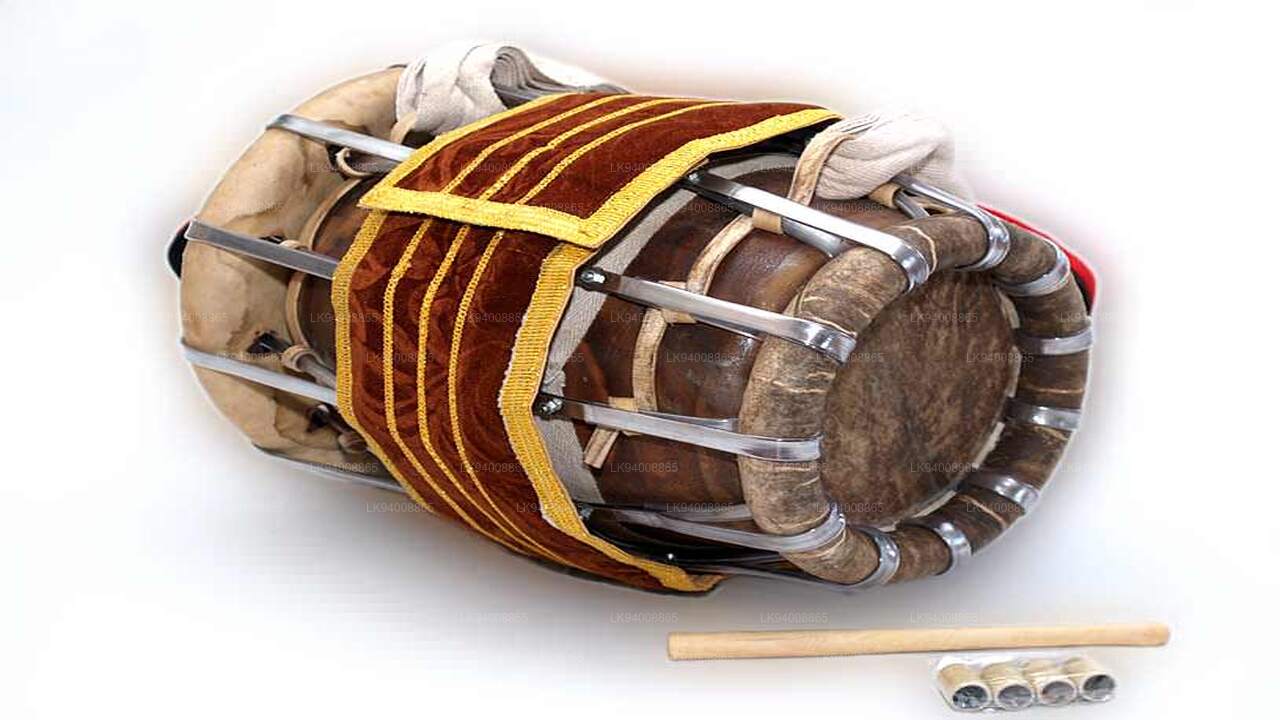
Some drummers personalise their instruments by carving or painting decorative motifs on the body of the drum, or by fitting decorative stainless steel bars around the exterior. These embellishments carry no acoustic function; they are markers of pride, lineage, and artistic identity.
What role does the Yak Beraya play in Sri Lankan ritual?
Within the low country tradition, the Yak Beraya is the anchor of the ensemble. It keeps time, signals transitions between ritual sequences, and communicates with both the dancers and the spirit world that the ceremony addresses. The drummers who perform in tovil ceremonies undergo years of apprenticeship, learning not only technique but the specific rhythmic patterns — tala — associated with each yaksha figure being invoked.
The instrument also appears in broader southern performance contexts: kolam dance dramas, devil dances, and village festivals. Wherever low country masked performance is found, the Yak Beraya is close by. Its deep, authoritative voice anchors the dramatic space, separating the ceremonial world from everyday time.
The Esala Perahera Festival in Kandy draws on a different drumming tradition — the up country Kandyan school — but the Yak Beraya's equivalent centrality to southern ceremonial life makes it an instructive parallel: in both contexts, the drum is never decorative. It is structural.
How does the Yak Beraya differ from other Sri Lankan drums?
| Drum | Region | Primary Context | Playing Method |
|---|---|---|---|
| Yak Beraya (Ruhunu Beraya) | Low country / Southern | Tovil rituals, kolam, village ceremony | Both hands, worn at waist |
| Geta Beraya | Up country / Kandyan | Kandyan dance, Perahera processions | Two sticks, hung from shoulder |
| Thammattama | Up country / Kandyan | Temple ceremony, ensemble percussion | Two curved sticks |
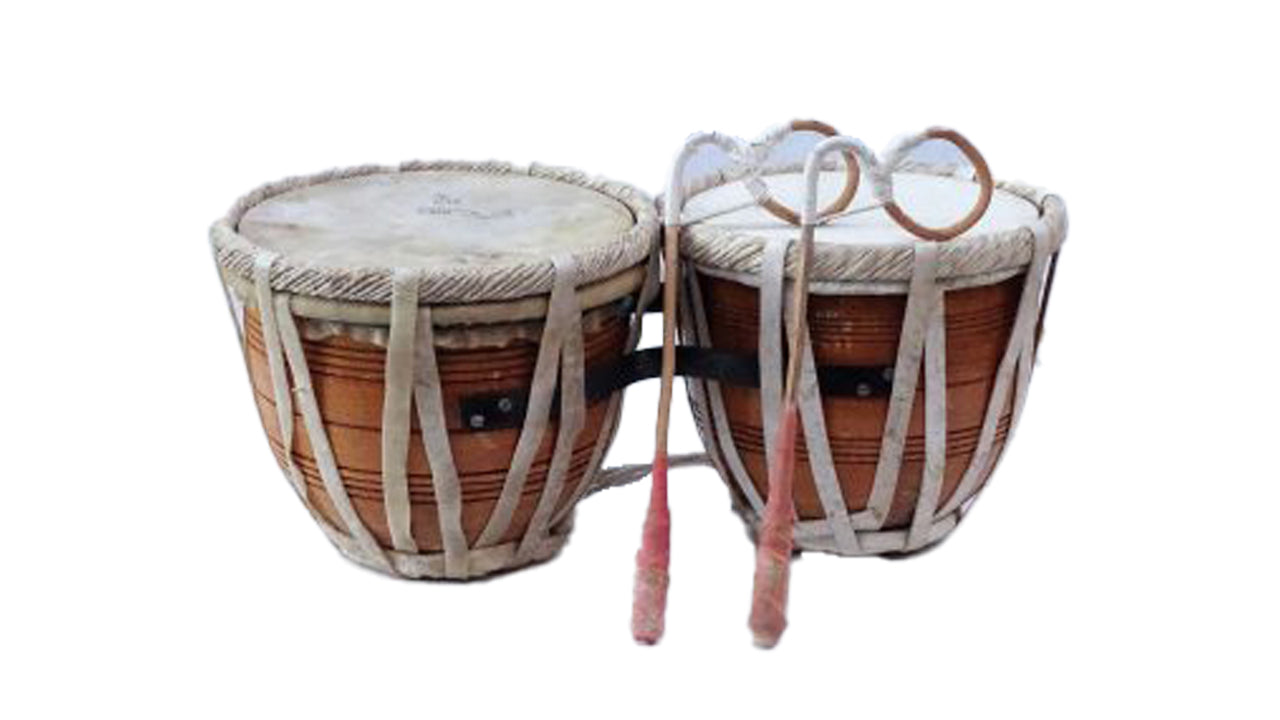
| Rabana | Island-wide | Social celebration, Avurudu | Hands, played on ground or lap |
The Yak Beraya's waist-mounted, two-handed playing style is its most distinctive physical characteristic and one of the most demanding technically. A skilled player can sustain intricate polyrhythmic patterns for hours without interruption.
Where can you experience the Yak Beraya tradition in Sri Lanka?
Southern Sri Lanka remains the living heartland of this tradition. The coastal districts of Galle, Matara, and Hambantota are where you are most likely to encounter authentic tovil ceremonies, though these are community rituals rather than tourist performances — access depends on local invitation and timing.
Cultural centres in Colombo and Galle periodically stage demonstrations of low country drumming and dance for general audiences. For those who want to go deeper, specialist cultural tour operators can arrange introductions to practising drummers and craft workshops where the instrument is still made by hand using traditional methods.
Owning a Yak Beraya as an instrument — or as a piece of tangible cultural heritage — is also possible. Lakpura's 28-inch Yak Beraya is made to the traditional specification: hand-turned hardwood body, cattle-skin heads, and hand-finished detailing.
Is the Yak Beraya tradition at risk?
Like many specialised craft and performance traditions, the lineage of Yak Beraya making and playing faces quiet pressure from modernisation and the declining frequency of full-scale tovil ceremonies in urban contexts. The knowledge required — both the rhythmic repertoire and the drum-making craft — is transmitted within families and guilds, and formal documentation of this oral tradition remains limited.
Several Sri Lankan universities and cultural bodies have begun archiving audio and video records of low country drumming traditions. Travellers and researchers interested in supporting these efforts can connect with cultural institutions in the south that work alongside practising artists.