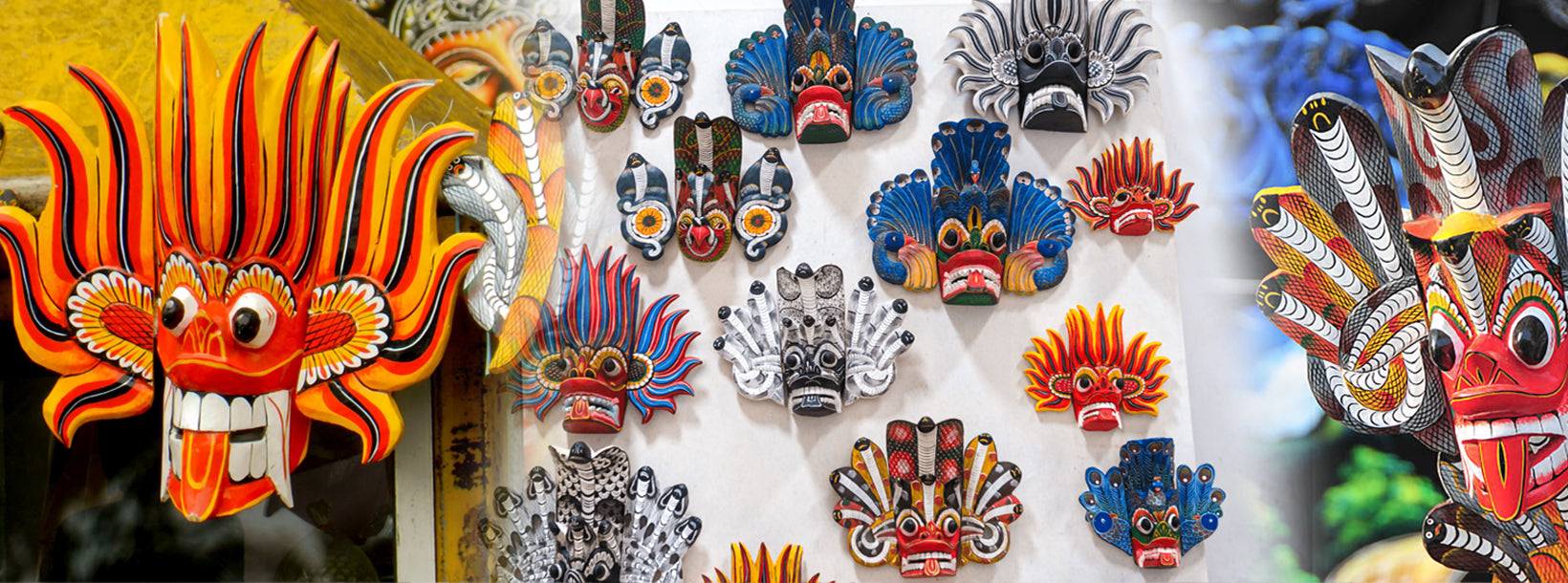
The "Raksha" mask is a traditional mask from Sri Lanka, often used in traditional dance performances and rituals. It represents a demon character with bulging eyes, protruding tongue, and fearsome expressions. These masks play a significant role in Sri Lankan culture, symbolizing protection against evil spirits and bringing blessings to the community.
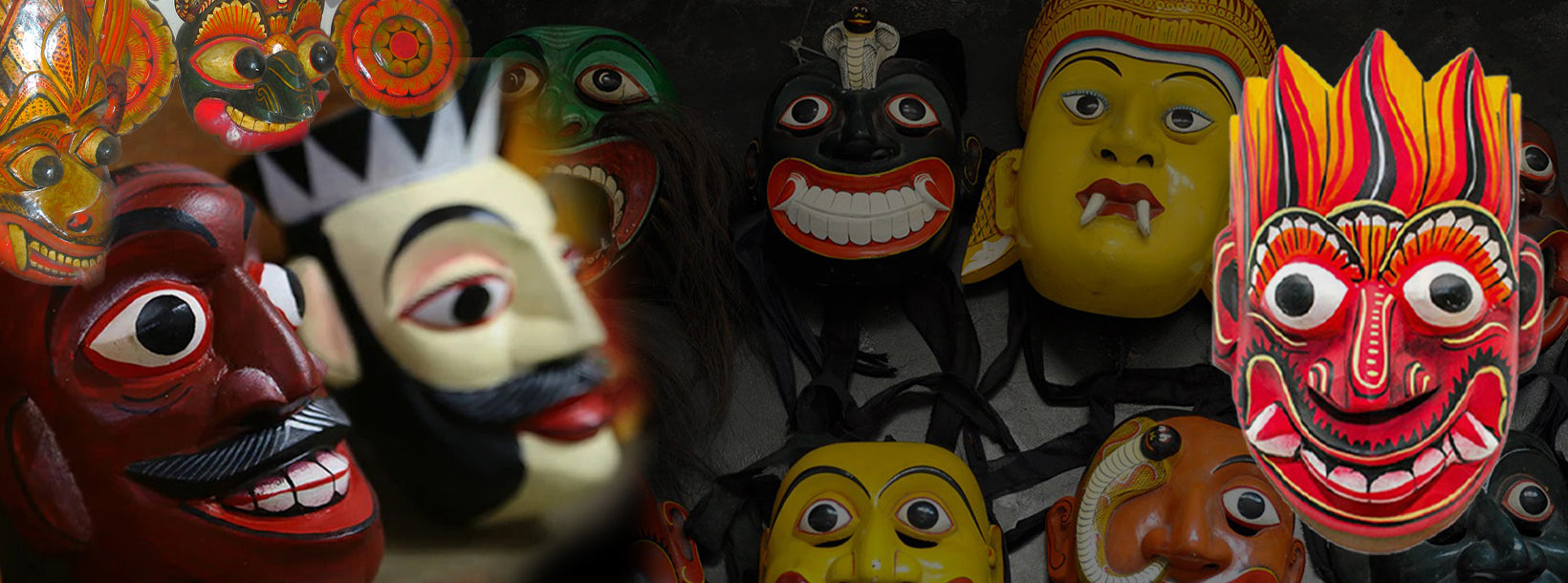
Sanni masks are traditional wooden masks from Sri Lanka, used in ritualistic performances to ward off evil spirits and diseases. Intricately carved, they depict various demonic figures and spirits. These masks play a significant role in the country's cultural heritage, symbolizing the battle between good and evil in traditional dance forms.
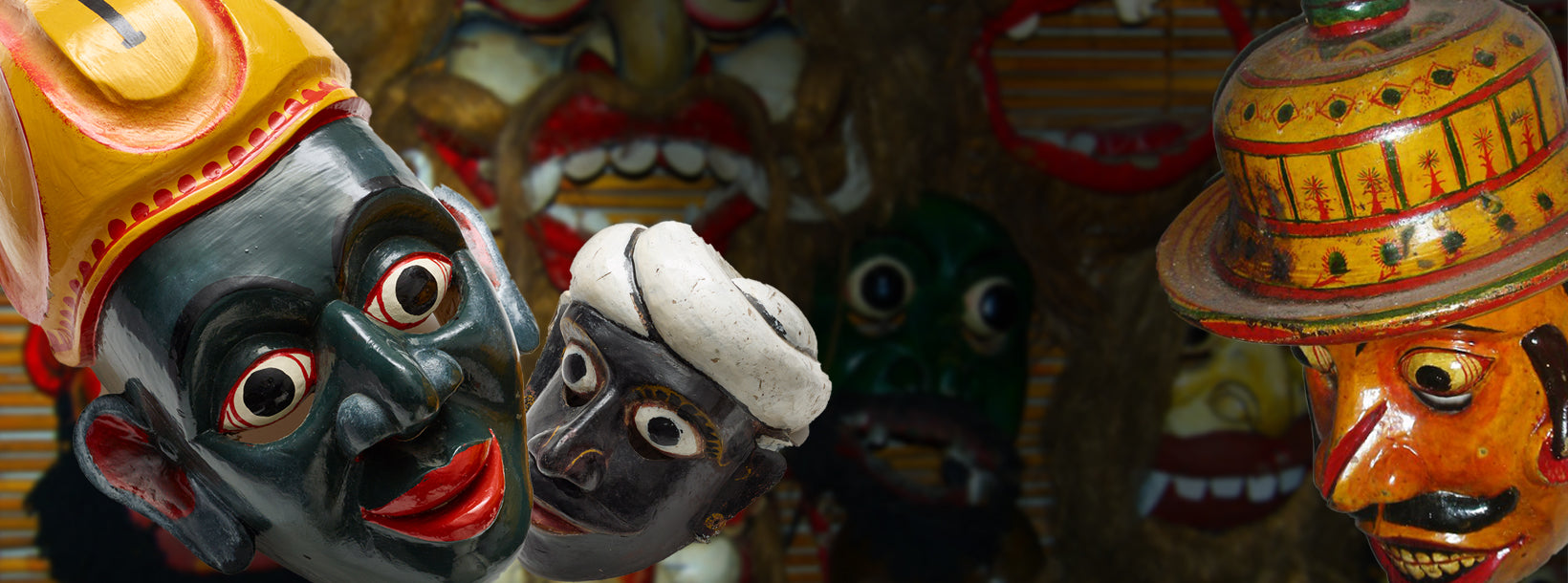
Kolam masks in Sri Lanka are traditional wooden masks used in various cultural rituals and performances. Intricately carved and brightly painted, these masks represent different characters and deities, such as demons, animals, and folk heroes. They hold significant cultural and religious value, showcasing the rich artistic heritage of Sri Lanka.
The Rathnakuta Raksha (Red Mask) is a striking and culturally significant artifact in Sri Lanka's traditional mask-making and performance arts. Known for its vibrant red color, this mask symbolizes power, energy, and protection, making it an essential element in rituals and theatrical performances. Its fierce design, featuring bulging eyes, exaggerated expressions, and intricate detailing, is intended to intimidate and ward off evil spirits, embodying a mythical demon spirit believed to cleanse spaces of negative energies. The mask is often used in ceremonies like the Sanni Yakuma and Kolam, which are rooted in exorcism, healing, and storytelling traditions.
As part of the Raksha (demon) mask family, the Rathnakuta Raksha reflects Sri Lanka's deep connection to its folklore and spiritual practices. Beyond its ritualistic purposes, it represents the island's exceptional craftsmanship, showcasing the skill of traditional mask-makers who carve and paint each piece with meticulous detail. This mask is not only a protective symbol but also a vivid reminder of the island's rich cultural heritage, where art and spirituality are seamlessly intertwined.