
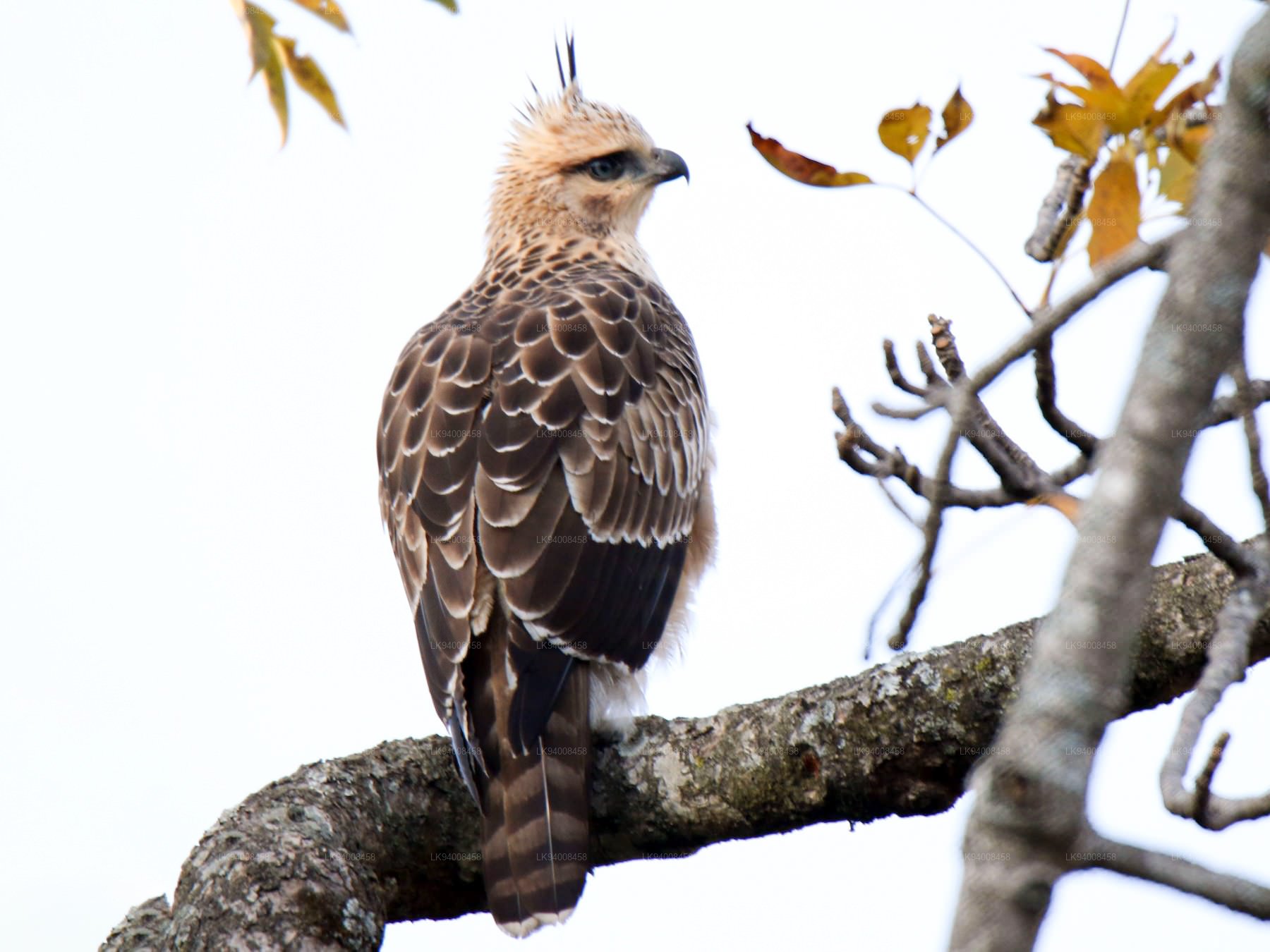
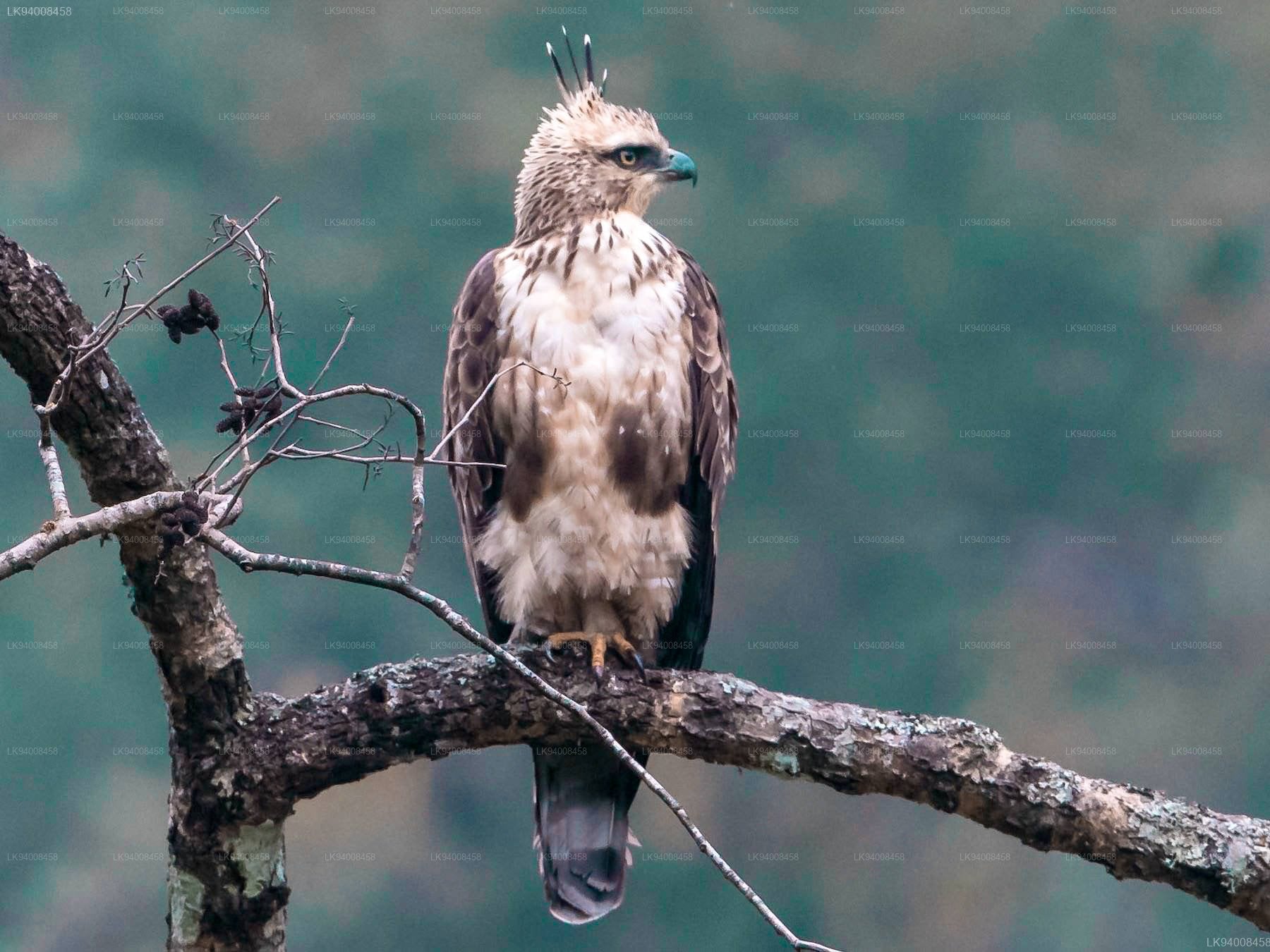
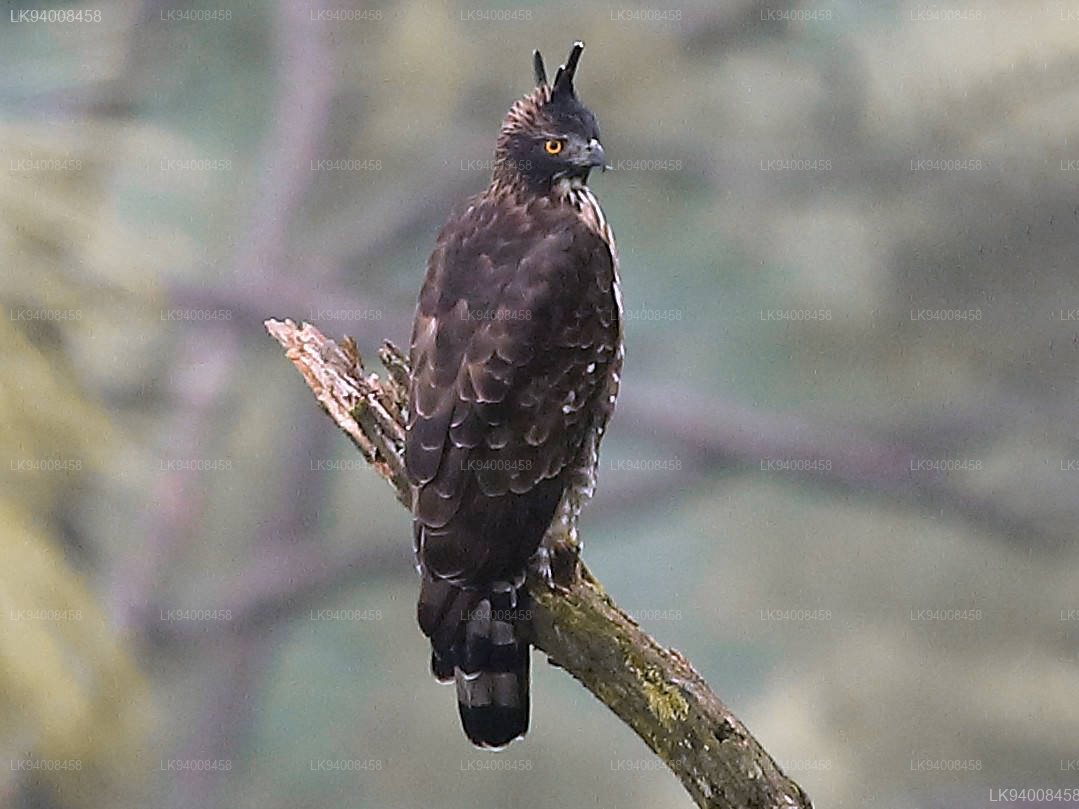
The mountain hawk-eagle (Nisaetus nipalensis), sometimes called Hodgson's hawk-eagle after the naturalist Brian Houghton Hodgson who first formally described it, is one of the larger and more powerful raptors found across forested Asia. Hodgson collected a specimen in the Himalayas, which gave rise to both the common name and the species epithet nipalensis. A third, less widely used English name — feather-toed eagle — describes the distinctive feathering that extends down the tarsus, a trait shared by members of the subfamily Aquilinae within the broader family Accipitridae.
How is the mountain hawk-eagle classified?
Like all hawk-eagles of the Old World, this species was long placed in the genus Spizaetus. Molecular studies have since shown that grouping to be paraphyletic — meaning Old World and New World hawk-eagles do not share a single common ancestor exclusive to themselves. As a result, the Old World members, including Nisaetus nipalensis, were transferred to the genus Nisaetus (Hodgson, 1836), separating them formally from their New World counterparts.
The mountain hawk-eagle is currently assessed as Least Concern on the IUCN Red List, reflecting its relatively wide distribution. That classification should not be read as security: populations are considered sparse across much of the range and are declining, largely because of large-scale habitat loss and forest degradation.
Where does the mountain hawk-eagle live?
The species breeds across a broad arc of forested Asia. Confirmed breeding populations are found in:
- Northern India and Nepal (the species' Himalayan heartland)
- Bangladesh and Myanmar
- Thailand and mainland Southeast Asia
- Taiwan
- Japan, where it is known as kuma-taka
The true extent of its breeding range may be wider still, as remote forested mountain regions remain under-surveyed. The eagle favours dense, mature forest on mountain slopes and foothills, typically avoiding open lowland habitats. Birders visiting montane forest reserves — such as the Sinharaja Forest Reserve in Sri Lanka — should note that while the mountain hawk-eagle is not documented there, the reserve hosts other impressive raptors and provides a comparable experience of searching for forest eagles in dense tropical canopy.
What does the mountain hawk-eagle eat?
This is an opportunistic predator whose diet shifts with local prey availability rather than following a fixed menu. Recorded prey across its range includes:
- Mammals: hares, martens, flying squirrels, tree squirrels and shrew moles
- Birds: pheasants, jays and various medium-sized forest birds
- Reptiles: snakes and lizards
The mountain hawk-eagle hunts almost entirely within forested environments, targeting areas where prey is densest. Its primary technique is still-hunting — waiting motionless on a concealed perch, then launching a rapid attack when prey moves within range. It also moves systematically between perches at forest edges and, less frequently, soars above the canopy to scan open ground below.
How does the mountain hawk-eagle behave in the wild?
The species is sedentary throughout most of its range, with individual birds — and mated pairs — remaining within the same home territory year-round. Outside the breeding season, however, paired birds often live independently within that shared territory rather than keeping constant company.
Some dispersal, most likely by recently fledged juveniles, is reported, but adults rarely undertake long-distance movements. In flight, the mountain hawk-eagle is immediately recognisable: when soaring it holds its wings slightly forward and angled upward in a shallow V; when gliding it drops the wings to body level. During courtship display flights, the action is markedly more powerful — undulating stoops, parallel flight passes and acrobatic manoeuvres that demonstrate fitness to a watching mate.
How does the mountain hawk-eagle breed?
Mountain hawk-eagles form long-term monogamous pair bonds, and the same nest site is often reused across multiple seasons. Courtship typically begins in autumn with elaborate aerial displays: the pair performs undulating flights in close formation, approaches stoops and other acrobatic figures. Nest construction begins while courtship is still ongoing.
Nests are large stick platforms built high in mature trees on mountain slopes. Both partners defend the territory actively, chasing away intruders together. The precise timing of the breeding season varies with latitude and altitude — populations at higher elevations or higher latitudes generally begin nesting later in the year. Typically a single egg is laid, and parental investment in raising each chick is considerable, consistent with the long-term pair bond the species maintains.
Is the mountain hawk-eagle endangered?
The mountain hawk-eagle is currently listed as Least Concern by the IUCN, based on the breadth of its range. In practice, the bird is genuinely rare wherever it occurs — observers in known habitat should count themselves fortunate to see one. The primary threat is deforestation: this eagle depends on large, structurally complex forest, and fragmented secondary growth does not support stable breeding populations. In Japan, Taiwan and parts of South and Southeast Asia, targeted conservation of old-growth montane forest is considered the most effective way to protect the species long-term.
Where can I see raptors in Sri Lanka?
The mountain hawk-eagle is not a confirmed resident of Sri Lanka, but the island supports a rich raptor fauna including crested hawk-eagles, black eagles and changeable hawk-eagles — all species that occupy similar ecological niches. Horton Plains National Park and the cloud forests of the central highlands offer the best chances of finding large forest raptors in Sri Lanka, particularly in the early morning when birds are most active. Birding guides familiar with raptor behaviour significantly improve encounter rates in these environments.