Lakpura
Lakpura®

Ambalangoda Mask Factory and Museum

Few craft traditions in Sri Lanka carry as much ritual weight as mask carving, and nowhere is that tradition better preserved than in the coastal town of Ambalangoda. Roughly 90 kilometres south of Colombo on the South Western coast, Ambalangoda has been synonymous with mask making for generations. At its centre stands Ariyapala & Sons — a family institution that functions simultaneously as a working workshop, a museum, and a small specialist library dedicated entirely to Sri Lankan mask culture.

What is Ariyapala & Sons and why does it matter?

The establishment has been held by the Wijesuriya family across five generations, making it one of the longest-running craft businesses on the island. It takes its name from a celebrated ancestor, Ariyapala Wijesuriya Gurunnanse, who is widely regarded as one of the finest mask craftsmen Sri Lanka has produced. The family's work straddles two roles: keeping a documented cultural record alive, and ensuring the physical skills of carving are passed on to working artisans.

That role is increasingly important. Two of the primary ritual forms that once gave masks their social purpose — the Sanni Yakuma (a healing devil-dance ceremony) and the Kolam (a comic and narrative dance theatre) — have largely faded from everyday Sri Lankan life. As those ceremonies declined, the demand for functional ritual masks shrank with them. What remains is a cottage industry sustained partly by tourism, making institutions like Ariyapala & Sons both a cultural anchor and a practical lifeline for the craft.

How are the masks made?

The production process follows steps documented in ancient scriptures, and watching it unfold in the on-site workshop is one of the more genuine craft encounters available on the Southern coast.

  1. Timber selection. Artisans use wood from the Kaduru tree (Strychnos nux-vomica), valued for its relatively soft grain that responds well to detailed carving.
  2. Drying. Felled trunks are dried until the sap has fully drained, then cut into blocks sized to the intended mask type.
  3. Rough carving. Mallets, chisels, and a range of smaller tools are used to establish the basic form, with proportions derived from measurements set out in traditional texts.
  4. Smoking. The roughed-out pieces are placed on racks over a large hearth and smoked, a step that protects the finished mask from insect damage over time.
  5. Detail carving and smoothing. Once seasoned, the wood is worked into the elaborate facial expressions — bulging eyes, layered fangs, serpentine headdresses — that give each mask its character.
  6. Painting. Colours are applied using paints prepared in the traditional manner. The palette follows scriptural convention: specific hues correspond to specific characters and their roles in ritual or narrative.

Visitors can watch artisans at work during most opening hours, and the workshop is small enough that you can observe the process at close range without it feeling like a staged performance.

What does the museum display?

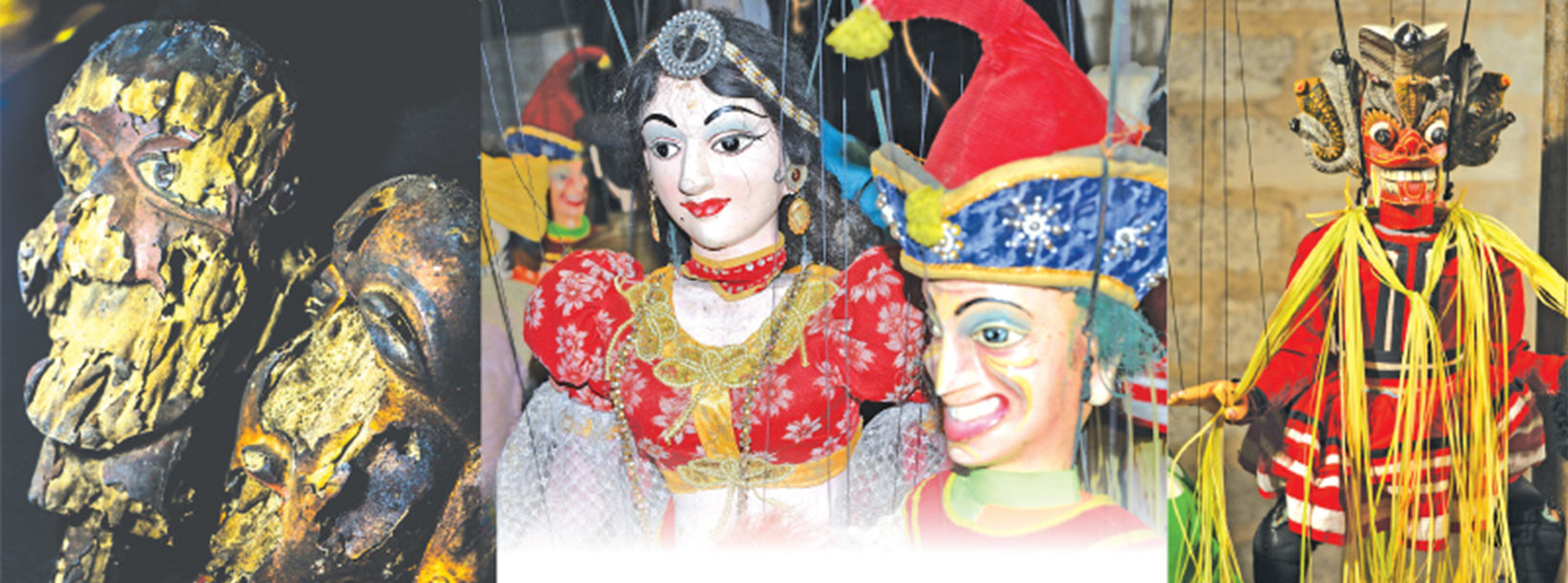
The museum section holds a collection of around 120 masks in total, though not all can be shown simultaneously due to space constraints. On permanent display are two complete sets: one representing the full cast of the Sanni Yakuma ritual, the other covering the characters of the Kolam dance tradition.

The Sanni masks are among the most immediately striking — 18 distinct demon figures, each corresponding to a specific illness or affliction that the ceremony was intended to cure. Their exaggerated features and vivid colours were designed to be read from a distance in firelight, and they retain a raw visual power even in a display case. The Kolam collection, by contrast, includes human and royal characters alongside mythological figures, reflecting the satirical and theatrical nature of that tradition.

Alongside the masks, the museum displays primitive carving tools and contextual material that explains the ceremonial settings for which the masks were originally made.

What is in the mask library?

The library at Ariyapala & Sons is understood to be the only specialist collection of its kind in Sri Lanka. It holds anthropological records, historical accounts, and documentation of the performance traditions associated with Sri Lankan masks. For researchers, cultural historians, or simply curious travellers who want to go deeper than the standard museum visit, it offers a level of detail that is genuinely difficult to find elsewhere. Access is typically available as part of a visit to the broader centre.

How does Ambalangoda fit into a broader South Coast itinerary?

Ambalangoda sits on the coastal highway between Colombo and Galle, making it a natural stop on any South Coast drive. A visit to the mask factory and museum typically takes between one and two hours. The town itself has a working, unhurried character distinct from the more heavily touristed beaches further south.

If you are travelling the coast, the nearby Madu River Safari on the Madu Ganga lagoon is a natural complement — a mangrove boat journey that adds a very different kind of local experience to the same day. The Galle City Tour is a logical next stop heading south, adding a UNESCO-listed Dutch fort to the itinerary.

When is the best time to visit Ambalangoda?

The South Western coast of Sri Lanka is driest and most settled between December and April, when the northeast monsoon brings clear skies to this side of the island. The Ariyapala & Sons workshop and museum can be visited year-round, but travelling between May and September means navigating the southwest monsoon, which brings heavy rain and occasionally rough seas. If combining the visit with beach time or a boat excursion on the lagoon, the dry-season window is preferable.

How do I get to Ambalangoda from Colombo?

Ambalangoda is approximately 90 kilometres south of Colombo, typically around two hours by road depending on traffic. The Southern Expressway (E01) cuts travel time significantly compared to the old coastal road. Trains on the Coastal Line stop at Ambalangoda station, and the journey from Colombo Fort takes roughly two to two-and-a-half hours by rail. A private transfer from Colombo Airport directly to Ambalangoda is the most convenient option for travellers arriving with luggage or on a tight schedule.

What should I know before visiting?

  • The workshop functions as a genuine production facility, not a re-enactment — artisans are working to commercial deadlines, so some stages of the process may not be visible on every visit.
  • Masks are available for purchase on site, ranging from small decorative pieces to full ceremonial masks. Quality varies, and the pieces produced at Ariyapala & Sons are generally considered among the more authentic available to tourists.
  • Photography is typically permitted in the museum and workshop areas, but it is courteous to confirm with staff on arrival.
  • The library is a working archive; visitors with a specific research interest may want to contact the centre in advance.

Book this experience with Lakpura

Curated by our local team. Direct booking, instant confirmation.

Ask Lakpura® Agent