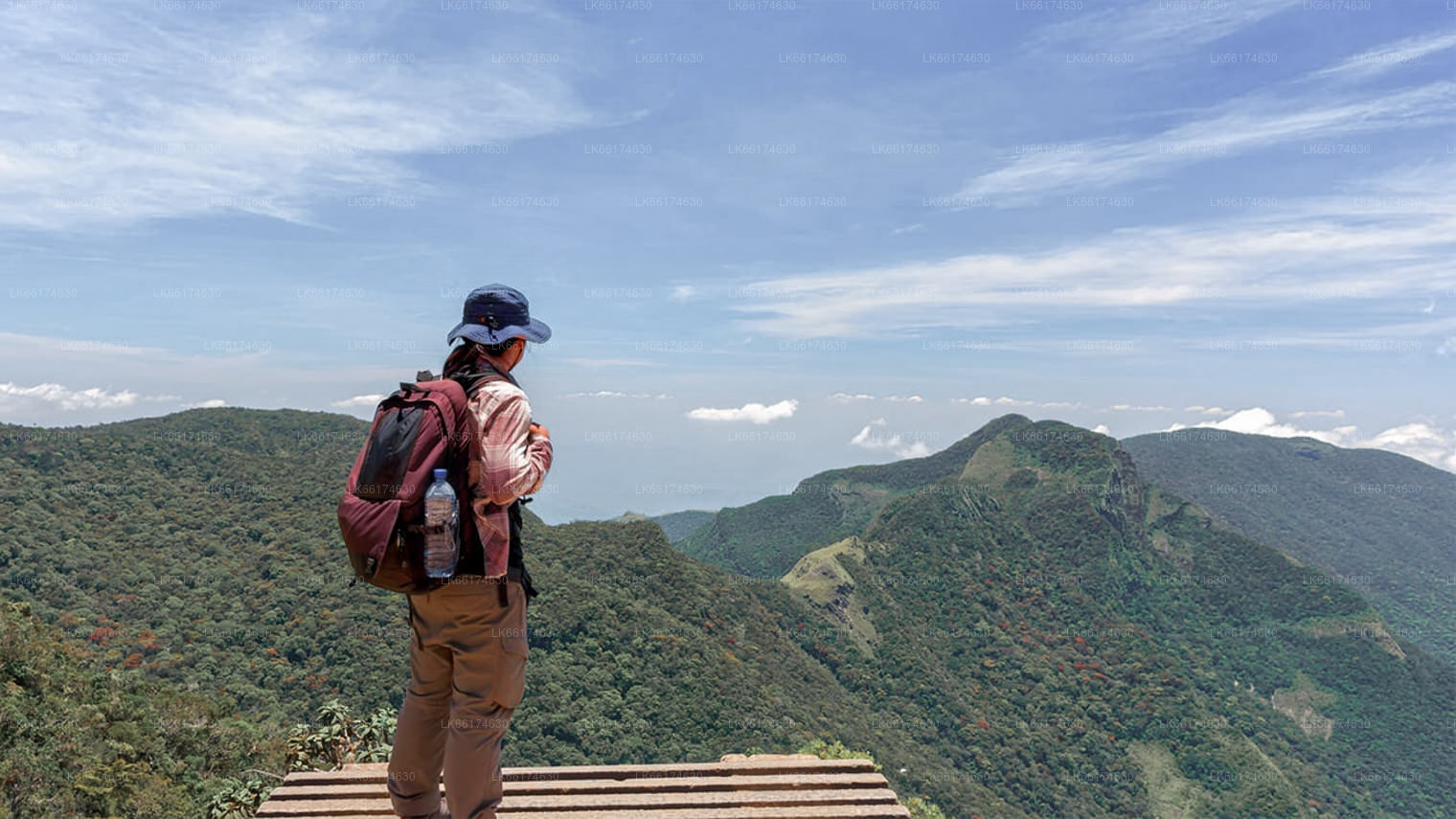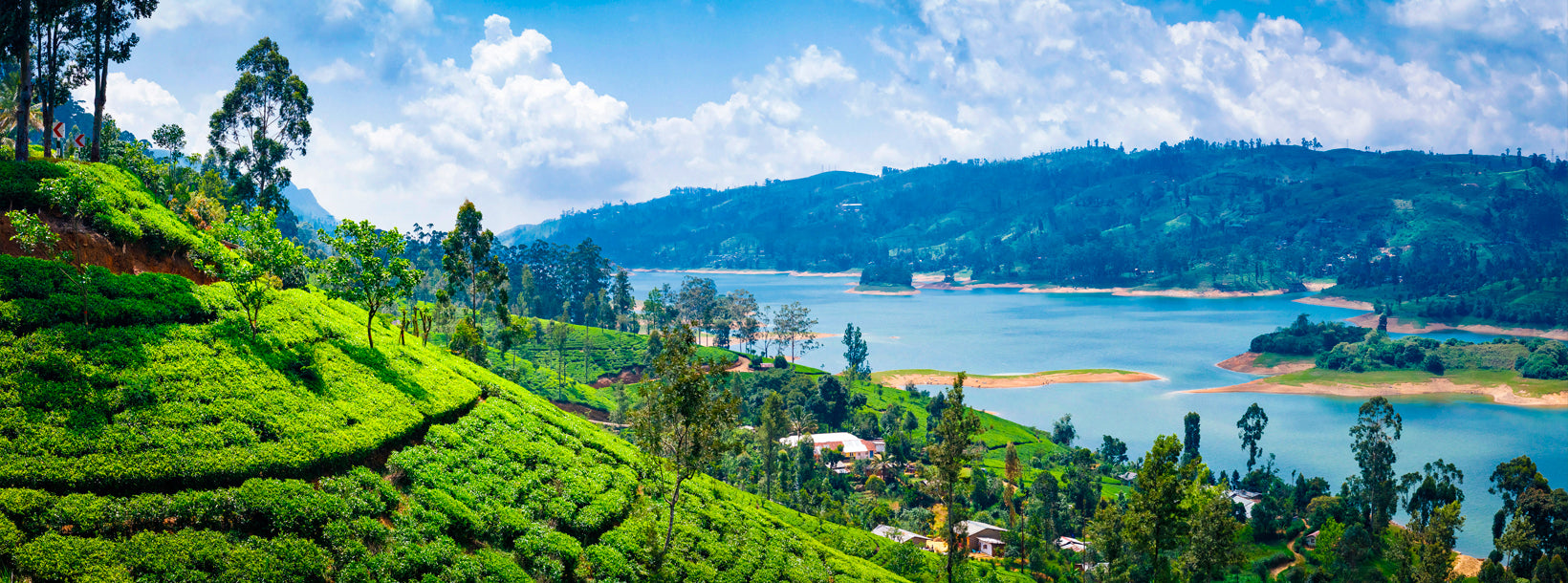
At the southern edge of Horton Plains National Park, the plateau simply stops. The grasslands and cloud-forest that stretch across the central highlands give way to a sheer escarpment dropping around 880 metres into the lowland valleys below. This is World's End — one of the most remarkable viewpoints in Sri Lanka and, on a clear morning, one of the most memorable in South Asia.
What exactly is World's End?
World's End is a sheer cliff at the southern rim of the Horton Plains plateau, with a vertical drop of roughly 1,200 metres (around 4,000 feet) to the plains far below. The escarpment marks a dramatic geological boundary: in a matter of steps the cool, montane grassland of the highlands gives way to nothing but air. On exceptionally clear days, the Indian Ocean — about 80 km to the south — is visible on the horizon. Tea-estate villages clinging to the valley slopes appear almost miniature from the viewpoint.
About one kilometre before the main cliff, the trail passes Mini World's End, a smaller subsidiary escarpment with a drop of around 300 metres (1,000 feet). It offers a worthwhile preview of the terrain and, because fewer visitors stop here, it is often quieter.
When is the best time to visit World's End?
Timing is everything at World's End. The escarpment faces south into the moisture-laden winds that roll in from the Indian Ocean, and cloud builds quickly once the sun warms the valley air. By around 9 am most mornings — and sometimes earlier during the rainy months — a wall of white mist obscures the view entirely.
Aim to arrive at the park entrance by 6 am and reach the viewpoint no later than 8:30 am. Those early hours reward visitors with clear sightlines across the valley and, on the best days, all the way to the coast. The light at this time of morning is also considerably more pleasant for photography.
The inter-monsoon and post-monsoon period from roughly October to March offers the highest frequency of clear mornings. Between April and September, cloud and mist are prevalent and the view is frequently obscured — though the landscape has its own moody appeal in these conditions.
Avoid visiting on Sundays and public holidays if you can. The trail attracts large crowds on these days, and the atmosphere at the viewpoint becomes noticeably less peaceful.
How do I get to World's End from Colombo or Nuwara Eliya?
The park entrance at Pattipola or the main gate at Ohiya serves as the starting point for all visitors. Ohiya, the closest railway station, sits on the scenic Colombo–Badulla line and is a popular option for those travelling independently. From Ohiya to the park gate is a short drive or a longer walk.
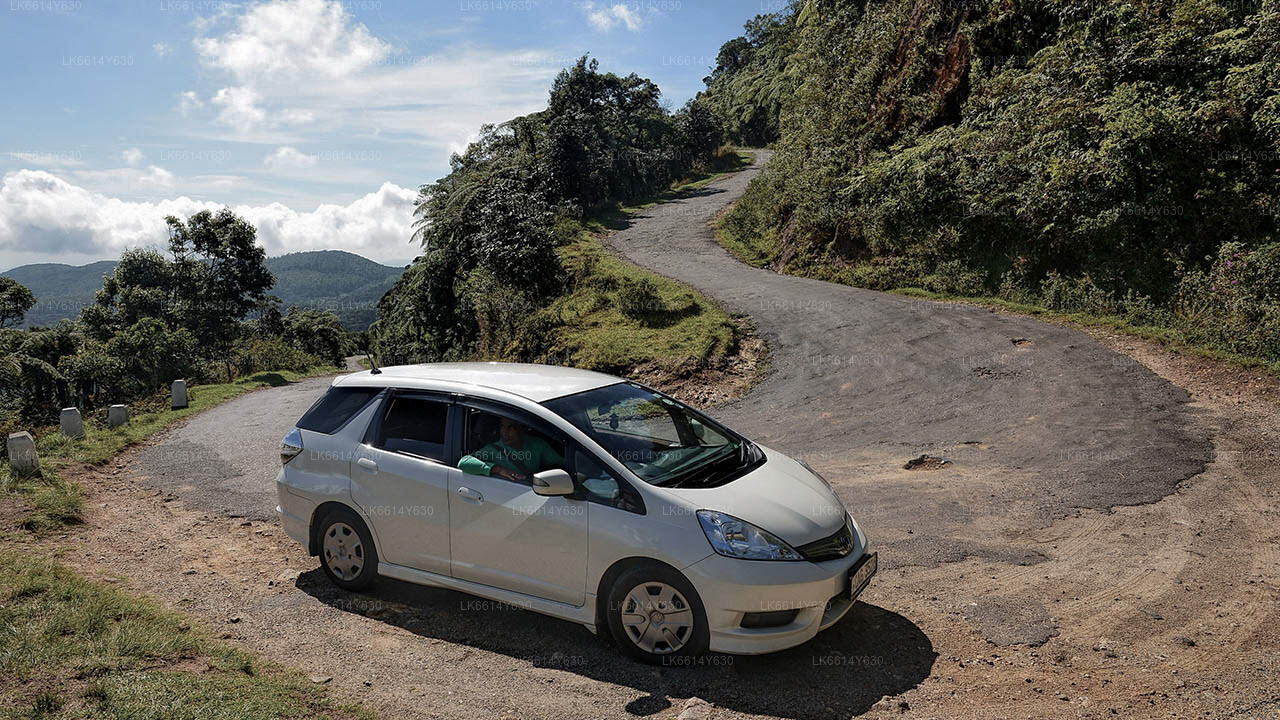
Most visitors approach from Nuwara Eliya, which lies around 32 km to the north-west, or from Ella, roughly 20 km to the east. Private transfers are the most practical option for early-morning departures, since organised transport is limited at the hours needed to reach the viewpoint before cloud arrives.
What is the trail like?
The circular trail from the main park entrance to World's End and back is approximately 9.5 km and takes between two and a half and three hours at a comfortable walking pace. The path is well marked and generally well maintained, though some sections can be slippery after rain or heavy dew.
| Trail Segment | Distance |
|---|---|
| Entrance to World's End | ~4 km |
| World's End to Baker's Falls | ~2 km |
| Baker's Falls back to entrance | ~3.5 km |
| Total loop | ~9.5 km |
Baker's Falls, reached roughly halfway through the return leg, is a worthwhile stop. The cascade drops about 20 metres through a narrow forest gorge and provides a cool, shaded resting point before the final stretch back to the entrance.
What wildlife might I see in Horton Plains?
The plateau supports an ecosystem found nowhere else in Sri Lanka. The patchy cloud forest along the trail is home to endemic species including the Sri Lanka leopard, sambar deer and purple-faced langur monkey, though the leopard is rarely seen by day. Birders will find the walk especially rewarding: the yellow-eared bulbul, Sri Lanka whistling thrush and Dull-blue flycatcher are regularly recorded along the forest edges.
The open grasslands harbour endemic plants adapted to the cold nights and intense UV radiation at altitude. Leaving the marked paths damages this fragile ecology, and park regulations strictly prohibit it.
What should I bring on the walk?
- Footwear: sturdy, closed-toe walking shoes with grip. The path is uneven and can be wet.
- Clothing: dress in layers. At 6 am the temperature near the escarpment can be close to 5–8 °C, but it warms quickly once the sun rises. A windproof outer layer is useful.
- Sun protection: at over 2,100 metres above sea level, UV intensity is high even when the air feels cool. Bring sunscreen, sunglasses and a hat.
- Water and food: there are no refreshment facilities on the trail itself. Carry enough water for the full loop and pack a snack or light meal — many visitors arrange a breakfast pack and eat at the viewpoint.
- Camera: a clear morning at World's End is a photography opportunity that is hard to replicate elsewhere in Sri Lanka.
Are there safety concerns at the viewpoint?
There are no safety barriers at the cliff edge. The terrain near the escarpment is uneven and, in places, close to a sheer drop. Visitors should stay well back from the edge and follow park ranger guidance. Children must be kept under close supervision at all times near the cliff. The park authority has marked the safe viewing areas; these should be respected.
It is also forbidden to leave marked trails anywhere within Horton Plains, both for visitor safety and to protect the endemic grassland and forest.
Practical information at a glance
| Detail | Information |
|---|---|
| Park opening hours | Typically 6 am – 6 pm daily |
| Best arrival time | By 6 am at the gate |
| Best months for clear views | October to March |
| Trail length (full loop) | ~9.5 km |
| Approximate walking time | 2.5 – 3 hours |
| Altitude at viewpoint | ~2,100 m above sea level |
| Nearest town | Nuwara Eliya (~32 km) |
Entry fees are set by the Sri Lanka Department of Wildlife Conservation and are subject to periodic revision; confirm the current rate when booking your visit or arranging your transfer.