Honingrivier

Madu River Madu River Madu River

De Madu-rivier is een schilderachtige waterweg in de zuidwestelijke regio van Sri Lanka, nabij Balapitiya. Bekend om zijn rustige wateren en rijke biodiversiteit, maakt de rivier deel uit van een complex wetlandecosysteem dat bestaat uit mangroven, kleine eilanden en onderling verbonden waterwegen.

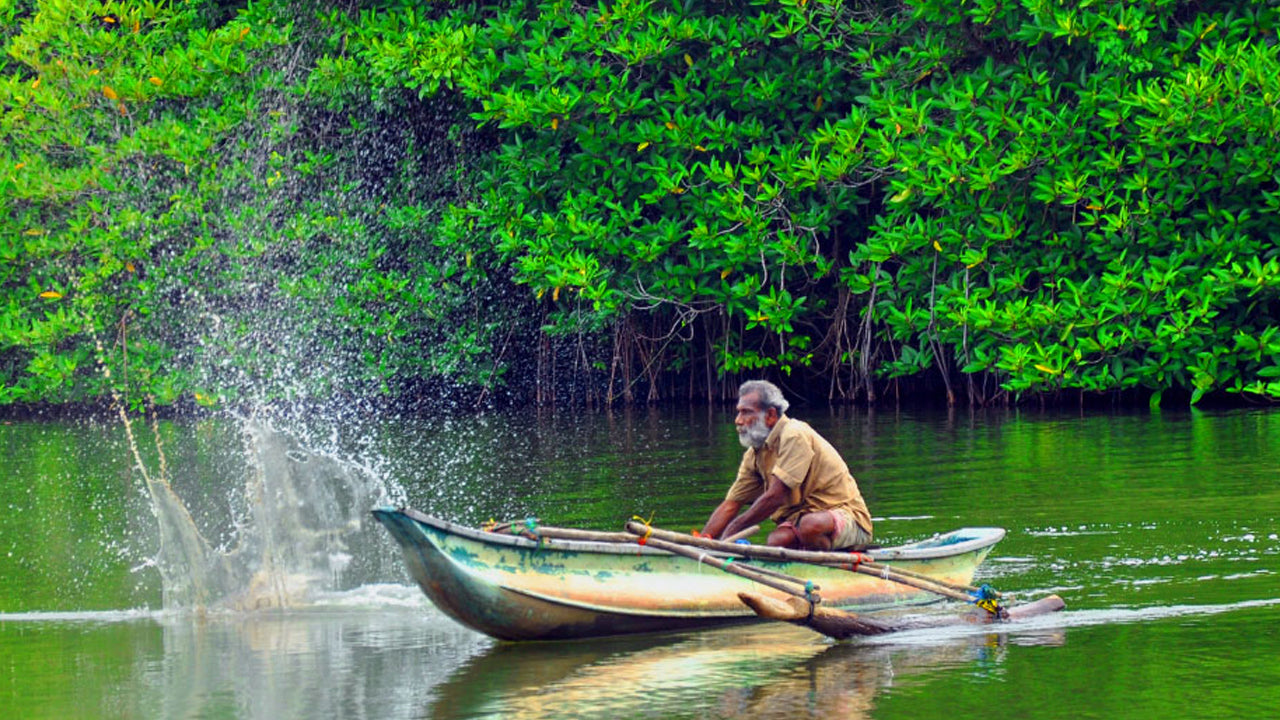
De rivier en de omliggende wetlands ondersteunen een grote verscheidenheid aan wilde dieren, waaronder vissen, reptielen, vogels en waterplanten. Mangrovebossen spelen een belangrijke rol bij het beschermen van de kustomgeving en bieden tegelijkertijd onderdak aan vele soorten die in dit kwetsbare ecosysteem gedijen.

Bezoekers van de Madu-rivier kunnen het gebied verkennen via ontspannende bootsafari's die door mangrovetunnels en langs kleine eilanden varen. Deze tours bieden de mogelijkheid om lokaal wildleven te observeren, traditionele kaneel-verwerkingsgebieden te bezoeken en de rustige natuurlijke schoonheid van het wetlandmilieu te ervaren.

De beste tijd om de Madu-rivier te bezoeken is tijdens de droge maanden van december tot april, wanneer de weersomstandigheden ideaal zijn voor boottochten en buitenverkenning. De rivier is gemakkelijk bereikbaar vanuit kustplaatsen zoals Balapitiya en Bentota en biedt een rustige natuurervaring langs de Sri Lanka zuidkust.

Madu River Madu River Madu River

About Galle District

Galle is a city situated on the southwestern tip of Sri Lanka, 119 km from Colombo. Galle is the best example of a fortified city built by Europeans in south and Southeast Asia, showing the interaction between European architectural styles and south Asian traditions. The Galle fort is a world heritage site and the largest remaining fortress in Asia built by European occupiers.

Galle is the best example of a fortified city built by Europeans in south and Southeast Asia, showing the interaction between European architectural styles and south Asian traditions. The Galle fort is a world heritage site and the largest remaining fortress in Asia built by European occupiers.

Galle is a sizeable town, by Sri Lankan standards, and has a population of 91,000, the majority of whom are of Sinhalese ethnicity. There is also a large Sri Lankan Moor minority, particularly in the fort area, which descend from Arab merchants that settled in the ancient port of Galle.

About Southern Province

The Southern Province of Sri Lanka is a small geographic area consisting of the districts of Galle, Matara and Hambantota. Subsistence farming and fishing is the main source of income for the vast majority of the people of this region.

Important landmarks of the Southern Province include the wildlife sanctuaries of the Yala and Udawalawe National Parks, the holy city of Kataragama, and the ancient cities of Tissamaharama, Kirinda and Galle. (Although Galle is an ancient city, almost nothing survives from before the Portuguese invasion.) During the Portuguese period there were two famous Sinhalese poets called Andare who was from Dickwella and Gajaman Nona who was from Denipitiya in Matara District, composing poems on common man.