Lakpura
Lakpura®

Wildlife

Sri Lanka packs an astonishing range of wildlife into an island roughly the size of Ireland. Sixteen national parks, several forest reserves, coastal wetlands, and open ocean corridors make this one of Asia's most rewarding destinations for naturalists and casual wildlife watchers alike. Whether you are tracking leopards at dusk, watching blue whales breach offshore, or spotting rare endemic birds in a highland forest, the encounters here tend to feel genuine — unhurried, and rarely crowded by the standards of Africa or India.

What large mammals can I see in Sri Lanka?

The Sri Lankan elephant (Elephas maximus maximus) is the largest of the Asian elephant subspecies, and the island holds one of the highest wild elephant densities in Asia. Udawalawe National Park is the most reliable park for close, open-grassland sightings — herds of fifty or more are not unusual in the dry season. Minneriya and Kaudulla host the famous "The Gathering", an annual congregation of several hundred elephants around shrinking reservoirs between July and October.

For a more intimate look at orphaned elephant calves, the Elephant Transit Home near Udawalawe operates a twice-daily feeding programme where young elephants receive milk bottles before being rehabilitated for release into the wild. Visiting responsibly — watching from a distance rather than riding — keeps the experience ethical for both animal and observer.

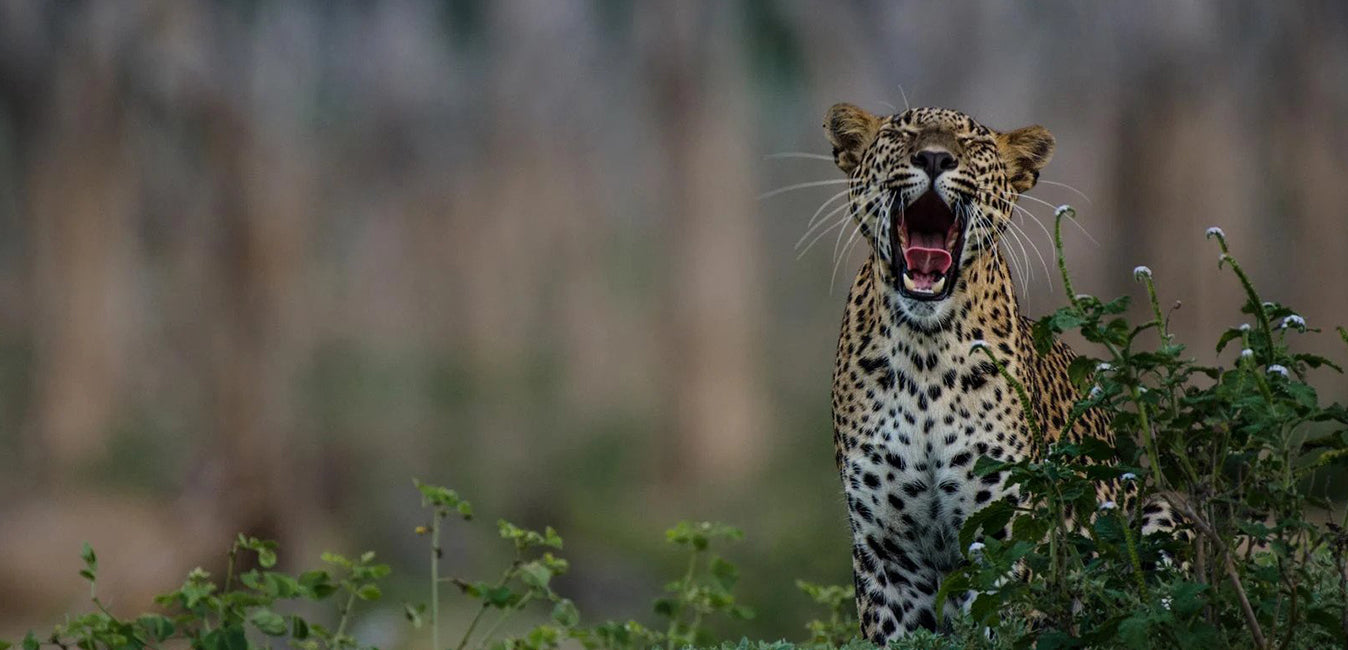
The Sri Lankan leopard (Panthera pardus kotiya) is classified as Endangered by the IUCN and is found nowhere else on earth. Yala National Park's Block I carries one of the highest leopard densities recorded anywhere in the world, making sightings more likely here than in most African reserves. Wilpattu National Park, with its signature natural lakes called villus, offers a quieter, less visited alternative where leopards are regularly seen lounging in open scrub.

Other notable mammals include the Sri Lankan sloth bear, the elusive fishing cat, the endemic purple-faced langur, and three species of deer — spotted, sambar, and barking.

Where is the best place to see leopards in Sri Lanka?

Yala National Park's Block I is consistently the most productive location, particularly in the dry months from May through September when low water forces animals into the open. Early morning and late afternoon game drives yield the highest probability of sightings. Wilpattu is a strong alternative for travellers who prefer a less congested park experience; sightings require more patience but the landscape rewards it.

What whale and dolphin watching is available?

Sri Lanka sits within the Indian Ocean's International Whaling Commission protected zone, and its deep offshore waters are among the best in the world for blue whale encounters. The channel off Mirissa, on the southern coast, is the principal departure point from November through April. Spinner dolphins are almost guaranteed on most departures, often appearing in pods of several hundred animals.

The northwest coast around Kalpitiya offers a different experience: bottlenose and spinner dolphins gather in large numbers in the Palk Bay between November and April, and sperm whales are occasionally sighted further offshore. Whale watching is weather-dependent; the northeast monsoon makes southern departures preferable from December to March, while the southwest monsoon shifts viable watching windows to the north.

Which birds can I see, and where?

Sri Lanka has recorded over 430 bird species, of which around 33 are endemic — a remarkably high proportion for an island its size. The Sinharaja Forest Reserve, a UNESCO World Heritage Site in the wet zone lowlands, is the single best location for endemic forest birds and is famous for its mixed feeding flocks. A morning walk along the main trail can produce Sri Lanka blue magpie, red-faced malkoha, green-billed coucal, and the Sri Lanka spurfowl in a single session.

Horton Plains National Park hosts highland endemics including the dull-blue flycatcher and Sri Lanka whistling thrush. Wetland sites such as Bundala National Park and the Kumana (Yala East) mangroves attract large winter populations of migratory waders and shorebirds from October through March. Birdwatchers should also explore the Madu Ganga wetland system, where kingfishers, herons, and purple herons are easily observed from a boat.

The best months for birdwatching are November through April, when resident species are joined by migrants from Central Asia, Siberia, and the Indian subcontinent.

What marine turtles nest on Sri Lankan beaches?

Five of the world's seven sea turtle species visit Sri Lankan waters, with the green turtle and the olive ridley being the most commonly encountered. Loggerhead, hawksbill, and leatherback turtles are also recorded. Nesting activity peaks along the southwest coast, particularly on beaches between Rekawa and Kosgoda, between November and April.

The Kosgoda Sea Turtle Conservation Project and the Hikkaduwa Turtle Hatchery operate responsible nest-protection programmes. Visiting these projects after dark to witness nesting or hatchling release is one of Sri Lanka's more memorable wildlife experiences, and the entry fees directly support conservation.

Are primates easy to spot in Sri Lanka?

Sri Lanka has three species of non-human primate. The toque macaque — an endemic species studied continuously since the 1960s at Polonnaruwa — is the most commonly observed and lives in large social troops around ruins, forest edges, and villages. The grey langur is widespread in drier zones and frequently seen at the same national parks as elephants and leopards. The purple-faced langur, classified as Endangered, is endemic to Sri Lanka and best seen in the wet zone forests of the southwest and in certain suburban gardens around Colombo and Kandy.

What reptiles and amphibians are notable?

Sri Lanka's reptile and amphibian fauna is extraordinary relative to its size. The island has well over 100 endemic amphibian species, many discovered in the last two decades, primarily in the rainforests of the wet zone. The mugger crocodile is common in rivers and tanks throughout the dry zone; crocodile watching tours operate on several waterways. The water monitor — one of Asia's largest lizards — is abundant and visible in virtually every national park.

Among the snakes, the endemic Sri Lankan python and four dangerously venomous species (cobra, Russell's viper, saw-scaled viper, and common krait) are present, though encounters during guided safaris are uncommon.

What butterflies and insects can I find?

Sri Lanka records around 245 butterfly species, of which roughly 26 are endemic. The wet zone forests of Sinharaja and Makandawa Rainforest are particularly rich. The Sri Lanka birdwing, the largest endemic butterfly, is a target species for lepidopterists. Butterfly activity peaks in the inter-monsoon periods — around March to April and again in October to November — when flowering plants attract the widest variety of species.

How should I plan a wildlife itinerary in Sri Lanka?

A well-planned itinerary can combine several ecosystems without excessive driving. A common circuit pairs the Cultural Triangle in the north-central zone (good for elephants, leopards at Wilpattu, and birds) with the southern parks (Yala, Udawalawe) and the southwestern wet-zone forests (Sinharaja). Adding a two-night stay on the southern coast extends the trip to include whale watching and turtle nesting, depending on the season.

Ten to fourteen days is a comfortable minimum for covering this range. Longer itineraries allow more time at individual sites — patience is often the difference between a good sighting and an exceptional one. All national park game drives require a licensed naturalist guide; Lakpura's wildlife specialists can advise on seasonal conditions and the most productive entry zones for each park.

Book this experience with Lakpura

Curated by our local team. Direct booking, instant confirmation.

Ask Lakpura® Agent