Lakpura
Lakpura®

Nalanda Gedige

Nalanda Gedige is a small stone shrine standing on open ground beside the Bowatenna reservoir, roughly midway between Matale and Dambulla. It is one of the most architecturally puzzling monuments in the country: a building assembled in the manner of a South Indian Hindu temple, apparently used by Buddhists, containing no surviving image of the Buddha, and facing north rather than the customary east. Most travellers pass it in twenty minutes on the drive north, yet few sites in the island raise as many unanswered questions.

What exactly is Nalanda Gedige?

The word gedige refers to a class of Sri Lankan shrine built entirely of stone or brick with a corbelled roof, rather than the timber-and-tile construction used in most temples. Nalanda Gedige is a compact example: a square inner sanctum (garbhagriha), a vestibule, and a pillared hall or mandapa in front, raised on a moulded plinth.

The stonework is dry-jointed. Cut granite slabs and blocks were fitted together without mortar, which is one reason the building survived centuries of neglect and later allowed archaeologists to take it apart and reassemble it. The scale is modest — this is not a monument on the order of the great Anuradhapura stupas — but the detailing rewards a slow walk around the exterior.

Dating is imprecise. The consensus places construction somewhere between the 8th and 10th centuries CE, a period when South Indian political and artistic influence in the island was strong and the Anuradhapura kingdom was in decline.

Why does a Buddhist shrine look like a Hindu temple?

The architectural vocabulary at Nalanda is unmistakably Dravidian, closely related to the Pallava style of Tamil Nadu — the pilasters, the mouldings, the treatment of the roof tiers and the layout of hall-plus-sanctum all belong to that tradition. Yet the site sits in the Sinhalese heartland and has long been associated with Buddhist worship.

Scholars have offered several explanations, none of them settled:

  • That it began as a Hindu temple built by or for South Indian residents, and was later adapted for Buddhist use.
  • That it was always a Buddhist shrine, deliberately built in the fashionable South Indian idiom of the day by craftsmen trained in that tradition.
  • That it reflects Mahayana or Tantric practice, which in this period moved fluidly between Hindu and Buddhist iconography and had a documented presence in Sri Lanka.

The Tantric reading is supported by fragments of carving on the exterior stonework — including a small panel of amorous figures, unusual in Sri Lankan religious sculpture and often cited as the only such carving on the island. Much of the sculpture is heavily eroded, so interpretations remain cautious. Whatever the truth, the building is a useful corrective to the idea that Sinhalese Buddhist and Tamil Hindu heritage developed in isolation from one another.

The orientation adds another layer. The shrine faces north, a direction associated in some traditions with Kubera, the god of wealth, whose figure is thought to appear among the carvings. Northward-facing sanctums are rare enough in the island to be worth noting.

Who rediscovered the site, and what did he find?

The building had been abandoned at some unrecorded point and swallowed by forest. It came to official attention in 1893 through H. C. P. Bell, then Archaeological Commissioner of Ceylon, whose surveys did more than any other single effort to map the island's ruined monuments. Bell acquired the land around the shrine specifically to protect and study it.

His own report describes the setting plainly: land "acquired round this little-known and solitary shrine of granite construction, popularly styled gedige", standing "on raised ground in paddy fields, picturesquely surrounded by low hills and wooded hamlets". In 1911 a small work gang was detached from the excavations at Sigiriya Rock Fortress to clear the jungle growth off the ruin and cut back the silt hiding its plinth.

Bell rated the find highly, calling it the sole example then known in Ceylon of composite architectural styles blended into a single coherent building. He also judged the location precarious and floated the idea of dismantling the shrine and re-erecting it somewhere safer — a proposal that went nowhere in his lifetime.

Why was the shrine moved?

Bell's suggestion was eventually acted on, for reasons he could not have anticipated. In the 1970s and 1980s the Bowatenna reservoir was created as part of the Mahaweli development scheme, and rising water threatened to submerge the shrine's original position in the paddy land below.

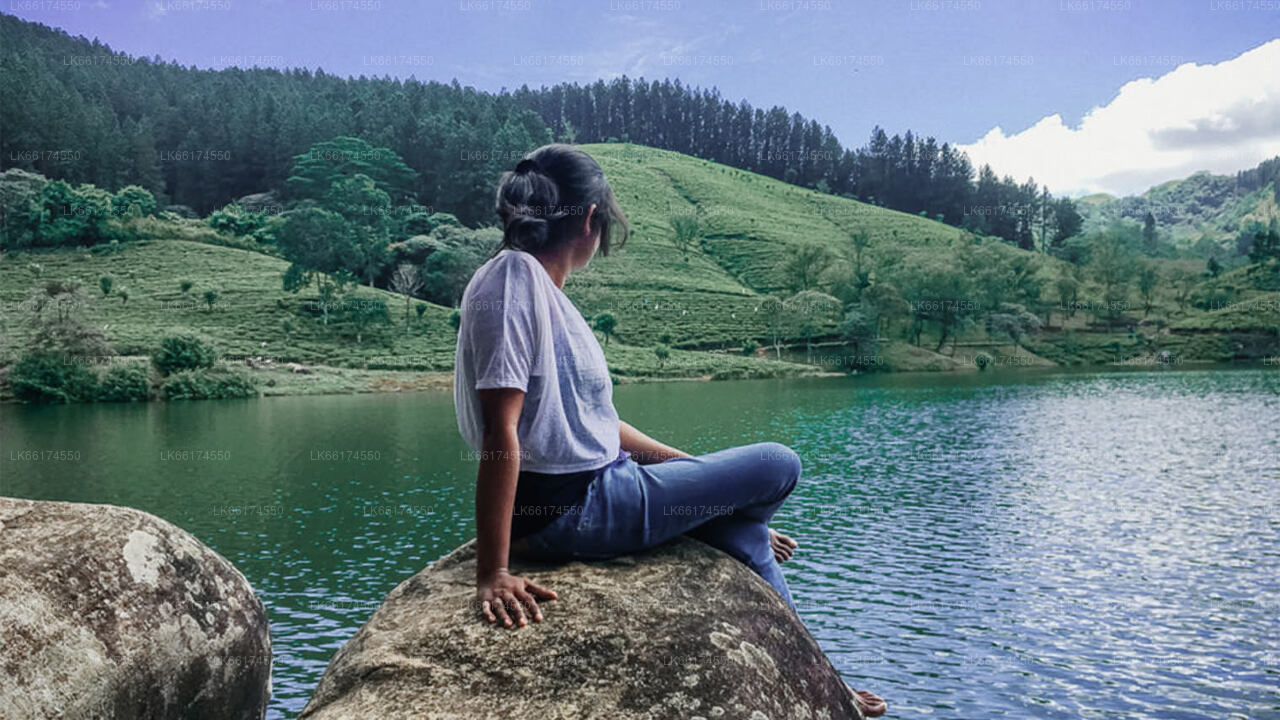
Archaeologists took the opportunity that the dry-jointed masonry offered. The building was numbered stone by stone, dismantled, and rebuilt on higher ground beside the reservoir's retaining embankment. Today it is reached along a short causeway, with wooded hills rising behind the water.

Purists note that a relocated monument loses part of its meaning — the relationship to the paddy fields and the village that Bell described is gone. The trade-off was survival, and the reconstruction is generally regarded as carefully done.

What is there to see at Nalanda Gedige today?

The site is compact and can be walked in half an hour, but there is more detail than a quick glance suggests. Look for:

  • The plinth mouldings and pilasters — the clearest evidence of Pallava-derived design.
  • The corbelled stone roof — a construction method that predates the arch in the island and defines the gedige type.
  • The eroded exterior carvings, including the much-discussed erotic panel and figures interpreted as Kubera.
  • The empty sanctum — no original cult image survives, which is central to the debate over the building's function.
  • Loose architectural fragments laid out around the platform during reconstruction.
  • The reservoir setting, which is a photogenic stop in its own right in the early morning.

There is no museum on site and interpretation panels are limited, so a knowledgeable tour guide makes a substantial difference here. The interest of Nalanda is almost entirely in what the stonework implies, and that is hard to read unaided.

The site is also frequently described as lying close to the geographical centre of the island — a claim repeated on local signage and worth taking as folklore-flavoured geography rather than surveyed fact.

How do you get to Nalanda Gedige?

The turn-off is signposted from the A9, the main Matale–Dambulla road, with a short access lane leading to the reservoir bund. Almost everyone arrives by road as part of a longer journey north into the Cultural Triangle.

FromApproximate distanceTypical drive time
MataleAround 25 km40 minutes
DambullaAround 20 km30 minutes
KandyAround 50 km1.5 hours
SigiriyaAround 40 km1 hour
ColomboAround 150 km4 hours

Buses running between Kandy, Matale and Dambulla pass the junction and will drop you on the main road, leaving a walk of roughly a kilometre to the site. Because Nalanda works best as a 30-minute stop rather than a destination, most visitors fold it into a private transfer. Lakpura arranges the leg with chauffeur guides who can explain the architecture rather than simply wait in the car park, and can combine it with other stops on the same transport route.

When is the best time to visit?

The site is open air with almost no shade, so time of day matters more than season. Early morning and late afternoon are far more comfortable and give better light on the carvings, which are shallow and wash out under midday sun.

The dry months from roughly December to April suit the Matale–Dambulla corridor best. During the inter-monsoon rains the reservoir is fuller and the surrounding hills greener, which is attractive, but afternoon downpours are common. The site is generally open during daylight hours and a modest ticket fee is collected at the entrance for foreign visitors.

Modest dress is appropriate, as at any religious monument in Sri Lanka, and shoes are removed before stepping onto the shrine platform.

What can you combine with a visit?

Nalanda sits on one of the busiest cultural routes in the country, which is precisely why it deserves a stop rather than a drive-past. Sensible pairings include:

  • The Dambulla cave temples, roughly half an hour north — a UNESCO-listed complex and one of the island's key World Heritage Sites.
  • Aluvihare Rock Temple near Matale, where the Pali Canon was first committed to writing.
  • Matale's spice gardens and the Sri Muthumariamman Thevasthanam Hindu temple.
  • Polonnaruwa, where later gedige-type buildings such as the Thuparama show how the form developed.
  • The Temple of the Sacred Tooth Relic in Kandy, for context on how Sri Lankan Buddhism absorbed and reshaped outside influences.

Seen alongside those monuments, Nalanda Gedige stops being a curiosity and becomes a piece of evidence — a small, stubborn building that records a moment when the island's culture was being rewritten by contact with South India, and nobody thought to leave an explanation.

Ask Lakpura® Agent