Sri Lankan cuisine is built on layers — roasted spices, fresh coconut milk, hand-pounded pastes, and slow-cooked curries that carry centuries of trade and tradition. A cooking demonstration lets you observe that process up close, guided by an experienced home cook or professional chef who can explain not just the technique, but the story behind each dish.
What happens during a Sri Lankan cooking demonstration?
A typical session begins with an introduction to the core pantry of Sri Lankan cooking: raw spices such as Ceylon black pepper, cinnamon, cardamom, and cloves, alongside fresh aromatics like pandan leaves, lemongrass, and curry leaves. The chef then walks through the preparation of two to four dishes, usually a rice-and-curry spread that might include a meat or fish curry, a vegetable dish such as jackfruit or green bean, a coconut sambol, and a simple dessert.
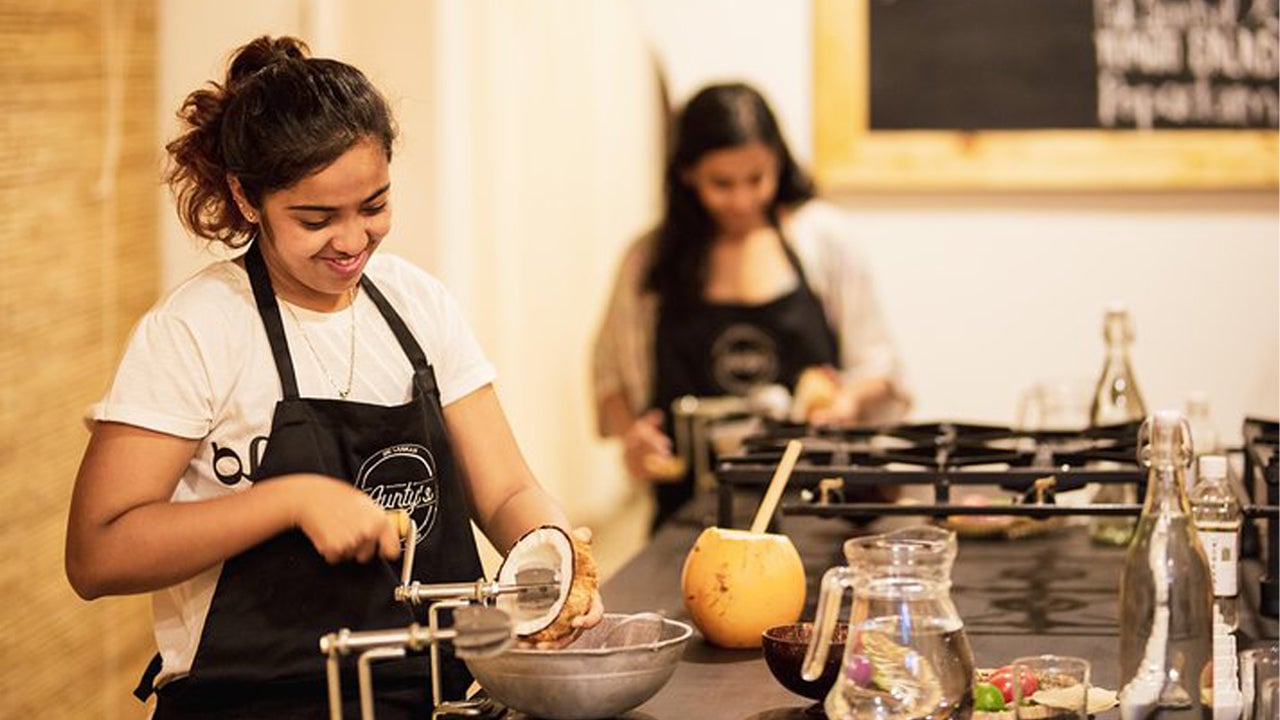
Along the way, you can watch techniques that rarely survive the journey to restaurant menus: grinding dried spices on a flat stone mortar, squeezing fresh milk from grated coconut, and tempering whole spices in hot oil until they release their aroma. The difference in flavour between freshly ground spice and a jar of powder becomes immediately obvious.
At the end of the demonstration, guests sit down to eat what has been prepared. This tasting component is what separates a good demonstration from a purely academic exercise — you leave with a sensory memory of the cuisine, not just notes.
Where are cooking demonstrations held in Sri Lanka?
Settings vary considerably, and the location shapes the experience as much as the food itself.
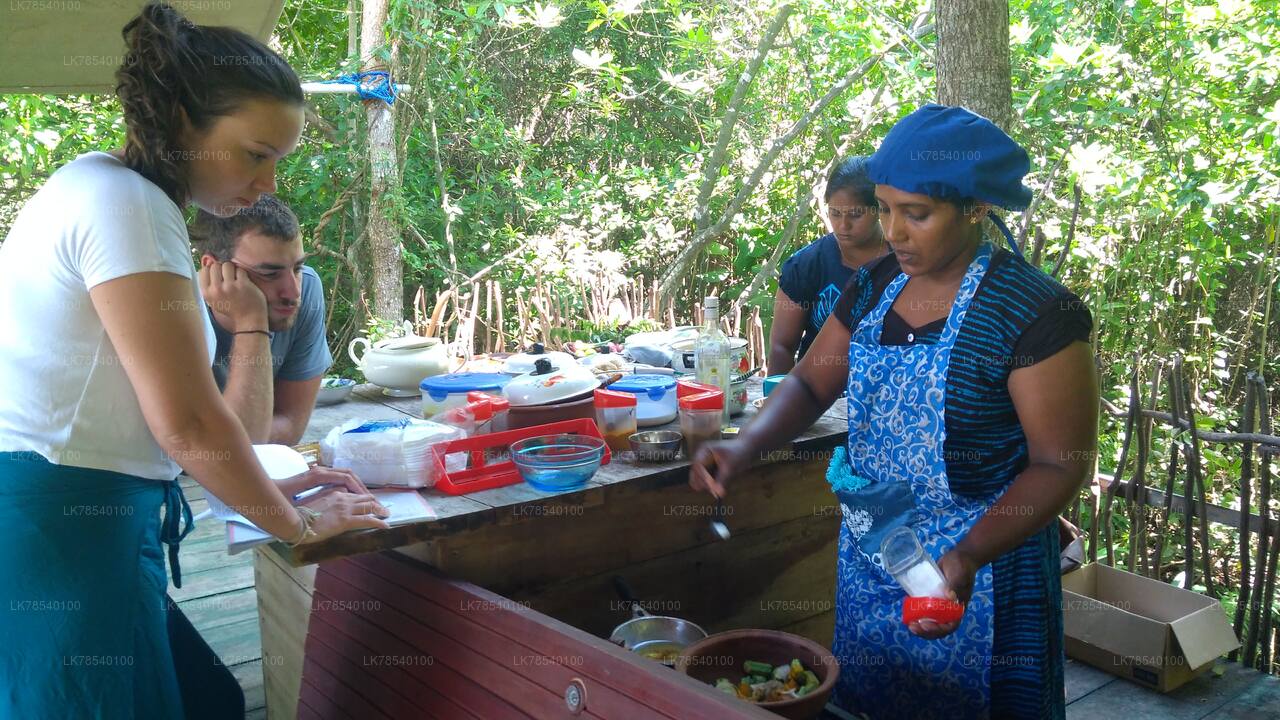
- Home kitchens and village settings: The most intimate option. A family hosts you in their home, cooking on a wood-fired hearth using produce from their garden. The Sigiriya and Habarana areas — close to working farms and spice gardens — are particularly good for this format.
- Spice gardens, Matale: The hill country around Matale is one of the island's main spice-growing regions. Several gardens here combine a guided walk through cinnamon, clove, nutmeg, and pepper plants with a hands-on cooking session that uses what you have just seen growing.
- Boutique hotels and villa kitchens: Many smaller properties in Galle, Kandy, Unawatuna, and Bentota run demonstration sessions using their own chefs. The production values are higher and the setting more polished, though you trade some authenticity for comfort.
- Coastal fishing communities: In towns along the southern and western coasts, demonstrations sometimes focus on seafood — preparing freshly landed fish, crab, or prawn in the local style. A market tour beforehand, choosing ingredients directly from the catch, adds useful context.
- Jaffna: The cuisine of Sri Lanka's north is genuinely distinct from the southern tradition — drier, more heavily spiced, with a stronger Tamil influence. A kokis-and-curry session in Jaffna covers techniques and flavour profiles you simply will not encounter further south.
Which dishes are typically covered?
Most demonstrations are built around rice and curry, the everyday meal of the island. Beyond that, expect the content to reflect the region and the season.
- Hoppers (appa): Thin, bowl-shaped rice-flour pancakes fermented overnight with a little coconut milk and toddy. Watching a cook swirl the batter in a rounded iron pan is one of the more satisfying kitchen moments on any Sri Lankan trip.
- Coconut sambol (pol sambol): Freshly grated coconut pounded with red chilli, lime, and Maldive fish. Simple to describe, difficult to perfect — the ratio of ingredients changes family by family.
- Dhal curry: Red lentils cooked with turmeric, tempered with mustard seed, onion, and dried chilli. Found on almost every table in the country and a good starting point for understanding Sri Lankan spice logic.
- String hoppers (indi appa): Pressed rice noodles steamed on woven mats, traditionally eaten with coconut milk gravy for breakfast.
- Watalappan: A dense coconut-and-jaggery custard with Malay roots, flavoured with cardamom and often cashew. Common in Muslim communities along the west coast and in Kandy.
- Kiri bath: Milk rice cooked with thick coconut cream, served on ceremonial occasions but also straightforward enough to appear in many demonstrations.
How does Sri Lankan cooking differ from other South Asian cuisines?
The most distinctive characteristic is the use of roasted spices. Where Indian cooking frequently uses raw or lightly toasted masalas, Sri Lankan cooks often dry-roast coriander, cumin, fennel, and cinnamon to a darker degree before grinding, producing a deeper, earthier base. Coconut milk is used far more liberally than in most Indian regional cooking, and the heat tends to come from dried red chillies rather than fresh green ones in the finished dish. Ceylon tea, often served sweetened and with tinned milk, bookends almost every cooking session as the default hospitality drink.
The island's history as a trading hub is visible in the food. Portuguese, Dutch, and Malay communities each contributed techniques and ingredients — lamprais (rice baked in banana leaf), seeni sambol (caramelised onion relish with Malay roots), and the mustard-heavy pickles that carry a clear Dutch-Burgher influence.
What should you look for in a quality cooking demonstration?
The best sessions are small — six to ten guests at most — and led by someone who actually cooks that food daily, not a dedicated tourism performer. Ask whether the ingredients are sourced locally and whether the menu changes with the season. A demonstration that uses pre-measured spice packets and moves through a fixed script every day will teach you less than one where the cook explains why she is choosing ripe rather than green tomatoes today, or adjusts the chilli for the group.
A market visit beforehand is worth seeking out. Walking through a local market with someone who can identify dried Maldive fish, three varieties of dried chilli, and a dozen types of fresh leaf changes how you look at the cooking that follows.
How long do cooking demonstrations last?
Sessions typically run between two and four hours, including the tasting meal at the end. More elaborate programs that include a market tour or spice garden walk can extend to a full day. Half-day formats are most common and fit easily into a sightseeing itinerary without displacing other activities.
Is a cooking demonstration suitable for children?
Most demonstrations are family-friendly, and children generally engage well with the sensory aspects — smelling spices, watching the hopper batter swirl, and tasting unfamiliar flavours in a low-pressure setting. A few operators run sessions specifically designed for younger participants, adjusting the spice levels and keeping the practical activities age-appropriate.