Plantes médicinales ayurvédiques
La tradition ayurvédique du Sri Lanka se caractérise par une grande variété de plantes médicinales utilisées depuis des siècles. Le Sri Lanka possède une riche tradition de médecine ayurvédique, puisant dans son savoir ancestral et une grande diversité de plantes médicinales. Voici quelques plantes médicinales ayurvédiques notables que l'on trouve au Sri Lanka
Tamarindus indica (Siyambala)
Tamarind is a type of tropical fruit. It’s used in many dishes around the world, and may even have medicinal properties. This article tells you everything you need to know about tamarind, including what it is, how it benefits health and how to use it.Tamarind is a hardwood tree known scientifically as Tamarindus indica. It’s native to Africa but also grows in India, Pakistan and many other tropical regions. The tree produces bean-like pods filled with seeds surrounded by a fibrous pulp. The pulp of the young fruit is green and sour. As it ripens, the juicy pulp becomes paste-like and more sweet-sour. Interestingly, tamarind is sometimes referred to as the “date of India.”
This fruit has many uses. It’s used for cooking, health and household purposes.
Cooking Uses
Tamarind pulp is widely used for cooking in South and Southeast Asia, Mexico, the Middle East and the Caribbean. The seeds and leaves are also edible. It is used in sauces, marinades, chutneys, drinks and desserts. It’s also one of the ingredients of Worcestershire sauce.
Medicinal Uses
Tamarind has played an important role in traditional medicine. In beverage form, it was commonly used to treat diarrhea, constipation, fever and peptic ulcers. The bark and leaves were also used to promote wound healing. Modern researchers are now studying this plant for potential medicinal uses. The polyphenols in tamarind have antioxidant and anti-inflammatory properties. These can protect against diseases such as heart disease, cancer and diabetes.
The seed extract may also help lower blood sugar, while the pulp extract may help you lose body weight and reverse fatty liver disease.
Home Uses
Tamarind pulp can also be used as a metal polish. It contains tartaric acid, which helps remove tarnish from copper and bronze.
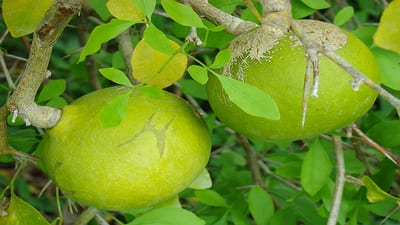
-
Laurier à fleurs en forme de griffe
Acronychia pedunculata -
Bael
Aegle marmelos -
Arbre de Leichhardt
Nauclea orientalis -
Faux Calumba
Coscinium fenestratum -
Gouffre de Malabar
Tinospora malabarica -
Titberry
Allophylus cobbe -
Arbre de fer
Memecylon capitellatum -
Feuille de velours
Cissampelos pareira -
Orange amère
Citrus aurantium -
Arbre de Reinwardt
Biophytun retour vers l'intérieur -
Thé du Fujian
Carmona microphylla -
tamarin de Malabar
Garcinia cambogia -
arbre à feuilles de curry
Murraya Koenigii -
Kappetiya
Croton laccifer -
lilas indien
Azadirachta indica -
Sida épineux
Sida alba -
grimpant orange
Toddlia asiatica -
Cannelle de Ceylan
Cinnamomum zeylanicum -
jacquier
Artocarpus heterophyllus -
Karonda
Carissa Carandas -
cerise espagnole
Mimusops elengi -
groseille indienne
Phyltanthus emblica -
palmier à bétel
Areca catechu -
géranium de la jungle
Ixora coccinea -
Alangium à feuilles de sauge
Alangium salviifolium -
Champak
Michelia champaca -
Tamarin
Tamarindus indica -
Faux poivre noir
Côtes d'Embelia -
Limeberry
Micromelum ceylanicum -
Climbing Atalantia
Paramignya monophylla
Ayurvédique et à base de plantes
-
PromotionBaume ayurvédique aux herbes Siddhalepa
Prix habituel À partir de $0.32 USDPrix habituel$0.38 USDPrix promotionnel À partir de $0.32 USDPromotion -
Feuilles entières déshydratées de corossol sauvage Lakpura® (Guanabana, Graviola, Guyabano)
Prix habituel À partir de $0.78 USDPrix habituel$0.92 USDPrix promotionnel À partir de $0.78 USDPromotion -
PromotionLink Swastha Thriphala (30 comprimés)
Prix habituel À partir de $1.90 USDPrix habituel$2.25 USDPrix promotionnel À partir de $1.90 USDPromotion -
PromotionHuile Setsuwa Pranajeeva
Prix habituel À partir de $4.11 USDPrix habituel$4.88 USDPrix promotionnel À partir de $4.11 USDPromotion