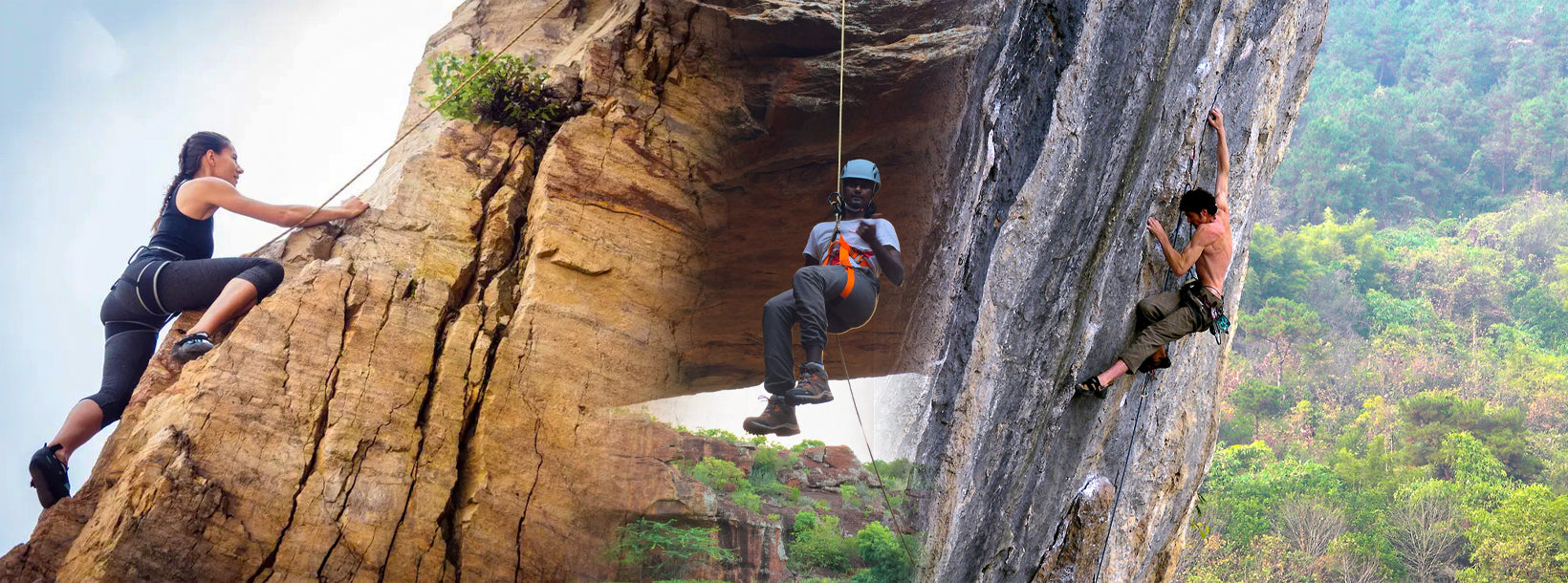
Sri Lanka's interior is scattered with ancient granite inselbergs, forested ridgelines, and sheer cliff faces that have drawn climbers for decades. Whether you are a first-timer working through a bouldering circuit or an experienced lead climber tackling a multi-pitch route, the island offers a surprisingly varied range of terrain within a compact geography. Rock climbing here combines physical challenge with genuine natural drama — most crags sit inside or near jungle, and the views from the top frequently extend over paddy plains, tea hills, or coastline.
What should beginners know before trying rock climbing in Sri Lanka?
Rock climbing is both mentally and physically demanding. It tests strength, endurance, balance, and composure in equal measure. Before you set out, a few fundamentals are worth understanding.
- Equipment check: Inspect harness, belay device, carabiners, and rope before every session — twice if you are new to the sport.
- Climb with a group: Solo climbing is significantly more hazardous, especially on unfamiliar rock. Having at least one partner increases safety dramatically.
- Use a spotter or guide: A spotter observes from the base, warns of hazards, and guides route decisions — an essential role for bouldering in particular.
- Know your grade: Beginner crags in Sri Lanka typically fall in the 5a–5c range on the French sport scale; experienced climbers will find routes graded 6a to 7b+ on the more technical faces.
- Hydrate and acclimatise: Humidity and heat add to fatigue. Start early in the morning to avoid the worst of the midday sun.
If you plan an adventure tour that includes climbing, working with a licensed guide service ensures the route is appropriate for your skill level and that all safety systems are in place.
What are the main types of rock climbing?
Climbing is not a single discipline. The styles differ considerably in technique, equipment, and risk profile.
Aid Climbing
Aid climbing uses mechanical devices — nuts, cams, étriers — to assist upward progress, allowing climbers to tackle large walls that would be impossible by strength alone. It is graded from A0 (minimal aid) through A5 (extremely insecure placements) and remains the dominant method for the biggest vertical faces in the world. Safety is a central concern of the discipline, which is why it is sometimes called Class 6 climbing.
Free Climbing
Free climbing relies on the climber's own strength and technique to ascend; equipment is carried only as a safety backup, not to aid upward movement. Several sub-styles fall under this broad category:
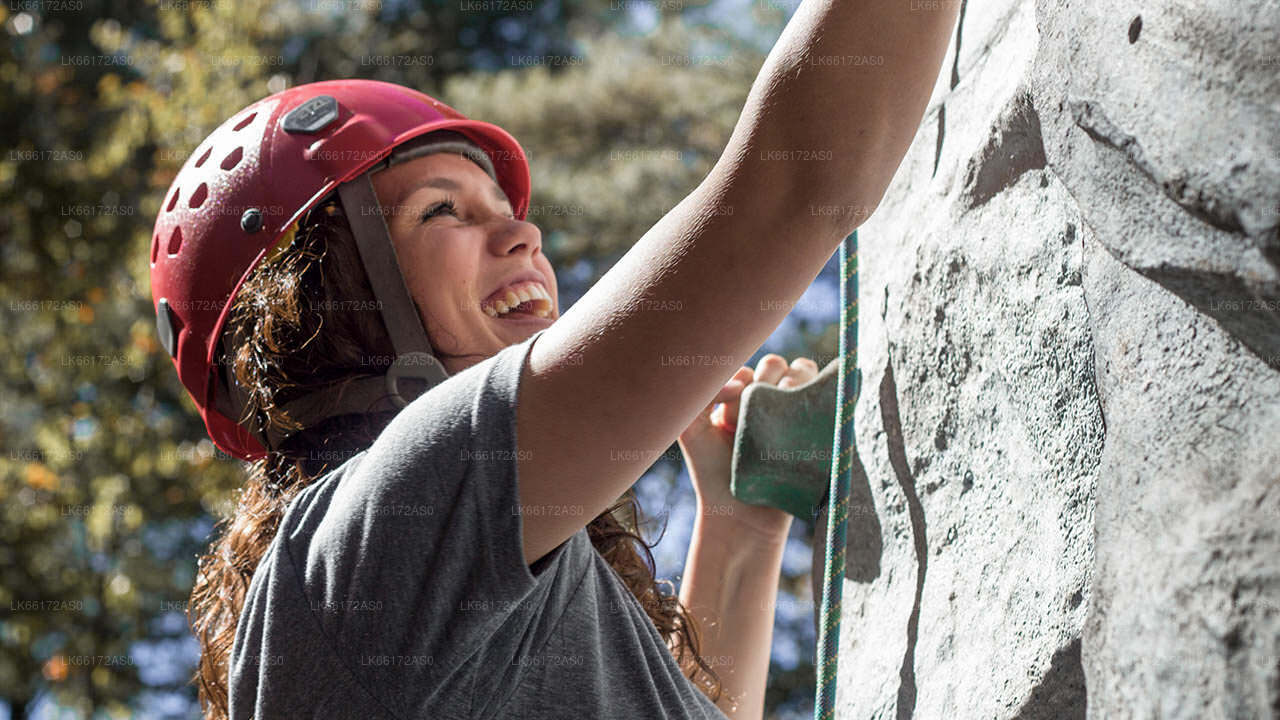
- Bouldering: Short, low-height problems — often on boulders, hence the name — without rope or harness. The primary protection is a foam crash pad placed below the climber, with a spotter positioned nearby. It is an excellent way to build technique and power.
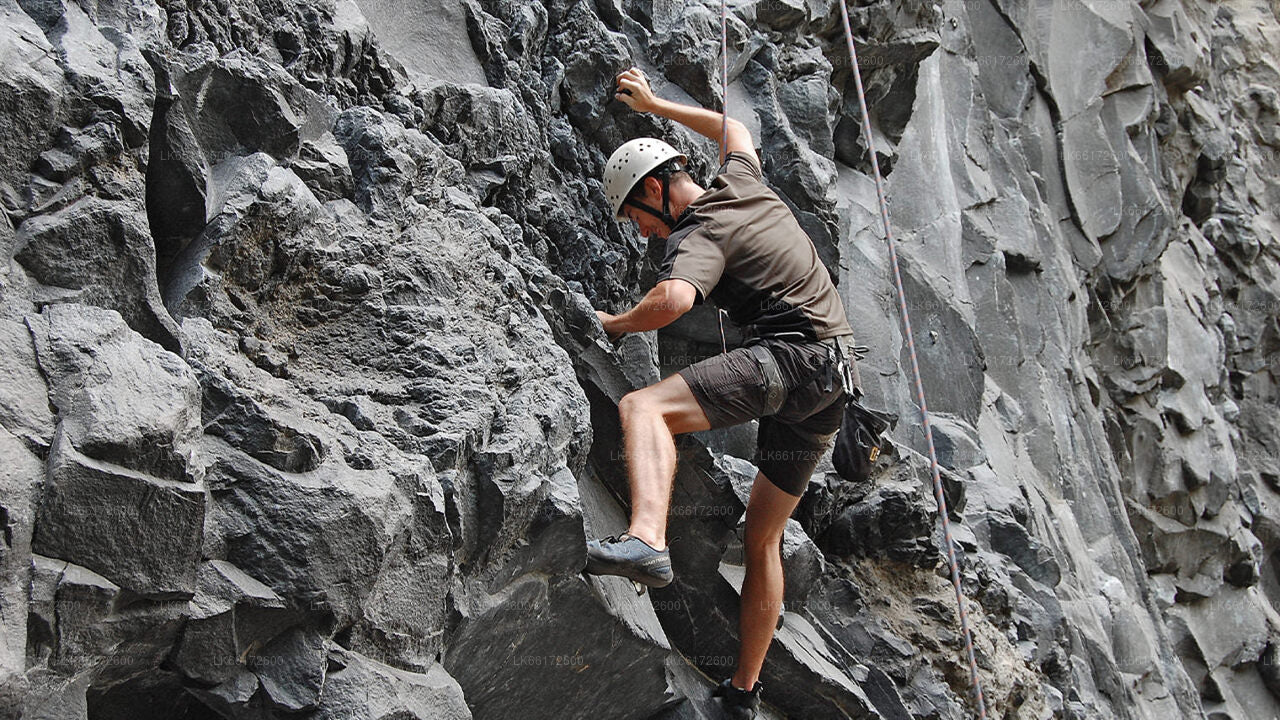
- Top rope climbing (bottom belay): The rope runs from the climber up through an anchor at the top of the route, then back down to a belayer on the ground. If the climber falls, the maximum drop is typically around one metre. This is the safest introduction to roped climbing and widely used in guided sessions.
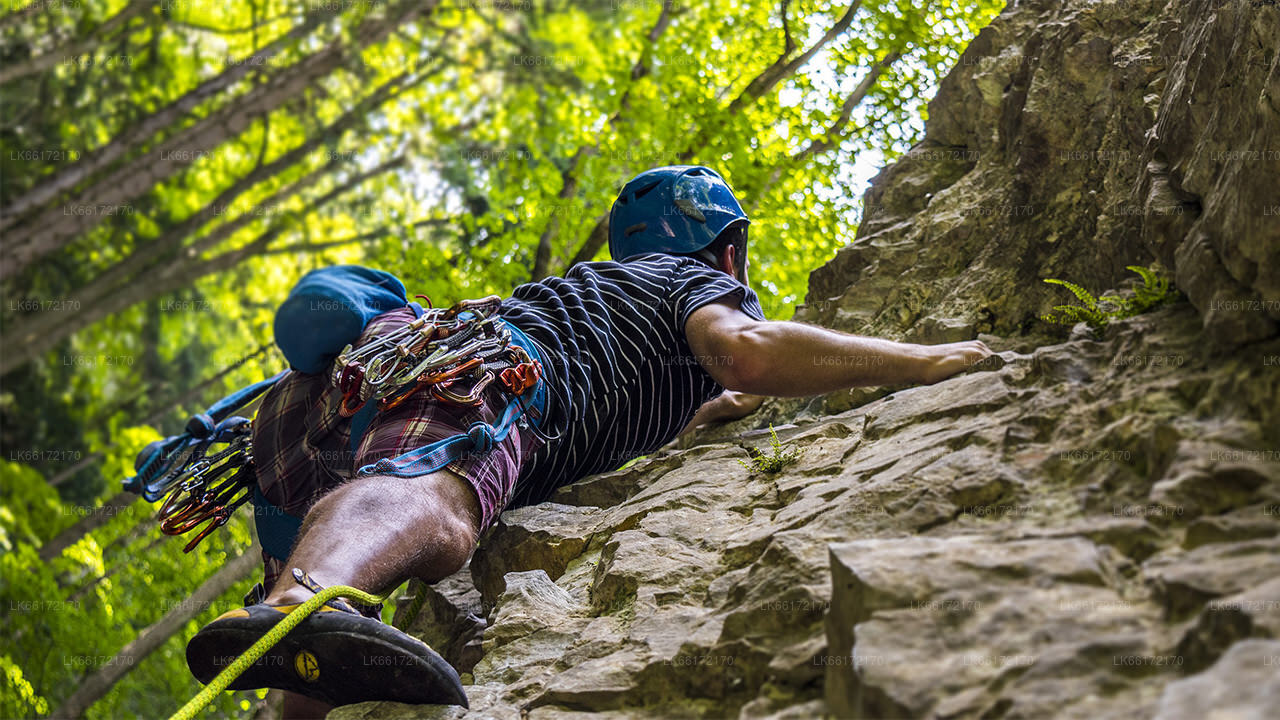
- Lead climbing: The climber carries the rope upward and clips it into protection anchors along the route. The belayer feeds rope from below. A fall travels twice the distance to the last anchor, making it more committing than top rope. Lead climbing includes sport climbing (bolted routes), traditional climbing (placing removable gear as you ascend), and multi-pitch routes (longer climbs broken into rope-length segments called pitches).
- Solo climbing: Climbing without a partner or belay. Roped solo climbing involves self-belay systems; free soloing — ascending with no rope at all — carries extreme risk and is not recommended for recreational climbers at any level.
Where are the best rock climbing spots in Sri Lanka?
Several sites stand out across the island, ranging from forest crags accessible on a day trip to larger formations requiring a short trek.
Horana Forest Rock
Located in the wet zone south of Colombo, the forested crags around Horana are among the most accessible venues for guided climbing in Sri Lanka. The setting is dense jungle, routes are suitable for beginners and intermediate climbers, and the area is reachable as a day excursion from the capital or from coastal hotels in the west.
Rawanagala
Rawanagala rises sharply above the forested hills near Koslanda in the Uva province. The climb to the summit is partly a hike and partly a scramble, with exposed sections that demand respect. The views from the top — across a wide arc of highland terrain — reward the effort. It is one of the more adventurous half-day outings available in the hill country.
Ella Region
The Ella area combines accessible trekking terrain with rock faces suited to both scrambling and technical climbing. Ella Rock itself involves a ridge walk with some exposed scrambling near the top, while surrounding crags offer more structured climbing for those with equipment and a guide.
Sigiriya and Pidurangala
Sigiriya — the ancient rock fortress — is a UNESCO World Heritage Site and a protected monument, so free climbing its main face is not permitted. However, the adjacent Pidurangala Rock is a popular alternative, involving a steep scramble to an open summit with direct views across to Sigiriya's profile. Read more about the history and landscape at Sigiriya: The Ancient Rock Fortress.
Horton Plains Escarpment
The southern edge of the Horton Plains National Park drops away at World's End — a near-vertical escarpment of around 870 metres. While this is not a managed climbing venue, the surrounding plateau and cliff edges attract those interested in via ferrata-style scrambling and exposed ridge walking.
How do I get to Sri Lanka's main climbing areas from Colombo?
Most climbing venues are accessible by road within two to four hours of Colombo. Horana is roughly 45 km south of the city and reachable in under two hours. Ella sits approximately 200 km east and is typically part of a longer hill-country itinerary. Rawanagala is around 170 km from Colombo, passing through the hill country. Arranging a private transfer through a DMC like Lakpura simplifies logistics considerably, particularly for sites that lack reliable public transport connections.
What climbing equipment do I need?
For guided sessions in Sri Lanka, most operators supply core equipment. If you are bringing your own gear or want to understand what is involved, the essentials include:
| Item | Purpose |
|---|---|
| Climbing harness | Connects the climber to the rope |
| Dynamic rope | Absorbs the energy of a fall |
| Belay device | Controls rope friction for the belayer |
| Carabiners | Connect components of the system |
| Climbing shoes | Provide precision grip on rock |
| Helmet | Protection from falling rock and impact |
| Chalk bag | Improves grip in humid conditions |
| Crash pad (bouldering) | Cushions unroped falls |
In Sri Lanka's humidity, chalk is especially useful, and lightweight, moisture-wicking clothing will keep you more comfortable on longer routes.
Is rock climbing in Sri Lanka suitable for children or families?
Guided bouldering and top-rope sessions are appropriate for older children — typically from around eight years upward, depending on the operator's guidelines and the child's physical confidence. Introductory sessions on shorter, well-bolted routes give families a structured and relatively controlled environment. Lead climbing and more technical routes are best reserved for adults with some prior experience. Always confirm age and fitness requirements with your guide service before booking.
What is the best season for rock climbing in Sri Lanka?
The island's two monsoon seasons affect climbing conditions differently depending on location. The southwest monsoon (roughly May to September) brings heavy rain to the western, southern, and central regions, making wet-zone crags around Horana slippery and potentially dangerous. During this period, the dry-zone sites in the north-central region and the east tend to offer better conditions. The northeast monsoon (October to January) affects the north and east. The driest months for climbing across most of the island are January to April, when rock surfaces are generally dry and temperatures manageable in the early morning hours.