Lakpura
Lakpura®

Kelaniya Raja Maha Vihara Stupa

Kelaniya Raja Maha Vihara stands on the western bank of the Kelani River, roughly 11 kilometres from central Colombo. According to the Mahavamsa, Sri Lanka's ancient Pali chronicle, the Buddha visited this precise spot during his third and final journey to the island — an event that elevates Kelaniya to a level of spiritual significance matched by very few sites in the country. The complex draws both devout pilgrims and curious travellers, and it rewards both equally.

What is the history behind Kelaniya Raja Maha Vihara?

Tradition holds that the Buddha arrived at Kelaniya to settle a dispute among the Naga king Maniakkhita and his rival, and delivered a sermon on a gem-studded throne on the very ground where the stupa now stands. The site was subsequently developed by King Yatala Tissa and later restored by King Dutugamunu in the second century BCE. Over the centuries the temple was damaged by South Indian invasions and by Portuguese forces in the sixteenth century, but it was comprehensively rebuilt in the eighteenth and nineteenth centuries under the patronage of Kandyan-era nobility.

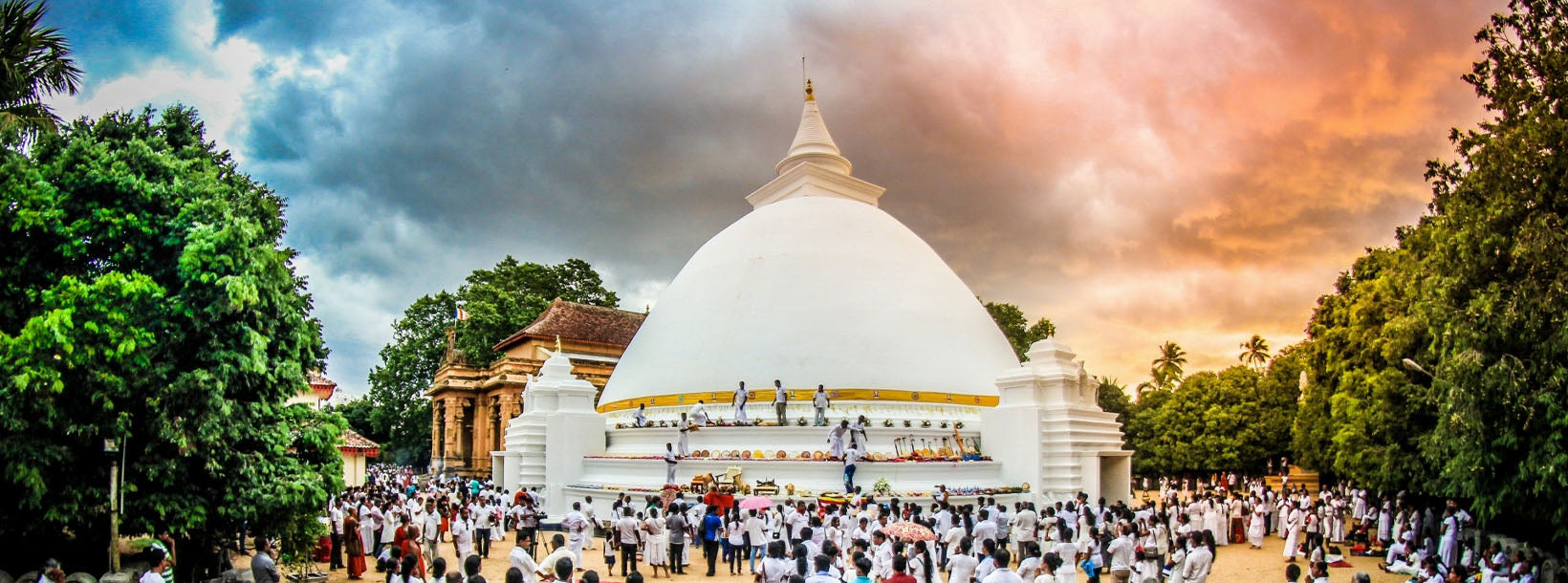
The stupa at Kelaniya is unusually proportioned — lower and broader than the great dagobas of Anuradhapura — because it was constructed over a chamber that, according to legend, contains a gem-encrusted throne. This distinctive silhouette, ringed by a white-washed platform and smaller subsidiary shrines, has become one of the most recognisable religious images in Sri Lanka. The broader temple complex, known formally as a stupa-centred vihara, includes several image houses, a bodhi tree of great antiquity, and monks' quarters that remain in active use.

What can visitors see inside the temple complex?

The principal image house contains a large reclining Buddha in the parinirvana posture, flanked by standing figures and attended by carved wooden pillars. What sets Kelaniya apart from most Sri Lankan temples, however, is the quality and density of its interior murals.

  • Salgado murals (twentieth century): The celebrated artist Solias Mendis completed a series of large-scale paintings across the walls and ceiling of the main image house. These depict scenes from the Jataka tales — the 547 stories of the Buddha's previous lives — alongside key episodes from Sri Lankan history, including the arrival of the Tooth Relic and the unification of the island under Dutugamunu.
  • Subsidiary shrines: Several smaller devale (deity shrines) within the compound are dedicated to the guardian deities Vishnu, Kataragama, and the goddess Vibhishana, reflecting the syncretic folk-Buddhist tradition common across the island.
  • The bodhi tree: A large sacred fig tree in the compound is revered as a direct descendant of the tree under which the Buddha attained enlightenment in Bodh Gaya, India.
  • Museum: A small on-site museum displays votive offerings, ancient bronzes, and items associated with the temple's history, offering useful context before or after walking the compound.

When is the best time to visit Kelaniya Raja Maha Vihara?

The temple is open year-round and receives visitors daily, but the experience changes significantly depending on the time of year and even the time of day. Early mornings — before 8 am — are the quietest, with the light catching the white stupa and the smell of incense drifting from the shrine rooms. Midday during school-holiday periods can feel crowded, particularly on poya (full-moon) days when pilgrims arrive in large numbers.

In terms of season, the stretch from December to April brings drier, cooler weather to the western lowlands, making outdoor exploration of the compound more comfortable. That said, Kelaniya is close enough to Colombo — and covered enough by its internal corridors and shrine rooms — that a rainy-season visit is entirely workable.

The most atmospheric time to visit is during the Duruthu Perahera, held in January on the poya day of the month of Duruthu. This is one of the oldest and most elaborate pageants in Sri Lanka, second in scale only to the Esala Perahera Festival in Kandy. Costumed elephants, traditional drummers, Kandyan dancers, and torch-bearers process through the streets of Kelaniya over several nights, commemorating the Buddha's legendary visit. If your itinerary overlaps with this period, planning a stay in or near Colombo for the event is well worth the effort.

How do I get to Kelaniya from Colombo?

Kelaniya is one of the most accessible sacred sites in Sri Lanka. From central Colombo the drive takes roughly 30 to 45 minutes depending on traffic, and the temple sits directly off the Colombo–Kandy road (A1), making it a natural first or last stop on journeys into the hill country.

  • By car or tuk-tuk: The most flexible option, particularly for families or those with mobility needs. Parking is available near the temple entrance.
  • By train: Kelaniya railway station on the Main Line is served by frequent services from Colombo Fort. The walk from the station to the temple is around 10–15 minutes.
  • By bus: Several SLTB and private bus routes connect Colombo Pettah bus stand with Kelaniya town.

For visitors combining Kelaniya with a broader tour of Colombo, pairing it with a Colombo city tour is a practical way to cover both the colonial and Buddhist heritage of the capital region in a single day.

What are the etiquette rules at Kelaniya Raja Maha Vihara?

Kelaniya is an active place of worship, not a museum, and the customary codes of conduct apply throughout the complex.

  • Remove footwear before entering any shrine room or approaching the stupa platform. Designated shoe racks are located at the entrances.
  • Dress modestly: shoulders and knees should be covered. Sarongs are sometimes available for loan at the entrance, but carrying your own lightweight covering is more reliable.
  • Photography is generally permitted in the outer compound. Inside the main image house, follow the guidance of the resident monks — some areas restrict photography, especially during active worship.
  • Speak quietly inside shrine rooms. The temple can feel busy, but the atmosphere within the image houses is one of contemplative calm that visitors are expected to respect.
  • Avoid turning your back on Buddha images when leaving a shrine room — step back to the door rather than pivoting away.

Is Kelaniya worth visiting for non-Buddhist travellers?

Yes, and for several reasons beyond its religious significance. The Solias Mendis murals are widely considered among the finest examples of twentieth-century Sri Lankan painting, and they function as a vivid illustrated history of the island even for visitors with no Buddhist background. The stupa's unusual architectural form — quite different from the towering hemispherical dagobas at Polonnaruwa — is architecturally interesting in its own right. The general atmosphere of the compound, with monks going about their daily routines and laypeople making offerings, offers an authentic window into contemporary Sri Lankan religious life that staged cultural shows cannot replicate.

Kelaniya combines well with a visit to the nearby Iranawila coast or the historic Attanagalla Raja Maha Viharaya, another important temple in the Gampaha district that attracts worshippers of all faiths.

Practical visitor information

Detail Information
Location Kelaniya, Gampaha District, Western Province
Distance from Colombo Fort Approximately 11 km via Colombo–Kandy road (A1)
Opening hours Open daily; typically accessible from early morning to evening
Entry fee No charge for the temple compound; donations welcomed
Key annual festival Duruthu Perahera (January full-moon poya)
Dress code Modest dress required; no short skirts, shorts, or sleeveless tops
Nearest station Kelaniya railway station (Main Line)

Book this experience with Lakpura

Curated by our local team. Direct booking, instant confirmation.

Ask Lakpura® Agent