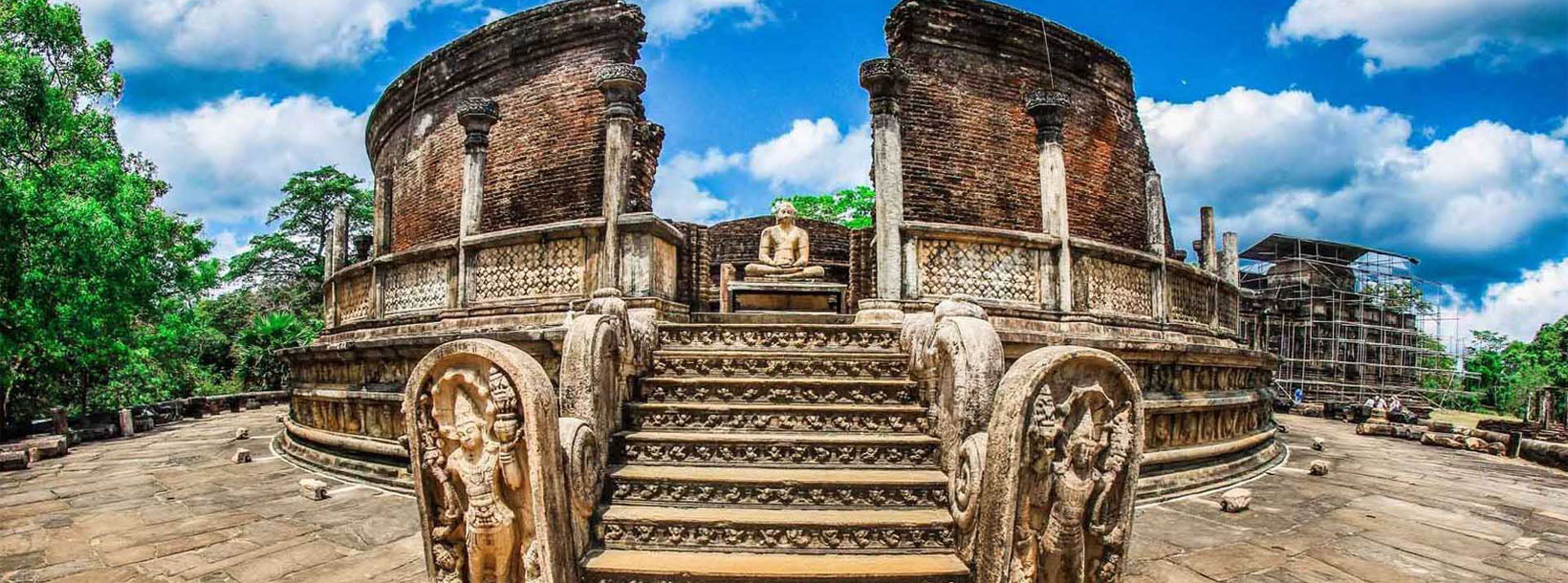
Polonnaruwa City
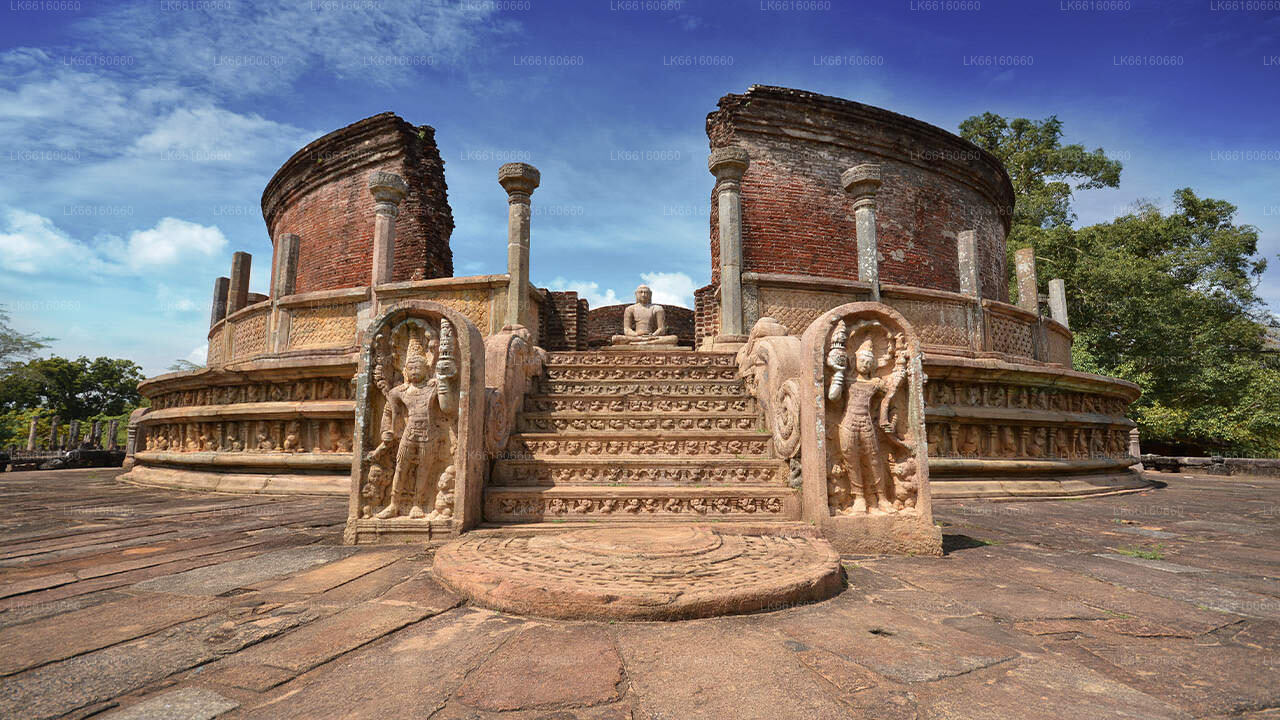
Polonnaruwa, a UNESCO World Heritage Site in Sri Lanka, was the country's medieval capital (11th-13th century). Renowned for its well-preserved ruins, including the iconic Gal Vihara statues, it showcases impressive architecture, reflecting the grandeur of the ancient Sinhalese civilization.
Kiri Vehera Stupa
Die Kiri Vehera Stupa ist ein antikes buddhistisches Monument, das in der historischen Stadt Polonnaruwa auf Sri Lanka liegt. Diese heilige Stupa wurde während der Herrschaft von König Parakramabahu I. im 12. Jahrhundert erbaut und ist eines der wichtigsten und am besten erhaltenen religiösen Stätten in der Region. Der Name "Kiri Vehera" wird als "Milch-Stupa" übersetzt, was ihr makelloses weißes Aussehen und ihre Bedeutung im buddhistischen Erbe von Sri Lanka widerspiegelt.
Die Stupa ist bekannt für ihre große kuppelförmige Struktur, die von wunderschön geschnitzten Steinsäulen und alten Ruinen umgeben ist. Es wird angenommen, dass sie Relikte von Buddha beherbergt, was sie zu einem wichtigen Wallfahrtsort für Buddhisten macht. Das umliegende Gelände, mit seiner üppigen Vegetation und der ruhigen Atmosphäre, trägt zur spirituellen Bedeutung des Ortes bei und bietet den Besuchern einen Ort der Ruhe und Besinnung.
Besucher der Kiri Vehera Stupa können die archäologischen Überreste des Ortes erkunden, einschließlich steinerner Inschriften, kleinerer Schreine und alter Klosteranlagen. Die Stupa und ihre ruhige Lage im kulturellen Dreieck von Sri Lanka machen sie zu einem beliebten Ziel für Touristen und Pilger gleichermaßen, die einen Einblick in die reiche buddhistische Geschichte der Insel erhalten möchten.
Die beste Zeit, um die Kiri Vehera Stupa zu besuchen, ist während der Trockenzeit von Dezember bis April, wenn das Wetter ideal für Besichtigungen und die Erkundung der Ruinen von Polonnaruwa ist. Der Ort ist von der Stadt aus leicht zu erreichen und bietet ein bedeutungsvolles Erlebnis für diejenigen, die sich für die alte buddhistische Architektur und Geschichte Sri Lankas interessieren.
About Polonnaruwa District
Polonnaruwa is the 2nd largest city in north central province in Sri Lanka. The ancient city of Polonnaruwa has been declared a World Heritage site by UNESCO Polonnaruwa has a great history of conquest and struggle behind it and rightfully forms the third element in the Cultural Triangle. Located about 140 kms north east from Kandy,Polonnaruwa offers hours of endless pleasure for history and culture lovers, as there are numerous sights of significance.
Much of the physical ruins standing today are credited to King Parakrama Bahu I who spent many royal resources on town planning, including parks, edifices, irrigation systems and so on. The period of his rule is considered a golden age where the kingdom thrived and prospered under a visionary ruler. The Parakrama Samudra is a mammoth tank and named after its patron. The popular kings Royal Palace, the Audience Hall encircled by beautifully carved stone elephants and the Bathing Pool reflect the superior engineering capabilities of the time.
About North Central Province
North Central Province which is the largest province in the country covered 16% of total country's land area. North Central Province consist two districts called Polonnaruwa and Anuradhapure. Anuradhapura is the largest district in Sri Lanka. Its area is 7,128 km².
North Central Province has numerous potentials for Investors to start their Businesses, especially Agriculture, agro based industries and Livestock sectors. More than 65% of North Central Province's people depend on basic Agriculture and agro base industries. NCP also called "Wew Bendi Rajje" because there are more than 3,000 medium and large scale tanks situated in the province. Sri maha bodiya, Ruwanweli seya, Thuparama dageba, Abayagiri Monastry, Polonnaruwa Rankot wehera, Lankathilake are scared