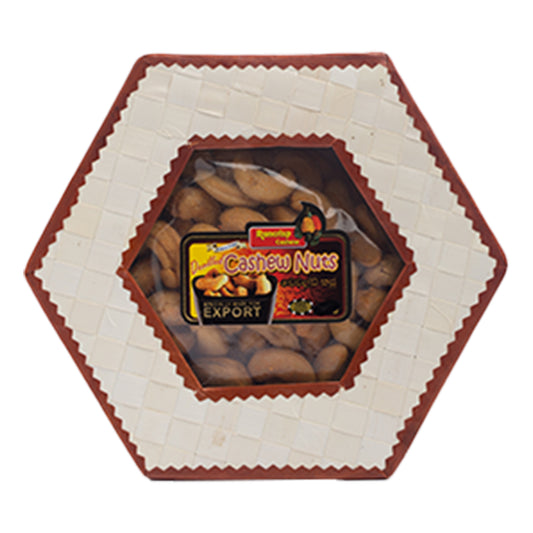
Few crops tell a more layered story than the cashew. Brought from the Americas by Portuguese traders in the sixteenth century, Anacardium occidentale quietly became one of Sri Lanka's most beloved snack foods, farm products, and export commodities. Whether you encounter a roadside stall heaped with devilled cashews in Kurunegala or a gourmet gift box at Bandaranaike Airport, the nut is woven into the island's everyday food culture in a way that belies its relatively recent arrival.
What exactly is the cashew tree?
The cashew tree is a fast-growing tropical evergreen in the family Anacardiaceae, the same family as mangoes and pistachios. Full-sized trees can reach 14 m (about 46 ft), though the dwarf cultivars grown commercially across Sri Lanka typically stay under 6 m and produce heavier, earlier yields — making them the practical choice for smallholder farmers. The tree thrives in well-drained sandy soils and tolerates low rainfall, which partly explains its concentration in Sri Lanka's North Western and North Central provinces.
Its leaves are elliptic and leathery, arranged in a spiral along the branch. The flowers emerge in branched clusters (panicles), opening pale green before turning reddish as they mature. Pollination leads to one of the more unusual fruits in the plant kingdom.
How does the cashew fruit work?
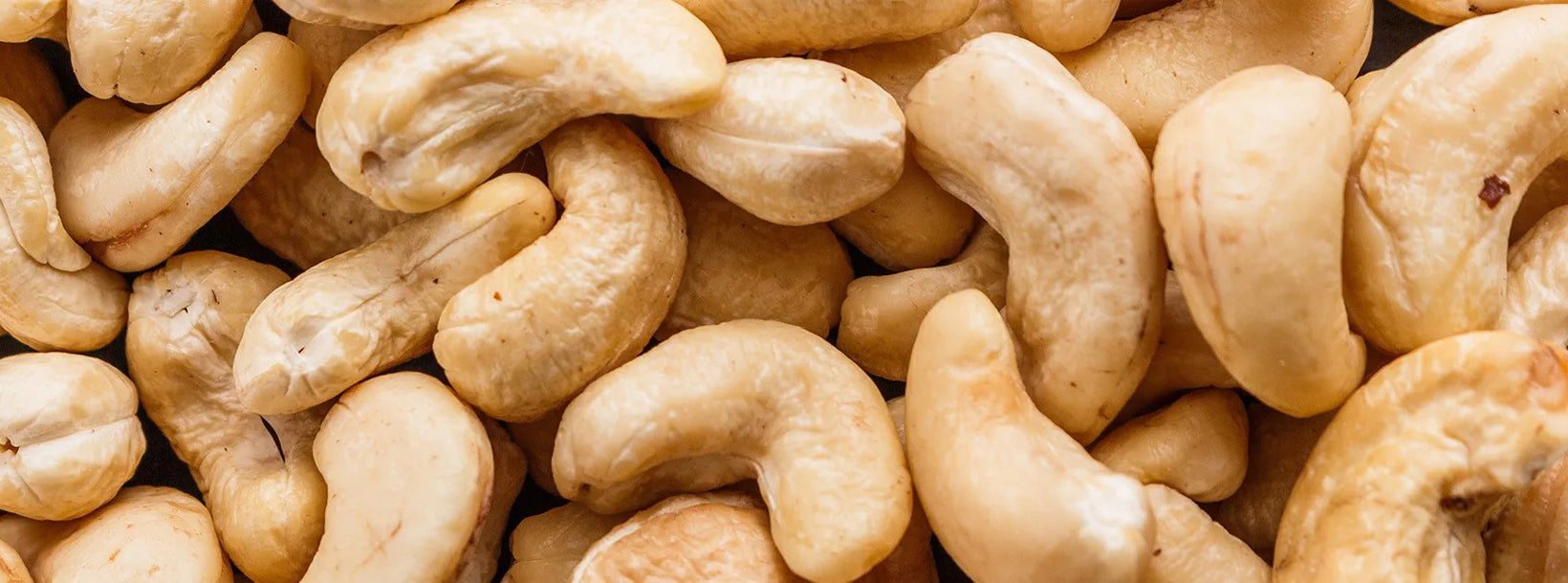
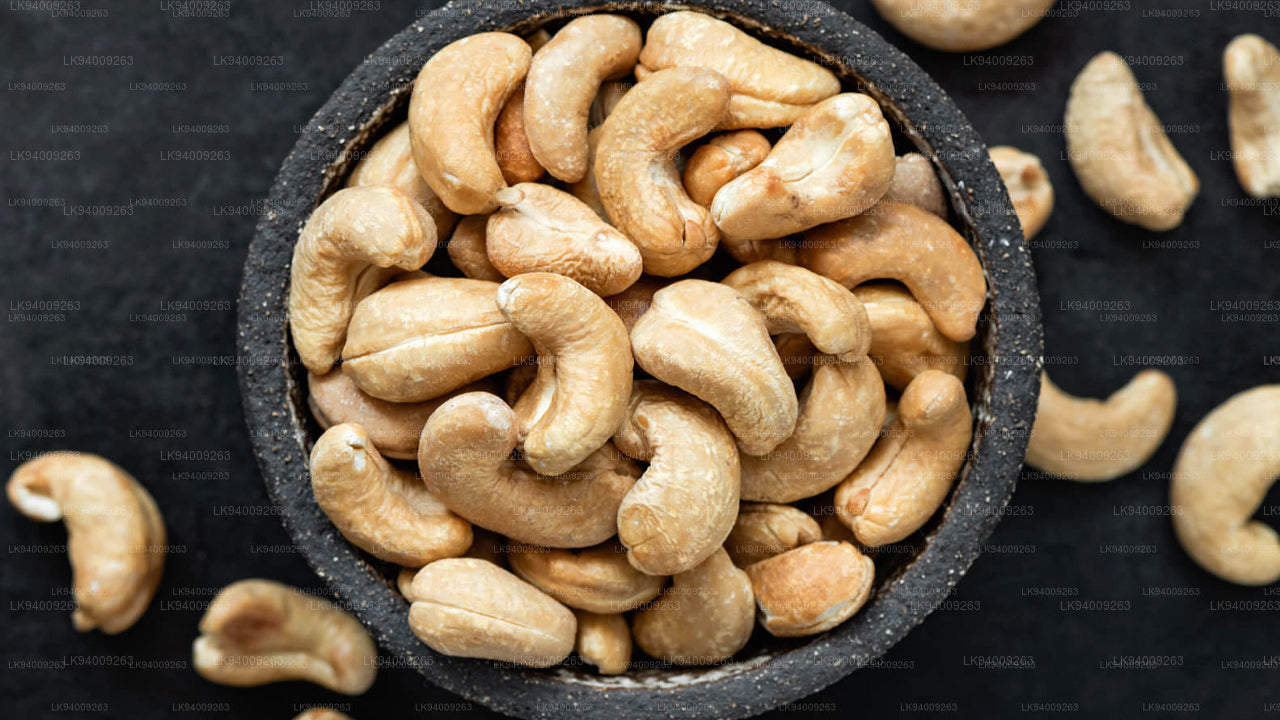
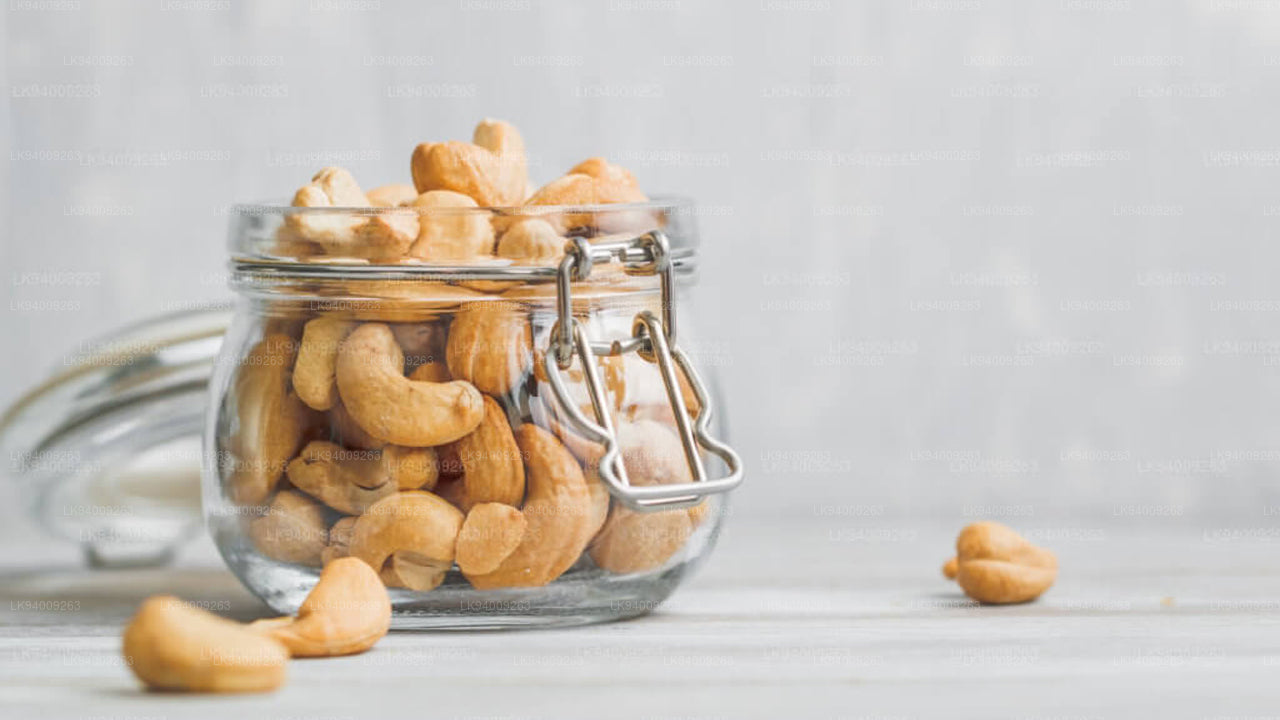
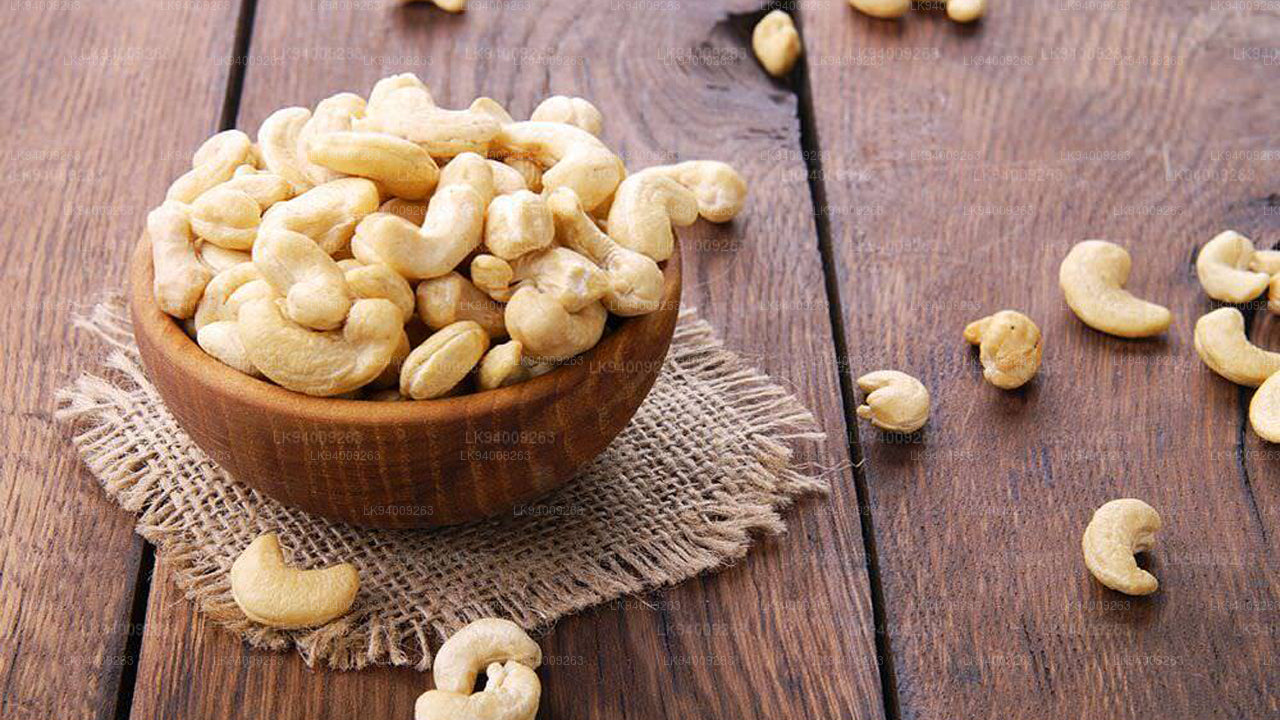
This is where the cashew becomes genuinely strange. What most people call the cashew nut is botanically the seed — a kidney-shaped drupe that sits at the bottom of a swollen, fleshy structure called the cashew apple. The apple is not the true fruit; it is an accessory fruit that develops from the flower's receptacle. The true fruit is the hard, c-shaped shell that encases the seed.
The cashew apple itself — known in Sri Lanka as kaju — ripens to a vivid yellow or coral red and reaches 5–11 cm in length. It has a sharp, slightly astringent sweetness and a fibrous texture that makes it tricky to transport fresh, which is why it rarely appears on export markets. Locally it is juiced, made into jam, or fermented into a spirit called feni in Goa, a tradition that echoes Portuguese influence across the Indian Ocean.
Why is the shell so hazardous?
The shell of the cashew seed contains cashew nut shell liquid (CNSL), a caustic oil rich in anacardic acid and cardol. Direct skin contact causes chemical burns similar to those from poison ivy, to which the cashew is distantly related. This is why raw, in-shell cashews are never sold commercially — the shelling and roasting process destroys the irritant compounds. Workers in processing facilities handle the shells with protective equipment, and the process requires carefully controlled heat.
CNSL itself has industrial value: it is used in brake linings, paints, varnishes, and waterproofing compounds. During the Second World War it was incorporated into certain armaments applications, a curious footnote in the nut's history.
Where does Sri Lanka fit in global cashew production?
The cashew is native to northeastern Brazil and was first exported by Portuguese colonists from the 1550s onward. As the Portuguese expanded their trading networks, they introduced the tree to coastal West Africa and South and Southeast Asia. Today the leading producers by volume are Vietnam, India, and Ivory Coast. Sri Lanka's output is modest by comparison, but the island has developed a strong reputation for value-added processing — roasted, devilled, spiced, and coated cashews that command premium retail prices both domestically and abroad.
Sri Lankan cashews are grown primarily in the districts of Kurunegala, Puttalam, and Anuradhapura, where the relatively dry climate and sandy loam soils suit the tree well. Ceylon black pepper, another spice with deep roots in Sri Lanka's agricultural heritage, is sometimes grown in mixed-crop systems alongside cashew in wetter transitional zones.
What are the culinary uses of cashew in Sri Lanka?
Sri Lankans have woven the cashew into their food culture in several distinct ways:
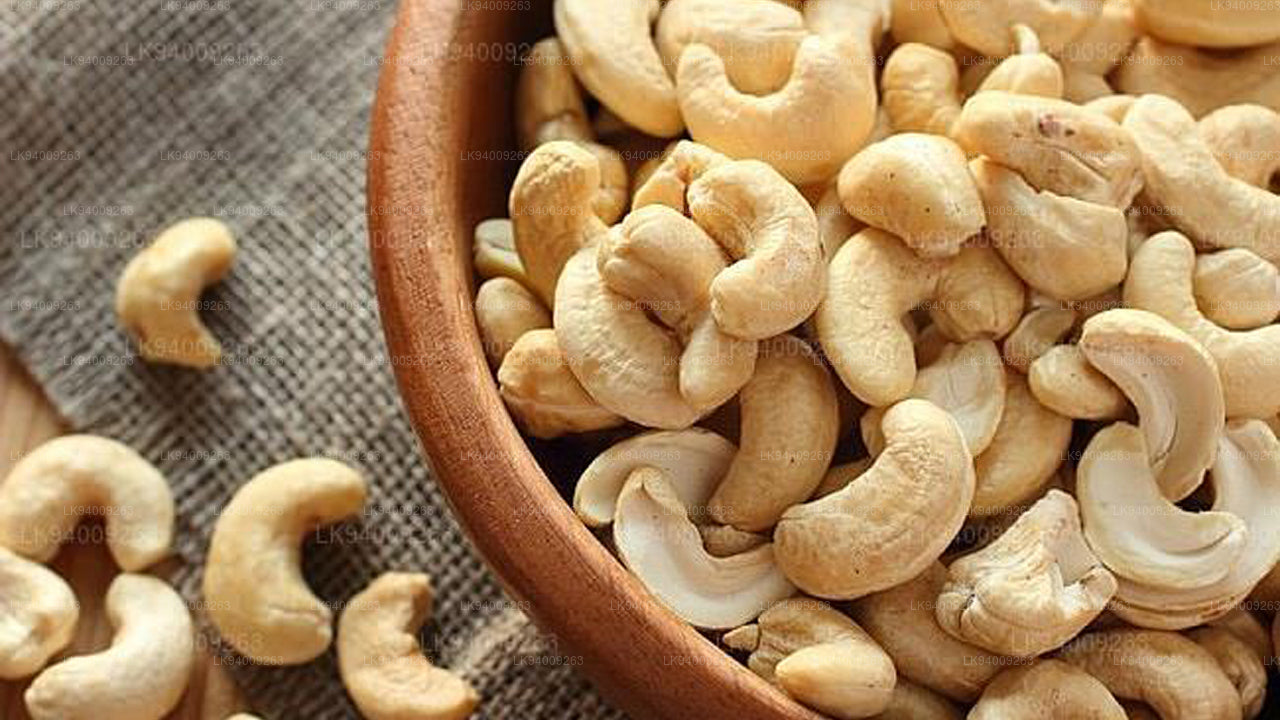
- Roasted and salted — the simplest preparation, sold at every roadside boutique and supermarket.
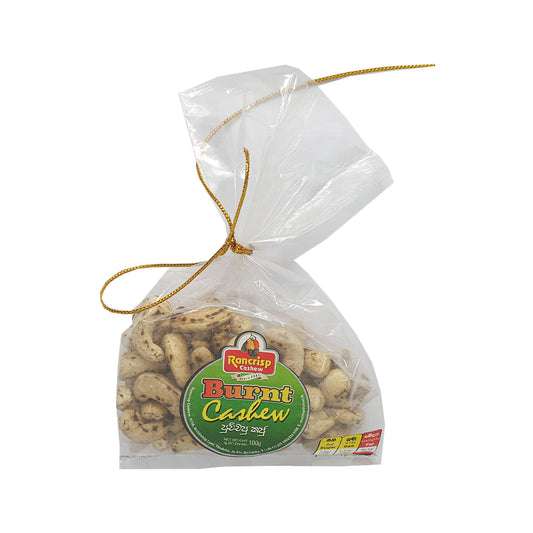
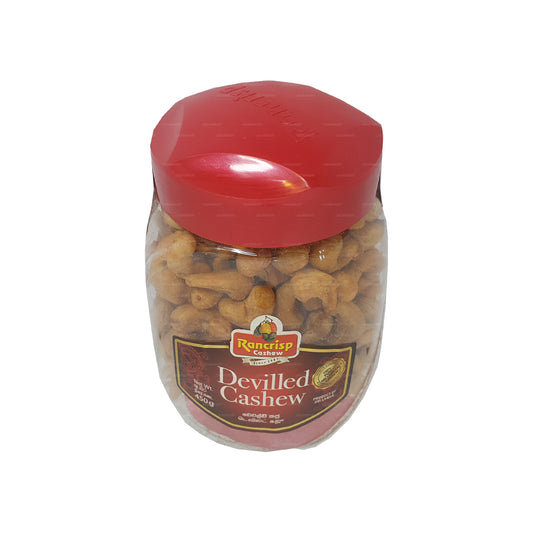
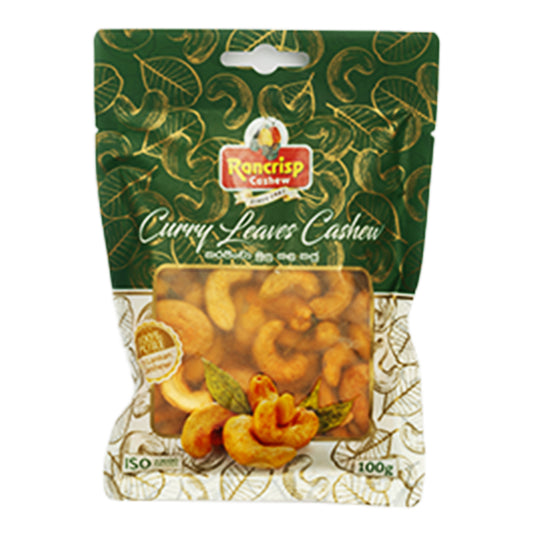
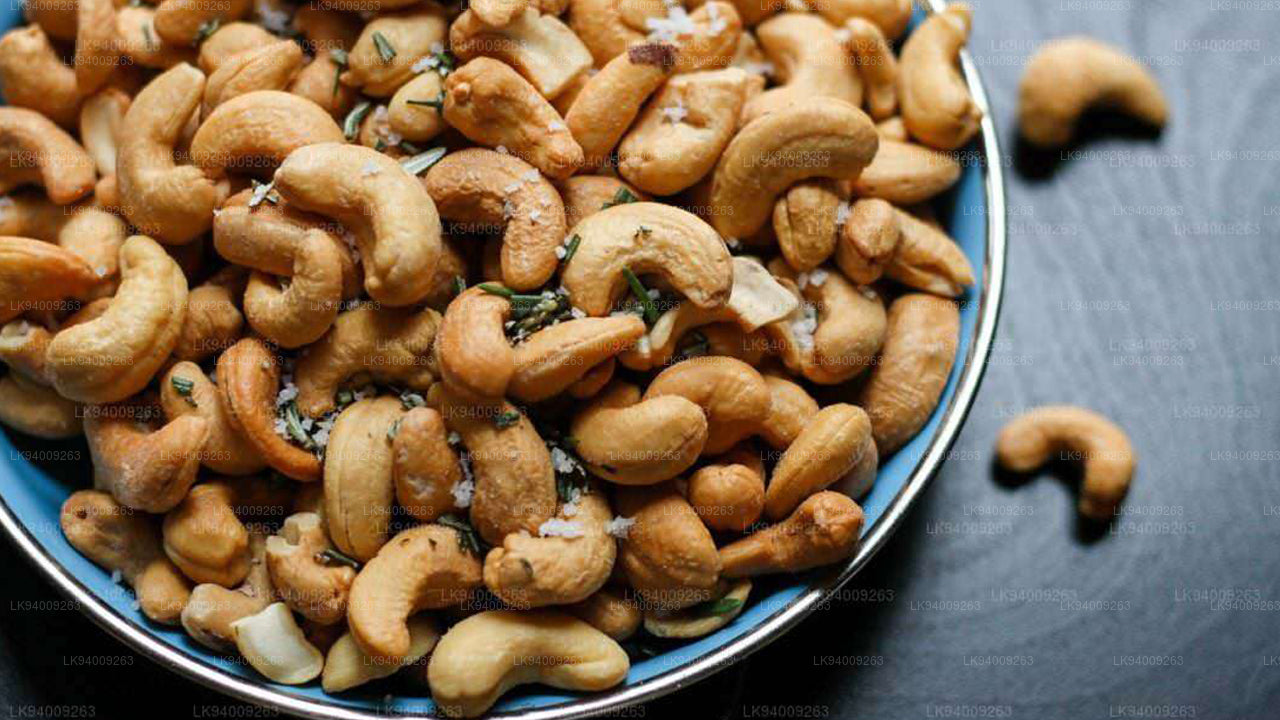
- Devilled cashews — tossed with dried chilli, curry leaves, and sometimes turmeric before roasting; a quintessential Sri Lankan snack and a popular souvenir.
- Kaju curry — whole cashews simmered in coconut milk with green chilli and pandan leaf; a festive dish served at weddings and temple offerings.
- Pani kadju — cashews coated in treacle or kithul syrup, producing a sticky-sweet confection found at markets across the island.
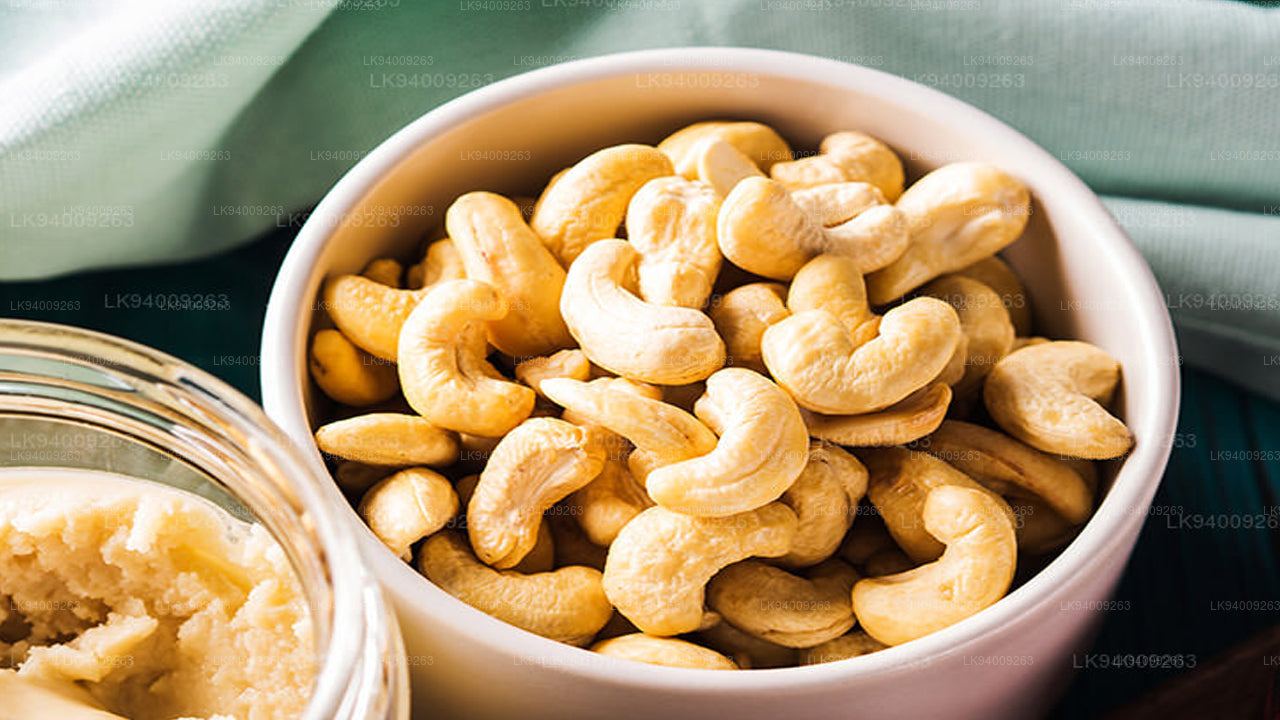
- Cashew butter and milk — increasingly produced by artisan food brands in Sri Lanka for the health-conscious market.
- Baked goods — cashews appear in love cake, a traditional Sri Lankan confection of Portuguese origin, as well as in various biscuits and cookies.
What are the nutritional qualities of cashews?
Cashews are calorie-dense but nutritionally rich. They are a good source of unsaturated fatty acids, plant protein, magnesium, zinc, and copper. Unlike many tree nuts, they contain relatively low levels of fat per gram compared to macadamia or pecan, and their protein content makes them a popular base for dairy-free alternatives such as cashew cheese and cashew cream. They also provide modest amounts of iron and B vitamins.
Their mild, buttery flavour and soft texture make them one of the most versatile culinary nuts, equally at home in a savoury curry or a chocolate confection.
What is the cultural significance of cashew in Sri Lanka?
The cashew occupies a quiet but important place in Sri Lankan rural life. Smallholder cashew farms provide seasonal income for families in the dry zone, and the harvest period — typically between February and May — brings a flurry of activity in processing sheds across the North Western Province. Cashew cultivation requires relatively little irrigation and provides ground cover that reduces erosion on sandy soils, making it an ecologically sensible choice for marginal land.
In urban Sri Lanka, devilled cashews are a fixture at hotel bars, on airline trays, and in gift boxes heading overseas. Sri Lankan diaspora communities often cite cashew snacks as one of the food products they miss most — a small but telling sign of the nut's hold on national food identity.
How does cashew farming work in Sri Lanka?
Most Sri Lankan cashew is grown by smallholder farmers on plots of one to five acres. Grafted dwarf varieties are preferred because they begin producing within three years of planting and allow easier manual harvesting. The harvest involves collecting fallen cashew apples — which drop naturally when ripe — and separating the nut from the apple by hand or with a simple blade.
After separation, nuts are sun-dried for several days to reduce moisture, then sent to processing units where they are roasted in drum roasters or steam-processed to loosen the shell before shelling by hand or machine. The kernels are then graded by size and colour, with whole white kernels fetching the highest prices. Value-added processing — seasoning, flavouring, and packaging — happens at facilities across the Western and North Western provinces before product reaches retail or export.
For travellers interested in experiencing traditional Sri Lankan agriculture first-hand, a visit to Midigama Fruit Farm offers an accessible introduction to tropical fruit and nut cultivation on the south coast.
What is the etymology of the word cashew?
The English word "cashew" derives from the Portuguese caju, itself adapted from the Tupian word acajú, meaning approximately "nut that produces itself" — a poetic description of the seed that seems to emerge directly from the end of the apple. The scientific genus name Anacardium blends Greek roots: ana (upward) and cardia (heart), likely a reference to the heart-like shape of the cashew apple or the position of the seed above the receptacle. The species epithet occidentale simply signals its New World origin.