Lakpura
Lakpura®

Leopards

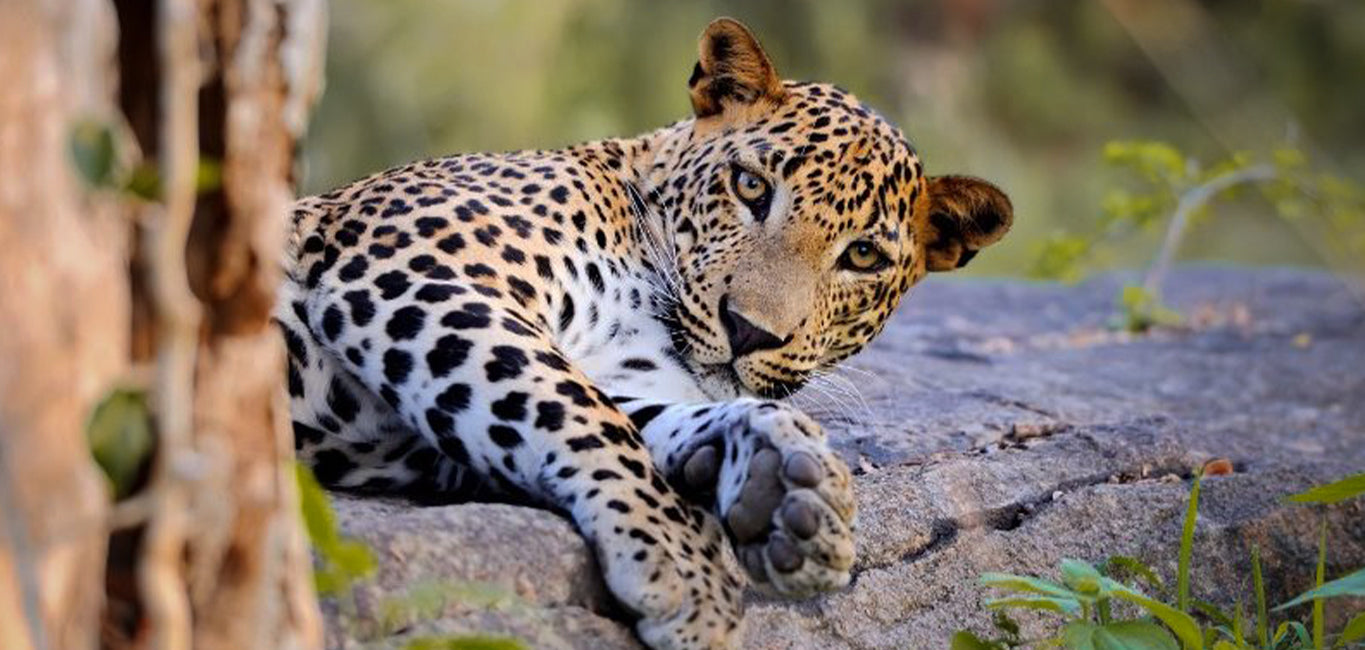
The Sri Lankan leopard (Panthera pardus kotiya) is one of the island's most compelling wild animals and, by most assessments, the largest leopard subspecies in the world. Once distributed across every habitat zone in Sri Lanka, its range has contracted sharply over recent decades, making protected reserves the best — and in some areas the only — places left to encounter it in the wild.

Where do Sri Lankan leopards live?

Historically, leopards occupied the full spectrum of Sri Lankan habitats: wet-zone rainforests, dry and arid scrub jungle, dry evergreen monsoon forests, and both low and upper highland forests. They are genuinely adaptable animals, and records exist of populations persisting in wet-zone intermediate forests as well as semi-arid coastal scrubland.

Today, the densest and most reliably observed populations are concentrated in the country's protected national parks and nature reserves. Peer-reviewed surveys consistently identify the dry zone as the stronghold, with Yala and Wilpattu national parks drawing wildlife watchers specifically hoping to observe this subspecies.

Which parks offer the best chance of seeing a leopard in Sri Lanka?

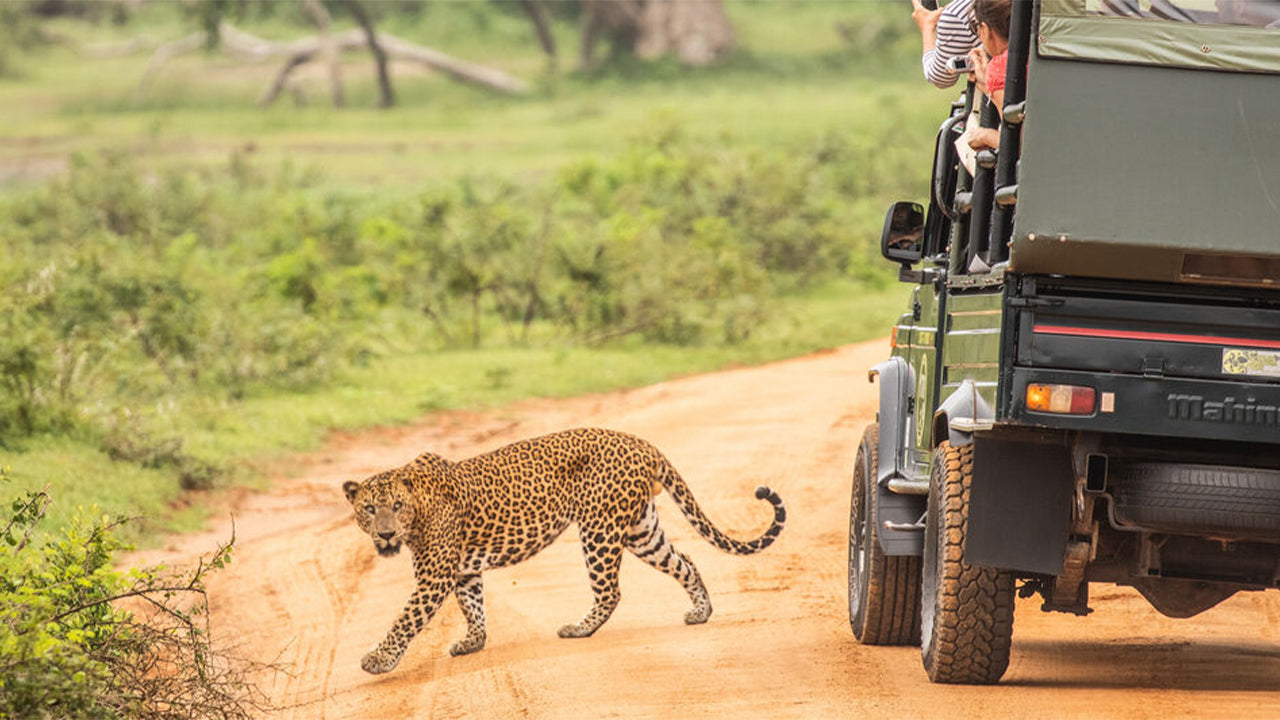
Yala National Park, in the southeastern dry zone, is widely regarded as one of the highest-density leopard habitats anywhere on earth. Block I of Yala in particular — the section open to safari vehicles — concentrates sightings along its rocky outcrops, water holes, and forest edges. Early morning and late afternoon drives consistently produce the most encounters.

Wilpattu National Park, in the northwest, offers a very different landscape of natural lakes (villus) surrounded by dense scrub and forest. Its leopard population is healthy and, because Wilpattu receives fewer visitors than Yala, sightings here can feel more isolated and unhurried.

Other reserves where leopards have been documented include Horton Plains, Knuckles Mountain Range, and Sinharaja Forest Reserve, though encounters in those areas are far less predictable.

When is the best time to see leopards in Sri Lanka?

Leopards are predominantly nocturnal, but they move during daylight hours more often than most large cats — particularly in the early morning and late afternoon when temperatures are cooler. Safari drives timed around sunrise and the two hours before sunset offer the highest likelihood of a sighting.

At Yala, the dry season from roughly February to July draws down water levels, concentrating wildlife around remaining water sources and making leopards easier to spot against open ground. Wilpattu is typically at its best between February and October. Both parks close periodically for maintenance, so it is worth confirming access dates before planning a visit.

What do Sri Lankan leopards eat?

The Sri Lankan leopard is a carnivore with a broad and opportunistic diet. Sambar deer and spotted deer (chital) form the core prey in most habitat types, but documented kills also include hare, langur monkeys, wild boar, porcupine, and smaller animals such as birds, frogs, reptiles, and rodents. Like leopards elsewhere, the Sri Lankan subspecies is a solitary hunter and relies on stealth and ambush rather than sustained pursuit.

Social groupings are uncommon. Outside the mating season, adults are generally encountered alone. The exception is a female with cubs, who may remain together for up to two years while the young develop hunting skills.

What are the physical characteristics of the Sri Lankan leopard?

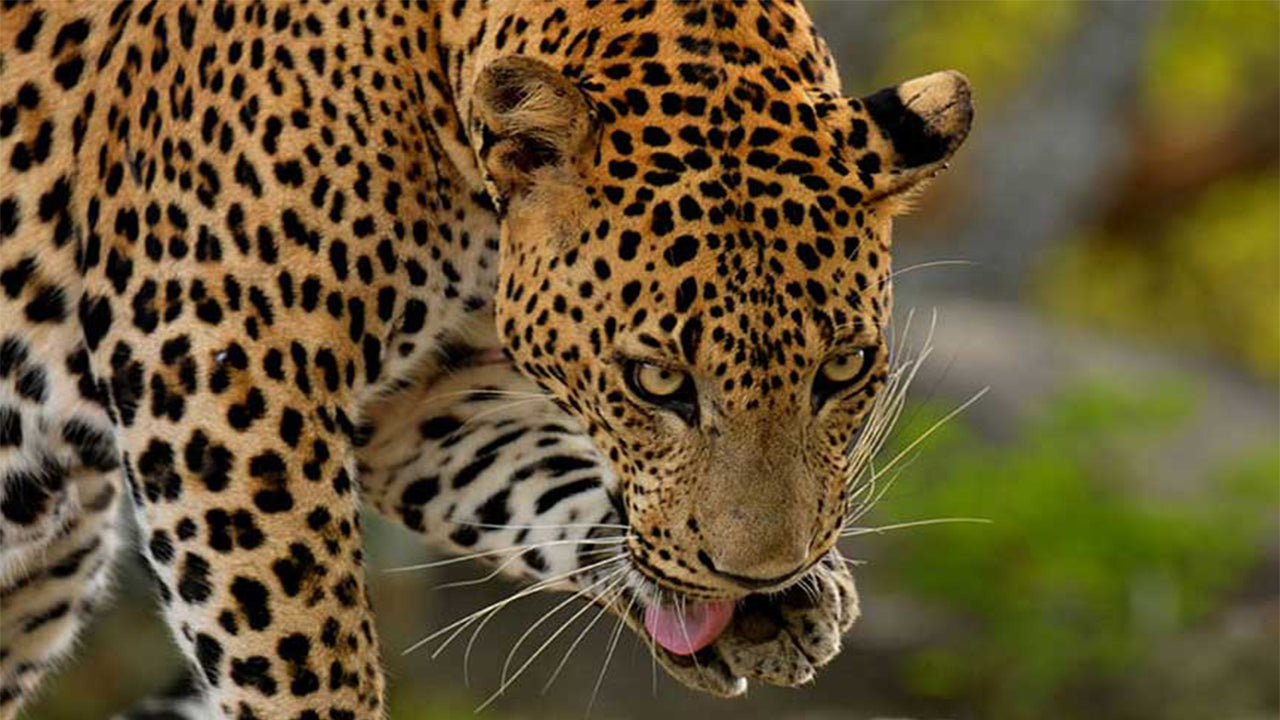
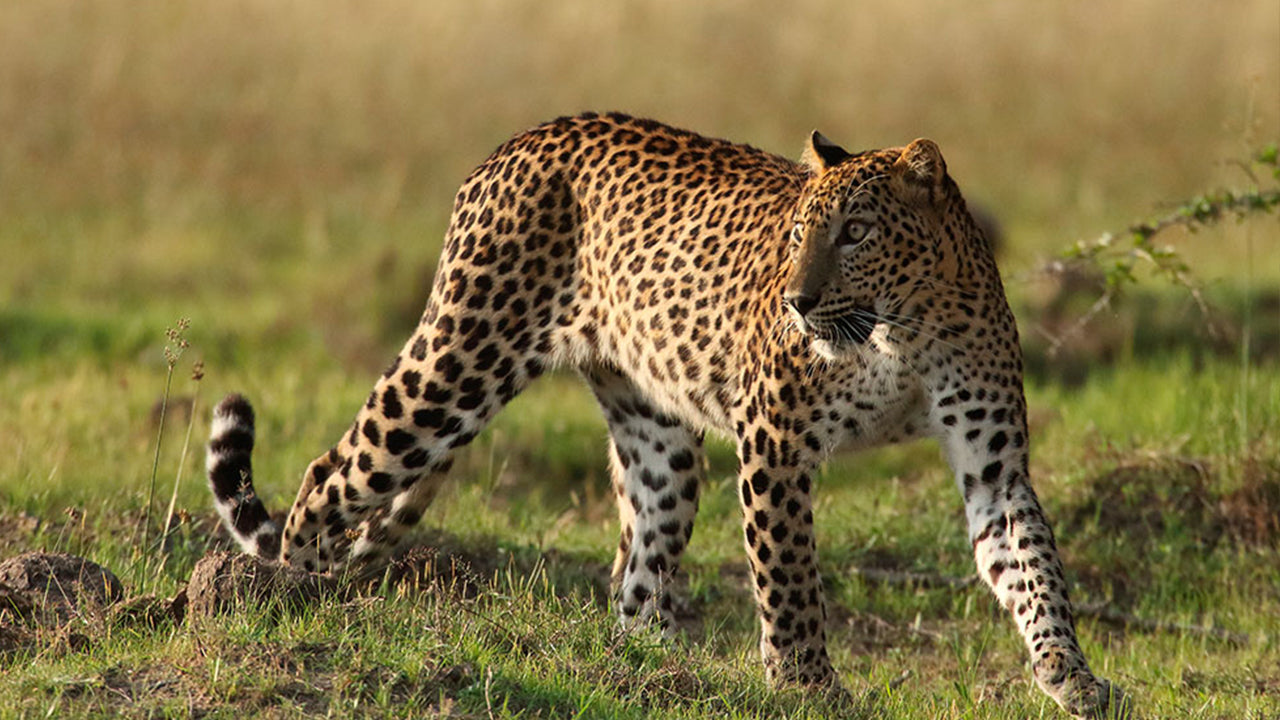
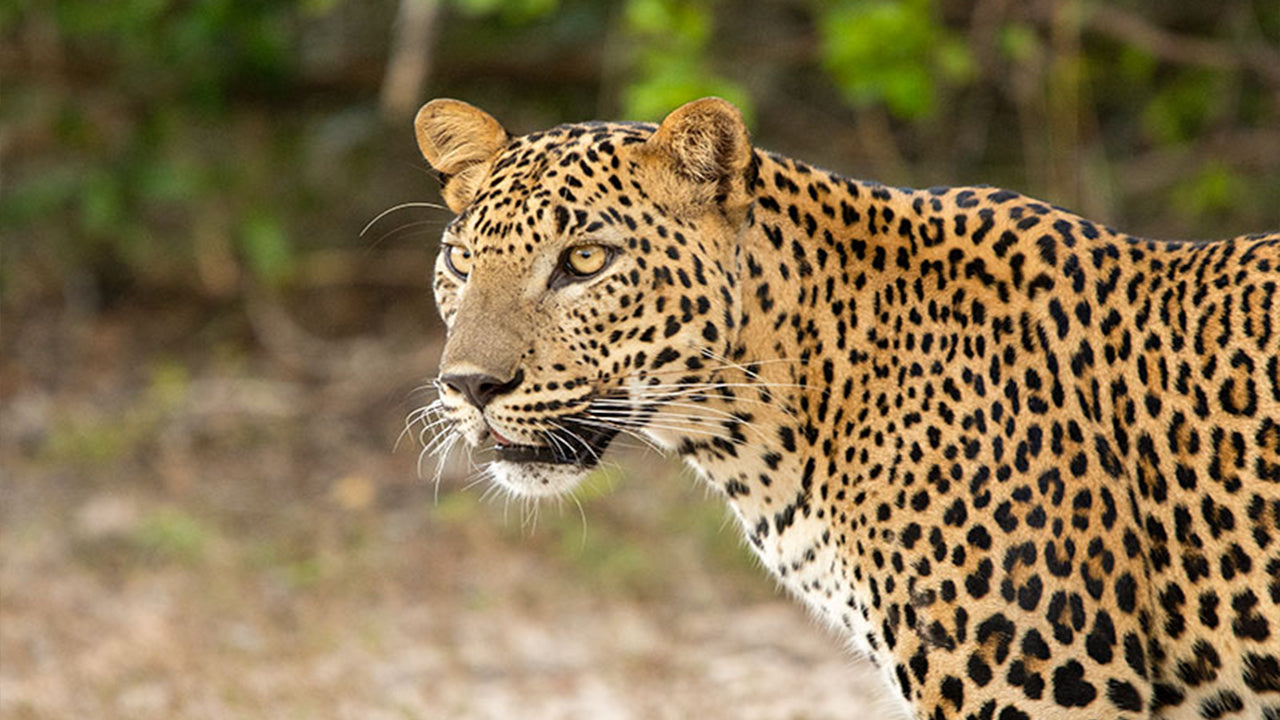
The Sri Lankan leopard shares the genus's hallmark coat — a rusty-yellow base overlaid with dark rosettes and solid spots — but is notable for its size relative to other leopard subspecies. Adult males typically weigh around 56–77 kg (approximately 125–170 lb), and females are considerably lighter, averaging around 29 kg (roughly 64 lb). Males are typically at least 30% larger than females and develop distinctively broad, heavy heads as they mature.

  • Shoulder height: approximately 45–80 cm
  • Tail length: longer than half the head-to-tail body length, used for balance when moving through trees and rocky terrain
  • Build: powerfully muscled shoulders, with scapular muscles adapted for climbing — leopards regularly haul prey into tree forks to cache it away from scavengers

The coat pattern of each individual is unique, which allows researchers to identify and track specific animals through camera-trap imagery over time.

How endangered is the Sri Lankan leopard?

The Sri Lankan leopard is classified as Endangered on the IUCN Red List. Three interrelated pressures have driven the population decline: habitat loss through agricultural expansion and development, fragmentation of forest corridors that previously allowed animals to move between ranges, and illegal killing — both targeted hunting for the wildlife trade and retaliatory killing by farmers protecting livestock.

Accurate population estimates are difficult to establish, but camera-trap studies in Yala and Wilpattu suggest the species is holding its own within well-managed reserves. Outside protected areas, the picture is less certain.

What conservation efforts are underway for Sri Lankan leopards?

Several organisations work specifically on leopard conservation in Sri Lanka. The Wilderness and Wildlife Conservation Trust (WWCT) has run long-term field research under its Leopard Project, using camera traps, GPS collaring, and population surveys to build a detailed picture of density, territory, and movement across key habitat blocks. The Sri Lanka Wildlife Conservation Society contributes additional research capacity and community engagement work.

The Department of Wildlife Conservation, the government body responsible for managing national parks and sanctuaries, enforces anti-poaching patrols and works with WWCT and other partners to identify and, where possible, restore wildlife corridors between fragmented habitats. Reducing human-leopard conflict near park boundaries — by supporting livestock insurance schemes and building predator-proof enclosures — is increasingly recognised as critical to sustaining tolerance for leopards in communities that live alongside them.

Tips for responsible leopard watching in Sri Lanka

  • Always enter national parks with a licensed wildlife guide and a registered vehicle — this is mandatory in all Sri Lankan reserves.
  • Keep noise to a minimum and avoid any behaviour that might pressure an animal to move away from water or shade.
  • Do not encourage drivers to leave designated tracks in pursuit of a sighting.
  • If a leopard is resting or feeding, give it space — a queue of vehicles circling an animal creates stress and degrades the experience for everyone present.
  • Avoid flash photography at close range, particularly in low-light conditions when animals are most active.
Ask Lakpura® Agent