Lakpura
Lakpura®

Hamilton Canal

Hamilton Canal is a 14.5-kilometre waterway running along Sri Lanka's western coast between the mouth of the Kelani Ganga at Hekitta and the southern edge of the Negombo Lagoon at Pamunugama. Conceived by Garvin Hamilton, British Agent of Revenue and Commerce, and built between 1802 and 1804, it is the youngest of three successive canal systems that have connected Colombo and Negombo over several centuries. Today it functions as both a working waterway shaped by tidal rhythms and a public promenade that draws walkers, cyclists, and canal-boat enthusiasts.

What is the history of Hamilton Canal?

The story of the Colombo–Negombo waterway predates British rule by several centuries. During the 15th century, under King Vira Parakramabahu VIII, the Negombo lagoon served as the principal seaport for the cinnamon trade, and a rudimentary canal was cut to ease the transport of goods to Colombo. The Portuguese were using a version of this route by the early 17th century: a Father Manoel Barradas describes embarking near Colombo onto a canal that led into the Kelani River and onward to Negombo, travelling through a passage he recalled as narrow and heavily shaded by overhanging vegetation.

When the Dutch took control of the island's maritime provinces, they inherited both the canal and the adjacent Muthurajawela marshlands. Attempts to cultivate paddy in those marshes failed repeatedly because tidal surges inundated the fields with sea water. The Dutch response was to construct a network of dams, sluices, and water cuts designed to drain salinity from the fields and to move cinnamon barges efficiently between ports. The resulting Dutch Canal became part of a broader system that, at its greatest extent, linked the Kelani River to Puttalam in the north through the Negombo and Chilaw lagoons, and connected southward through Kotte Lake and the Bolgoda Lake to the Kalu Ganga at Kalutara. Separate canal works were also undertaken in Galle and Matara for timber floating and flood control.

Despite the scale of Dutch engineering, the waterway remained imperfect. When Garvin Hamilton surveyed the corridor in the early years of British administration, he proposed an entirely new cut running west of the Dutch Canal, closer to the coastline. Work began in 1802 and was completed by 1804. The new channel, named Hamilton Canal in his honour, ran a straighter course than its predecessor. An unintended consequence, however, was that its proximity to the sea allowed high tides from both the Negombo Lagoon and the Kelani estuary to push salinity deep into the Muthurajawela wetlands — the very problem earlier engineers had tried to solve.

Where exactly does Hamilton Canal run?

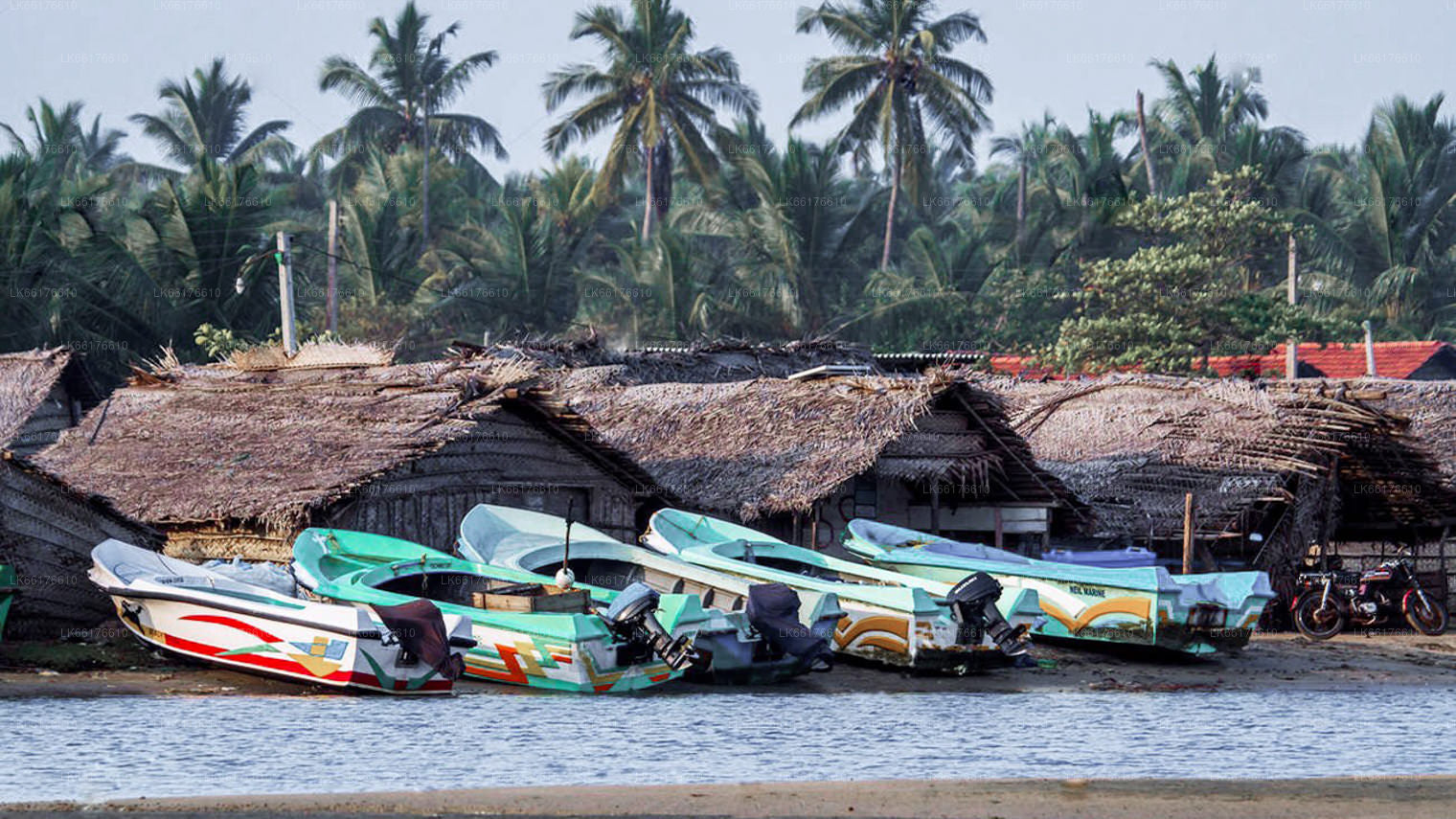
The canal begins at Hekitta, near the northern bank of the Kelani Ganga's mouth, and follows a broadly north-westerly course to Pamunugama on the southern edge of the Negombo Lagoon. The 14.5 km route passes through a mixture of urban Colombo suburbs, low-lying wetland, and fishing communities. A separate, nine-kilometre continuation extends northward from Negombo town to the Maha Oya river, historically part of the same navigable corridor.

One practical point for visitors: the water level in the canal rises and falls roughly every twelve hours in response to tidal influence from the sea. Watching the current actually reverse direction is a quietly striking phenomenon, and one that explains why the Muthurajawela wetlands beside it remain brackish rather than fully freshwater.

What can I see and do along Hamilton Canal?

A government-led rehabilitation programme, implemented by the Sri Lanka Land Reclamation and Development Corporation, has transformed much of the canal's urban frontage into a landscaped promenade. The most eye-catching addition is a pedestrian suspension bridge near the canal's southern entrance, designed with castle-tower pylons. After dark, colour-changing ribbon lights along the bridge reflect in the water below, making it a popular evening destination for local families.

  • Waterside walkway: Broad pavements run along rehabilitated sections, punctuated by mature trees and newly planted saplings. Paving materials, colours, and layouts vary by section, giving the route a degree of visual variety rather than a uniform appearance.
  • Glass-floor overpass: One section of walkway overhangs the canal on large glass pavers, allowing pedestrians to watch the water flowing beneath their feet.
  • Decorative installations: Bas-relief panels and sculptures depicting sailing ships and sea creatures are set into walls along the promenade, acknowledging the canal's maritime trading heritage.
  • Fish market: A working fish market sits at the canal's edge, where cuttlefish, prawns, and a range of locally caught fish are sold each morning. Arriving early gives the best selection and a lively atmosphere.
  • Boat rides: The canal connects directly to the Muthurajawela wetland system to its east, a protected brackish marsh that supports a notable range of bird species and aquatic life. Boat excursions into the marsh typically depart from Negombo or from dedicated jetties near the Dutch Canal, making it straightforward to combine a Hamilton Canal visit with a wetland tour.

How do I get to Hamilton Canal from Colombo?

The southern end of the canal is approximately 15 kilometres north of Colombo Fort, making it a practical half-day excursion from the city. The most direct route by road follows the Negombo Road (A3) northward from Peliyagoda; the canal runs roughly parallel to this road for much of its length. Tuk-tuks, taxis, and private transfers all make the journey in under an hour outside peak traffic. From Negombo town, the northern end of the canal is easily reached on foot or by three-wheeler from the main bus stand.

If you are travelling from Bandaranaike International Airport, the canal is even closer — Negombo is only around six kilometres from the airport, and Pamunugama at the canal's northern end is within easy reach without re-entering Colombo traffic at all.

When is the best time to visit Hamilton Canal?

The canal can be visited year-round. The driest and most comfortable months along the western coast are generally from November through to early April, when humidity is lower and the risk of afternoon showers is reduced. The promenade and fish market are most active in the early morning and again in the late afternoon and early evening, when light is softer, temperatures are cooler, and the suspension bridge lighting comes on after dusk. Avoid visiting at midday in the hotter months if you plan to walk the full length of the rehabilitated section.

Is Hamilton Canal connected to the Muthurajawela wetlands?

Yes. The Muthurajawela marsh system lies immediately to the east of Hamilton Canal and is hydrologically connected to it. Covering around 3,000 hectares, Muthurajawela is one of the largest remaining coastal wetlands in Sri Lanka and forms part of the same tidal corridor that both the Dutch and British canal builders tried — and partly failed — to control. The marsh is recognised as an environmentally significant area and supports mangroves, wading birds, water monitors, and a variety of fish species. The Dutch Canal, which runs through the western edge of the wetland, is the standard departure point for guided boat tours into the marsh.

What is the significance of Hamilton Canal to Sri Lanka's colonial history?

Hamilton Canal sits at the intersection of three successive colonial projects — Sinhalese, Dutch, and British — each of which attempted to master the same challenging tidal geography for economic ends. The cinnamon trade that motivated King Vira Parakramabahu's original works in the 15th century was the same trade that the Dutch refined and the British inherited. The canal's name preserves the identity of a relatively obscure British administrator whose engineering ambition, however imperfectly realised, produced a waterway that is still in use more than two centuries later. For students of Sri Lankan colonial history, the canal offers a rare opportunity to read layered human intervention directly in the landscape.

Book this experience with Lakpura

Curated by our local team. Direct booking, instant confirmation.

Ask Lakpura® Agent