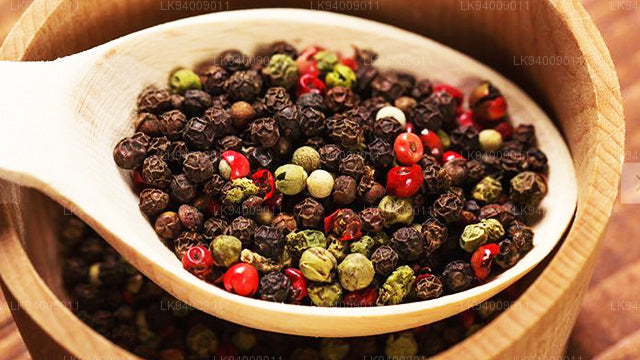
Called the King of Spices for good reason, pepper has shaped trade routes, sparked expeditions, and flavoured cuisines for millennia. Ceylon Pepper — grown on the island's highland and mid-country estates — occupies a respected niche in that long story. Though Sri Lanka accounts for only around 2.5% of global pepper supply, what the island produces is regarded by traders and chefs as a premium-quality product, prized for its intensity and its unusually high concentration of piperine, the alkaloid responsible for pepper's distinctive heat.
What makes Ceylon Pepper different from other peppers?
The botanical origin of pepper is the climbing vine Piper nigrum, native to the forests of Kerala in southern India. Sri Lanka's version grows across the wet-zone highlands — districts where rainfall, humidity, and well-drained loam soils combine to produce berries with a markedly higher piperine content than many competing origins. Piperine is the compound that gives black pepper its sharp, lingering pungency. A higher concentration means more flavour impact per gram, which explains why Ceylon Pepper commands a premium in specialty food markets in Europe, Japan, and the Middle East.
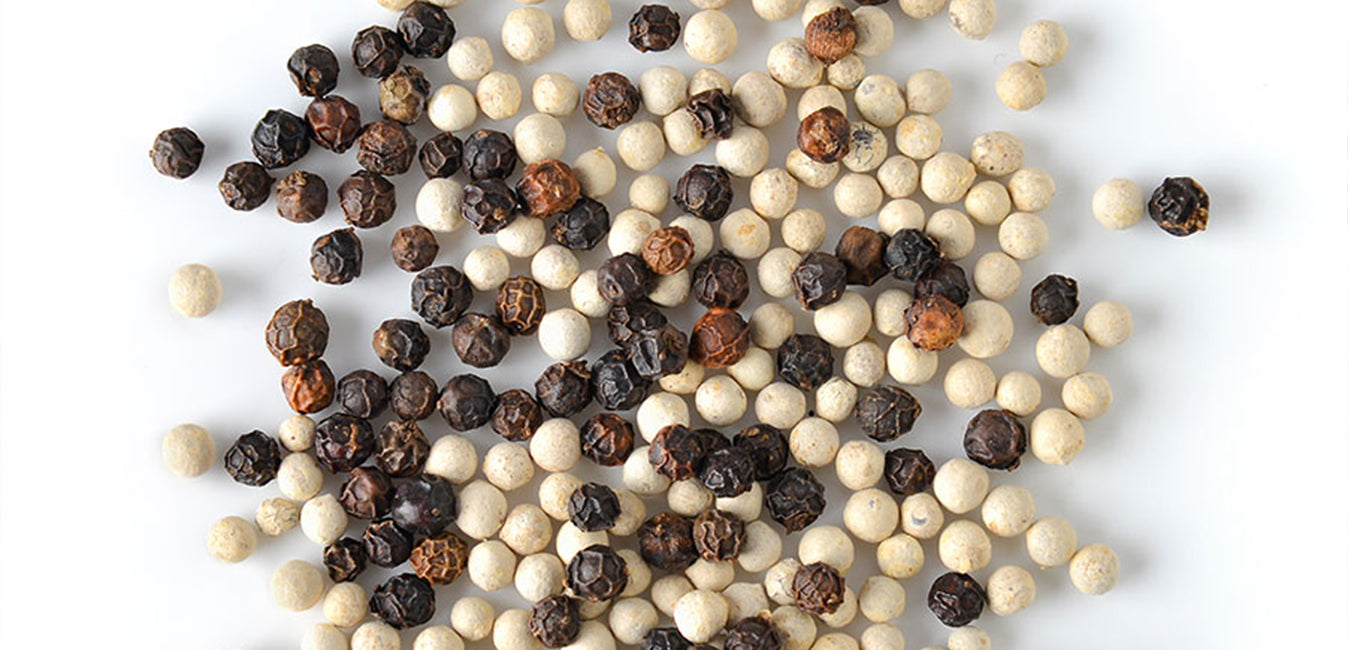
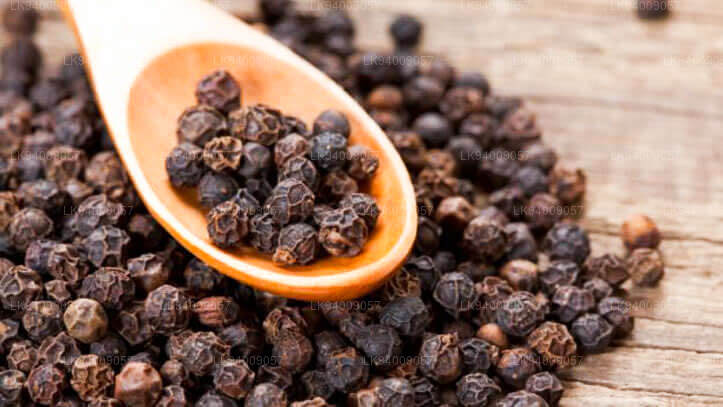
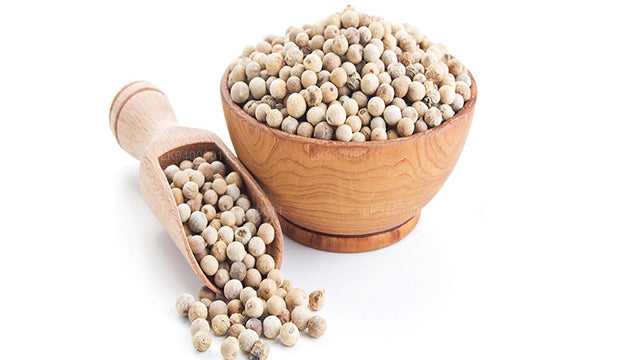
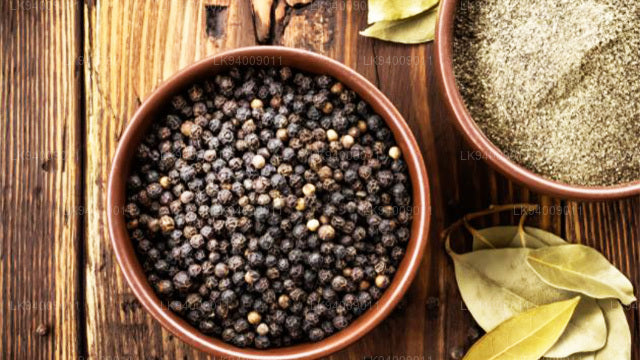
Ceylon Pepper is typically available in three commercial forms: whole dried peppercorns, coarsely cracked pepper, and finely ground powder. Each form suits different culinary applications — whole peppercorns for long-cooked stocks and brines, cracked for rubs and finishing, ground for sauces and table seasoning. You can explore Ceylon black pepper in detail, including the differences between black, white, and green variants produced from the same plant at different stages of ripeness.
How is Ceylon Pepper produced?
The pepper vine is a perennial climber that needs a support tree or post to grow. Flowering occurs once or twice a year depending on rainfall patterns, and the berries develop in clusters called spikes. Harvest timing determines which type of pepper is produced:
- Green pepper — harvested while immature and still green; mild and fresh-tasting, often freeze-dried or brined.
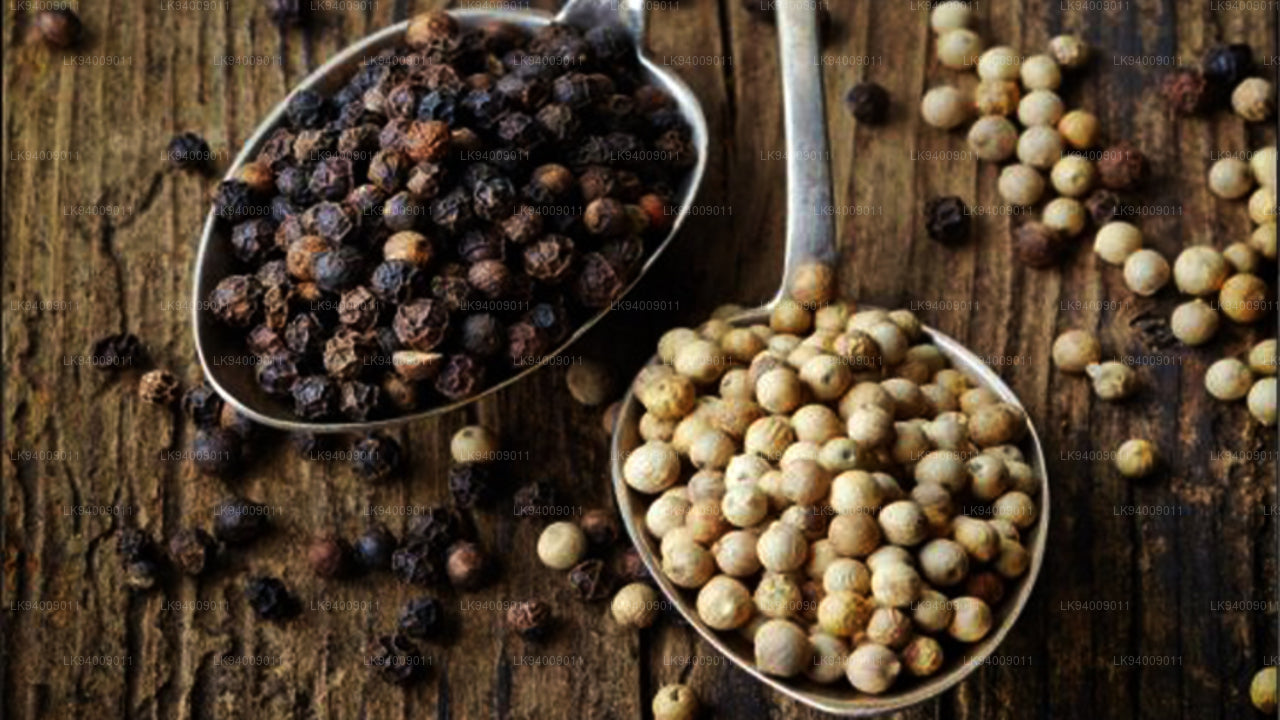
- Black pepper — harvested just before full ripeness, then sun-dried until the outer skin shrivels and darkens; the most pungent form.
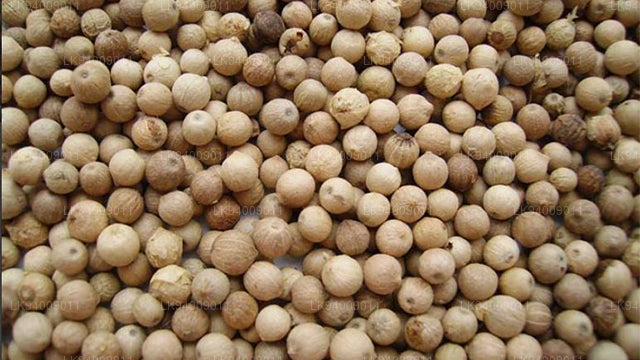
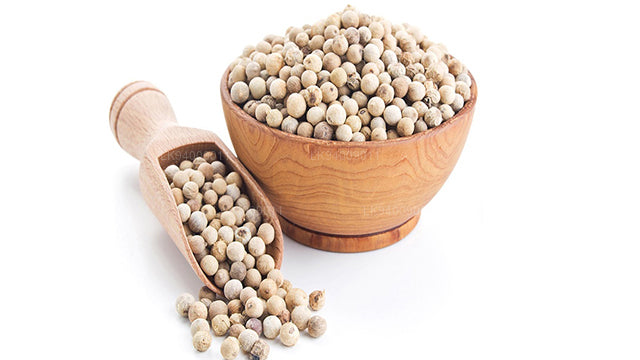
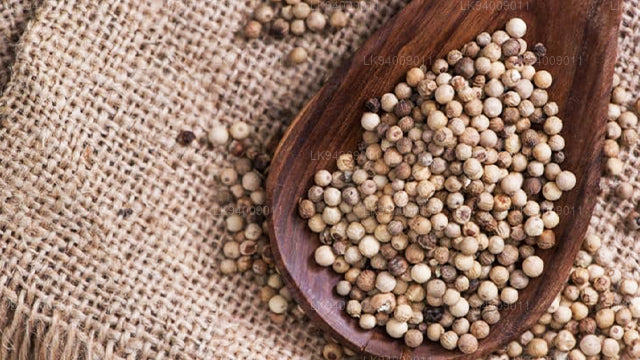
- White pepper — fully ripe berries soaked in water to remove the outer skin, revealing a pale inner seed; hotter, with a slightly fermented note.
Sun-drying on mats or raised racks is the traditional method in Sri Lanka's pepper-growing communities. The process concentrates flavour and reduces moisture to levels safe for long-term storage and export.
What are the health benefits of black pepper?
Pepper's medicinal use is documented in Ayurvedic and traditional Sri Lankan medicine stretching back centuries. Modern research has investigated many of these properties at a cellular level, though it is worth noting that most studies are preliminary and conducted in laboratory or animal settings rather than large clinical trials.
Nutritional profile
Black pepper contains a range of B vitamins — thiamine, riboflavin, and vitamin B6 — as well as vitamins C, E, and K. Mineral content includes zinc, magnesium, phosphorus, and calcium. It is also a source of dietary fibre, though the quantities consumed at typical culinary doses are modest.
Piperine and bioavailability
Perhaps the most researched property of black pepper is piperine's role as a bioenhancer — a substance that improves the body's absorption of other compounds. Studies have shown piperine can significantly increase the bioavailability of curcumin (found in turmeric) and certain pharmaceutical drugs. This is why black pepper and turmeric frequently appear together in traditional recipes and modern wellness formulations.
Antioxidant and anti-inflammatory activity
Piperine exhibits free-radical scavenging activity in cell studies, which has led researchers to investigate its potential role in reducing oxidative stress — a factor implicated in chronic inflammation, cardiovascular disease, and some cancers. Cell-based studies from institutions including the University of Michigan have noted anti-inflammatory and anti-tumour properties of piperine, though these findings have not yet been confirmed in large human trials.
Blood sugar regulation
Early research suggests piperine may support glucose metabolism by improving insulin sensitivity and moderating the activity of certain digestive enzymes involved in breaking down complex carbohydrates. Some studies have also noted piperine acting as a bioenhancer for metformin, a widely prescribed diabetes medication. Anyone managing diabetes should consult a physician before using pepper therapeutically.
Cardiovascular and digestive support
Piperine has been shown in some studies to inhibit enzymes involved in fat synthesis and to prevent reabsorption of bile acids, which may help lower LDL cholesterol levels while supporting healthy HDL levels. Black pepper also stimulates digestive enzyme secretion, which can improve overall digestive efficiency — one of the reasons it has featured in traditional medicine as a remedy for bloating and indigestion.
Oral health
The antibacterial properties of black pepper have been studied in the context of oral health. Traditional remedies in Sri Lanka and South Asia have long used pepper as a treatment for toothache and gum sensitivity, and laboratory research has identified antibacterial activity against some common oral pathogens, though clinical evidence in humans remains limited.
Mood and cognitive function
Oxidative stress in brain tissue is associated with mood disorders. Piperine has been shown in animal studies to reduce oxidative stress markers in brain cells, inhibit monoamine oxidase (an enzyme linked to depression), and support the release of serotonin and dopamine. Human clinical evidence is still early-stage, but the traditional use of pepper in tonic preparations aligns with these directions of research.
How is Ceylon Pepper used in Sri Lankan cuisine?
Pepper is foundational to Sri Lankan cooking. It appears in the island's characteristic black pepper chicken and beef dishes, in the spice blends that form the base of fish curries, in the fermented condiment lunu dehi, and in the street-food snack kokis in some regional variations. Pepper tea — pippali kahata — brewed with ginger and honey, is a standard home remedy for colds and respiratory congestion. Beyond the kitchen, pepper oil extracted from the berries is used in aromatherapy and traditional massage preparations.
Where is pepper grown in Sri Lanka?
Production is concentrated in the wet-zone districts of the island's south and south-west: Matara, Galle, Ratnapura, and Kegalle. Smallholder farmers typically intercrop pepper vines with trees such as coconut or jak, which provide the necessary support and partial shade. The Sinharaja Forest Reserve buffer zone includes communities where traditional spice cultivation has continued for generations alongside conservation efforts. Some estates in the Kandy hill-country also cultivate pepper alongside other cash crops including tea and cinnamon.
How is Ceylon Pepper graded and exported?
The Sri Lanka Spices and Allied Products Exporters' Association and the Sri Lanka Export Development Board set quality standards for exported pepper. Key grading criteria include moisture content, bulk density, volatile oil content, and piperine levels. Ceylon Pepper exported to demanding markets in the EU and Japan must meet strict pesticide residue standards, which is one reason many Ceylon Pepper producers have adopted or are transitioning toward certified organic practices. Sri Lanka's share of global pepper production may be small, but its reputation for quality in specialty markets is well established.