


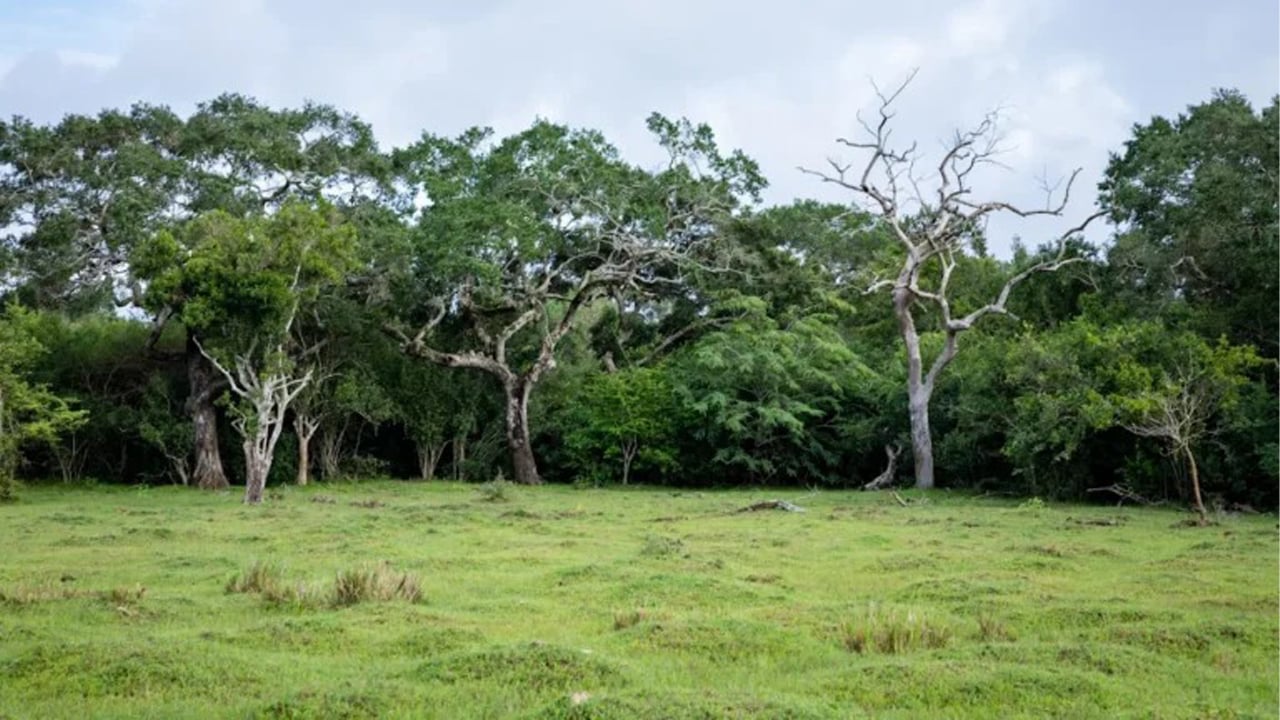


Somawathiya National Park sits in the dry lowlands of Sri Lanka's Eastern Province, straddling the Mahaweli River near Polonnaruwa. It is one of the country's less-visited parks, which is precisely its appeal: the game-viewing is unhurried, the landscape is raw, and the ancient Somawathiya Stupa within the park boundaries gives the experience a cultural dimension rarely found inside a wildlife reserve. For travellers who want genuine remoteness without sacrificing the chance to see elephants, leopards, or rare birds, Somawathiya deserves serious consideration.
What makes Somawathiya National Park different from other Sri Lankan parks?
Most national parks in Sri Lanka are defined primarily by their wildlife. Somawathiya carries a dual identity: it is simultaneously a protected biodiversity zone and an active Buddhist pilgrimage site. The Somawathiya Stupa — believed to enshrine a relic of the Buddha — draws devotees throughout the year, particularly during full-moon poya days. That coexistence of temple, pilgrim, and wild elephant is unusual anywhere in the world, and it gives Somawathiya a particular atmosphere that is hard to replicate elsewhere on the island.
The park also sits where the Mahaweli River — Sri Lanka's longest — curves through the dry zone, creating a mosaic of riverine forest, open grassland, and seasonal wetland. This ecological variety supports a wider range of species than the single-habitat parks further south.
What wildlife can you see at Somawathiya National Park?
Sri Lankan elephants are the headline attraction. Herds move across the park's grasslands and riverbanks year-round, though sightings are most reliable during the dry season when vegetation thins and animals concentrate near permanent water. Leopards are present but elusive, as they are throughout the dry-zone parks. Water buffalo, spotted deer, sambar, and wild boar are regularly observed on morning and late-afternoon game drives.
- Elephants: large herds, especially along the Mahaweli River corridor
- Leopard: present; patience and an early start improve sighting odds
- Water buffalo: often seen near wetland margins
- Mugger crocodile: found along riverbanks and water bodies
- Birds: painted storks, open-bill storks, lesser adjutant, crested serpent eagle, and numerous waders
- Migratory birds: significant arrivals from October through March, including waders from Central Asia and the Palearctic
The park's wetlands are particularly productive for crocodile watching, with mugger crocodiles basking on exposed banks in the cooler morning hours.
What ecosystems does the park protect?
Somawathiya covers around 37,762 hectares of dry mixed evergreen forest, riverine strips, scrubland, and seasonal grassland. The Mahaweli River forms the park's western boundary and is the dominant ecological influence: it floods periodically, depositing nutrients, creating temporary pools, and shaping the composition of the forest along its banks. Further inland, the vegetation shifts to denser dry-zone forest dominated by species such as Pongamia pinnata and thorny scrub typical of the Sri Lankan dry zone.
The seasonal wetlands within the park act as critical refuelling points for migratory waterbirds on the East Asian-Australasian and Central Asian flyways. During peak migration months, a single morning's birdwatching session can yield dozens of species in a short stretch of shoreline.
When is the best time to visit Somawathiya National Park?
The dry season from December to April is the most popular and generally the most rewarding period. Vegetation is lower, water points are finite, and wildlife concentrates in predictable locations. Daytime temperatures can exceed 35 °C by February and March, so early-morning game drives — departing around 06:00 — are strongly recommended.
The park receives the northeast monsoon from October to December, which can make tracks impassable and some areas of the park temporarily inaccessible. The shoulder months of October–November and May–June can still offer worthwhile visits, particularly for birders chasing migratory species, but check road conditions locally before entering.
| Month | Wildlife | Birdwatching | Weather |
|---|---|---|---|
| Dec–Feb | Excellent | Very good (migrants present) | Dry, mild |
| Mar–Apr | Very good | Good | Dry, hot |
| May–Sep | Fair | Fair | Occasional rain |
| Oct–Nov | Variable | Good (migrants arrive) | Northeast monsoon |
How do I get to Somawathiya National Park?
The park's main entrance is approached from Polonnaruwa, which lies roughly 30–40 km to the west and is well connected by road to Colombo, Kandy, and Sigiriya. From Polonnaruwa, a sealed road runs east toward the town of Aralaganwila; from there, a rougher track continues to the park entrance. A 4WD vehicle is advisable, particularly in the wet months.
There is no direct public bus to the park entrance gate, so most visitors arrange a jeep through a locally based operator or a destination management company. Travel time from Colombo is typically five to six hours by road; from Kandy, around three to four hours. For travellers building an itinerary through the Cultural Triangle, Somawathiya pairs naturally with Polonnaruwa's archaeological sites as a single overnight stop.
What activities are available inside the park?
Jeep safaris are the primary activity and must be conducted with a licensed tracker or naturalist inside the park boundaries. Safari vehicles can be arranged at the entrance gate or booked in advance. Two standard game drive slots — early morning and late afternoon — offer the best conditions for wildlife observation.
- Jeep safari: half-day or full-day circuits through the main game-drive tracks
- Birdwatching: particularly productive along the river and around seasonal pools
- Stupa visit: the Somawathiya Stupa and associated temple complex are accessible during daylight hours; modest dress is expected
- Nature walks: permitted in designated buffer zones with a guide; check current regulations at the entrance
Where should I stay when visiting Somawathiya?
Accommodation options close to the park are limited — there are a handful of small guesthouses in Aralaganwila and some basic park bungalows that can be booked through the Department of Wildlife Conservation. Most travellers choose to stay in Polonnaruwa town, which has a broader range of hotels and guest houses, and make a day trip or overnight excursion into the park. Polonnaruwa also provides easy access to the nearby Kaudulla and Minneriya national parks, making the region a solid base for multi-park itineraries.
Is Somawathiya worth visiting compared to more famous Sri Lankan parks?
If Yala or Minneriya are benchmarks, Somawathiya offers a different value proposition: solitude. On a typical game drive you are unlikely to share a waterhole with a convoy of safari vehicles. The trade-off is that visitor infrastructure is thinner, good guides are harder to arrange on the spot, and road access requires more planning. For travellers who prioritise authentic, crowd-free wildlife encounters over convenience, the park rewards the extra effort. For first-time visitors to Sri Lanka with limited time, a more accessible park such as Wilpattu or Minneriya may be a more efficient introduction to the island's wildlife.


