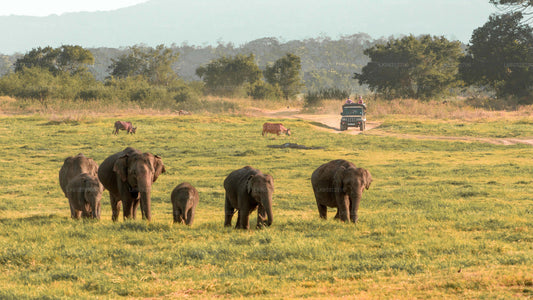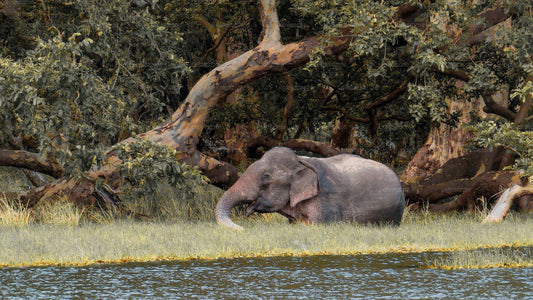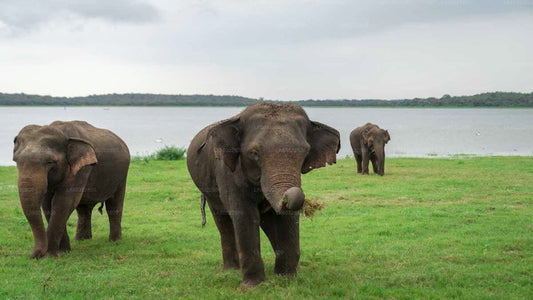
Hurulu Eco Park sits within the broader Hurulu Forest Reserve — a UNESCO-designated biosphere reserve since 1977 — in Sri Lanka's North Central Province. Covering a significant stretch of dry-zone dry evergreen forest, it forms the third leg of one of Asia's most remarkable elephant migration circuits, drawing naturalists and wildlife photographers who want to observe Sri Lankan elephants in a relatively less crowded setting than its famous neighbours.
What makes Hurulu Eco Park different from other Sri Lankan national parks?
Unlike the more visited Minneriya and Kaudulla parks to its east, Hurulu receives fewer safari vehicles, which means quieter game drives and more unhurried wildlife encounters. The park protects a classic dry-zone landscape — sparse canopy of tall hardwoods over scrub and grassland — that supports not only elephants but also leopards, spotted deer, sambar, wild boar, and a wide range of waterbirds. The reserve's relatively low elevation (roughly 90–150 m above sea level) and warm annual average temperature of around 27 °C create ideal conditions for dry-zone species year-round.
When is the best time to visit Hurulu Eco Park?
Timing your visit around the elephant migration cycle gives you the best sightings. Each year, large herds gather at Polonnaruwa-area tanks and surrounding forests before moving in a rough seasonal pattern across the three connected parks:
- July – September: Herds concentrate around Minneriya National Park as the Minneriya tank recedes and exposes lush grass flats.
- October – November: Rains refill the tanks and elephants shift toward Kaudulla National Park.
- December – January: Herds move into Hurulu Eco Park for the final leg of the migration — this is generally the prime window for elephant sightings here.
Outside the peak elephant season, the park remains open and offers good birding and small-mammal sightings throughout the year. The dry season (roughly April or May through September) keeps vegetation lower, making wildlife easier to spot even when elephants are fewer in number.
What wildlife can I expect to see at Hurulu Eco Park?
The Sri Lankan elephant (Elephas maximus maximus) is the headline attraction, and herds of dozens — occasionally over a hundred animals — have been recorded inside the reserve during the December–January peak. Beyond elephants, the park's mix of forest, scrubland, and seasonal water bodies supports a diverse cast of species:
- Leopard (elusive but present)
- Spotted deer (chital) and sambar
- Wild boar and grey langur
- Mugger crocodile around water holes
- Painted stork, grey heron, and numerous dry-zone raptors
- Monitor lizard and star tortoise
The reserve's forest edges also harbour several endemic dry-zone plant species, including Acacia chundra, which forms an important part of the habitat structure for smaller mammals and birds.
How do I get to Hurulu Eco Park from Colombo, Sigiriya, or Kandy?
The park's main entrance is located near the town of Habarana, making it straightforward to reach from several popular tourist hubs:
| Departure point | Approximate distance | Typical journey time |
|---|---|---|
| Habarana | ~5 km | 10–15 minutes |
| Sigiriya | ~20 km | 30–40 minutes |
| Dambulla | ~30 km | 40–50 minutes |
| Polonnaruwa | ~55 km | 1–1.5 hours |
| Kandy | ~115 km | 2.5–3 hours |
| Colombo | ~190 km | 3.5–4.5 hours |
Most visitors combine the park with nearby cultural sites. The Sigiriya rock fortress is under an hour away and pairs naturally with an afternoon or early-morning game drive.
What is the conservation context of the Hurulu Forest Reserve?
Hurulu's designation as a biosphere reserve by UNESCO in 1977 reflects its ecological significance, particularly as a critical corridor for the Sri Lankan elephant — a subspecies that exhibits distinct migratory behaviour across the dry-zone landscape. The reserve is bordered by several other protected areas, including the Ritigala Strict Nature Reserve to the west and the Minneriya-Girithale and Mahaweli flood plain nature reserves. Together these form an interconnected network of habitat that allows elephant herds to follow seasonal food and water availability across a wide range.
Human-elephant conflict remains an ongoing challenge. As settlements and agricultural land expand around the forest edges, elephants increasingly come into contact with farming communities. Translocation programmes and electric fence schemes are among the measures used, though conservationists emphasise that protecting intact forest corridors is the most sustainable long-term approach. Visitors who choose responsible, park-authorised safari operators contribute directly to the revenue that supports ranger patrols and wildlife management.
How is a safari inside Hurulu Eco Park conducted?
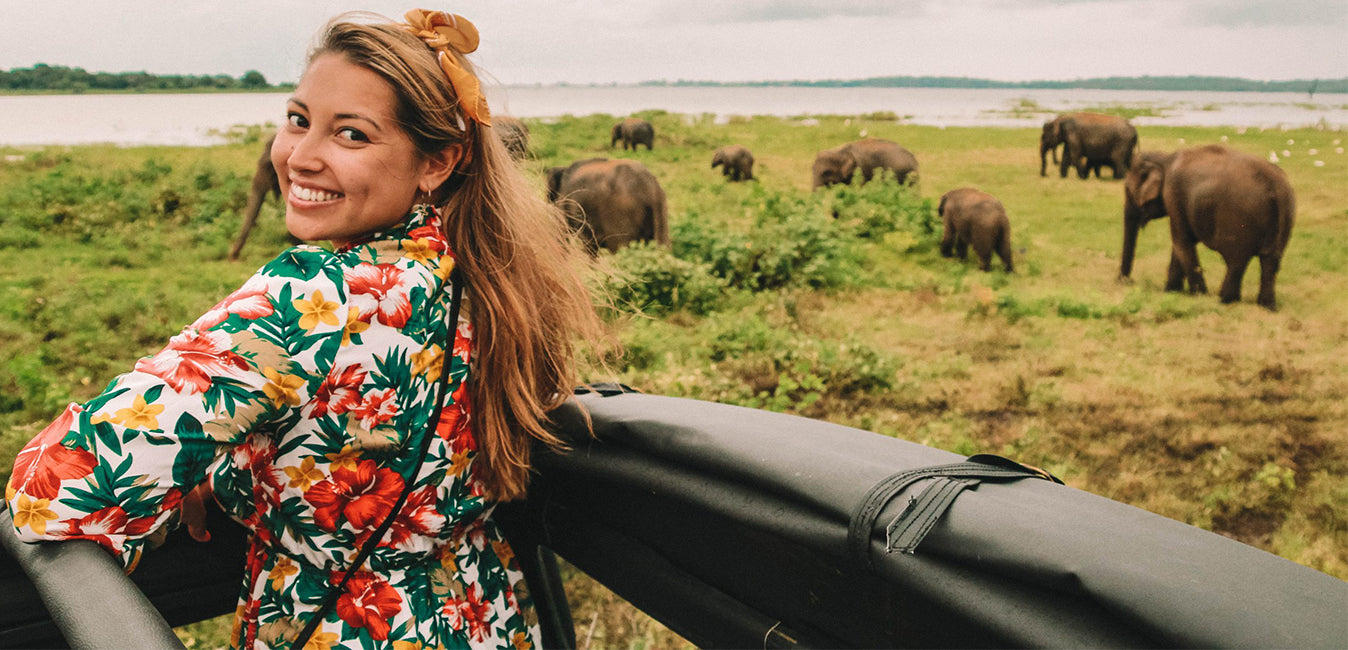
All game drives inside the park must use a park-registered jeep or safari vehicle — private cars are not permitted beyond the entrance gate. Safari vehicles typically seat four to six passengers and are accompanied by a trained tracker or naturalist guide. Most safaris last around three hours, with early morning (departing around 06:00) and late afternoon (departing around 14:30–15:00) being the most productive times for wildlife activity. Nights inside the park are not permitted for standard safari visitors.
Lakpura offers multiple safari formats for Hurulu, from shared departures to private guided drives with a naturalist, as well as transfer packages that incorporate the park into a broader itinerary. Visitors with a specific interest in elephant behaviour may benefit from a naturalist-led drive, which provides context on herd dynamics and migration patterns that a standard tracker may not cover in depth.
Are there accommodation options near Hurulu Eco Park?
Habarana serves as the most convenient base, with a range of lodges and hotels within easy reach of the park entrance. The Deer Park Hotel in Giritale offers a quieter lakeside alternative a short drive to the east, within comfortable range of both Hurulu and the Polonnaruwa heritage city. Sigiriya village also has several properties suited to wildlife-focused itineraries.