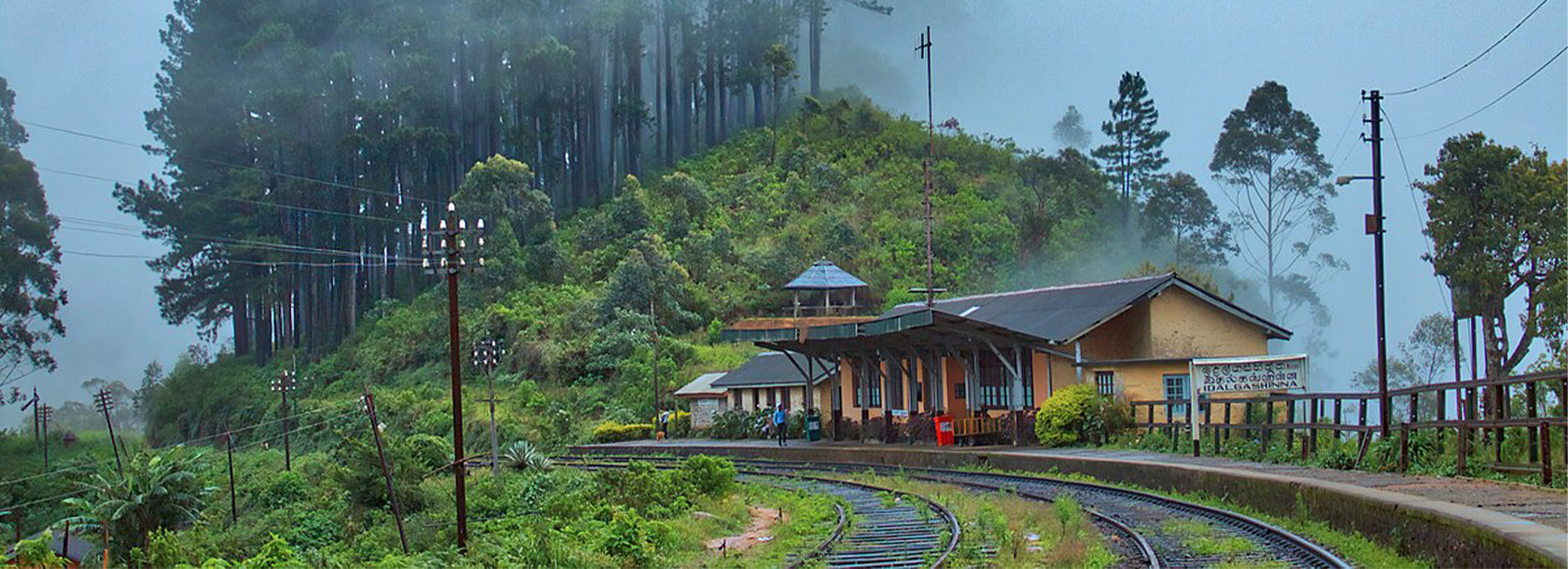
Perched on a steep ridge within the Haputale-Namunukula Range in Badulla District, Idalgashinna is one of Sri Lanka's least-visited yet most rewarding hill-country destinations. At an altitude that keeps the village draped in mist for much of the year, it rewards curious travellers with panoramic views, working tea estates, and a railway station that doubles as a minor geographical curiosity.
What makes Idalgashinna Railway Station so unusual?
The station sits precisely on a watershed ridge, meaning rainwater falling on the left side of the roof drains eventually into the Mahaweli River — Sri Lanka's longest — while water falling on the right side finds its way to the Walawe River, which flows south toward Udawalawe. Few places in the island allow you to stand in two river catchments simultaneously.
On clear days, the view from the platform extends south all the way to the coast. Local accounts claim that the Dondra Head Lighthouse — marking the southernmost tip of Sri Lanka — is visible at night. Whether or not visibility cooperates on a given evening, the panorama of ridgelines, tea country, and distant ocean light is worth the journey alone.
The station building itself is a classic colonial-era structure framed by long, dark goods sheds that disappear into the fog at either end. Pine groves and Ceylon tea gardens press in on all sides, and the sub-post office nearby is the only commercial landmark of note in the immediate vicinity.
How do you get to Idalgashinna from Colombo or Ella?
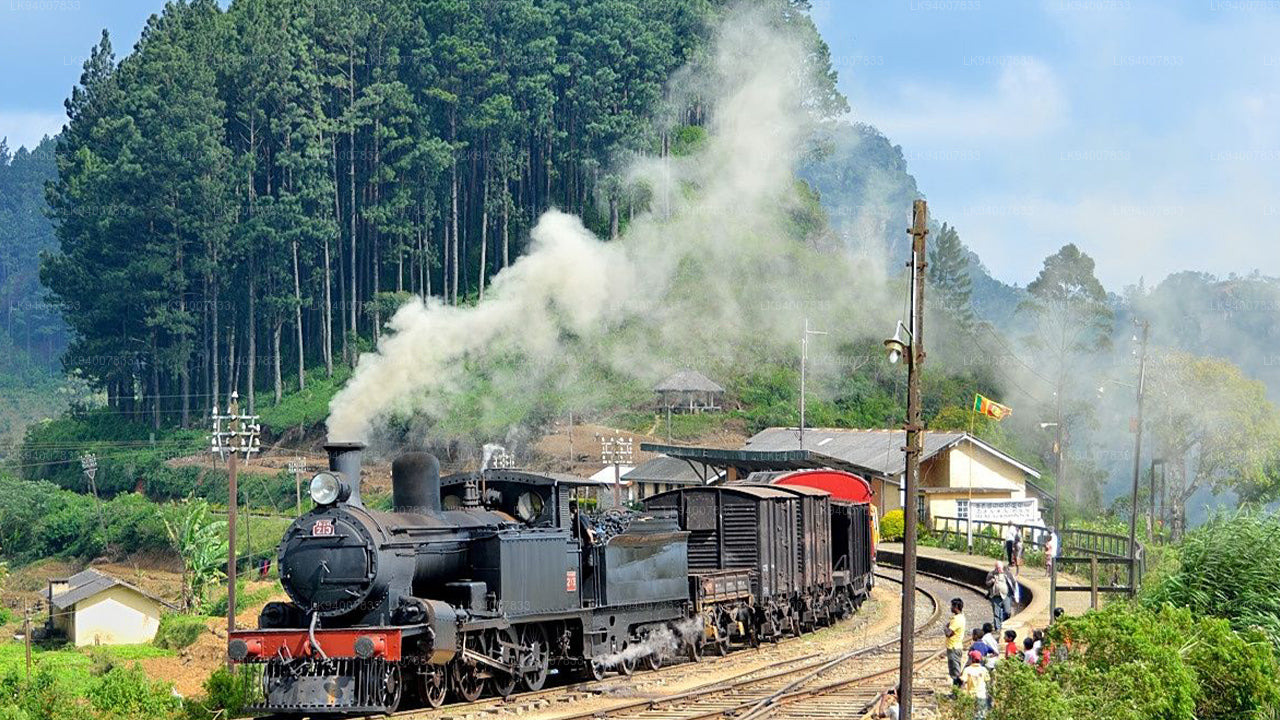
The most atmospheric route is by train on the scenic Colombo–Badulla Udarata Menike or Podi Menike services. Idalgashinna station lies between Ohiya and Haputale, making it easily combined with a visit to Ella to the east or Horton Plains to the west. Journey times from Colombo run to roughly seven or eight hours; from Ella, the trip is under an hour.
By road, Idalgashinna is accessible via the A4 highway from Haputale, then a turn-off onto mountain roads. Self-drive is possible but the gradients are steep and fog can reduce visibility sharply after midday. A private transfer is a practical alternative for families or anyone carrying camping gear.
What can you do near Idalgashinna?
The area's most popular activity is hiking to Idalgashinna Mountain, the peak visible beyond the station on the Ohiya side. The trail is accessible enough that it sees overnight camping by both solo travellers and groups. If you plan to walk along the railway line itself, note that rail hiking requires prior permission from the Sri Lanka Railways Department — an easy formality but a necessary one.
- Tea estate walks: Idalgashinna's tea cultivation dates to the mid-1980s and the estates around the village are relatively compact, making informal walking easy. Some estates welcome visitors; check locally on arrival.
- Birdwatching: The Haputale-Namunukula Range is within the island's montane zone, which supports several endemic bird species. Dawn hours are most productive before the mist thickens.
- Photography: The combination of a colonial railway platform, fog rolling through pine stands, and long mountain vistas produces conditions that reward wide-angle and telephoto work equally.
- Day trips: Horton Plains National Park is reachable in under two hours, making it a logical add-on for naturalists.
What is the best time to visit Idalgashinna?
Idalgashinna sits in Uva Province, which has a distinct inter-monsoonal dry spell roughly from July to September — this is generally the clearest period, when the long southern views are most reliable. The months of January to March also tend to offer reasonable weather. Heavy mist and rain are common from October to December as the northeast monsoon affects the highlands indirectly.
Even in the wetter months, the fog creates an atmosphere that many travellers find more compelling than clear skies. Mornings are usually clearest; plan to arrive early if a specific viewpoint matters to you.
Who lives in Idalgashinna and what is the local culture like?
The village has a mixed Sinhalese and Tamil community, reflecting the broader demographic pattern of Sri Lanka's central hill estates. Tamil estate workers and their descendants have been part of this landscape for generations, and the Government Tamil School below the railway station serves the local community. The coexistence of cultures here is low-key and genuine rather than performed for tourism.
There are no large hotels in the village. Accommodation options are limited to small guesthouses and the occasional homestay, which suits the pace of the place.
Is Idalgashinna suitable for budget travellers and backpackers?
Yes — the train is inexpensive, accommodation is modest in price, and most of the activities (walking, viewpoints, the railway station itself) are free or very low cost. The village has basic facilities including a sub-post office but limited ATMs; carry sufficient cash from Haputale or Bandarawela before heading up.