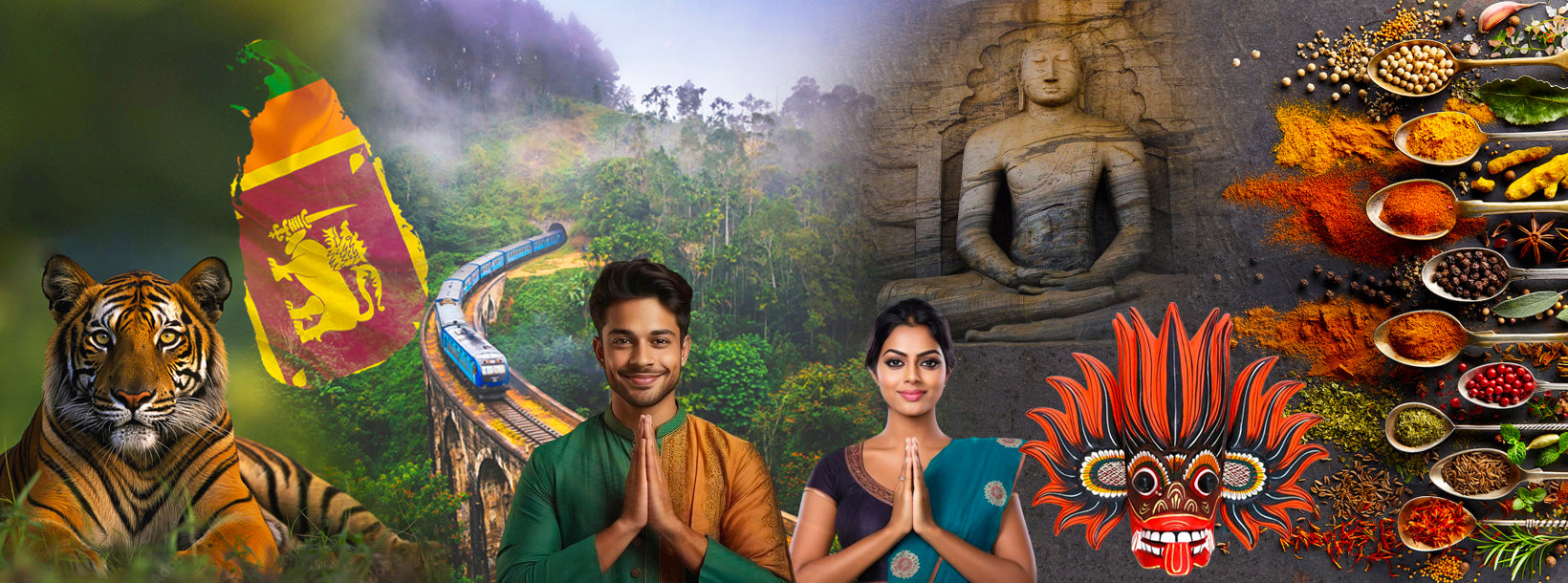
Indian Tamils


Indian Tamils of Sri Lanka, distinct from the native Sri Lankan Tamils, are an ethnic group primarily located in the central highlands of the island. Their history in Sri Lanka is relatively recent compared to indigenous Sri Lankan Tamils, tracing back to the British colonial era starting in the early 19th century. They were brought from India by the British colonizers as indentured laborers to work on tea, coffee, and rubber plantations.
Settled mainly in the regions of Nuwara Eliya, Badulla, and Ratnapura, Indian Tamils have formed vibrant communities whose lives have revolved around plantation work. These regions are known for their cool climate and fertile soil, conditions ideal for the cultivation of tea, which remains Sri Lanka's most famous export. Despite their significant contributions to the economy, Indian Tamils faced and still encounter numerous challenges regarding their social, economic, and political rights.
During the early and mid-20th century, Indian Tamils were disenfranchised, as they were not considered citizens of Sri Lanka. This legal status led to widespread marginalization and limited their access to government services, education, and employment opportunities outside the plantations. It wasn't until the 1960s and subsequent decades that steps were taken to grant citizenship to those born in Sri Lanka, a change that slowly began to alter their status and prospects.
Culturally, Indian Tamils have retained strong ties to their Indian roots, which is reflected in their languages, religions, and daily practices. They predominantly speak Tamil and practice Hinduism, with their religious and cultural festivals becoming a central aspect of their community life. The colorful celebrations of Deepavali and Thai Pongal are particularly significant, featuring rituals, traditional music, and dance that underscore their rich cultural heritage.
Despite their contributions to Sri Lanka’s cultural tapestry and economy, Indian Tamils have often lived in isolated communities, with their settlements centered around plantations. The geographic and social isolation has contributed to persistent socioeconomic disadvantages. Efforts have been ongoing to improve their living and working conditions, though progress has been gradual and uneven.
In recent years, there has been an increasing awareness of the unique identity and needs of the Indian Tamil community in Sri Lanka. Non-governmental organizations and government initiatives aimed at improving education, healthcare, and housing conditions have started to have an impact, helping to integrate Indian Tamils more fully into the broader Sri Lankan society.
Their journey reflects a history of resilience and adaptation as they continue to navigate the complexities of identity, belonging, and progress in a multi-ethnic Sri Lanka. The story of Indian Tamils is not just a narrative of labor and struggle but also one of cultural richness and community strength, contr