Rising four stories above the old ramparts of Galle Fort, the Galle Clock Tower is one of the most recognisable colonial landmarks on Sri Lanka's southern coast. Built in the closing decades of the 19th century, it stands on the site of a former guardroom, positioned to overlook the surrounding bastions and the sweep of the harbour beyond. Unlike many colonial monuments erected to honour governors or military commanders, this one was raised by ordinary citizens — a rare act of public gratitude that gives the tower a distinctly human story.
Who was the Galle Clock Tower built for?
The tower was erected in memory of Dr. Peter Daniel Anthonisz, a colonial surgeon born in Galle who served both the town's medical needs and its political life as a member of the Legislative Council. When residents of Galle decided to commemorate him, they chose to fund the construction through public subscription — each contribution a small acknowledgement of the doctor's reputation for skill and compassion.
The clock mechanism itself was a separate gift, donated by Mudaliyar Samson de Abrew Rajapakse, a patient who credited Dr. Anthonisz with his recovery. That combination of communal fundraising and personal gratitude is preserved in a stone plaque that remains legible on the tower today:
"This tower erected by public subscription to the perpetual memory of Peter Daniel Anthonisz (born in Galle) in testimony of his skill and benevolence in relieving human suffering. MDCCCLXXXIII."
The Roman numeral date — 1883 — anchors the tower firmly in the late colonial period, when Galle was still one of the busiest ports in the Indian Ocean.
Where exactly is the Galle Clock Tower located?
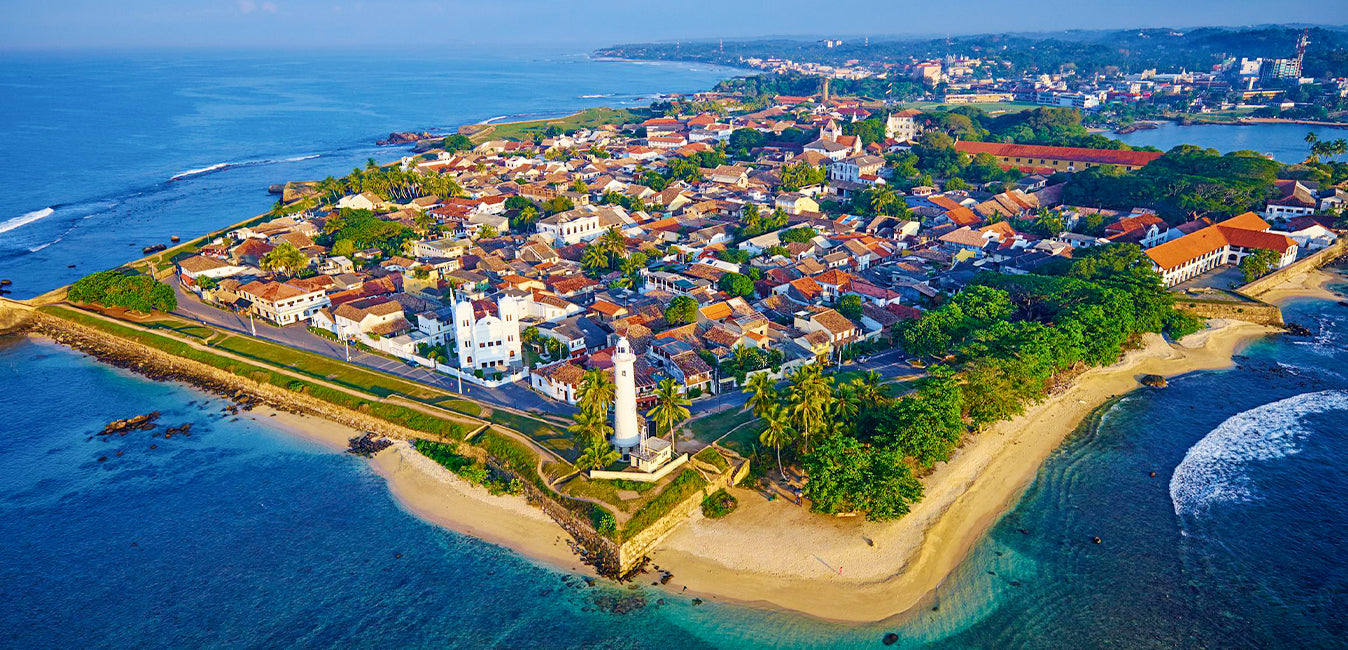
The tower stands inside the walled precinct of Galle Fort, a UNESCO World Heritage Site that covers the southwestern tip of the city. It is positioned near the Moon Bastion, one of the three principal bastions that define the fort's seaward defences. The surrounding streetscape — Dutch-colonial buildings, narrow lanes of polished stone, and the ever-present sound of the ocean on three sides — provides a context that makes the tower feel far older than its 19th-century origins.
Getting there is straightforward. The fort is walkable from the Galle bus and railway stations in under fifteen minutes. Once inside the main gate, the clock tower is visible from several vantage points along the rampart walk and from the central streets that cross the interior of the fort.
What is the best way to photograph the Galle Clock Tower?
The tower's height and its tight setting among other buildings make close-up photography awkward. Standing directly beneath it, the severe upward angle compresses the stonework and loses the structure's proportions. A more rewarding approach is to walk to the Moon Bastion, which the tower faces. From there, a moderate telephoto or even a standard lens captures the full height of the monument against the sky, with the ramparts and sea as a natural backdrop.
Early morning light falls favourably on the tower's eastern face, while late afternoon produces warmer tones and longer shadows that pick out the carved stone detailing. The fort in general is less crowded before 9 am, which also makes for cleaner compositions without passing tuk-tuks or tourist groups in frame.
What else can you see near the Galle Clock Tower?
The clock tower sits within a dense concentration of historical structures. Within a short walk visitors typically find:
- The Galle Fort ramparts, which offer unobstructed views across the Indian Ocean
- The Dutch Reformed Church (Groote Kerk), one of the oldest Protestant churches in Asia
- The National Maritime Museum of Sri Lanka, housed in a former Dutch warehouse
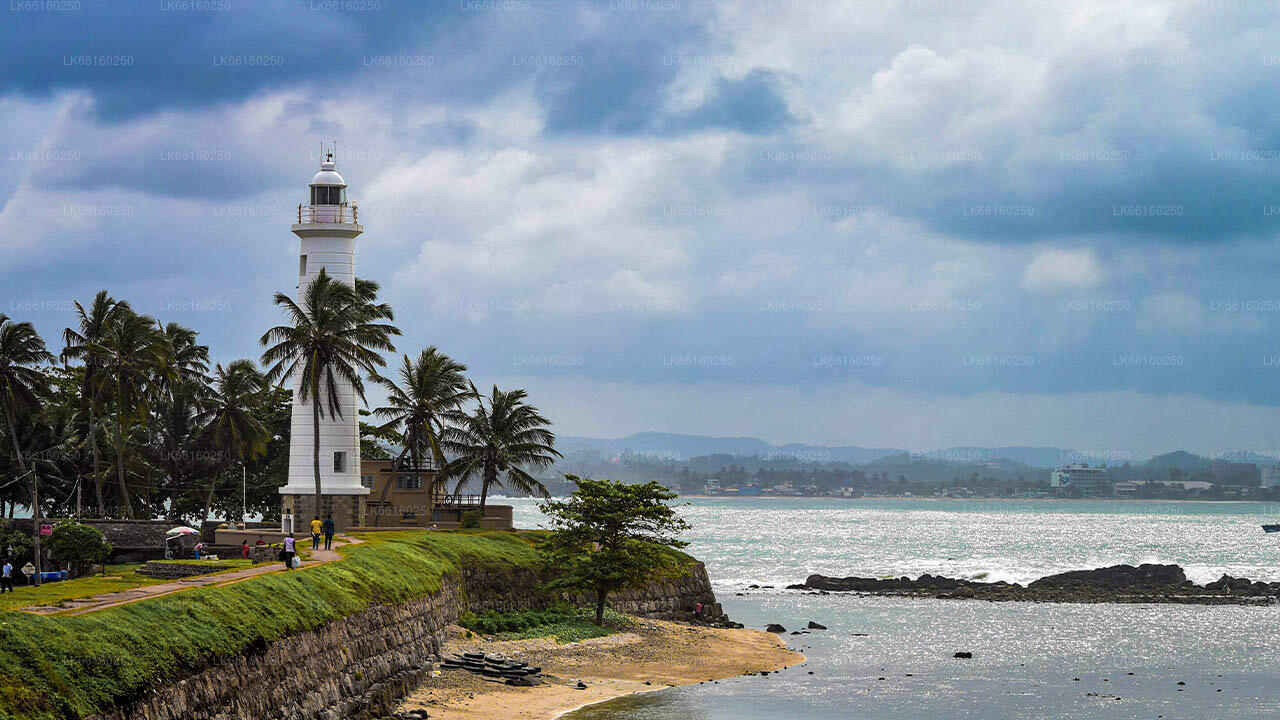
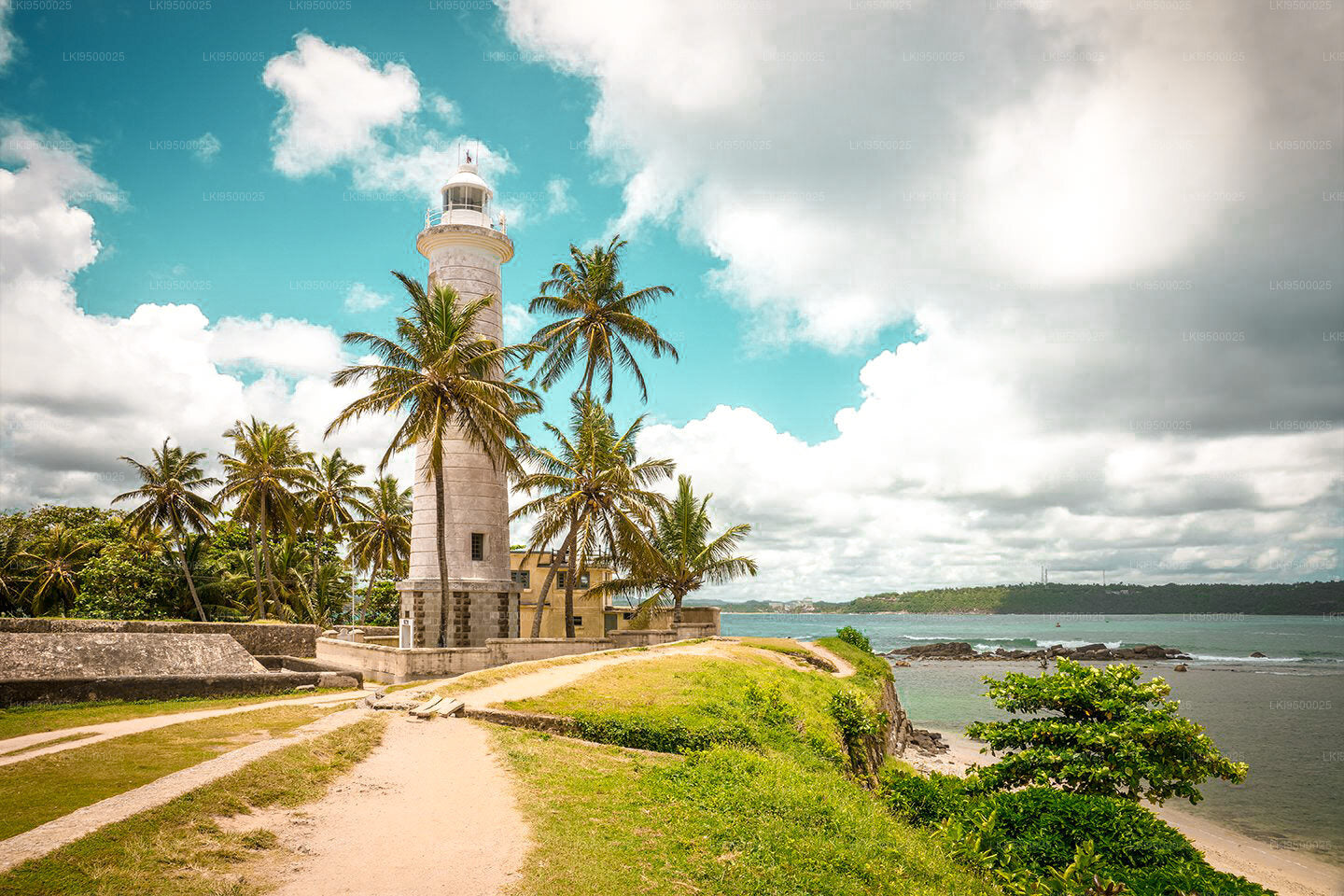
- The Galle Fort lighthouse, still operational on the southernmost bastion
- The old Dutch Hospital, now converted to a retail and dining precinct
- Numerous boutique galleries, cafes, and heritage guesthouses along Church Street and Leyn Baan Street
The fort rewards slow exploration on foot. Most visitors find that half a day is sufficient to cover the main sites, though those with an interest in colonial architecture or maritime history often linger considerably longer.
Is there an entry fee for Galle Fort?
The fort itself is an open, inhabited area — there is no gate charge to walk through the ramparts or the streets. Some individual attractions inside, such as the Maritime Museum, charge a modest admission fee. The clock tower can be viewed and photographed freely from the public streets and bastions at any time of day.
How does the Galle Clock Tower fit into the broader history of Galle Fort?
Galle Fort was first fortified by the Portuguese in the early 16th century, then substantially rebuilt by the Dutch East India Company (VOC) after they took control in 1640. The British assumed administration in 1796 and made incremental additions throughout the 19th century. The clock tower belongs to that final British phase, a period when Galle was being slowly eclipsed by Colombo as the island's primary commercial port but remained an important administrative and military centre.
Today the fort is inscribed on the UNESCO World Heritage List as an outstanding example of a European fortification in Asia that incorporates local building traditions. The clock tower, while not the fort's oldest structure, is one of its most immediately recognisable features and a useful reference point for navigating the interior.
When is the best time to visit Galle Fort and the Clock Tower?
The southern coast of Sri Lanka is generally at its driest and most accessible between November and April, when the southwest monsoon has retreated. Galle Fort can be visited year-round, but heavy rain between May and September can make walking the exposed ramparts less pleasant. The months of December through March coincide with peak tourist season; visiting on a weekday morning tends to mean quieter streets and more relaxed sightseeing. The fort also comes alive during the annual Galle Literary Festival, typically held in January, when the heritage buildings host readings, panels, and events across several days.