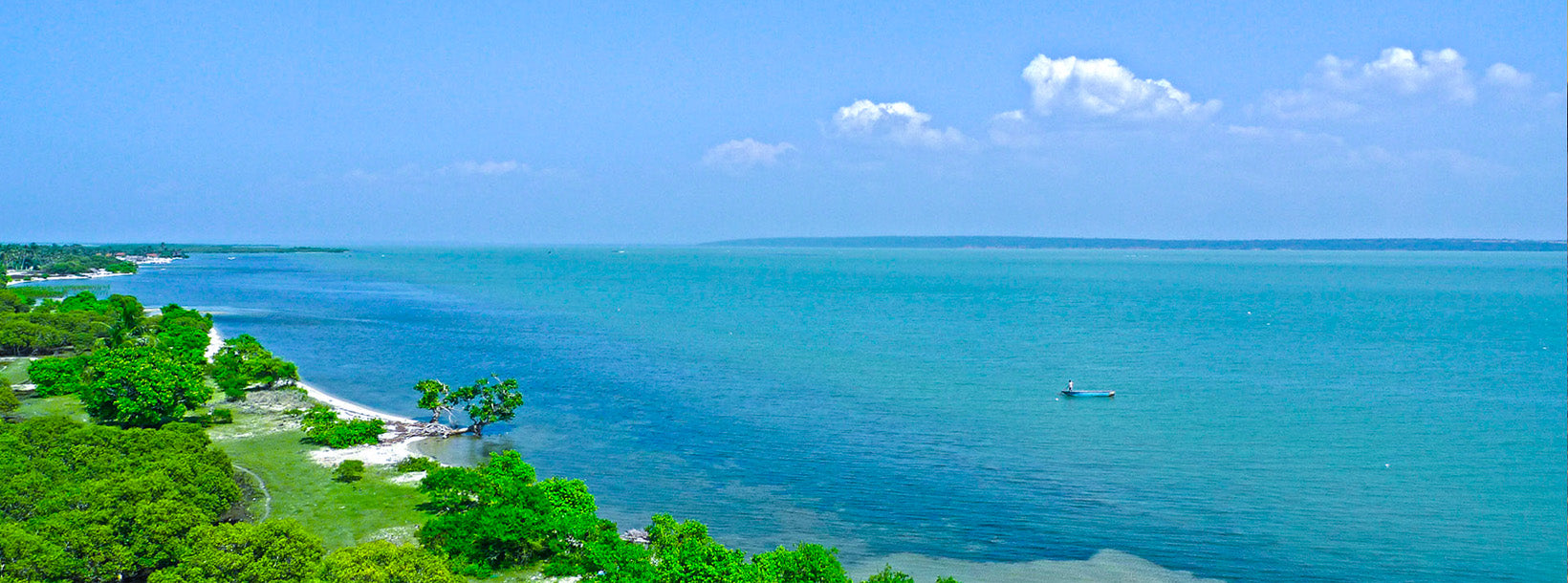
Puttalam sits roughly 120 kilometres north of Colombo on Sri Lanka's north-western coastline, where a broad lagoon meets a patchwork of salt pans, mangroves, and paddy fields. As the administrative capital of Puttalam District, it is a working town rather than a resort, and that is precisely what makes it interesting — visitors who venture this far north of Negombo find an authentic slice of Sri Lankan coastal life largely untouched by mass tourism.
What is Puttalam known for?
The town sits at the southern edge of a large, sheltered lagoon that has shaped its economy for centuries. Fishing is central to daily life here: brightly painted outriggers head out before dawn, and the catch — including prawn, crab, and various reef fish — is sold at a lively market near the waterfront by mid-morning. Alongside fishing, the surrounding district is a major producer of coconuts and onions, and the salt harvested from the coastal flats supplies much of Sri Lanka's domestic demand. This blend of sea, land, and trade gives Puttalam a character that feels genuinely productive rather than performatively picturesque.
The town is also notably diverse. Sinhalese, Sri Lankan Tamil, and Sri Lankan Moor communities have coexisted here for generations, and that is visible in the town's mosques, kovils, and Buddhist temples that stand within walking distance of each other. Friday prayers, Pongal celebrations, and Vesak illuminations each mark the calendar in their own way, layering the town's streets with a low-key but real cultural richness.
What can I see and do near Puttalam?
Wilpattu National Park is the single most compelling reason many travellers make the journey to this part of Sri Lanka. The park's northern entrance is accessible from Puttalam, and Wilpattu is one of the largest and oldest national parks on the island — its network of natural lakes, called villus, create watering holes that attract leopards, sloth bears, elephants, spotted deer, and a remarkable diversity of waterbirds. Because Wilpattu reopened to tourism only in 2010 after decades of restricted access, its wildlife density and forest cover remain exceptional.
The Puttalam Lagoon itself rewards a quiet morning on a boat. The lagoon's mangrove channels shelter crocodiles and migratory birds, and local fishermen sometimes offer informal guided trips. The shoreline north of town leads to Kalpitiya, a peninsula with shallow sandy beaches and, between November and April, some of the most consistent conditions in South Asia for kitesurfing.
The salt pans that spread inland from the coast are visually striking — shallow grids of water that turn pink and white as salt crystallises under the sun — and a handful of operations welcome visitors during the harvest season, typically from May to September.
For history, the Portuguese and Dutch left traces throughout the North Western Province. The town of Chilaw, about 40 kilometres south, has a notable kovil at Munnesvaram that draws pilgrims from across the island, and the area around Anamaduwa preserves fragments of ancient irrigation tanks that predate colonial settlement by many centuries.
When is the best time to visit Puttalam?
Puttalam lies in the dry zone and receives most of its rainfall between October and December, when the north-eastern monsoon moves across the island. The most comfortable period for visitors is January to April, when skies are reliably clear, temperatures are warm rather than oppressive, and Wilpattu's drier conditions push wildlife toward the villus where sightings are easier. The kitesurfing season at nearby Kalpitiya runs from roughly May through October, drawing a separate wave of visitors who are happy to accept some cloud cover in exchange for consistent wind.
| Detail | Information |
|---|---|
| Province | North Western Province |
| District | Puttalam |
| Distance from Colombo | Around 120 km by road |
| Nearest national park | Wilpattu National Park |
| Best months to visit | January – April |
| Primary language | Sinhala; Tamil and English also spoken |
How do I get to Puttalam from Colombo?
By road, the A3 coastal highway links Colombo to Puttalam in around two and a half to three hours depending on traffic. The route passes through Negombo and Chilaw, making it easy to combine stops along the way. A railway line also connects Colombo Fort to Puttalam, with several departures daily; the journey takes a little longer than driving but offers views across paddy fields and lagoon margins that you will miss at road level. Private transfers from Colombo Bandaranaike International Airport to Puttalam properties are the most convenient option if you are arriving directly from a flight.
What is the ecology of the Puttalam region like?
The district contains a striking variety of coastal habitats compressed into a relatively small area. The Puttalam Lagoon is one of the largest lagoon systems in Sri Lanka, fringed by mangrove forests that serve as nurseries for fish and nesting sites for egrets, herons, and kingfishers. Further inland, the landscape shifts to scrub jungle and irrigated agriculture before opening into the dense dry forest of Wilpattu. The salt pans, while industrial in function, attract flocks of flamingos and waders during the migratory season, particularly between September and March. This ecological variety makes the region disproportionately rewarding for birdwatchers relative to its modest profile on the tourist circuit.
Where should I stay in Puttalam?
Accommodation options range from simple guesthouses in the town itself to estate retreats and eco-lodges on the district's edges. Horathapola Estate, a working coconut and spice plantation north of Chilaw and within Puttalam District, offers a quieter alternative to beach resorts — guests stay in a restored colonial property surrounded by orchards and can visit the estate's production areas. For those prioritising Wilpattu access, several nature lodges sit on the park's periphery and can arrange early-morning game drives. Palagama Beach, on the Kalpitiya peninsula, caters to a more beach-oriented stay. The right base depends on whether wildlife, water sports, or a cultural town experience is the priority.
Is Puttalam suitable for families with children?
It can work well, provided expectations are calibrated. Families who enjoy nature rather than resort amenities will find Wilpattu game drives genuinely exciting for older children, and the lagoon boat trips are low-key enough for younger ones. The town itself does not have purpose-built tourist infrastructure — no theme parks, no family beach clubs — but the authentic atmosphere and accessible coastal scenery have their own appeal. Palagama and Kalpitiya beaches are calmer and more suitable for swimming than many of Sri Lanka's surf beaches further south.