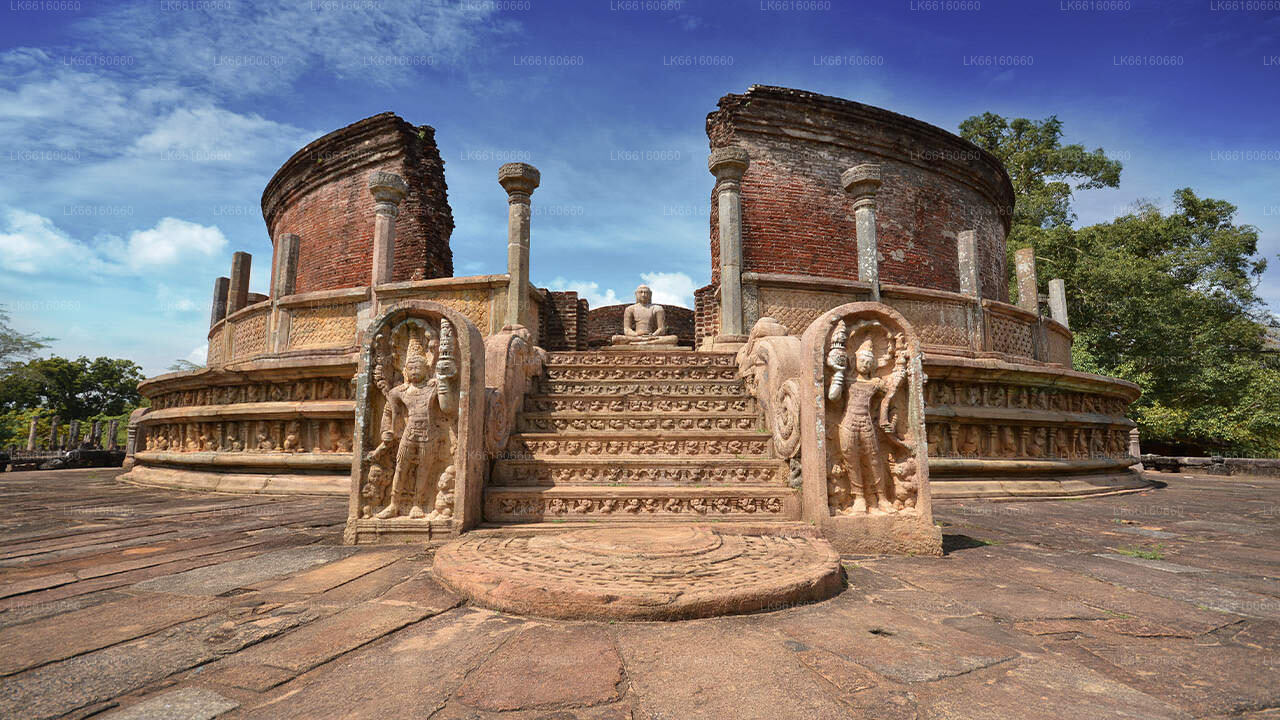
Gal Vihara (ගල් විහාරය)


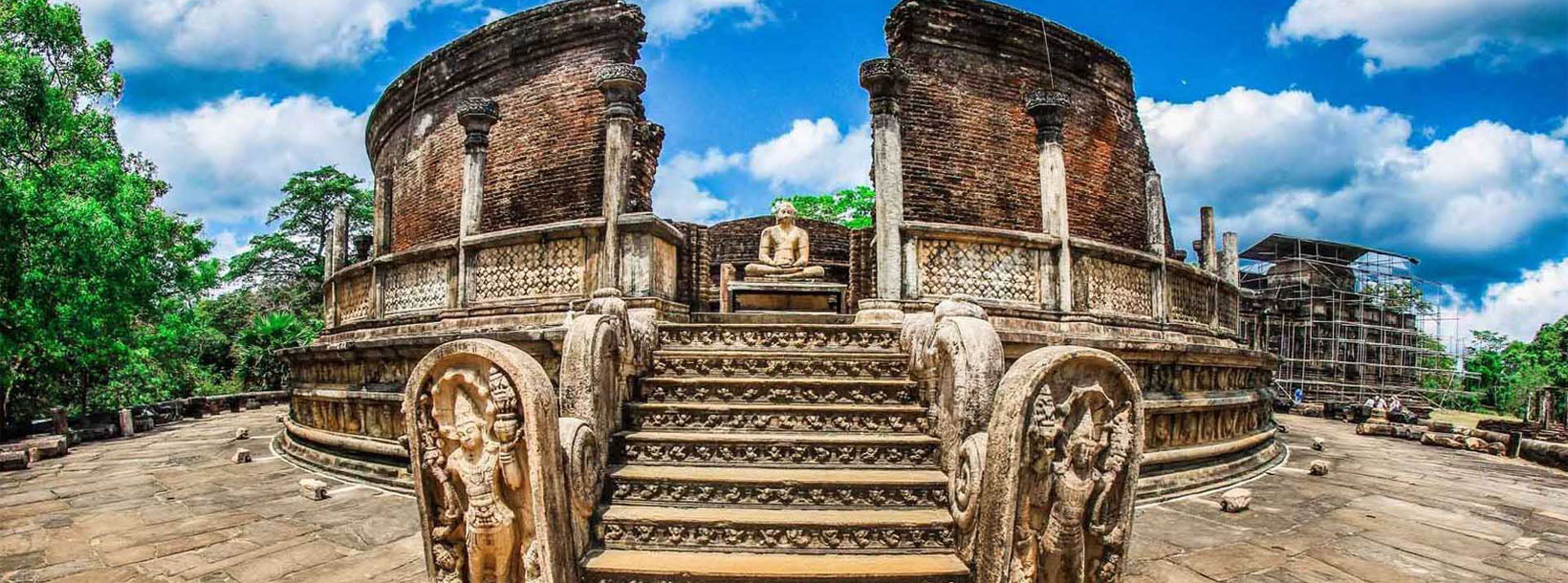
Gal Vihara (Sinhala: stone temple), Buddhist Temple at (UNESCO World Heritage Site) at Polonnaruwa, Sri Lanka is the most perfect specimen of Buddha statue hewn out of solid stone. Crafted during the reign of King Parakrabahu (1153-1186 A.C), Gal Vihara statues are still incomplete preservation with their irresistible charm and sublimity. It is undeniable that the sculptors of Gal Vihara were of greater skill and expertise in the art of stone sculpture in Sri Lanka. The images at Gal Vihara have brought about a higher level of awakening in the observers with respect to Buddhist art in Sri Lanka.
Gal Vihara at Polonnaruwa in Sri Lanka known as “The Northern Temple” at the beginning of its history, is a cave complex, about 27 meters in length and 10 meters in height at the center and sloping towards the ends, with sculptures carved on the solid rock in four shrines.
Gal Vihara, like numerous other Buddhist shrines of Sri Lanka, is a shrine of Theravada Buddhism. Then again Gal Vihara testifies to the influence of Mahayana Buddhism during the 12th century.
Caves of Gal Vihara
Gal Vihara consists of four cave shrines with sculptures hallowed out of granite rock.Caves from left to right are
(a) Cave of Vijjadharas,
(b) Excavated Cave,
(c) Cave of Standing Image and
(d) Cave of Reclining Image.
Between the Excavated Cave and the Cave of Standing Image is an inscription. In front of the Excavated Cave are remains of a pavilion.
Though the brick walls of the four shrines had collapsed centuries ago, the foundations remain giving evidence that each statue was separated from one another.
Cave of Vijjadharas
The cave consists of a main image of Buddha sculpted out of the rock boulder, having carved round and four small bas relief carvings of Buddha. The small bas relief statues are carved on either side, above the head of the main image.
The main image depicts the chief of meditative Buddhas titled Dharmadhatu, Adi Buddha, Vairocana, and Vajrasattva.
The four small images of the Buddha in Dhayani Mudra represent the four directions of the universe.
All five images are of Dhyana Mudra or meditative posture is believed to depict the all-embracing Body of Law (Dharmakaya).
The Excavated Cave
The Excavated cave too houses an image of Buddha in dhayana mudra or meditative attitude sculpted out of the rock boulder. The image herein is smaller than the main image at Vijjadhara Cave.
The Cave of Standing Image
The Buddha statue rising to 7 meters in height herein, stands on a lotus pedestal called Padmasana. Padmasana signifies that Buddha is a transcendental being.
The Cave of Standing image: Ananda or Buddha
The standing statue is at the head of the massive reclining Buddha. The standing statue’s placing of arms across the breast has caused a controversy as to the identity o