The Crimson-fronted Barbet (Psilopogon rubricapillus) is one of Sri Lanka's most frequently encountered endemic birds — a compact, predominantly green species that announces itself long before it is seen. Its persistent, repetitive call rings out from garden trees and forest canopies across the island's lowlands and foothills, making it a familiar presence for anyone who spends time outdoors in Sri Lanka.
How do you identify a Crimson-fronted Barbet?
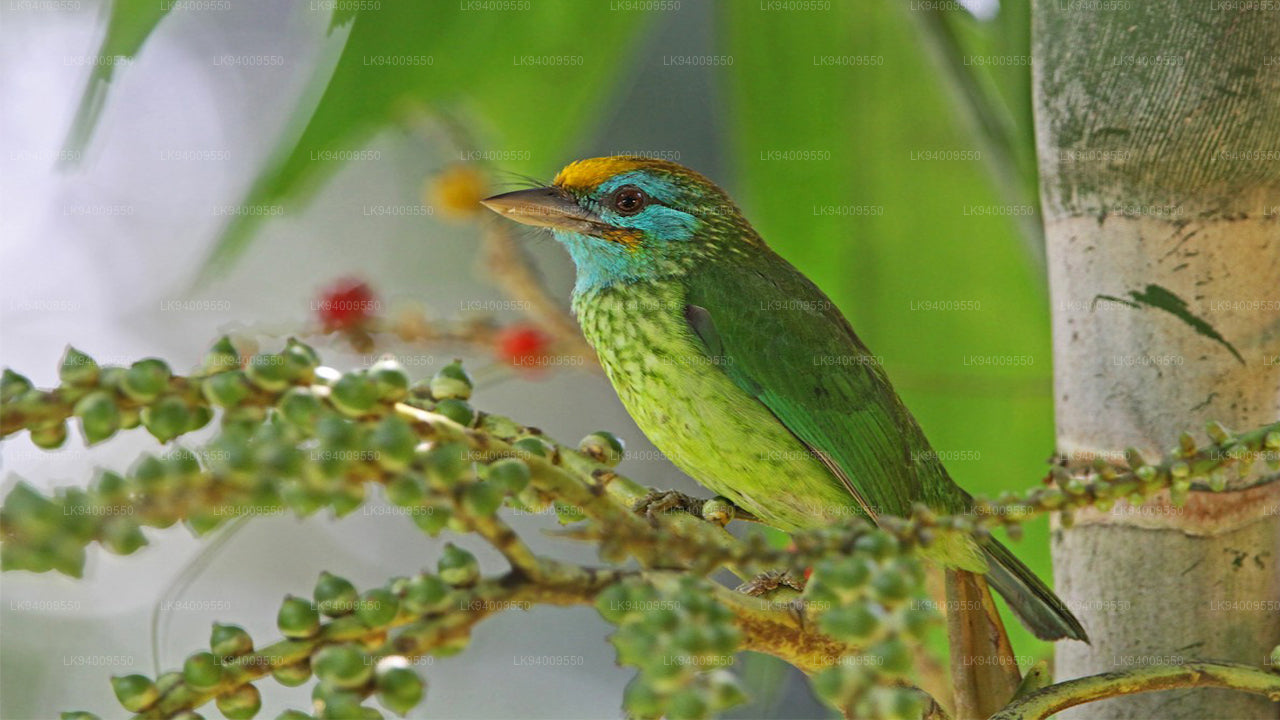
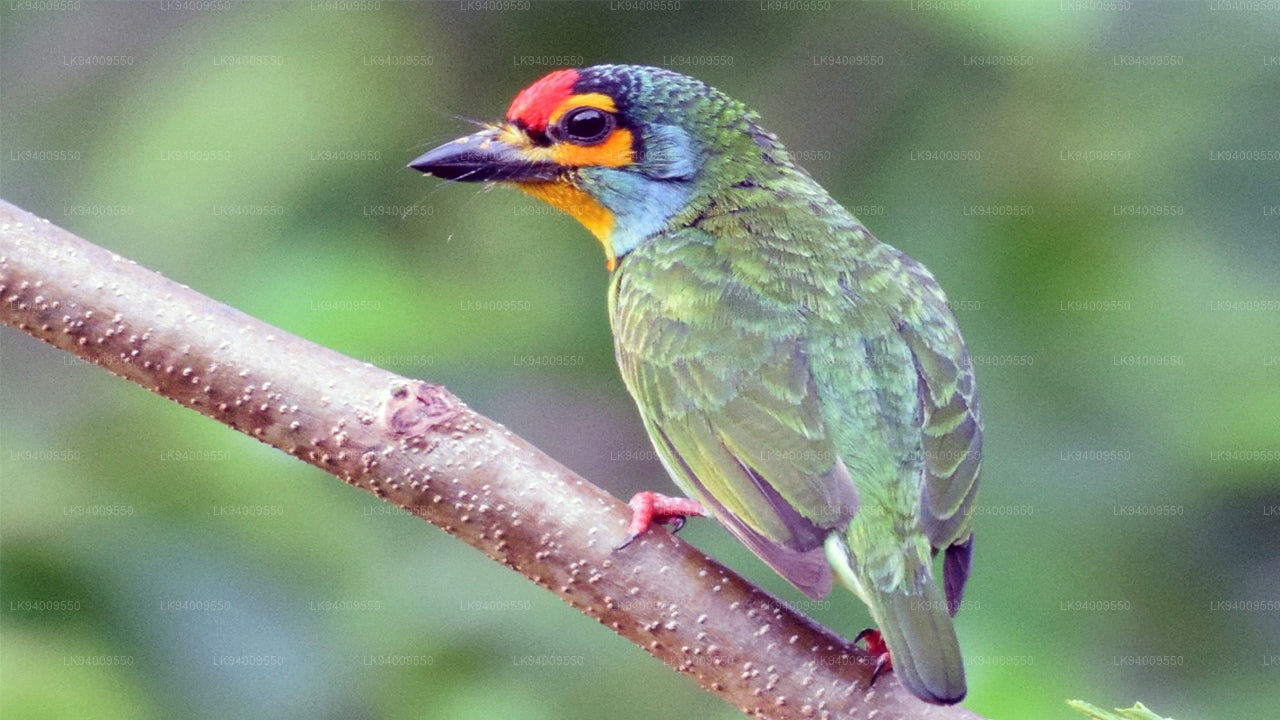
Despite its small size, this barbet is surprisingly distinctive once you know what to look for. The forehead blazes red, giving the species its common name. Around each eye, a wash of light orange frames the face, while the sides of the head carry a striking blue suffusion. The underparts are plain and unstreaked green, which separates it from several other barbets found across Asia that show heavy streaking below.
The bill is stout and robust — typical of barbets, which excavate nest holes in dead wood. In flight, the bird appears compact and direct, rarely travelling long distances before dropping back into the canopy.
Where does the Crimson-fronted Barbet live in Sri Lanka?
This species is strongly associated with the wet zone of Sri Lanka, where it is genuinely common in gardens, village trees, secondary growth, and the edges of lowland rainforest. It reaches its highest densities in areas with mature fruiting trees, since fruit — particularly figs and small berries — makes up a large portion of its diet alongside insects.
While the wet zone is its stronghold, the Crimson-fronted Barbet also occurs locally in parts of the dry zone, typically where irrigated gardens or riparian woodland provide sufficient food and nesting sites. It is predominantly a bird of the lowlands and foothills, becoming less frequent at higher elevations, where it is replaced by the Brown-headed Barbet in intermediate zones.
Reliable sites include home gardens in Colombo's suburbs, the forest fringes around Sinharaja Forest Reserve, and the woodland patches bordering Makandawa Rainforest near Kithulgala.
When is the best time to see the Crimson-fronted Barbet?
Unlike migratory species with narrow seasonal windows, the Crimson-fronted Barbet is a resident that can be encountered throughout the year. However, birders find it most conspicuous between January and April, when calling activity peaks ahead of the breeding season. During this period, males call persistently from exposed perches — a loud, repetitive note that carries well through the canopy.
The dry season months (roughly December to April in the wet zone) also bring clearer skies and lower humidity, making forest birding generally more comfortable and productive.
What does the Crimson-fronted Barbet eat?
Barbets are primarily frugivores, and the Crimson-fronted Barbet is no exception. It feeds heavily on small, soft fruits and berries — including those of Ficus species, which are critical food resources for many fruit-eating birds in Sri Lanka. It will also take nectar from flowers and supplements its diet with insects, particularly when feeding nestlings.
This dietary flexibility allows it to thrive in disturbed habitats alongside intact forest, which is one reason it remains common even in urban and semi-urban settings.
How does the Crimson-fronted Barbet breed?
Like all barbets, this species is a cavity nester. Pairs excavate nest holes in dead or softened branches, typically at moderate heights in garden trees or at the forest edge. Nesting generally takes place in the early months of the year, though some pairs may attempt a second brood later in the season. Both parents share incubation and chick-rearing duties.
Because they rely on dead wood for nesting, Crimson-fronted Barbets benefit significantly from gardens and estates that retain older trees rather than clearing all deadwood — a reminder of how traditional Sri Lankan garden culture supports biodiversity.
Is the Crimson-fronted Barbet endangered?
The species is currently assessed as a species of Least Concern by the IUCN, reflecting its wide distribution across suitable lowland habitat in Sri Lanka and its tolerance of modified landscapes. However, like many Sri Lankan endemics, it depends on a baseline of native vegetation — particularly fruiting trees — and faces long-term pressure from habitat loss and the homogenisation of garden plants.
Retaining diverse, native-fruiting trees in home gardens is one of the most practical steps individuals can take to support this and other endemic species.
What other endemic birds might I see alongside it?
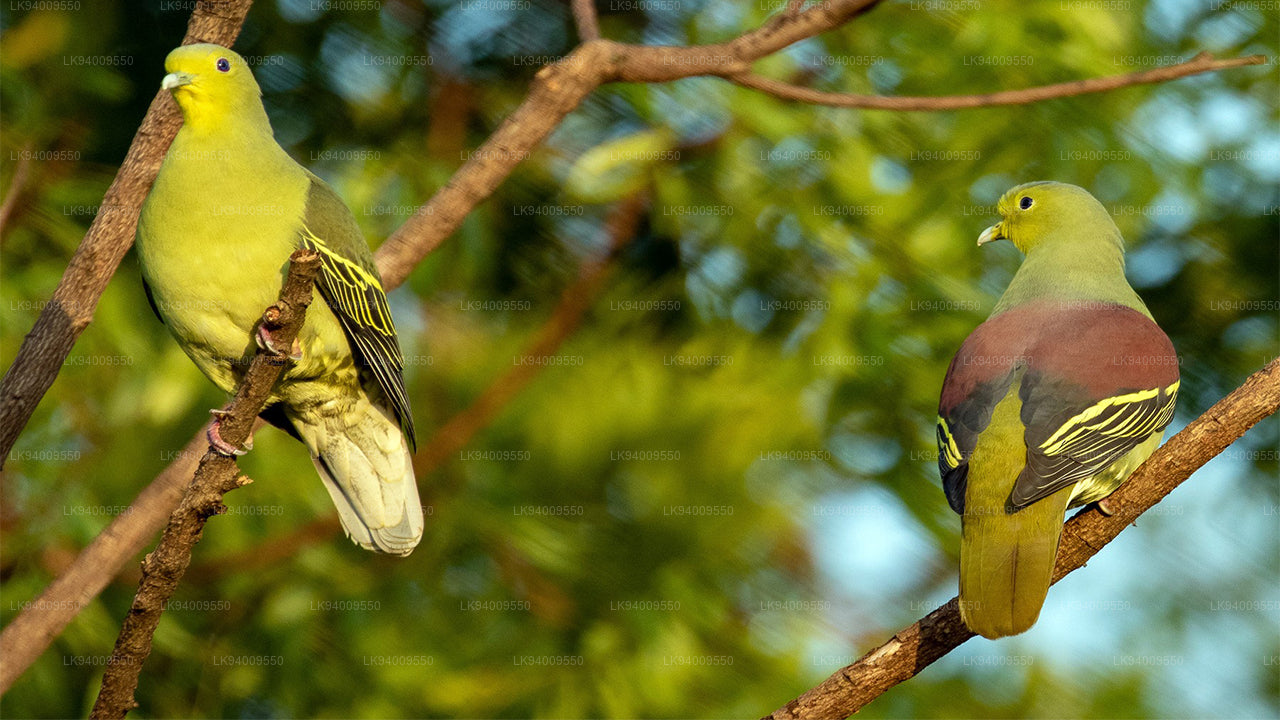
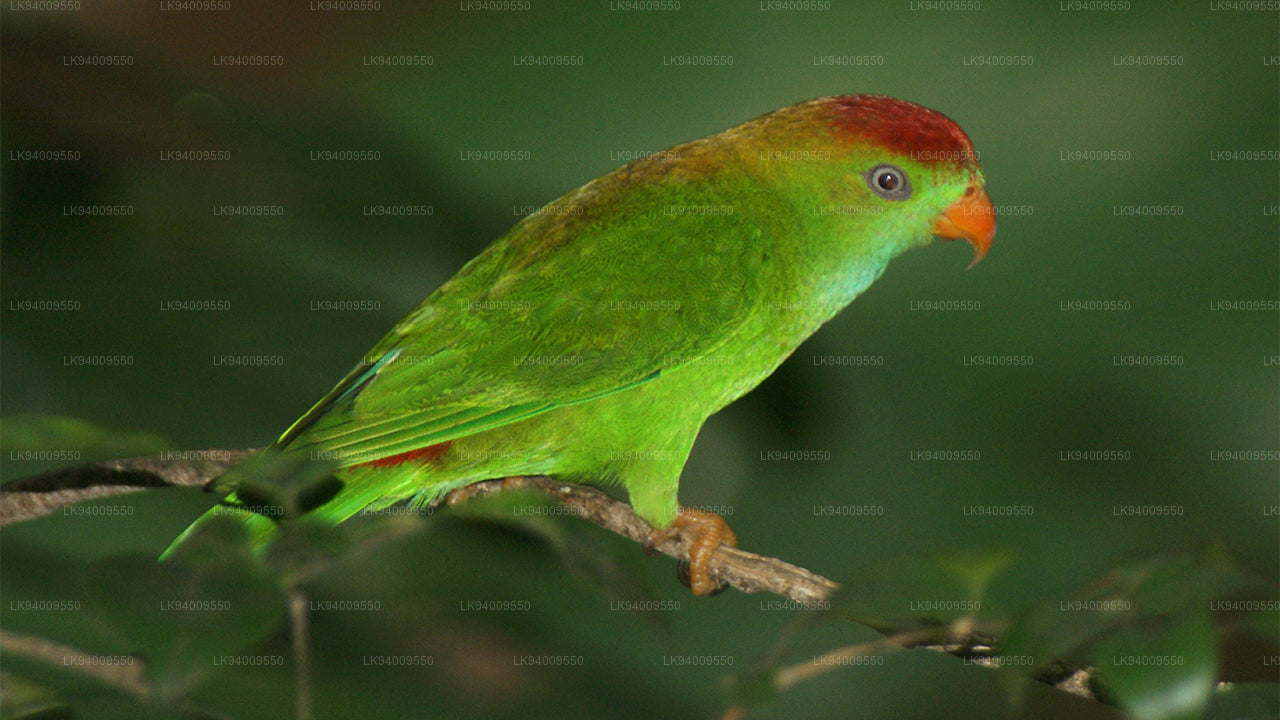
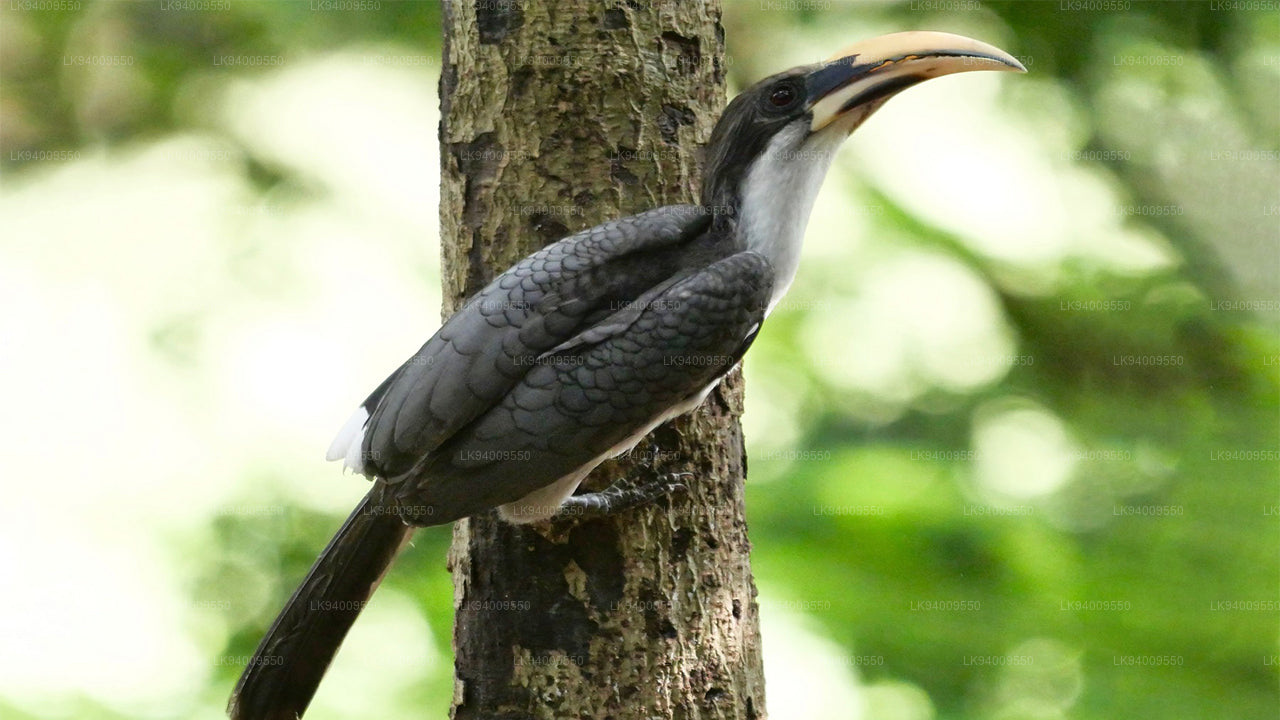
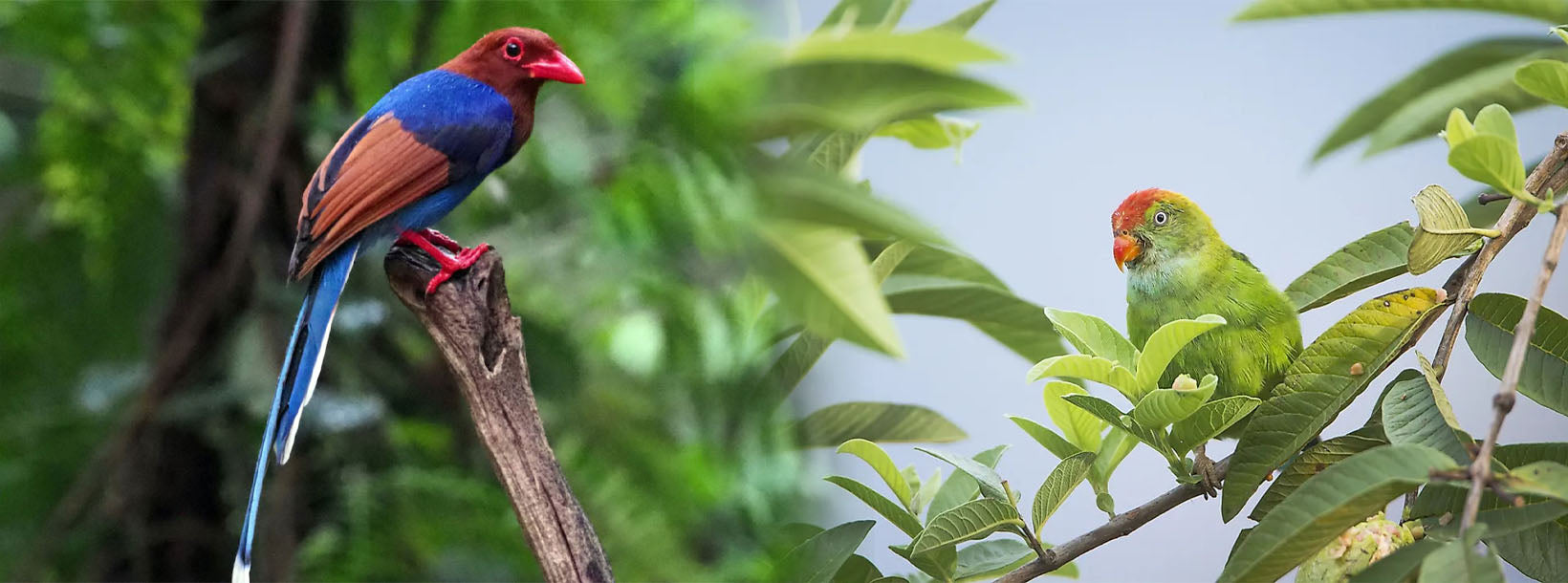
In the wet zone lowlands and foothills where the Crimson-fronted Barbet is most common, birders can typically encounter a broad range of Sri Lankan endemics. The Sri Lanka Green Pigeon, Layard's Parakeet, Sri Lanka Hanging Parrot, and Sri Lanka Grey Hornbill are all likely in similar habitat. In gardens near the coast or in the hill country, the Ella region and its surrounding forests add further species to a day list.
For a more structured birding experience, the forest trails around Horton Plains National Park and Sinharaja provide access to a high concentration of endemics, though the Crimson-fronted Barbet itself is less common at the higher elevations of Horton Plains.
Tips for watching Crimson-fronted Barbets
- Learn the call first — a monotonous, hollow note repeated at regular intervals. Once recognised, you will hear it almost everywhere in the wet zone lowlands.
- Look for movement at the mid-canopy level rather than scanning the highest treetops. Barbets often forage at middle height where fruiting branches are dense.
- Early morning (6–9 am) and late afternoon (4–6 pm) are peak activity periods, as with most tropical forest birds.
- Binoculars of 8×42 or 10×42 magnification work well in the relatively open canopy of garden habitats where this species is common.
- Patience pays off: find a calling bird by ear, then wait for it to move into a gap in the foliage rather than crashing through the canopy after it.