
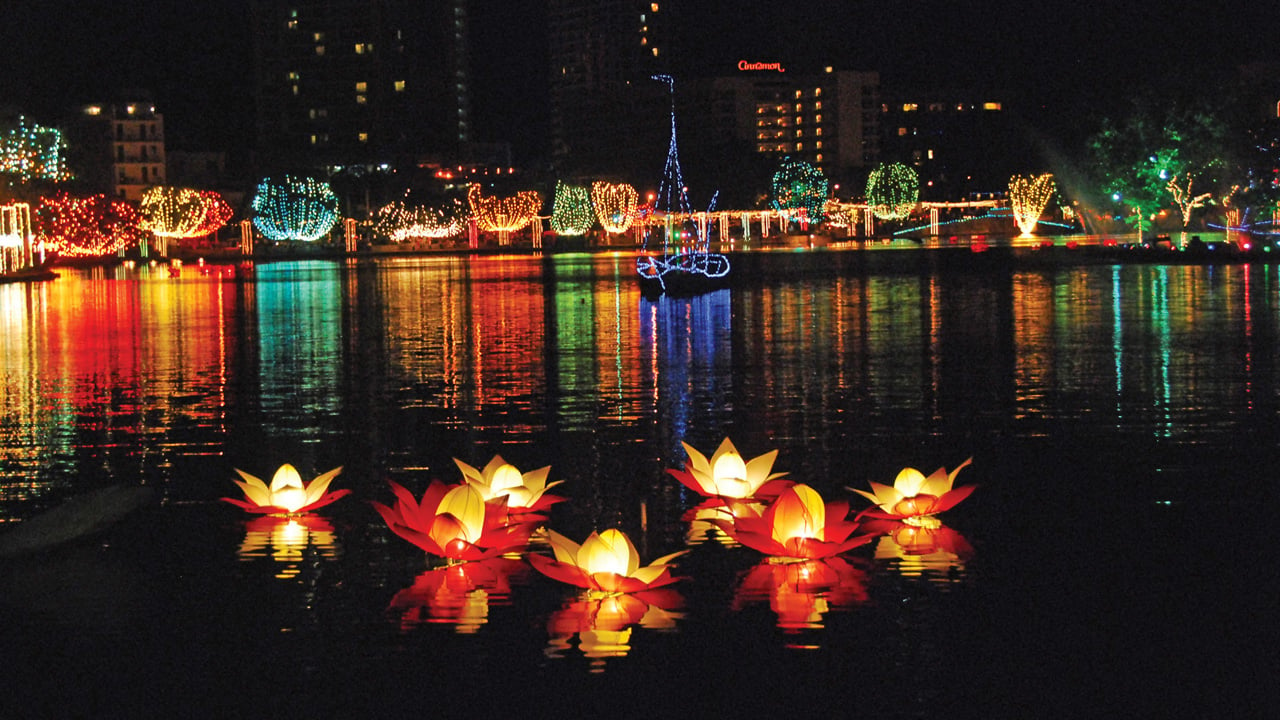
Every May, on the full moon day of the Buddhist calendar month of Vesak, Sri Lanka transforms. Streets fill with soft, coloured light as thousands of paper lanterns are strung from homes, temples, shops, and lamp posts. The festival marks the birth, enlightenment, and passing of the Buddha — three of the most significant events in Buddhist tradition, all commemorated on a single night. The lanterns are far more than decoration; they are an act of devotion, a symbol of the light of the Dhamma dispelling ignorance.
What is the significance of Vesak lanterns?
In Pali and Sinhala Buddhist tradition, light represents wisdom. Lighting a lantern during Vesak is a way of honouring the Buddha's teachings and sharing merit with others. The practice is rooted in the ancient custom of offering light at temples and shrines — today scaled up into a nationwide celebration that is simultaneously personal and communal.
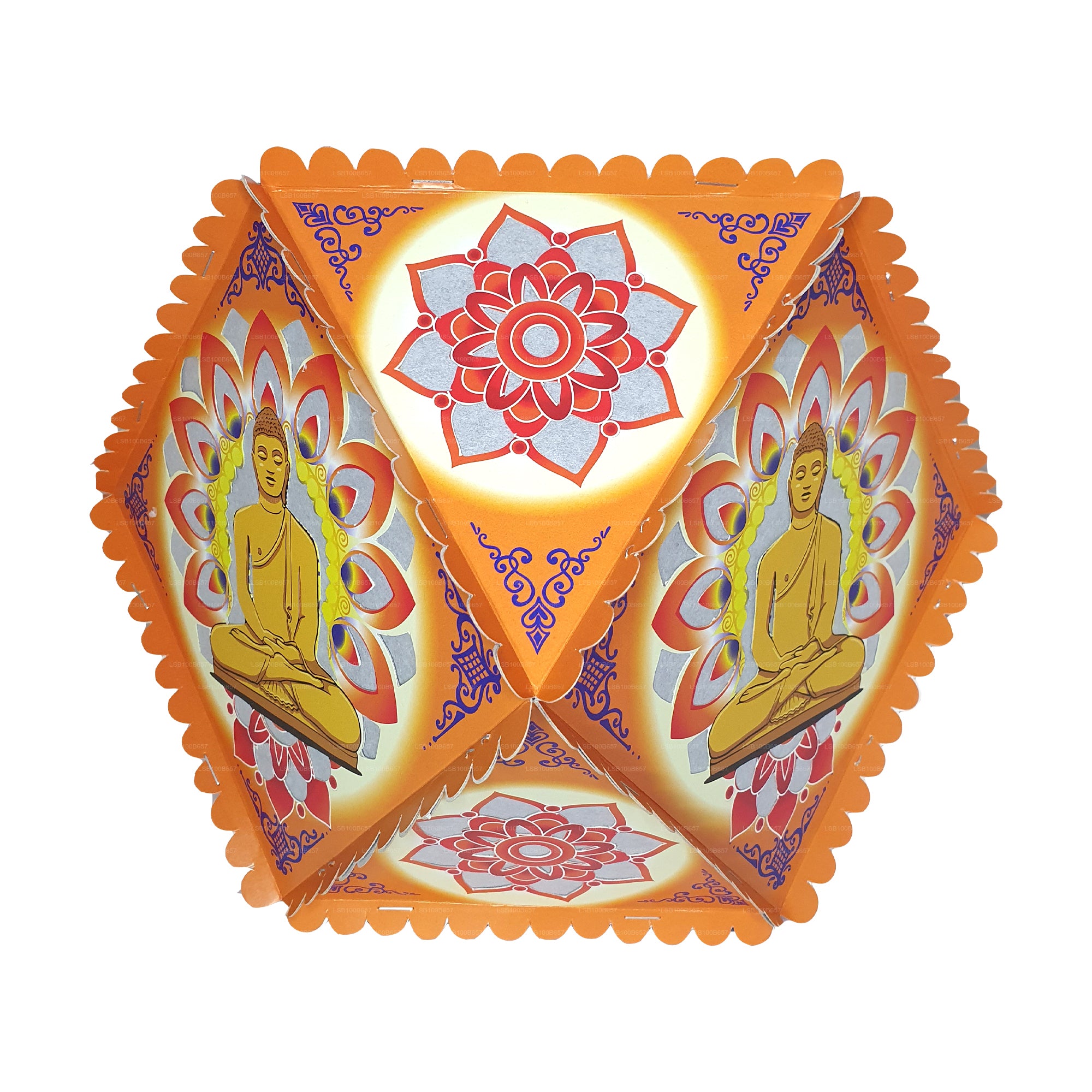
The lanterns come in dozens of traditional shapes: spheres, cubes, stars, lotus flowers, and the distinctive cube-with-pointed-top form known as the atapattam koodu (sometimes spelled atapattama). Each shape carries its own folk associations, though the craft tradition varies by region and family.
Alongside lanterns, large illuminated pandols — called thorana — are constructed at major junctions, depicting scenes from the Jataka tales (stories of the Buddha's past lives). These elaborate structures, lit by thousands of bulbs and LEDs, can tower several storeys high and draw enormous crowds. Colombo's main thoroughfares are among the best places to see them, though towns like Kandy, Negombo, and Gampaha mount impressive displays of their own. The Colombo city tour route passes several of the most celebrated thorana sites.
When does Vesak fall each year?
Vesak is observed on the full moon poya day of May in the Gregorian calendar, though the exact date shifts slightly each year in line with the lunar calendar. In Sri Lanka, Vesak is a two-day public holiday — the full moon day and the day following — during which alcohol sales are suspended and the country adopts a noticeably quieter, more reflective mood. Dansalas (free food and drink stalls run by community groups) line the streets, offering meals to anyone who passes.
What types of Vesak lantern are there?
- Atapattam koodu — the classic cube-and-point shape, made from bamboo or cardboard with coloured tissue paper panels. This is the most widely recognised form.
- Spherical lanterns — made by bending flexible strips into a globe shape, then covering with tissue. Popular with children because the round frame is forgiving to construct.
- Lotus lanterns — shaped to resemble the lotus flower, a central symbol in Buddhism. Usually more elaborate and often sold as finished pieces.
- Star lanterns — a five- or six-pointed star form that catches light from multiple angles.
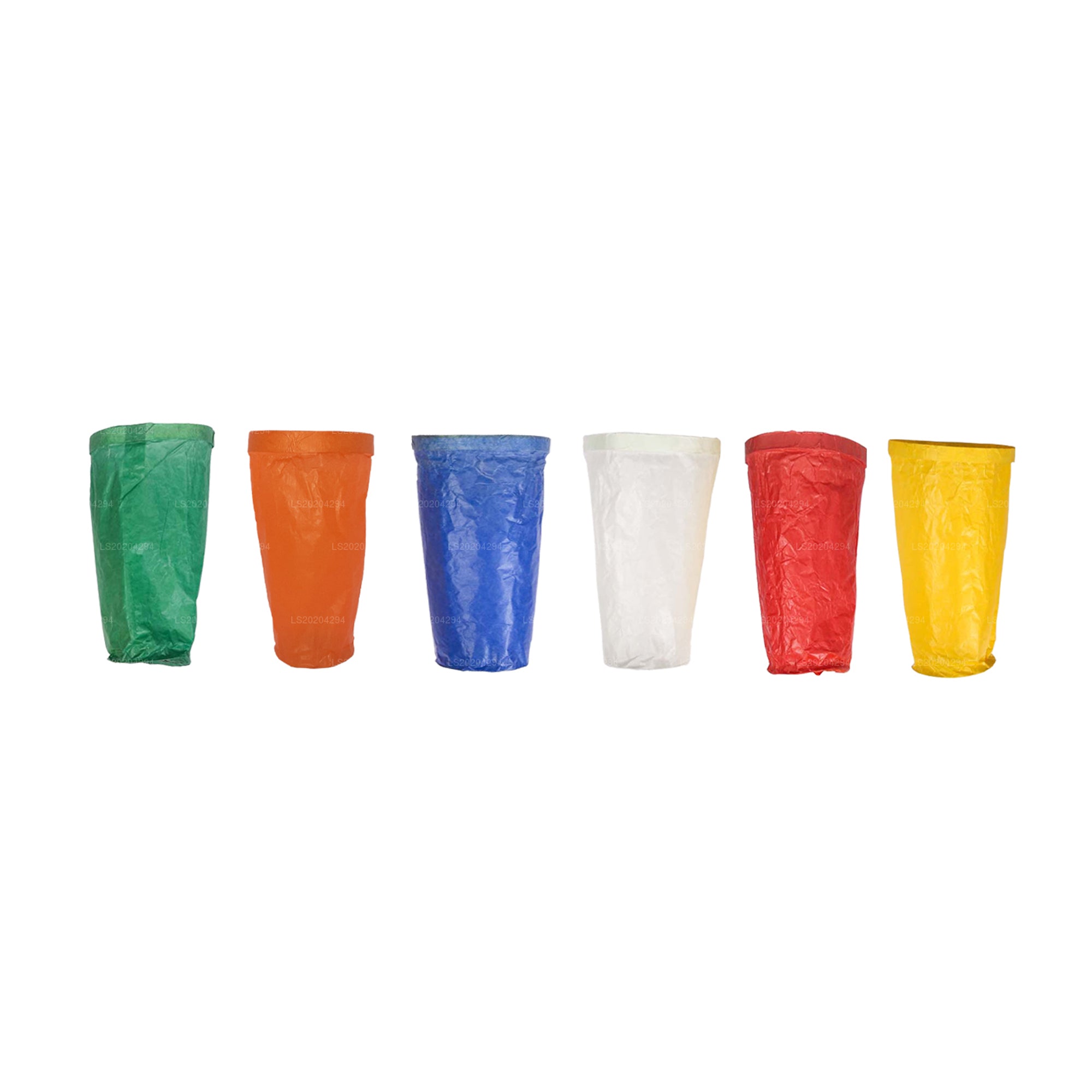
- Bucket lanterns (koodu) — a simpler cylindrical or tapered-bucket shape, often pre-printed with Buddhist motifs. These are popular among families wanting a quick but attractive option.
Commercially produced lanterns have become common alongside hand-crafted ones. Many Sri Lankan families buy pre-cut kits or ready-made lanterns and light them at home, while schools and Buddhist organisations still encourage students to build traditional bamboo-frame versions from scratch.
How do you make a traditional Vesak lantern at home?
Making your own lantern is one of the most rewarding ways to engage with the Vesak tradition. The classic atapattam koodu requires only a handful of materials and a patient afternoon.
What you will need
- 25 bamboo sticks cut to equal lengths (around 25 cm each), or a pack of bendy straws as a modern alternative
- Tissue paper in several colours
- Craft glue
- Scissors
- String or thin wire for tying joints
- A tea light candle and a small piece of cardboard, or a string of LED fairy lights for a fire-safe option
- Wire or string for hanging
Building the frame
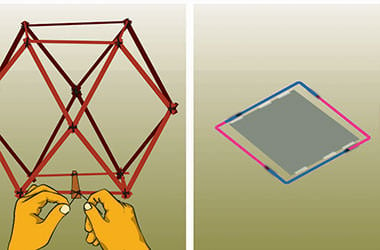
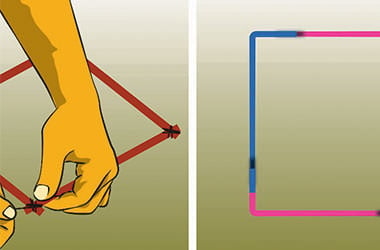
- Make six equal squares. If using bamboo sticks, tie four sticks together at the corners with string. If using bendy straws, bend the tops of four straws to 90 degrees and insert each shorter end into the longer end of the next, forming a square. Close the square by connecting the last straw to the first.
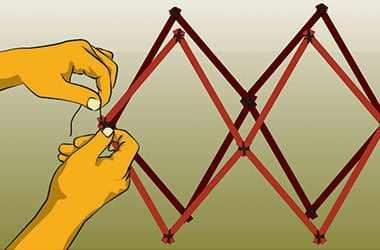
- Assemble the cube. Take four of your squares and tie their corners together side-by-side in a ring. Attach one remaining square to the top of this ring and one to the bottom, securing all corners. You now have the basic cube.
- Add the pointed top. For the traditional atapattam shape, form a pyramid from four additional sticks or straws, tied at a central apex, and attach it to the top square of the cube.
- Stabilise for hanging. Run one bamboo stick horizontally through the interior of the cube, tying it across the middle. This crossbar lets you loop a hanging wire through or thread a lightbulb fitting safely.
Covering with tissue paper
Cut panels of tissue paper slightly larger than each face of the cube, then glue them carefully to the frame — working one face at a time and letting each dry before turning. Layering two colours of tissue on top of each other creates attractive tonal effects when lit from within. Leave the bottom face open if you plan to use a candle, or covered if using battery-powered LEDs.
Adding light
To use a tea light, cut a piece of cardboard to fit inside the bottom square and tape it in place as a base, ensuring it does not overhang the frame edges. Place the tea light in the centre. Never leave a candle lantern unattended, and keep it away from other flammable materials. For a safer option — especially indoors or with children — a small loop of battery-powered LED fairy lights tucked inside the frame gives a warm glow without the fire risk.
Where are the best places in Sri Lanka to see Vesak lanterns?
Colombo's Galle Road, Baseline Road, and the areas around Kelaniya Raja Maha Viharaya attract some of the largest crowds and most elaborate displays. The Kandy city streets also come alive, with lanterns framing the lakeside walk near the Temple of the Tooth. Negombo, which has a sizeable Buddhist community alongside its Catholic majority, hosts its own charming neighbourhood displays.
For a quieter, more contemplative experience, visiting a rural temple — particularly one with a traditional bodhi tree and stupa — during Vesak poya night gives a sense of the festival's spiritual core away from the crowds. Devotees gather to observe sil, meditate, and make offerings of light and flowers through the night.
What other Vesak traditions should visitors know about?
Beyond lanterns and thorana, Vesak is a time of giving. Dansalas operate around the clock for the two-day holiday, and it is considered meritorious to both run one and to accept food or drink from one. The atmosphere is generally warm and welcoming to visitors, who are encouraged to participate respectfully.
Vesak is also distinct from Sri Lanka's other major Buddhist festival, the Esala Perahera Festival in Kandy, which takes place in July or August and centres on a grand procession. The two events complement each other well for visitors planning an extended cultural itinerary.
Dress modestly when visiting temples during Vesak — covered shoulders and knees are expected — and remove footwear before entering shrine rooms. Photography is generally welcome at public displays, though it is courteous to ask before photographing worshippers during private devotional moments.