Lakpura
Lakpura®

Udawatta Kele Sanctuary

Udawatta Kele Sanctuary sits on the hillside directly behind the Temple of the Tooth Relic in Kandy, forming a green canopy above one of Sri Lanka's most important heritage cities. Covering around 257 acres, this forest is simultaneously a biodiversity reserve, a watershed for Kandy Lake, and a living record of the Kandyan Kingdom. Walking its shaded trails, you are never more than a few minutes from the city centre — yet the density of the canopy and the calls of endemic birds make it feel removed from the streets below.

What is the history of Udawatta Kele Sanctuary?

Long before Kandy was a royal capital, the area was covered by dense rainforest. Human settlement expanded during the reign of King Panditha Parakramabahu (1302–1326 AD), and by 1371 AD King Wickramabahu had established Kandy — then known as Senkadagala — as his kingdom. That name derives from a Brahmin named Senkanda, who is said to have lived in a cave within the forest during that period.

Throughout the Kandyan Kingdom era, the forest behind the palace was known as Uda Wasala Watta, meaning the Upper Palace Garden. It was the preserve of royalty and strictly off-limits to ordinary people. After the fall of the Kandyan Kingdom in 1815, the forest became vulnerable to woodcutting and encroachment. By 1856 the colonial government declared it a Forest Reserve, and in 1938 it was upgraded to a sanctuary — a status it retains today.

Why is Udawatta Kele ecologically important?

Kandy is encircled by hills, and Udawatta Kele functions as the city's primary green lung. The forest's catchment area feeds Kandy Lake, making it a direct source of freshwater for the city. Its continuous canopy moderates local temperatures and filters air in a densely populated urban environment — a role that becomes more significant each year as Kandy expands.

The forest is structured in distinct vertical layers: a high canopy, a sub-canopy, a shrub layer, and a ground layer of seedlings and creepers. The density of growth is such that very little direct sunlight reaches the forest floor, maintaining the cool, humid microclimate that many species depend on. One of the forest's most remarkable botanical features is a Pus Wela liana (Entada pusaetha) estimated to be between 200 and 300 years old — a plant of both scientific and cultural interest. Visitors with an interest in Sri Lanka's broader forest ecosystems may also find it useful to read about the Sinharaja Forest Reserve, which shares some of the same endemic species.

What trees and plants can I find in Udawatta Kele?

The sanctuary supports a mix of native and naturalised tree species. Among the more notable are:

  • Acronychia pedunculata (Ankenda)
  • Adenanthera pavonina (Madatiya)
  • Aleurites moluccana (Tel Kekuna)
  • Antidesma bunius (Karawala Kebella)

The understorey is woven with creepers and climbers, many of which spiral upward toward the canopy. Ferns, mosses, and epiphytes colonise older tree trunks throughout the reserve, giving certain sections of the trail a particularly ancient character.

What birds and wildlife can I see at Udawatta Kele?

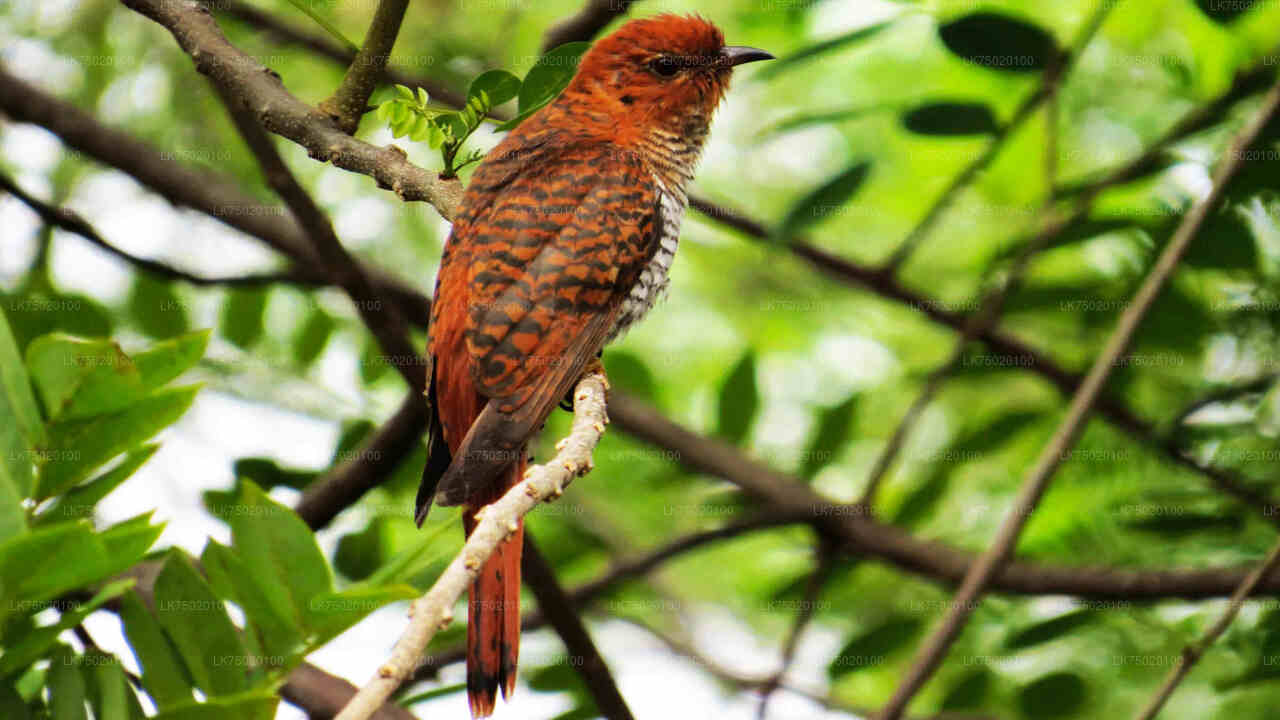
Udawatta Kele is considered one of the better urban birdwatching sites in Sri Lanka, with a species list that includes several endemics. The Grey Hornbill, Layard's Parakeet, Sri Lanka Green Pigeon, and the Sri Lanka Hanging Parrot are among the birds regularly recorded here. Mammals present in the forest include purple-faced langurs and giant squirrels, both of which are often visible from the main trails in the early morning.

The small water pond inside the sanctuary attracts waterbirds and provides a reliable spot for wildlife observation. Because the forest is surrounded by city, animal sightings can be surprisingly close — langurs in particular are accustomed to human presence near the main paths.

What are the key sites to visit inside Udawatta Kele?

Several specific points of interest are worth planning into your walk:

  • Kodimale — the highest peak within the sanctuary, offering views over Kandy and the surrounding hills.
  • Senkanda Cave — the cave associated with the Brahmin Senkanda, from whom the city's ancient name is derived.
  • The Water Pond — a forest pond that attracts birds and provides a quiet resting point on the trail circuit.
  • The Garrison Cemetery — a colonial-era burial ground within the forest boundary, maintained as a heritage site. It contains graves of British soldiers and officials from the early 19th century.
  • Buddhist temples and hermitages — several forest monasteries and meditation hermitages are located within the reserve. Monks continue to use these in the traditional forest-dwelling (aranya) tradition.

How do I get to Udawatta Kele from Kandy city centre?

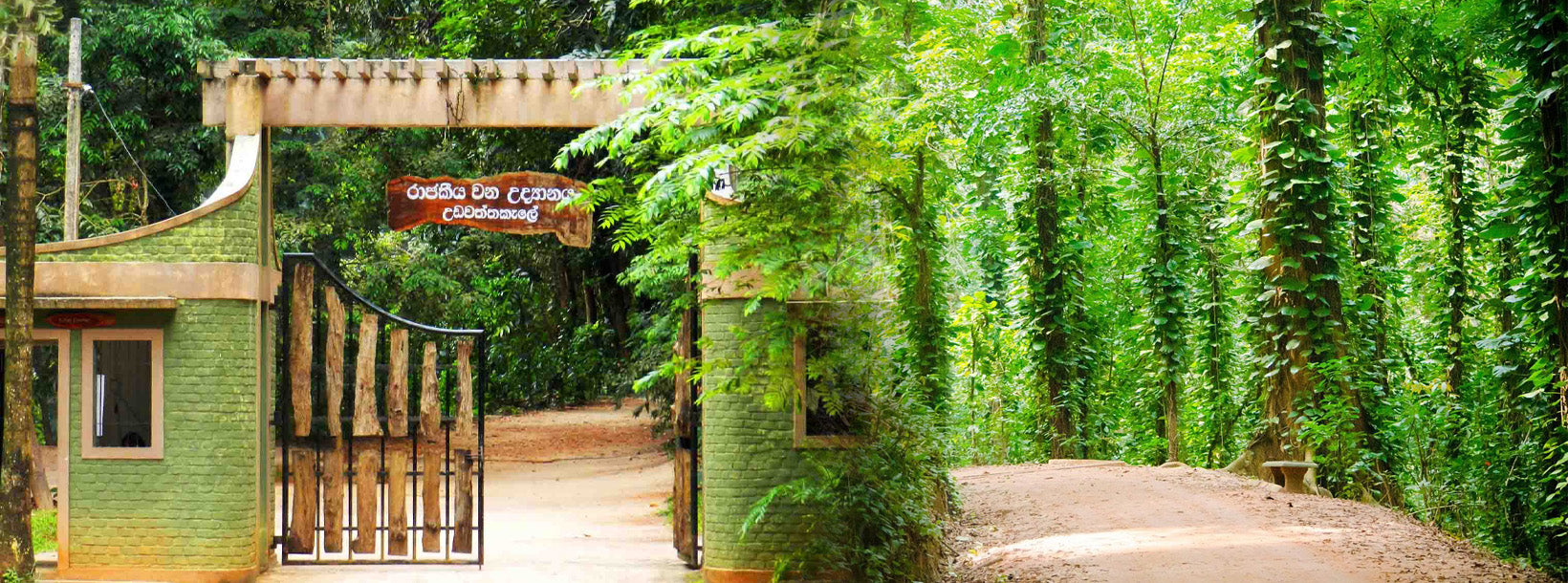
The main entrance to Udawatta Kele is located near the Kandy Lake embankment, a short walk from the Temple of the Tooth Relic. The forest is easily reached on foot from most accommodation in central Kandy. There are typically two entry gates: one closer to the lake road and a second on the upper approach near the Garrison Cemetery. Both are well signposted. A modest entrance fee is charged at the gate; tickets are available on arrival.

Those travelling from outside Kandy can arrange a private transfer or use one of the regular bus services running into central Kandy. For orientation in the city before or after your visit, the Kandy Tourist Information Center near the lake can provide trail maps and updated entry information.

When is the best time to visit Udawatta Kele Sanctuary?

The forest can be visited year-round, but early morning — between roughly 6:00 am and 9:00 am — is strongly recommended for birdwatching and for walking the trails before the day heats up. The canopy keeps conditions comfortable even in warmer months, but trails can become slippery during heavy rain. The Kandy region receives two monsoon influences: the south-west monsoon (May to August) and the north-east monsoon (November to January). Lighter rainfall in the inter-monsoon periods (February to April and September to October) typically offers the most straightforward walking conditions.

If your visit to Kandy coincides with the Esala Perahera Festival in July or August, the city is far busier than usual, but the sanctuary itself remains a peaceful alternative to the crowded lakeshore.

Is Udawatta Kele suitable for a self-guided walk?

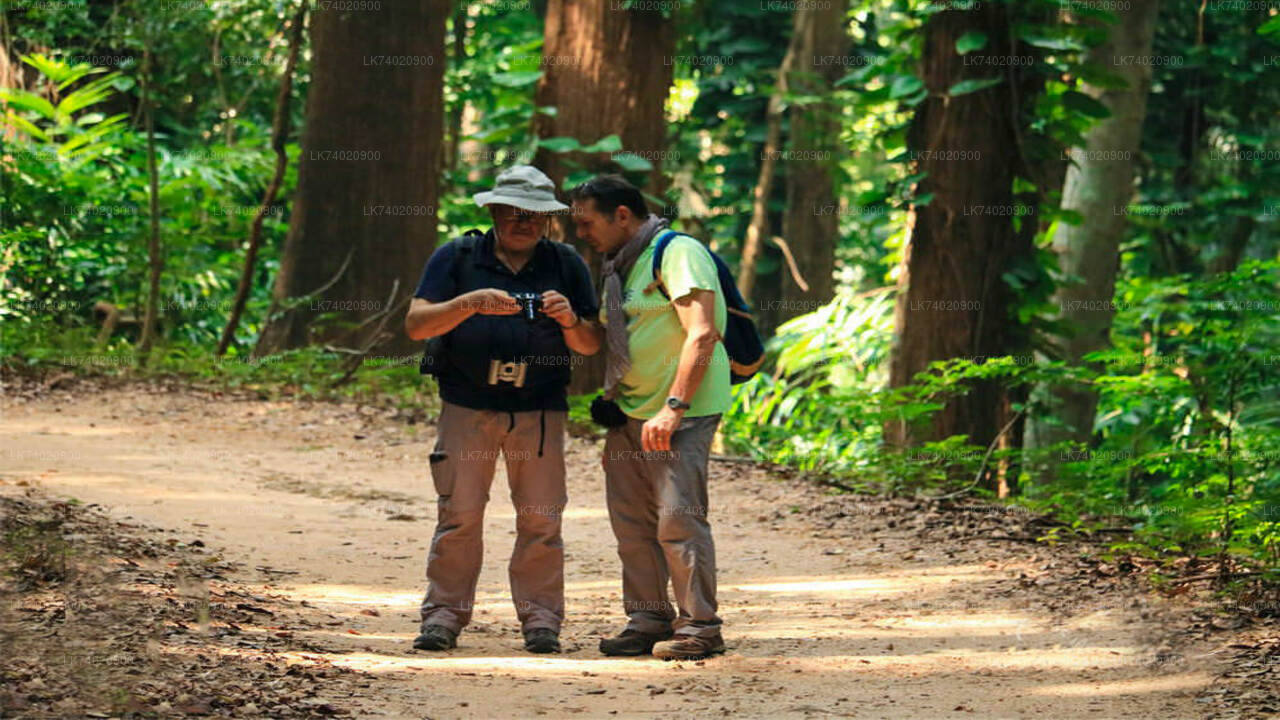
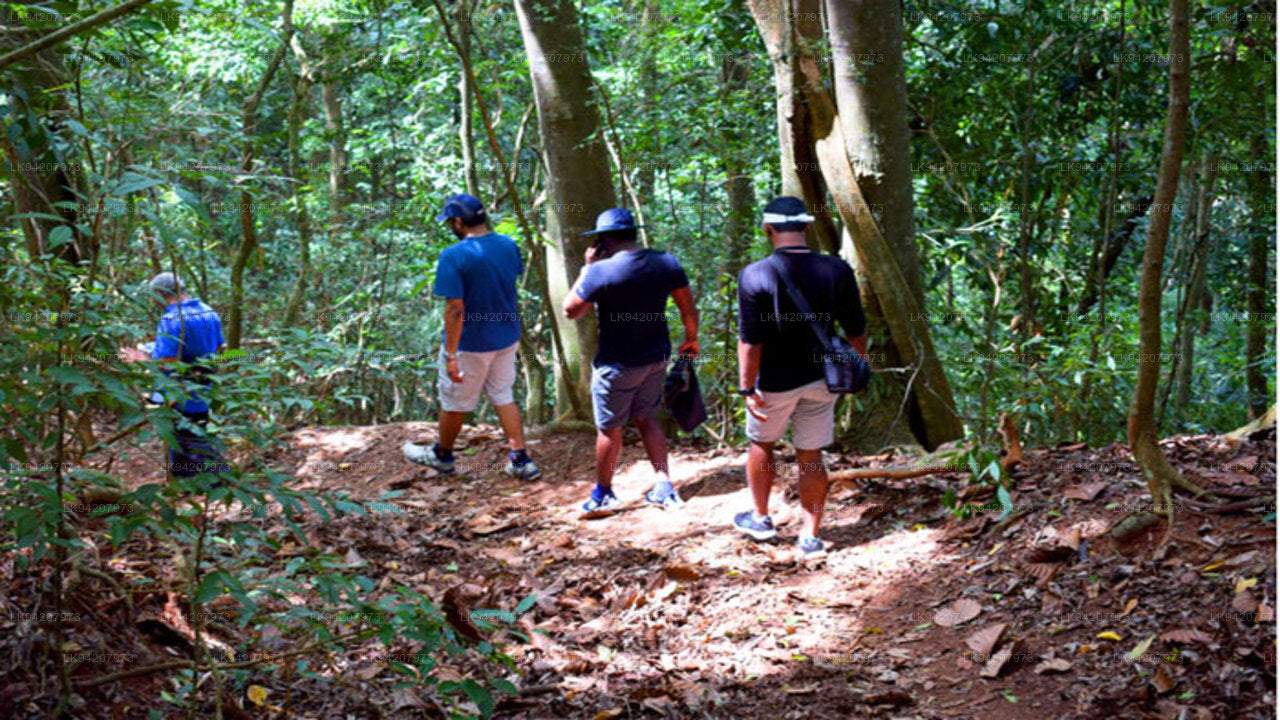
The main trail circuit is manageable without a guide and takes around one to two hours at a relaxed pace. Signage within the forest is present but uneven in quality, so a simple trail map from the entrance gate is useful. For birdwatching specifically, hiring a local naturalist guide significantly increases the number of species you are likely to identify. The forest slopes can be steep in places, and proper footwear — closed shoes with grip rather than sandals — is advisable. The sanctuary is generally safe, but visitors should remain on marked paths and respect the boundaries of active meditation hermitages.

Book this experience with Lakpura

Curated by our local team. Direct booking, instant confirmation.

Ask Lakpura® Agent