Lakpura
Lakpura®

Munneswaram

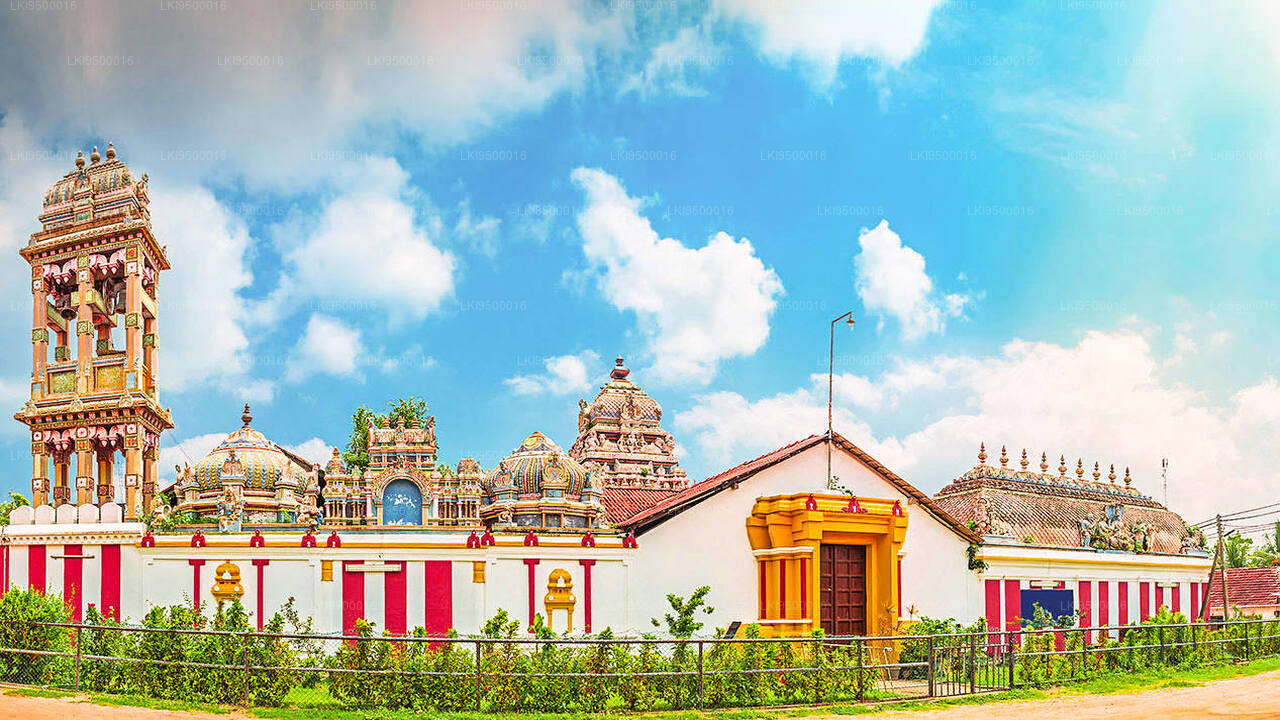
Sri Munneswaram Devasthanam is one of the oldest and most religiously layered temple complexes in Sri Lanka. Situated in the village of Munneswaram in the Puttalam District — a settlement with a mixed Sinhala and Tamil population — the complex draws devotees from across the island's religious communities: Hindu, Buddhist, Catholic, and Muslim. Its documented history stretches back to at least 1000 CE, and oral traditions link the site to the Ramayana, associating it with the hero-king Rama.

What temples make up the Munneswaram complex?

The complex comprises five individual shrines, each with its own presiding deity and distinct congregation.

  • Shiva temple — the central and largest structure, administered by Tamil priests. It is one of five ancient Shiva temples in Sri Lanka and draws the largest number of Hindu pilgrims.
  • Ganesha temple — dedicated to the elephant-headed deity of beginnings and obstacles, revered across Hindu communities.
  • Kali temple — the most culturally cross-denominational of the five, attracting Sinhala Buddhists and Roman Catholics alongside Hindu worshippers. Its popularity reflects a centuries-long process by which Kali was absorbed from a Tamil Hindu deity into Sinhalese Buddhist folk religion.
  • Ayyanayake temple — dedicated to a guardian deity venerated in both Tamil and Sinhala traditions.
  • Buddhist temple — a reminder that this complex has always occupied shared religious ground rather than exclusively Hindu territory.

The Shiva, Ganesha, and Kali temples are administered by Tamil trustees. The Ayyanayake and Buddhist temples operate separately. Despite this administrative separation, the majority of visitors in the post-19th century period have come from Sinhala Buddhist communities.

What is the historical background of Munneswaram?

The temple's recorded history is both long and turbulent. During the colonial era, Portuguese forces destroyed the complex twice. On each occasion, local Sinhala and Tamil communities rebuilt it — a testament to the site's deep communal importance. The Portuguese subsequently handed the associated lands to the Jesuits, who constructed a Catholic chapel over the original temple foundation. This layering of religious histories, far from erasing the site's Hindu character, appears to have deepened the cross-denominational reverence that defines it today.

By the late 18th century, demographic and religious shifts across the surrounding region meant that most nearby villages were no longer directly involved in temple administration. Two villages, however — Maradankulama and Udappu — have remained closely linked to organising the temple's principal festivals.

Scholars Richard Gombrich and Gananath Obeyesekere document how the cult of Kali reached Sri Lanka through South India. Kali shrines may have existed within Tamil Hindu temples before the 12th century CE, but Munneswaram is the earliest known example of a Kali shrine that became widely popular among Sinhalese Buddhist worshippers. A local myth describing Kali's arrival at nearby Chilaw and her residence at Munneswaram contributed to the temple's reputation as a place for protective rituals and, historically, sorcery.

How has the role of the Kali shrine changed over time?

In the early 1970s, the majority of Sinhalese visitors came to Munneswaram specifically seeking sorcery-related rituals. By the 1990s, more than half were visiting for general veneration — a significant shift that anthropologists interpret as the cultural transformation of Kali from a fearsome demigod into a nurturing Mother Goddess within Sri Lanka's Sinhala Buddhist tradition.

Since the 1960s, Kali shrines have proliferated across the island, particularly in urban areas. These are typically managed by Sinhala lay practitioners — both men and women — who serve as ritual intermediaries, sometimes entering trance states while acting as conduits between the deity and devotees.

What festivals are celebrated at Munneswaram?

Three principal festivals mark the annual calendar at the complex.

  1. Navarathri — a nine-day festival honouring the presiding Goddess. It follows the wider Hindu tradition of nine nights dedicated to different forms of the Divine Feminine, and draws pilgrims from across Sri Lanka's Tamil and Sinhala communities.
  2. Sivarathri — an overnight vigil observed in honour of Lord Shiva, typically involving continuous prayer, fasting, and devotional singing through the night.
  3. The Munneswaram Festival — the complex's own four-week celebration, the most encompassing of the three. It is attended by Hindus, Buddhists, Catholics, and Muslims, making it one of the genuinely multi-faith public events in Sri Lanka's religious calendar. The villages of Maradankulama and Udappu play central organisational roles.

Visitors planning to attend any of these festivals should expect large crowds and arrange accommodation and transport well in advance, particularly for the four-week Munneswaram Festival.

Where is Munneswaram Temple and how do I get there?

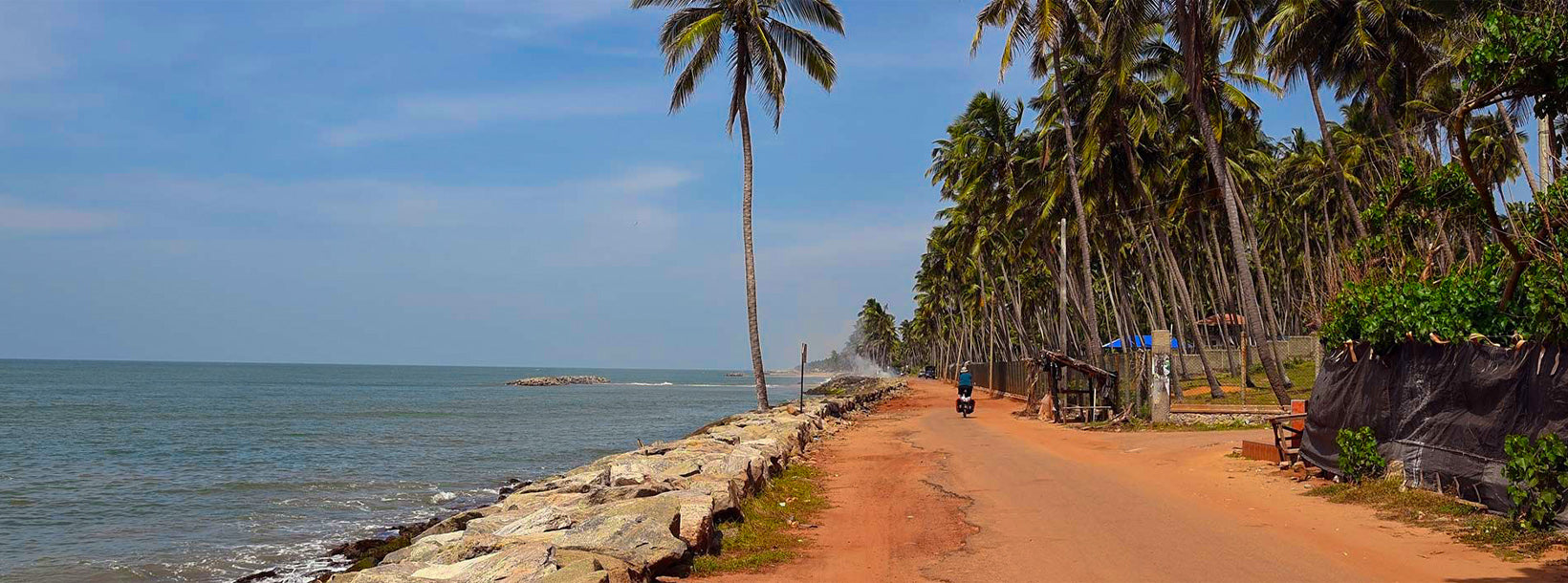
The temple is located in Munneswaram village, within the Puttalam District on Sri Lanka's North Western coast. The nearest major town is Chilaw, which lies a short distance to the south and is well connected by road from Colombo. The Colombo–Puttalam highway passes through this coastal corridor, making a day trip from the capital feasible. Travellers combining Munneswaram with a visit to Wilpattu National Park, roughly an hour's drive further north, can make efficient use of the route.

Tuk-tuks and taxis are available in Chilaw for the short onward journey to the temple. Visitors arriving by private vehicle will find parking in the village, though space can be limited during festival periods.

What should visitors know before they go?

Munneswaram is an active place of worship, not a heritage monument. Visitors of all faiths are welcome, but the usual courtesies apply: remove footwear before entering any temple building, dress modestly (covering shoulders and knees), and avoid photography inside the inner sanctums unless clearly permitted. Priests and attendants at the complex speak Tamil and Sinhala; some have working knowledge of English.

The complex can be visited at any time of year, though the atmosphere is richest during festival seasons. Mornings tend to be quieter for those who prefer a more contemplative visit. The site is free to enter, though offerings and donations are customary.

The Negombo coastal strip lies to the south and pairs well with a Munneswaram visit, offering a contrast between colonial-era Christian heritage and the living Hindu traditions of the Puttalam coast.

Book this experience with Lakpura

Curated by our local team. Direct booking, instant confirmation.

Ask Lakpura® Agent