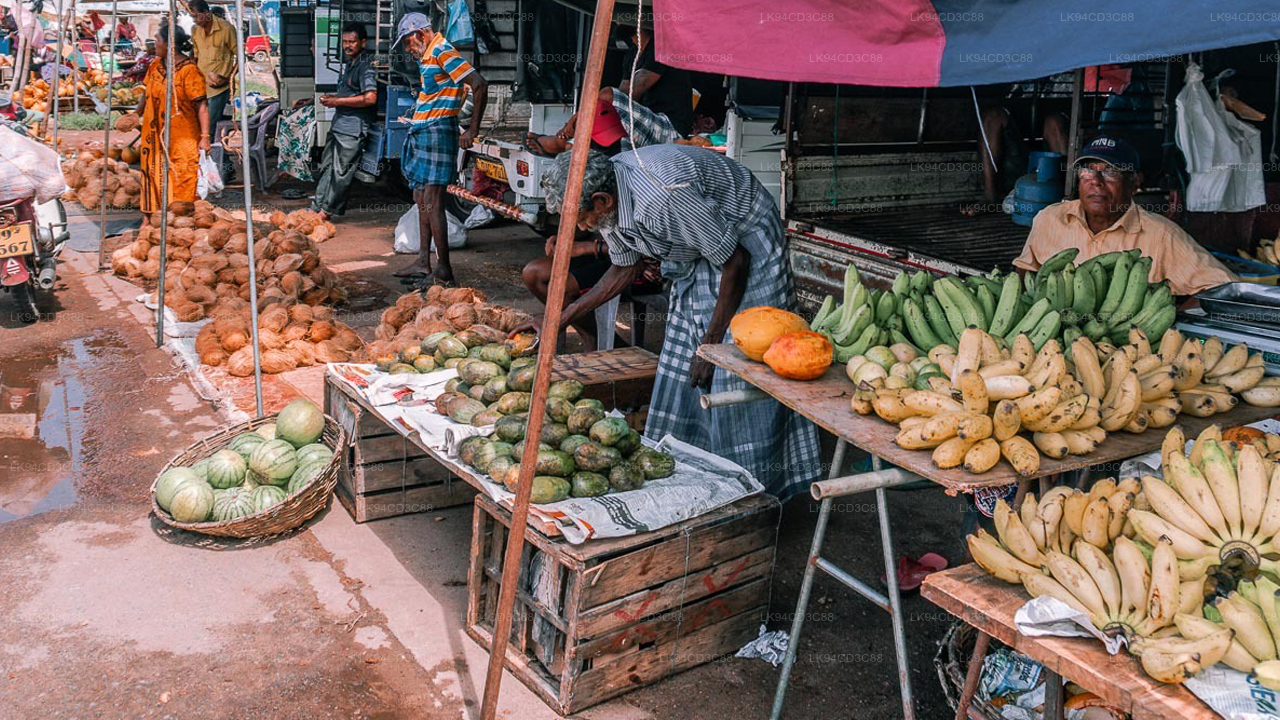
Negombo Market sits at the commercial and social heart of Negombo town, a coastal city in Sri Lanka's Western Province roughly 35 kilometres north of Colombo. For residents, it is a daily necessity; for travellers passing through on their way to or from Bandaranaike International Airport, it offers one of the most accessible windows into ordinary Sri Lankan life outside the capital. The market is not a curated tourist experience — it is a working market, and that is precisely what makes it worth an hour or two of your time.
What will I find at Negombo Market?
The market divides loosely into distinct trading zones. The fresh-produce section carries the staples of the Sri Lankan household: king coconut, ripe bananas, mangoes, jak fruit, and a rotating selection of seasonal vegetables. Alongside these you will find dry goods including Ceylon black pepper, cardamom, dried chillies, and locally grown spices that are considerably cheaper here than in Colombo's souvenir shops.
A separate fish market — open from very early in the morning — handles the overnight catch brought in by Negombo's large fishing community. The town has one of the longest-established fishing industries on the island, and the variety of fresh seafood on display reflects that heritage. Expect tuna, seer fish, prawns, and crab, sold from open-air stalls in a brisk, no-frills environment.
- Produce: tropical fruits, vegetables, coconut products
- Spices: pepper, cinnamon, cardamom, dried chillies
- Seafood: fresh and dried fish, prawns, crab
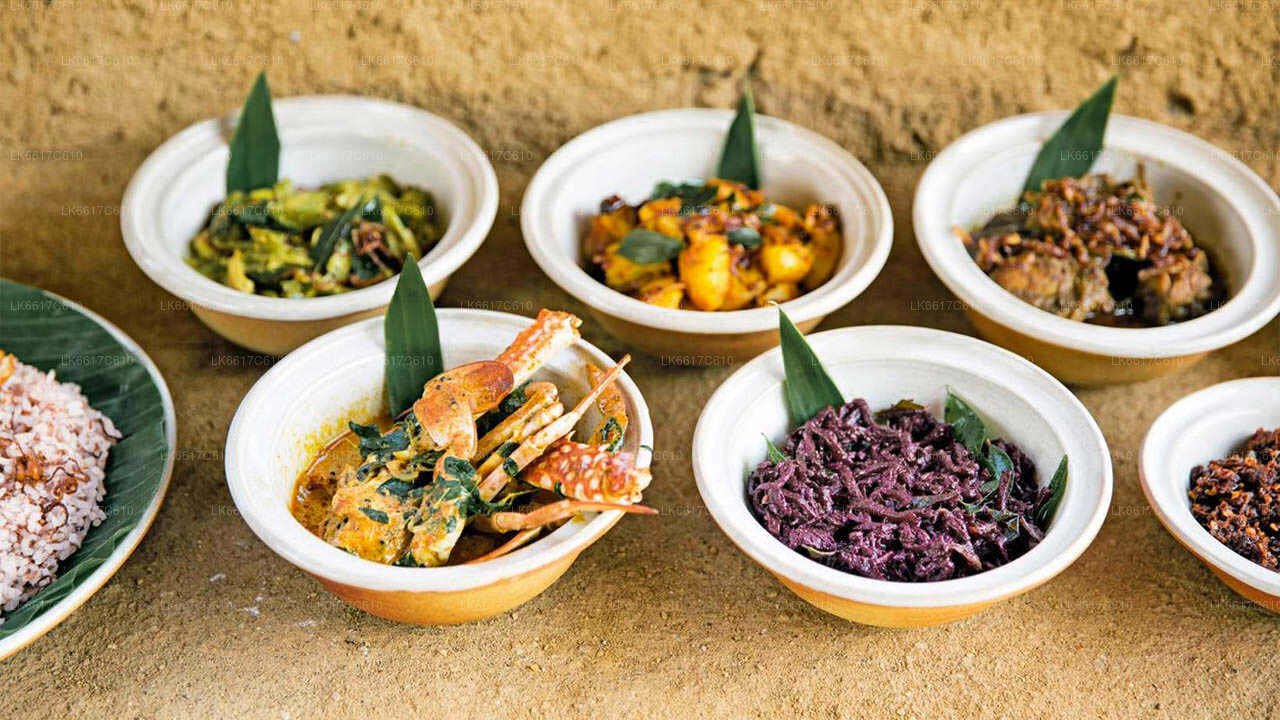
- Street food: rice and curry, coconut roti, traditional sweets
- General goods: clothing, household items, small handicrafts
What street food should I try near Negombo Market?
The lanes around the market are dotted with small eateries and mobile carts. Coconut roti — a flat, slightly charred bread made with fresh coconut and flour — is a reliable choice at any time of day. Rice and curry served on banana leaf is the standard lunch, with portions tailored to a local budget. For something sweet, look out for kokis, a crispy deep-fried snack of Dutch-Burgher origin that reflects Negombo's colonial past, and pani kadju (jaggery-coated cashews), which travel well as a light snack.
Vendors near the fish market area often grill small portions of catch to order during the busier morning hours — an informal but genuine way to taste the town's fishing culture.
When is the best time to visit Negombo Market?
Early morning — between 6 a.m. and 9 a.m. — is when the market is at its most active. The fish auction and fresh deliveries happen in this window, the heat is manageable, and the atmosphere is unhurried compared to midday. A second quieter peak happens in the late afternoon, from around 4 p.m. onward, when day-trippers and after-work shoppers return. Midday during the dry season can be uncomfortably hot; if your schedule allows, avoid it.
The market operates year-round. There is no single best season, though visiting during a local festival period — such as the lead-up to Sinhala and Tamil New Year in April — brings additional colour and a wider variety of traditional sweets and packaged goods intended as gifts.
How do I get to Negombo Market from Colombo?
Negombo is connected to Colombo by a well-maintained expressway, and the journey by private car or taxi typically takes around 45 minutes to an hour depending on traffic. Buses run frequently between Colombo's Bastian Mawatha bus terminal and Negombo town, making the market easily accessible on a budget. Because Negombo sits only a short distance from Bandaranaike International Airport, many travellers combine a market visit with an airport arrival or departure day, which removes the need for a separate detour.
Within Negombo town, the market is central enough to reach on foot from most guesthouses along the beach strip. Tuk-tuks are available for hire throughout the day if you prefer a quicker transfer.
What else is worth seeing near Negombo Market?
The market pairs naturally with a broader look at Negombo. The Dutch Fort Negombo — a colonial-era fortification now partially converted into a prison — stands a short walk from the town centre and provides context for the town's history as a Portuguese and later Dutch trading post. The Hamilton Canal, running north from Negombo Lagoon, can be explored by boat; it was originally built under Dutch administration and still carries small fishing craft today.
Negombo Beach, running along the western edge of town, is a low-key stretch popular with long-stay travellers and local families on weekends. A Negombo city tour can cover the market, the fort, the lagoon, and the beach in a single half-day itinerary without feeling rushed. For those with a full day, the nearby wetlands and the lagoon's birdlife extend the experience comfortably.
Is Negombo Market good for buying spices and souvenirs?
For spices, the market is one of the more reliable places to buy in bulk at honest prices. Vendors sell pre-packed portions as well as loose goods weighed to order. Ceylon cinnamon — the true, thin-quilled variety grown on the island — is widely available and noticeably fresher than the same product exported and repackaged abroad. Ceylon black pepper and cardamom are also good value.
Souvenir handicrafts are a smaller part of the offer here compared to markets in Kandy or Colombo's Pettah district. If textile or craft shopping is a priority, Negombo Market is a complement rather than a destination in its own right. That said, its authenticity — the absence of tourist-only stalls and inflated souvenir pricing — is a quality that more polished markets lack.
Is bargaining expected at Negombo Market?
For produce, prices are generally fixed or lightly negotiated based on quantity rather than hard bargaining. For dry goods, spices bought in larger amounts, and general merchandise, a polite counteroffer is normal and expected. A calm, friendly approach tends to work better than aggressive negotiating; vendors appreciate return business and a relaxed tone usually results in a fair outcome for both sides. Very few vendors in the main produce sections speak extensive English, though numbers and simple phrases are understood widely enough to complete most transactions without difficulty.