Kanneliya Rain Forest


Kanneliya-Dediyagala-Nakiyadeniya, or KDN, is a forest reserve in the Southern Province of Sri Lanka. Identified as one of the most floristically rich areas in South Asia; this forest region is the last remaining large rainforest in Sri Lanka, other than the Sinharaja Rainforest. The forest is situated 35km northwest of the City of Galle; and is a major catchment area for two of the most important rivers in southern Sri Lanka, Gin Ganga and Nilwala Ganga. Designated as a biosphere reserve in 2004 by UNESCO, the Kanneliya forest reserve home to many endemic plant and animal species.
Geographical Features
The KDN forest reserve consists of a series of parallel hills and valleys; ranging in elevation from 60m to 425m above sea level, and extending to an area of approximately 5306 hectares. It acts as a catchment for many rivers and streams; including Gin Ganga and Nilwala Ganga, that have their sources within the forest, and flow toward the west and the east of the forest respectively. Kanneli (from which Kanneliya gains its name), Nanikiththa and Udugama are the smaller streams that begin within the Kanneliya Rainforest; while Homa Dola and Gal Bandi Dola are sourced by the Nakiyadeniya and Dediyagala and pass through the forest. The forest receives a substantial rainfall of 3,750mm; with a mean annual temperature of 27.0°C, which can vary approximately 4°C to 5°C. Many ancient taxonomic groups of Gondwana are present in these rain forests. They also relate to Indo-Malayan plants and animals.
Flora and Fauna
The Kanneliya Forest reserve has large number of endemic flora and fauna; with 17 percent of lowland endemic floral species confined to this forest area, and 41 species of endemic fauna living there. Of the 319 woody plants recorded in the KDN forest reserve, about 52 per cent are endemic. The vegetation is representative of the Sri Lankan lowland rainforests; with the floral communities dominated by Shorea, Dipterocarpus, and Mesua plants, which is common in the emergent layer. The forest also harbours numerous medicinal plants and rare plants within the forest; including yellow vine (Concinium fenestratum), Salacia reticulata, heart-leaved moonseed (Tinospora cordifolia), coarse tassel fern (Lycopodium Squarrosum), and coarse tassel fern (Lycopodium phlegmaria). 27 percent of the floral species within the forest are listed as vulnerable, and 45 percent are in the rare plants category.
Kanneliya also has a total of over 220 known species of fauna; including 86 species of mammals, 36 species of snakes, and several species of avian life and fish. Amongst the bird species here; 26 birds are endemic with 20 of them only seen within the KDN forest complex. Some of these are the Sri Lankan spur fowl, Sri Lankan jungle fowl, Sri Lankan grey hornbill, red-faced Malkoha, orange-billed babbler and the Sri Lankan blue magpie. The Green-billed Coucal , ashy-headed laughing thrush and the white-faced starling are bird species that are also listed as endangered. Twenty percent of Sri Lanka’s endemic freshwater fishes inhabit in the waters of Gin River and Nilwala River; while 17 endemic snakes are amongst the Kanneliya Rainforest’s herpetofauna. A total of 23 species of lizards were recorded within the KDN forest reserve.
The Socio-economic conditions and Conservation
Over 10,000 people inhabit the 78 villages around the Kanneliya rainforest. A number of activities; such as forestry, collection of non-timber products, rice cultivation, tea, rubber and cinnamon plantations, animal husbandry and other forms of agriculture and cottage industries; are undertaken by these villagers around the forest as part of their livelihood. The Nugegoda, Rajagala and Dediyagala hermitages are situated in quiet clearings within the forest itself. When people settled in the area, the forest complex was subjected to logging for a few decades; until, thankfully, laws against it were put in place in 1988. Fortunately the diversity of species and plants remained largely intact, despite this destruction. A forest corridor is currently being planned between the Sinharaja Forest Reserve and the KDN forest Reserve, in order to facilitate animal movement between the two forests.
The Attractions
Visitors to Kanneliya should first visit the Forestry Department building housed within the jungle. The building also has a dormitory with bunkbeds, where visitors can choose to stay overnight. They also provide traditional meals in the cafeteria made from fresh local produce. So spending a whole day looking at the attractions is a good idea too.
The Kanneliya Rainforest has many beautiful sights to see. But key amongst these are four of them. The Anagimale Falls is an extremely attractive white cascade bounding over a number of large rocks strewn around the stream bed, and is just 2km from the gate on a broad trail. This makes it very accessible. The streams lost most of their water retaining capabilities due to de-forestation in the 70s and 80s, an therefore the true beauty of these waterfalls are rarely seen today. However, the situation is improving as the forest recoversthe delicate balance of nature, which was once disturbed. Walking 200m further down the main trailfrom the Anagimale Falls, one can reach the giant creeper. This is an ancient twisted creeper almost the height of a person, and is one of the wonders of Kanneliya.
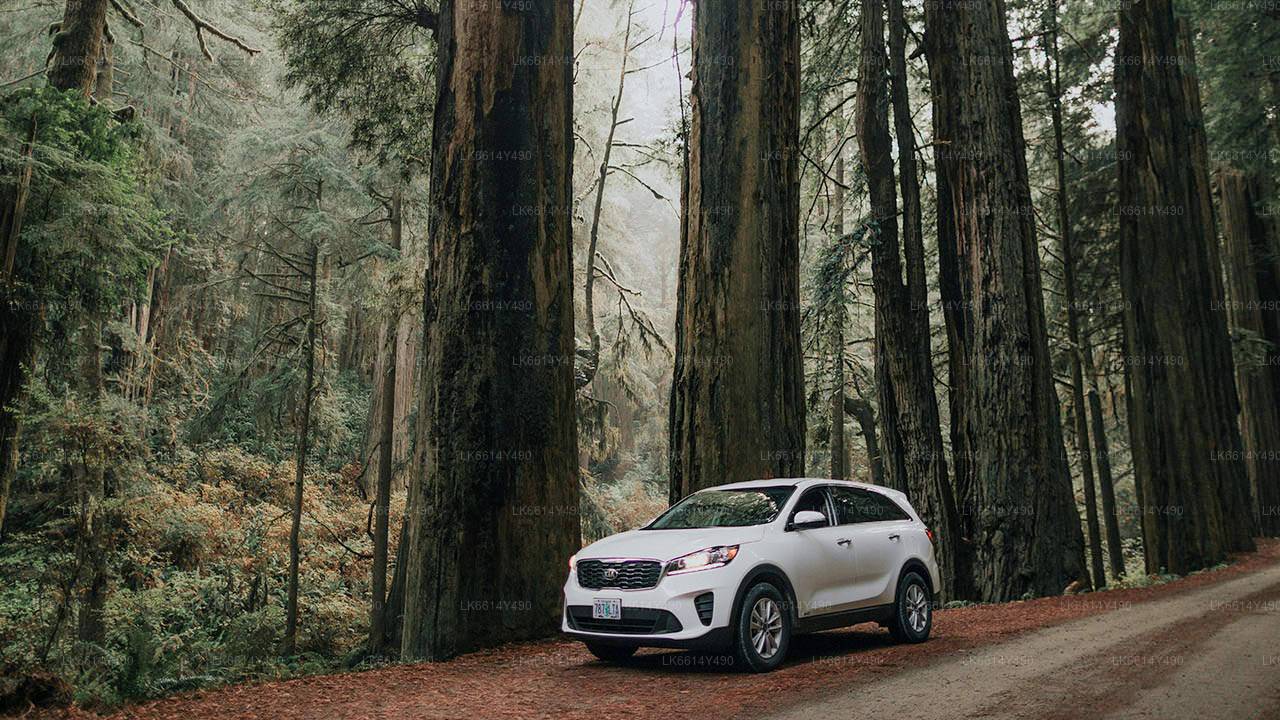
The other two attractions are deeper within the forest, reached by walking over slippery trails and rope bridges. One of these is Narangas Ella, a charming little waterfall that drops down a vertical rock shelf to fall onto a number of flat ledges before continuing on. It makes for a very beautiful sight. The other attraction is the giant Nevada tree located at a short detour on the same trail. There is an observation platform built halfway up the trunk so that visitors can see the wonders of Kanneliya from a height.
Kanneliya is much unknown rainforest that should not be missed.