Lakpura
Lakpura®

Kandy Temples

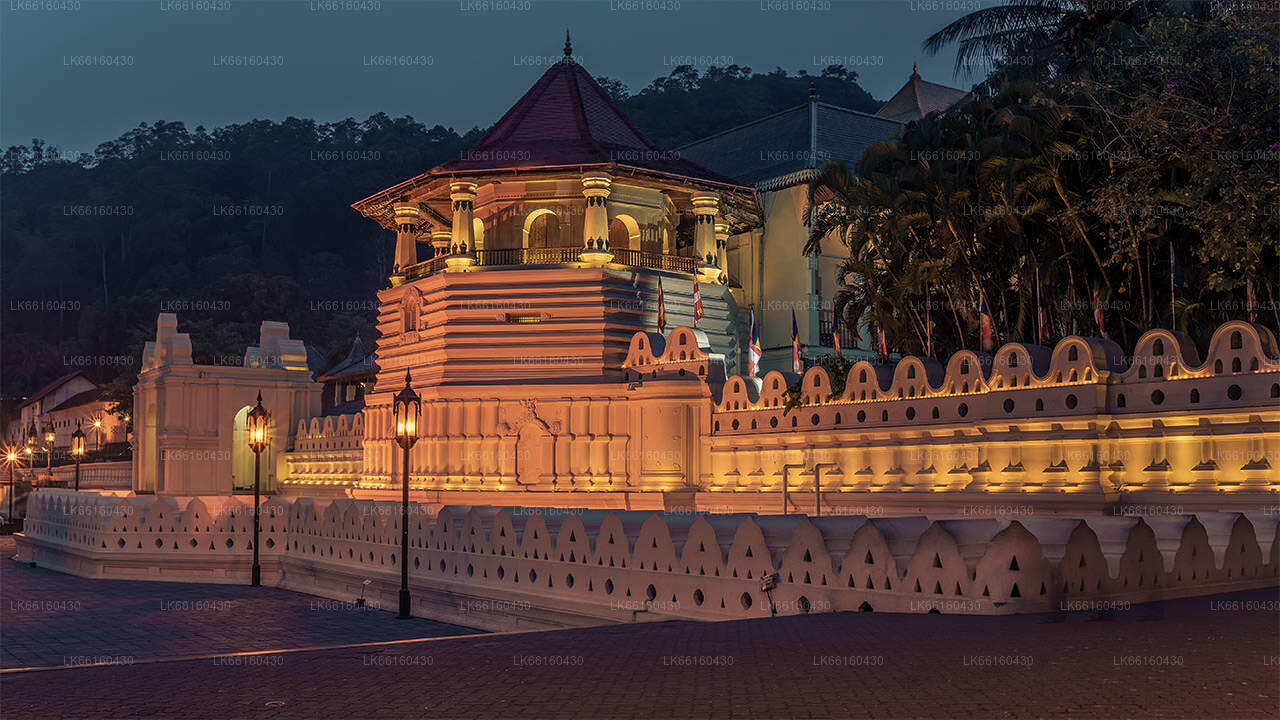
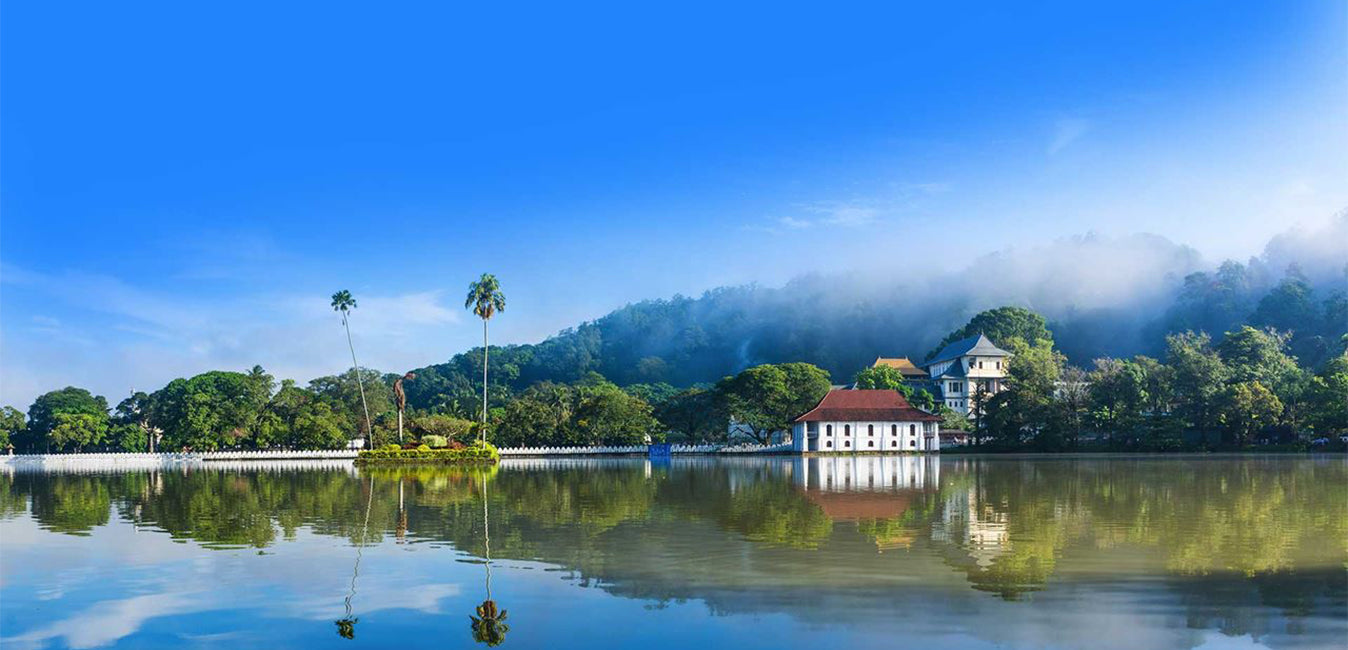
Kandy's spiritual landscape extends well beyond its famous lake and royal palace. Scattered across the hills and valleys of the Kandy District are a cluster of medieval temples that rank among the finest examples of pre-colonial Sinhalese religious architecture. Built largely in the fourteenth century, these sites blend South Indian, Dravidian, and indigenous Sinhalese craftsmanship into something that feels entirely its own. Whether you are a practising Buddhist making a pilgrimage or a traveller drawn by history and craft, the temples around Kandy reward a dedicated half-day or full day of exploration.

What temples are near Kandy worth visiting?

Four temples in the greater Kandy area stand out for their architectural distinction and historical significance. Gadaladeniya Raja Maha Viharaya, Embekka Devale, and Lankatilaka Viharaya were all constructed around 1344 CE and are often visited as a trio since they lie within a few kilometres of one another in the Udunuwara direction. Degaldoruwa Viharaya, a cave temple to the east of Kandy, rounds out the itinerary with a very different character — its significance lies in its murals rather than its stone or woodwork.

Gadaladeniya Raja Maha Viharaya

Built on a large outcrop of granite in Gadaladeniya village, on the border of Udunuwara and Yatinuwara, this temple was commissioned in 1344 CE under King Bhuvanekabahu IV and is sometimes called Dharmakirti Viharaya or Saddharmatilaka Viharaya. Its most immediately striking feature is the main shrine room, which shows strong South Indian influence: a soaring stone superstructure (sikhara) rises above the entrance, and the inner sanctum frames a serene seated Buddha beneath an elaborately carved Makara Torana — a decorative arch of mythological creatures that recurs across the region's temples.

A secondary shrine beside the main structure follows a cruciform floor plan, with a large central sikhara flanked by smaller towers at each wing. The temple is also renowned for its metalwork ornamentation, which distinguishes it from the timber-focused craftsmanship at nearby Embekka. The site was later dedicated to Velivita Sangharaja, one of the most venerated monks of the Kandyan period, by King Narendrasinghe.

Embekka Devale

About 8 miles from Kandy centre, in the village of Embekke near Daulgala, this devale — a shrine dedicated to a deity rather than a strictly Buddhist vihara — is celebrated for the quality of its medieval woodcarving. Virtually every structural timber in the complex is covered in intricate relief work, and the variety of motifs is extraordinary: entwined swans, double-headed eagles (a heraldic device associated with Kandyan royalty), wrestlers locked in combat, and graceful dancing figures appear side by side on the same pillar.

The entrance pavilion (Vahalkada) is supported by 16 carved wooden columns, while the Digge, or Dancing Hall, has 32 pillars containing around 514 distinct decorative patterns — no two are identical. The roof structure of the main hall is held together by a single wooden pin called the Madol Kurupuwa, a feat of traditional joinery that distributes the weight of 26 rafters without metal fasteners. The Drummers' Hall (Hewisi Mandapaya) incorporates pillars salvaged from an earlier royal audience hall, giving it a slightly grander scale than the rest of the complex.

Lankatilaka Viharaya

Lankatilaka sits dramatically on Panhalgala rock in Handessa, around 12 km from the Peradeniya Bridge, and was also built in 1344 CE — in the same year as Gadaladeniya — by Minister Senalankadhikara under the patronage of King Bhuvanekabahu IV. The site originally rose four storeys, though today only the ground level and a portion of the first floor survive intact. What remains is still imposing: the exterior walls incorporate elements of Polonnaruwa-era Sinhalese architecture alongside Dravidian and Indo-Chinese decorative traditions, reflecting the cosmopolitan artistic networks of fourteenth-century Sri Lanka.

Entering through a gateway flanked by gajasimha sculptures — composite lion-elephant figures that symbolise royal power — visitors pass through a colonnaded pavilion before reaching the inner chamber. Inside stands a colossal seated Buddha beneath a Makara Torana similar in form to the one at Gadaladeniya, though on a larger scale. The surrounding walls are covered in murals depicting the twenty-four Buddhas and a pantheon of protective deities including Upulvan, Saman, Vibhisana, and Skanda. The views from the rock over paddy fields and forested hills are among the most quietly rewarding in the Kandy area. Lankatilaka has architectural parallels with temples found at Polonnaruwa, Sri Lanka's medieval capital, reflecting a shared aesthetic lineage.

Degaldoruwa Viharaya

Located in Amunugama village, approximately 7 km from Kandy, Degaldoruwa is a cave temple of a very different character from the three stone-and-timber shrines described above. Its renown rests entirely on its interior murals, which are considered among the finest examples of eighteenth-century Kandyan painting in Sri Lanka. Executed during the reign of the last Kandyan kings, the compositions cover the cave ceiling and walls with densely layered scenes from the Jataka tales — stories of the Buddha's previous lives — rendered in warm ochres, deep reds, and mineral blues that have survived remarkably well in the cave's sheltered environment.

The paintings at Degaldoruwa are particularly valued by art historians because they show less Indian influence than earlier Sri Lankan Buddhist murals, reflecting the emergence of a distinctly local Kandyan visual style. A resident monk community maintains the site, and it remains an active place of worship.

When is the best time to visit Kandy's temples?

The temples are accessible year-round, though the Kandy region receives heavy rainfall from October through January (northeast monsoon) and again briefly in April to May. The July–August window coincides with the Esala Perahera Festival, when Kandy hosts one of Asia's grandest Buddhist processions. Visiting the surrounding temples in the days around the Perahera gives the experience an added ceremonial atmosphere, though accommodation should be booked well in advance during this period. Mornings are generally the best time to visit — temple precincts are cooler, the light is better for photography, and devotional activity peaks at dawn.

How do I get to the Kandy temples from Kandy city?

Gadaladeniya, Embekka, and Lankatilaka can be combined into a single half-day loop by tuk-tuk or private car, since they are clustered in the Udunuwara area southwest of Kandy. A typical sequence is Gadaladeniya first, then a short ride to Embekka, and on to Lankatilaka, returning to Kandy via Peradeniya. Public buses serve the area but require changes and add significant time. Degaldoruwa lies in the opposite direction, east of the city, and is best treated as a separate excursion. A Kandy city tour with a private vehicle can incorporate all four temples in a full day.

What should visitors know before entering?

  • Remove footwear before entering any shrine room or inner sanctum.
  • Dress modestly — shoulders and knees should be covered. Sarongs are often available to borrow at the entrance.
  • Flash photography is typically prohibited inside shrine rooms; natural-light photography is usually permitted.
  • A small donation is customary at each temple; some sites charge a nominal admission fee for foreign visitors.
  • Embekka Devale houses a devale (deity shrine) rather than a purely Buddhist vihara, so you may encounter Kandyan rituals involving drumming and offerings alongside standard Buddhist practice.
  • Monks are present at most sites; respectful questions are welcome but ask permission before photographing residents.

How do these temples compare to Sri Lanka's other Buddhist sites?

The Kandy-area temples are distinguished by their medieval craftsmanship and their continued use as active worship sites — they are not open-air museums. In contrast, the ancient stupas and monastery complexes of Polonnaruwa are largely archaeological sites maintained by the Central Cultural Fund. The Kandy temples feel more intimate, the communities around them are still woven into the religious life of the buildings, and the woodcarving tradition at Embekka has no real parallel elsewhere on the island. For visitors following a broader Buddhist heritage itinerary, combining Kandy's temples with the Kandy Tourist Information Center is a practical way to plan the wider circuit.

Book this experience with Lakpura

Curated by our local team. Direct booking, instant confirmation.

Ask Lakpura® Agent