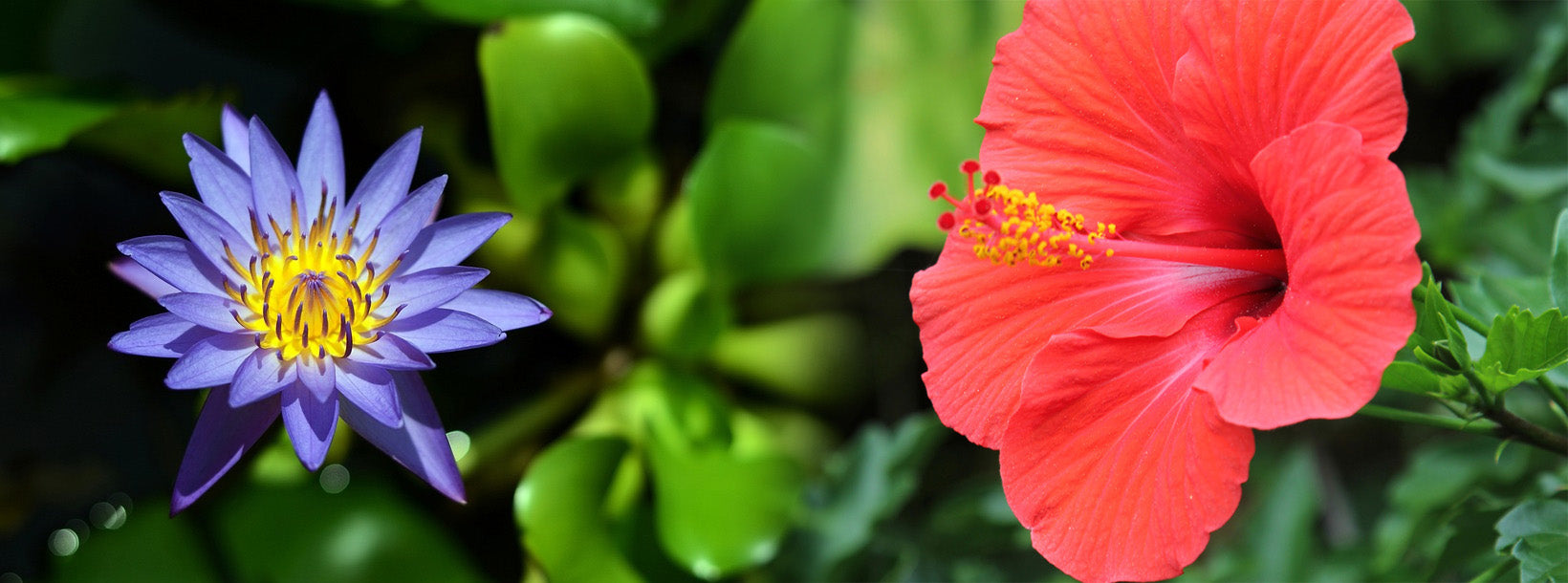
Hibiscus rosa-sinensis, known in Sinhala as Sapaththu Mala (සපත්තු මල), is one of the most recognisable flowering plants across Sri Lanka. Found in home gardens, temple courtyards, and roadside hedges alike, it has served both ornamental and medicinal roles for centuries. In Sri Lanka's ayurvedic tradition, it holds a respected place among therapeutic plants, valued for its flowers, leaves, and bark.
What is the hibiscus plant, and how does it grow?
Hibiscus rosa-sinensis is a woody, evergreen shrub belonging to the Malvaceae family. In Sri Lanka's tropical climate, it can grow to around two to three metres in height when unpruned. The leaves are broadly ovate, typically ten to fifteen centimetres in length, with serrated margins. Flowers are large and funnel-shaped, most commonly seen in deep red, though cultivated varieties produce pink, yellow, white, and orange blooms.
The plant flowers year-round in warm lowland areas, making it one of the most continuously productive ornamental shrubs in the island's gardens. The outer bark is noticeably rough in texture, and the stems are semi-woody with a fibrous interior.
The common English nickname "shoe flower" — which maps closely to the Sinhala sapaththu — is thought to derive from the historical use of crushed hibiscus petals to polish shoes in parts of Asia. In India, the flower is also closely associated with the goddess Durga and is routinely offered at Hindu temples.
What are the ayurvedic and traditional medicinal uses of hibiscus?
Hibiscus rosa-sinensis appears in the traditional ayurvedic pharmacopoeia of Sri Lanka as a plant with cooling, astringent, and emollient properties. Traditional practitioners have used different parts of the plant — petals, leaves, and roots — for a range of applications.
- Blood pressure support: Dried hibiscus petals steeped in hot water produce a deep crimson tisane that has traditionally been consumed to help moderate blood pressure. This use is increasingly supported by preliminary clinical research, though it should not replace medical advice.
- Wound healing: Fresh petals macerated in coconut oil or sesame oil and applied topically have long been used in rural Sri Lankan households as a gentle wound dressing. The mucilaginous quality of the petals is thought to contribute to this soothing effect. Coconut, another cornerstone of Sri Lankan traditional medicine, is a common carrier for such preparations.
- Skin and hair care: Crushed hibiscus leaves and petals are used as a hair conditioning rinse, with a reputation for promoting scalp health and reducing hair fall. The flower's juice is also applied in folk practice to support eyebrow and lash growth.
- Digestive and liver support: Sun-dried petals powdered and dissolved in warm water are consumed in small quantities as a daily tonic, particularly in formulations aimed at supporting liver function and managing digestive discomfort.
- Women's wellness: In traditional practice, petals soaked in cool water overnight and consumed as an infusion have been used to address certain complaints related to the female reproductive cycle.
- Acne and skin clarity: The juice of fresh hibiscus leaves is applied as a topical treatment for acne and uneven pigmentation in traditional Sri Lankan skincare.
It is worth noting that while these uses are deeply embedded in traditional medicine, individuals should consult a qualified ayurvedic physician or healthcare provider before using hibiscus preparations therapeutically, particularly in conjunction with prescription medications.
How is hibiscus used as a tea or infusion?
Hibiscus tea — brewed from dried petals — has gained considerable global popularity, and Sri Lankan producers now export both whole dried petals and blended tea products to international markets. The resulting infusion is tart and cranberry-like in flavour, naturally caffeine-free, and rich in anthocyanins, which give it its characteristic ruby colour.
To prepare a basic hibiscus infusion, steep two to three teaspoons of dried petals (or one tea bag) in hot water for five to eight minutes, then strain. It can be consumed warm or chilled over ice, and pairs well with a slice of lime or a small amount of honey. Ready-made hibiscus teas produced in Sri Lanka range from simple whole-petal formats to blended varieties incorporating lime, ginger, or other herbs.
Where does hibiscus grow in Sri Lanka?
The plant thrives across Sri Lanka's low and mid-elevation zones, particularly in the wet and intermediate climatic regions. It is a common garden plant in the Western, Southern, and Sabaragamuwa provinces, and is cultivated in home plots as well as larger agricultural settings. Given its year-round flowering and low maintenance requirements, it is frequently planted alongside other medicinal species such as those found in traditional ayurvedic herb gardens attached to rural homesteads.
Sri Lanka's biodiversity corridors — including areas near the Sinharaja Forest Reserve — support rich flora in the surrounding villages, where plants like hibiscus are integral to traditional garden medicine practices.
What is the difference between Hibiscus rosa-sinensis and other hibiscus species?
Hibiscus rosa-sinensis is the ornamental species most commonly found in Sri Lankan gardens and is the one associated with the traditional medicinal applications described here. It should not be confused with Hibiscus sabdariffa (roselle), a related species whose calyces are the primary source of commercial hibiscus tea and dried hibiscus products in international trade.
In Sri Lanka, both species are cultivated, and dried hibiscus products sold under the Lakpura label may draw on Hibiscus rosa-sinensis petals as well as roselle. The flavour profile of roselle is more strongly acidic, while rosa-sinensis preparations tend to be milder and more mucilaginous. For therapeutic applications, the distinction matters — always check the species on product labelling or consult a practitioner.
How is hibiscus used in Sri Lankan culture and daily life?
Beyond the garden and the dispensary, the hibiscus flower holds genuine cultural currency in Sri Lanka. Red hibiscus flowers are a standard offering at Buddhist and Hindu shrines, placed alongside incense and oil lamps at dawn. The flower's association with auspiciousness makes it a frequent choice for festival garlands and ceremonial arrangements.
In everyday life, Sri Lankan households often maintain at least one hibiscus shrub primarily for this ritual purpose, harvesting fresh blooms each morning. The same plants double as a first-aid resource — a leaf crushed in the hand provides immediate mucilaginous gel useful for minor skin irritations.