

Boie's Rough-Sided Snake (Xenochrophis boiei) is a semi-aquatic, non-venomous colubrid found in the freshwater wetlands of Sri Lanka and parts of India. Relatively inconspicuous by nature, it rarely draws attention from casual visitors, yet it fills a meaningful ecological niche — keeping populations of small fish and aquatic invertebrates in check across the island's lowland river systems and marshes.
What does Boie's Rough-Sided Snake look like?
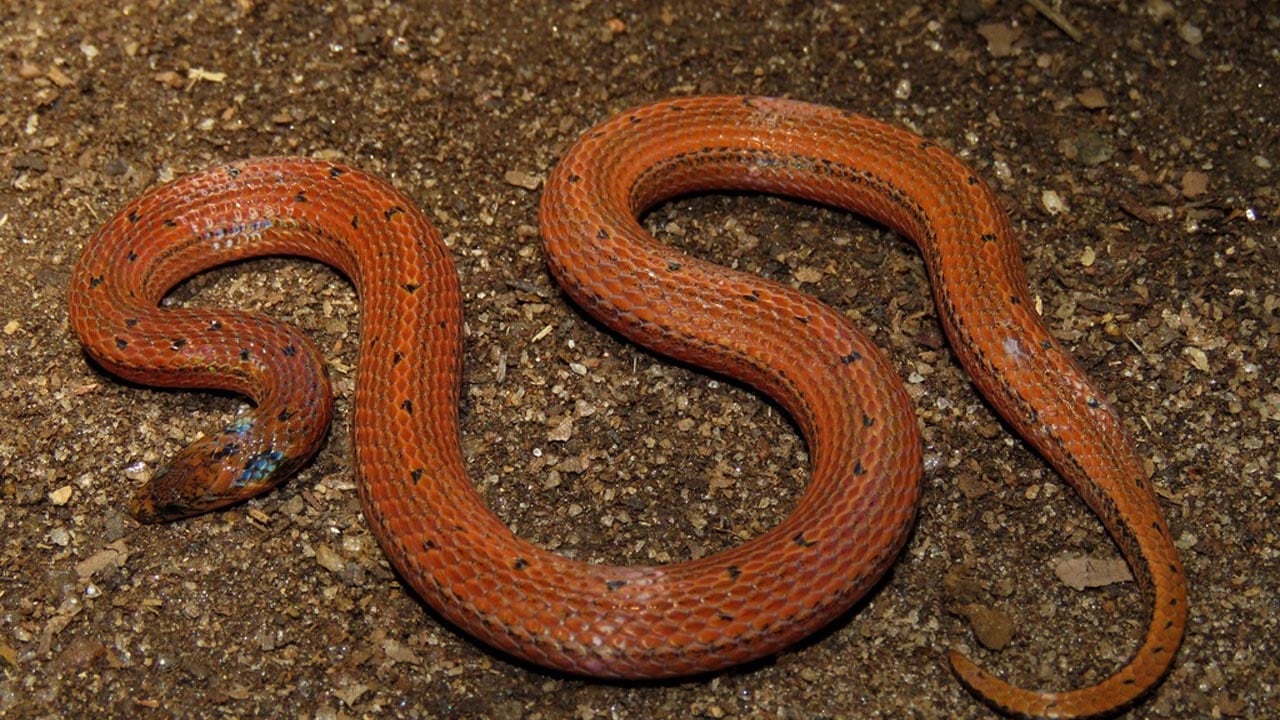
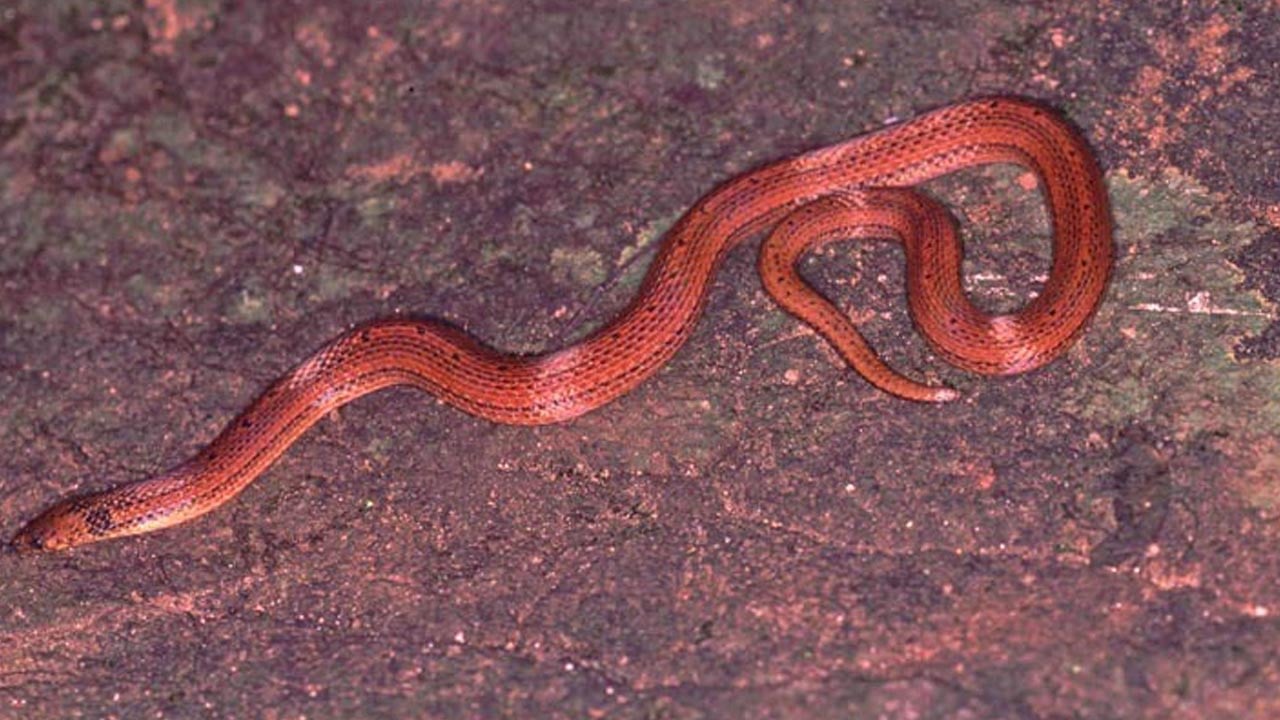
Adults typically measure between 50 cm and around 1 metre in total length, making this a moderately slender species. The body is covered in distinctly keeled, rough-textured scales — the feature that gives the snake its common name — which likely improve grip on wet, vegetated surfaces and in moving water.
Colouration is generally a dark olive-brown, grey, or muted green along the dorsal surface, sometimes broken by pale yellowish markings along the flanks. The belly is noticeably lighter, ranging from cream to pale yellow. The head is small, slightly flattened, and pointed — well-suited to probing through aquatic vegetation — with relatively large eyes that serve the snake in both terrestrial and underwater hunting.
Where does Boie's Rough-Sided Snake live in Sri Lanka?
Within Sri Lanka, the species is associated primarily with the lowland and midland wet and intermediate zones. It favours slow-moving or still freshwater environments: streams, rivers with calm margins, irrigation canals, ponds, and marshes. Dense aquatic vegetation is a consistent requirement — both for shelter from predators and as a hunting ground.
Wetland systems such as those along the Madu Ganga estuary and its associated backwaters provide the kind of mosaic habitat this snake depends on: shallow water edges, reed beds, and overhanging riparian growth. Sightings are occasionally reported near the margins of national park waterways as well.
How does Boie's Rough-Sided Snake behave?
Like other members of the Xenochrophis genus, this species divides its time between water and land. It is often encountered basking on muddy banks or low branches overhanging the water during the cooler parts of the morning. When threatened, it typically retreats into the water or disappears into vegetation rather than confronting the observer.
Feeding activity appears most pronounced in the early morning and late afternoon. The diet centres on small fish, frogs, tadpoles, and aquatic invertebrates. Although the species does produce mildly toxic saliva that may help subdue small prey, this poses no meaningful risk to humans. Bites from a startled individual may cause minor local irritation at most.
Is Boie's Rough-Sided Snake venomous or dangerous?
No. Xenochrophis boiei is classified as non-venomous. The mild saliva toxicity documented in related Xenochrophis species is rear-fanged and functions primarily to immobilise small prey. There is no documented case of serious envenomation of humans by this species. It is a shy, inoffensive snake that will almost always flee before resorting to a defensive bite.
If encountered in the field, the appropriate response is simply to observe from a short distance and allow the snake to move on undisturbed. Handling wild snakes — even non-venomous ones — is discouraged, as it causes stress to the animal and can lead to defensive biting.
What is the conservation status of Boie's Rough-Sided Snake?
The species has not been evaluated by the IUCN as a discrete taxon in recent assessments, partly because its taxonomy within the wider Xenochrophis complex has undergone periodic revision. In practical terms, the primary threats it faces are the same ones affecting Sri Lanka's freshwater biodiversity broadly: wetland drainage, water pollution, and the degradation of riparian vegetation. Protected wetland areas and forest reserves help maintain suitable habitat.
How does Boie's Rough-Sided Snake fit into Sri Lanka's wider herpetofauna?
Sri Lanka hosts a remarkably rich snake fauna relative to its size, with both endemic and widespread Asian species represented. Non-venomous water snakes of the family Colubridae — including Xenochrophis — play a quiet but important regulatory role in wetland food webs. By preying on fish and frogs, they help prevent any single prey population from overrunning an ecosystem.
Visitors with an interest in Sri Lanka's reptiles will find wetland-edge habitats the most productive places to look: early mornings near calm waterways, particularly in areas where dense grass or reeds meet open water. The Sinharaja Forest Reserve and surrounding lowland wet-zone areas are among the best regions in Sri Lanka for encountering a broad range of reptile and amphibian species, though Boie's Rough-Sided Snake is more characteristic of open wetland margins than closed-canopy forest interior.
Tips for responsible wildlife observation
- Keep noise to a minimum and move slowly along water edges — sudden movements cause most snakes to flee before you can observe them.
- Early morning, roughly 6–9 am, is typically the best window for spotting basking water snakes.
- Do not attempt to catch or handle wild snakes. Photograph from a respectful distance.
- Avoid disturbing the bankside vegetation that provides essential cover for this and many other aquatic species.
- Report unusual or unexpected sightings to a local herpetological society or university zoology department — citizen observations genuinely contribute to distribution records for less-studied species.
Taxonomy at a glance
| Rank | Classification |
|---|---|
| Kingdom | Animalia |
| Class | Reptilia |
| Order | Squamata |
| Family | Colubridae |
| Genus | Xenochrophis |
| Species | X. boiei |
| Common names | Boie's Rough-Sided Snake, Boie's Water Snake, Boie's Rough-Scaled Water Snake |