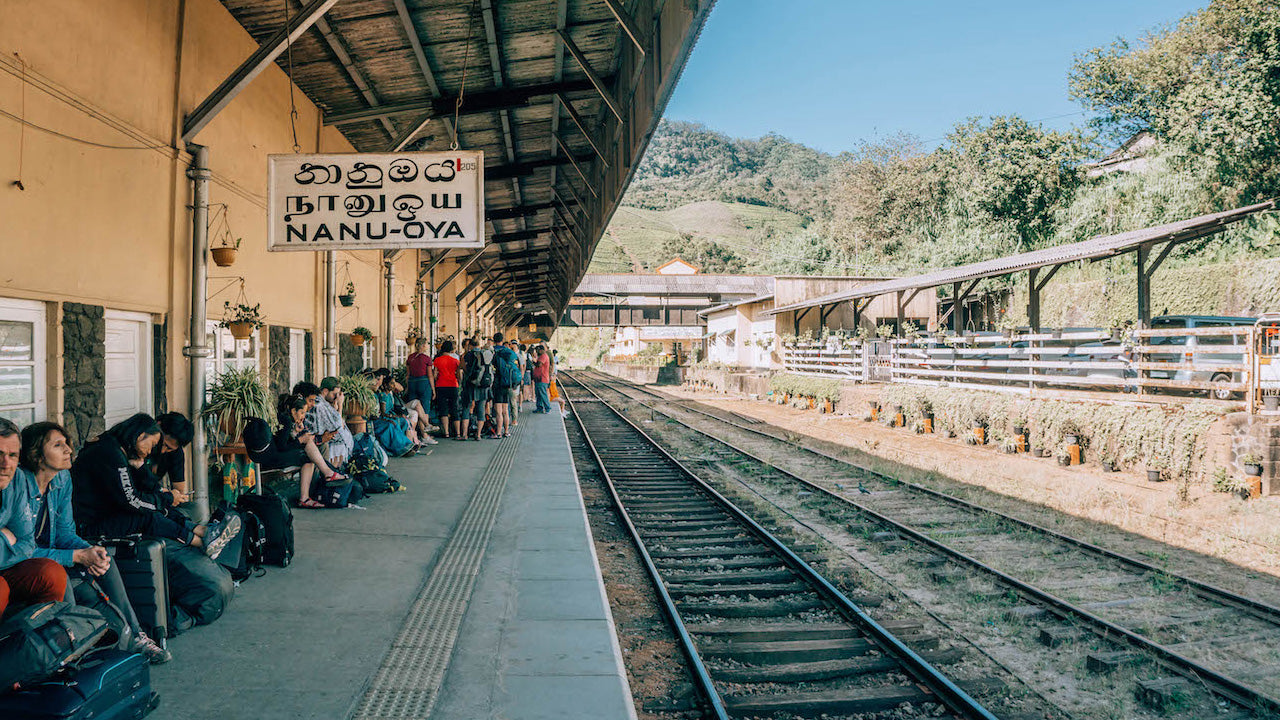
Nanu Oya sits at roughly 1,700 metres above sea level in Sri Lanka's Central Province, tucked between rolling tea estates and mist-wrapped ridges a short drive from Nuwara Eliya. Most travellers pass through the town on the famous hill-country railway line, but those who slow down discover a quiet highland settlement with cool air, rich birdlife, and easy access to some of the island's most rewarding natural landscapes.
What makes Nanu Oya worth visiting?
The town's appeal is quiet rather than spectacular. Tea plantations cover almost every slope, broken occasionally by patches of montane forest and small streams that feed the Nanu Oya River. The river itself winds through the valley floor, adding a gentle soundtrack to the surrounding farmland. Because the altitude keeps temperatures consistently cool — often between 10 °C and 20 °C — the air feels noticeably fresher than in Colombo or Kandy, and the light on a clear morning has a particular clarity that photographers seek out.
Nanu Oya also sits at the boundary of some of the island's most biodiverse terrain. The forests edging the tea estates shelter endemic bird species including the Sri Lanka white-eye, dull-blue flycatcher, and yellow-eared bulbul, making the area a productive stop for birders working through the hill-country checklist. Larger mammals such as sambar deer and purple-faced langurs occasionally appear along quieter forest tracks.
What can I do in and around Nanu Oya?
- Tea estate walks: Several working estates near the town welcome visitors who want to see withering, rolling, and drying in action. A walk through the plucking fields in the early morning — when pickers move through the rows with practiced speed — is one of the more grounded travel experiences in the highlands. Ceylon tea from this elevation is prized for its bright, brisk character.
- Horton Plains day trip: The road from Nanu Oya to Horton Plains National Park is one of the shortest access routes to the plateau, making the town a practical base for an early-morning visit to World's End. The UNESCO-listed park covers grasslands, cloud forest, and two dramatic cliff-edge viewpoints.
- Hiking: Trails through the surrounding hills range from gentle estate paths to more demanding forest routes. The landscape around Nanu Oya connects to a network of footpaths that existed long before roads were built — some originally cut by colonial-era planters.
- Photography: Dawn mist settling between the tea rows, freight trains crossing small viaducts, and the interplay of cloud and ridge provide consistent material for landscape photographers throughout the year.
- Birdwatching: The ecotone between tea estate and cloud-forest edge is particularly productive, especially in the early morning hours before plantation activity begins.
How do I get to Nanu Oya from Colombo or Kandy?
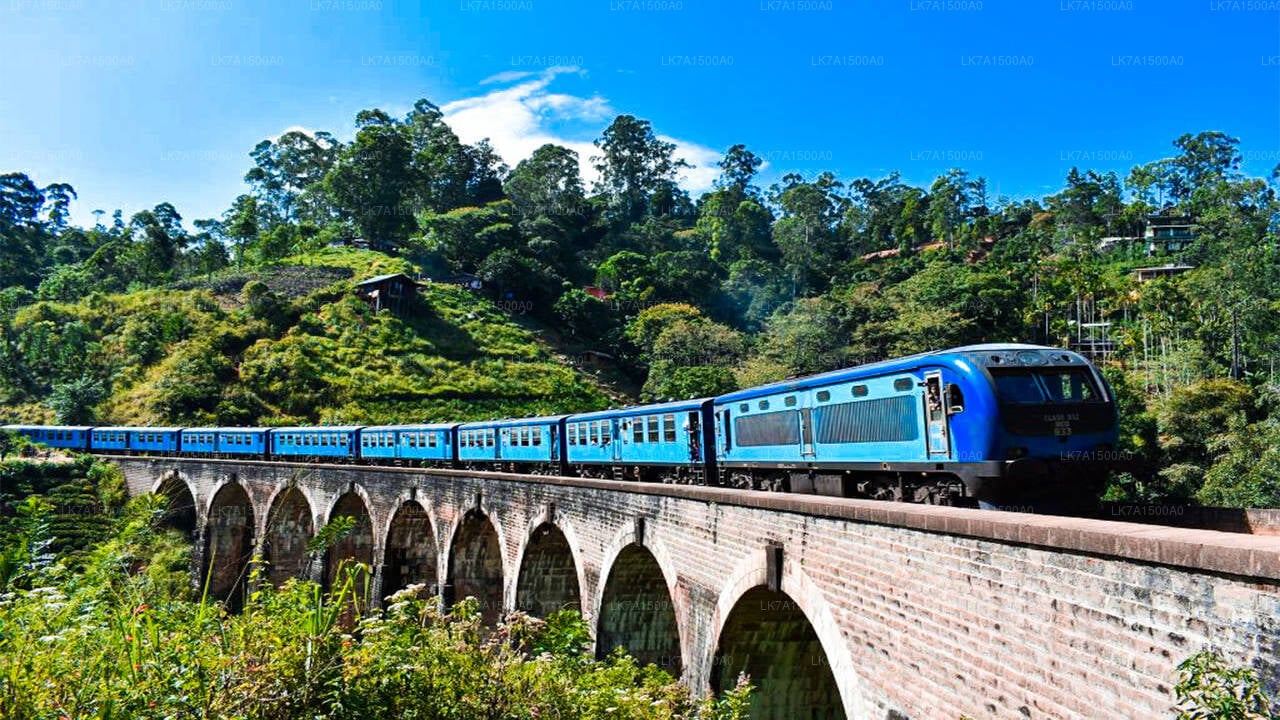
The railway is both the most practical and most scenic option. Nanu Oya Railway Station lies on the Kandy–Badulla main line, and several named expresses stop here daily. From Colombo Fort the journey takes around five to six hours; from Kandy it is roughly two and a half to three hours. The section between Kandy and Nanu Oya passes through the famous Nine Arches area and climbs steadily through tea country — widely regarded as one of the most scenic rail routes in South Asia.
By road, Nanu Oya is approximately 8 km from Nuwara Eliya town centre. Taxis and tuk-tuks connect the two easily. The A7 highway links Nuwara Eliya to Kandy (around 75 km) and to Colombo via Kandy (around 180 km total), though hill-country roads demand patience — bends are tight and distances take longer than the map suggests.
When is the best time to visit Nanu Oya?
The dry season from December to April generally brings the clearest skies and the most reliable conditions for outdoor activities. January and February in particular see cool, bright days that suit hiking and photography. The Nuwara Eliya area also becomes festive around April, when the Sinhalese and Tamil New Year coincides with the local racing season and flower shows — accommodation books out quickly during this period.
From May to September, the south-west monsoon brings heavier rainfall to the western slopes of the central highlands. Nanu Oya is partially sheltered by the ridge line, so showers tend to be shorter and more predictable than on the coast, often clearing by mid-morning. The landscape turns intensely green during the monsoon months, and the tea flush is at its most productive — a different but equally worthwhile time to visit for those who don't mind intermittent rain.
Where should I stay near Nanu Oya?
Most accommodation options cluster in nearby Nuwara Eliya, which has a broader range of hotels from colonial-era grand properties to smaller guesthouses. A handful of plantation bungalows and boutique stays operate closer to Nanu Oya itself, offering a quieter alternative for travellers who prefer to be away from the town centre. The Grand Hotel, Nuwara Eliya is one of the hill country's best-known heritage stays and sits within easy reach of Nanu Oya by road.
What else is nearby?
Nanu Oya occupies a central position in the highlands, which means several other key destinations are within reach without long drives. Ella is around two to three hours east along the railway, passing through some of the line's most dramatic scenery including the Nine Arches Bridge. Kandy, the cultural capital of the hill country, lies roughly two and a half hours west by train and anchors the northern edge of the central highlands circuit.
For nature-focused travellers, the Sinharaja Forest Reserve — Sri Lanka's last significant tract of primary lowland rainforest — is accessible as a longer day trip or overnight excursion from Nanu Oya, typically requiring a change in transport at Ratnapura or Deniyaya.
Is the Nanu Oya train journey worth it?
The hill-country railway ranks among the world's celebrated rail journeys for good reason. Between Kandy and Badulla the line crosses more than 40 tunnels and over 100 bridges, climbing through tea country, cloud forest, and open grassland. The stretch approaching Nanu Oya — where the track skirts deep valleys and tea fields drop away on both sides — is among the most photogenic sections. Observation cars on some services allow travellers to stand in the open doorway, though standard second-class carriages with open windows offer an equally immersive experience at a fraction of the cost. Reserving seats in advance is strongly recommended, particularly for the named expresses like Podi Menike and Udarata Menike, which are popular with both visitors and locals.