
The Common Rough-sided Snake (Contia tenuis) is a small, secretive colubrid native to the dry foothills and rocky lowlands of the western United States. Despite its wide range across California, Oregon, Nevada, and parts of Arizona, it is rarely encountered — not because it is scarce, but because it spends most of its active hours hidden beneath rocks and debris. For naturalists and herpetology enthusiasts, spotting one is a quiet reward for patient fieldwork.
What does the Common Rough-sided Snake look like?
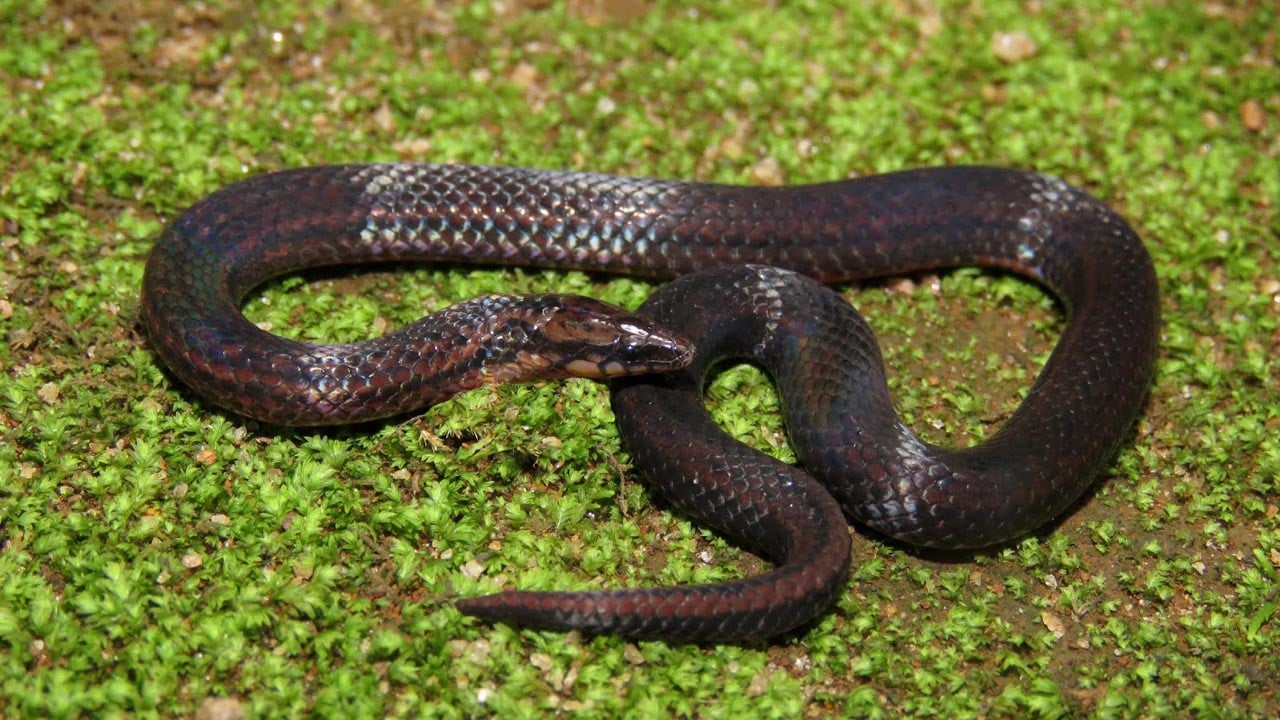
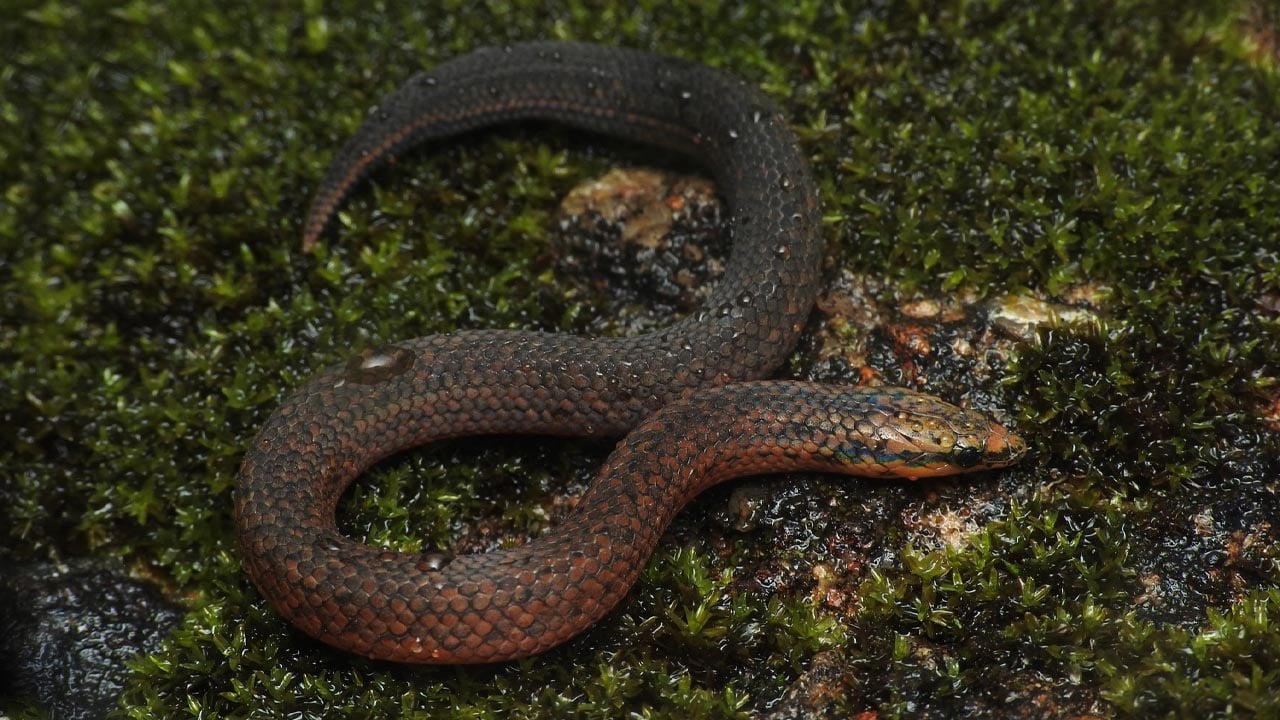
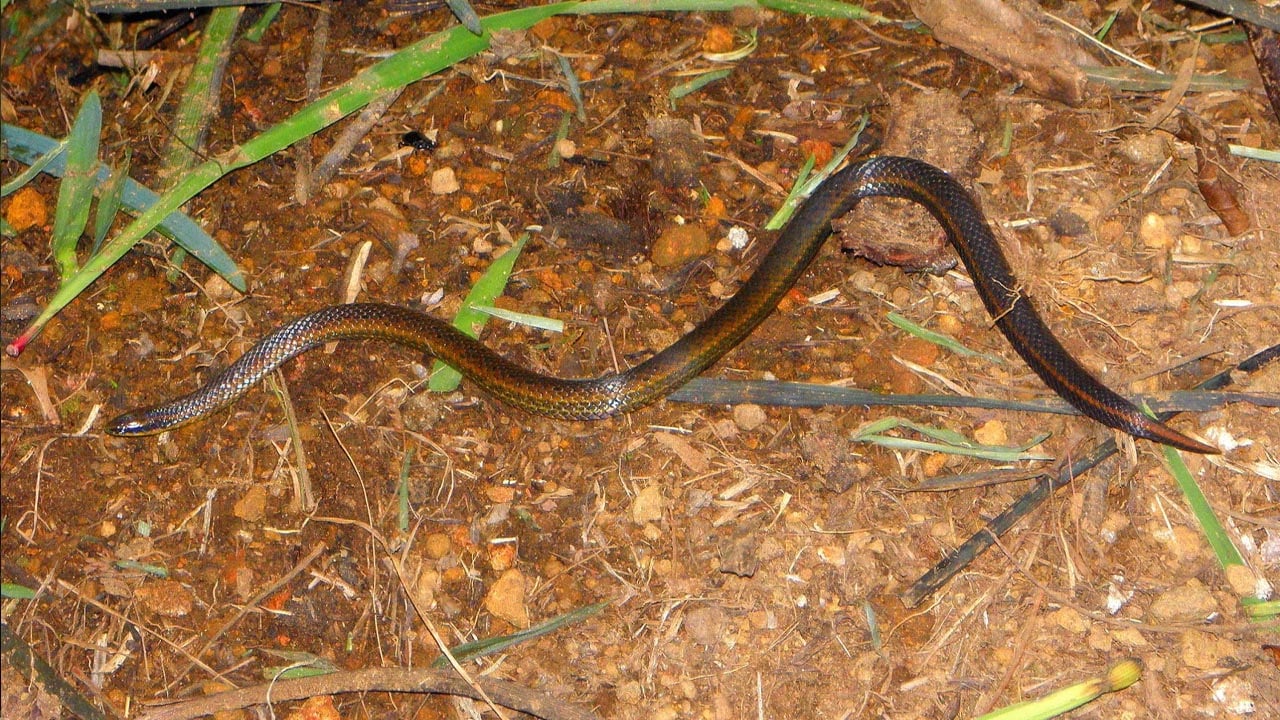
Contia tenuis is a slender snake, typically 30 to 45 cm (roughly 12 to 18 inches) in length when fully grown. Its most distinguishing feature is the texture of its scales: each lateral scale is keeled — slightly ridged along the centre — giving the body a subtly rough feel that sets it apart from many of its smooth-scaled colubrid relatives.
- Coloration: The dorsal surface is usually muted brown or grey, often with faint darker streaking along the back and sides. The belly and chin are pale cream or off-white.
- Head: Small and narrow, barely wider than the neck, which gives the animal a streamlined, almost worm-like silhouette at first glance.
- Eyes: Dark and proportionally small, consistent with a species that is most active at low light levels.
- Tail: Short and tapered, blending smoothly into the body without any abrupt distinction.
Because the head is so inconspicuous, observers sometimes mistake juvenile individuals for earthworms until a closer look reveals scales and a forked tongue.
Where does the Common Rough-sided Snake live?
The species occupies a geographic band running through the Pacific states and into the Great Basin. Core populations are centred in California's foothills and coastal ranges, with additional populations recorded across much of Oregon, western Nevada, and the northern fringes of Arizona. Within that range, habitat choice is fairly specific.
Contia tenuis favours dry to moderately moist rocky terrain: scrublands, open oak woodlands, chaparral, and areas with loose talus or abundant surface debris. It is rarely found in densely forested zones or heavily agricultural land. At higher elevations, activity windows are constrained by cooler temperatures, so individuals tend to congregate in lower-lying, sun-warmed rocky areas where prey is most accessible.
What does the Common Rough-sided Snake eat?
This species is insectivorous, and its diet is more specialised than many small colubrids. Primary prey items include ants, termites, beetle larvae, and other soft-bodied arthropods encountered under rocks or in leaf litter. The snake relies heavily on chemosensory detection — flicking its tongue to pick up chemical traces — rather than visual pursuit, which suits its dim-light activity pattern well.
Because it targets invertebrates rather than vertebrates, Contia tenuis plays a measurable role in regulating insect populations within its local habitat, particularly in areas where termite or ant colonies are abundant.
When and how is the Common Rough-sided Snake active?
Activity is primarily nocturnal or crepuscular — concentrated around dusk and dawn. During daylight hours the snake shelters under flat rocks, bark slabs, or within deep crevices, emerging only when temperatures drop to a comfortable range. In the hottest months of summer, surface activity can decline significantly, with individuals becoming more fossorial and remaining underground for extended periods.
Spring and early autumn typically represent the most reliable windows for observation, when overnight temperatures are mild enough to encourage extended foraging but not so cold as to suppress activity entirely. In the northern parts of its range, the snake enters a winter dormancy period, emerging again as soils warm in late February or March.
How does the Common Rough-sided Snake reproduce?
Like most members of the Colubridae family, Contia tenuis is oviparous — it lays eggs rather than giving birth to live young. Breeding activity typically peaks in spring following emergence from winter dormancy. Females seek out concealed, moisture-retaining microhabitats — beneath flat rocks, in rotting logs, or within loose soil — to deposit their clutch. Eggs generally hatch in late summer or early autumn, and hatchlings are fully independent from the moment they emerge, receiving no parental care.
Is the Common Rough-sided Snake dangerous to humans?
Contia tenuis is non-venomous and poses no meaningful threat to people. It is a docile species that rarely bites even when handled, and its small mouth is not capable of causing injury to an adult. If disturbed, the typical response is to freeze, flatten the body slightly, or attempt to slip away beneath the nearest cover. It should not be confused with venomous species sharing portions of its range, such as the Western Rattlesnake, which is considerably heavier-bodied and has a distinctly triangular head.
What are the main conservation concerns for this species?
The Common Rough-sided Snake is not currently listed as threatened or endangered, and it retains a reasonably broad range across the western United States. However, several pressures warrant attention from conservation planners:
- Habitat loss: Urban expansion across California's foothills and valley margins removes the rocky scrubland this species depends on. Roads and development fragment populations that would otherwise interbreed freely.
- Agriculture: Conversion of chaparral and open woodland to cultivated land eliminates shelter sites and disrupts invertebrate prey communities.
- Climate variability: Extended drought conditions in the western United States alter soil moisture levels and invertebrate abundance, both of which can affect breeding success and food availability.
- Road mortality: Like many small, cryptic reptiles, individuals crossing roads during nocturnal foraging are vulnerable to vehicle strikes.
Efforts by state wildlife agencies and land trusts to maintain intact patches of native scrubland and oak woodland are the most effective means of supporting stable populations. Citizen science platforms that record confirmed sightings also contribute meaningfully to understanding range shifts over time.
How does Contia tenuis compare to related species?
The genus Contia contains at least two recognised species in the western United States. The Forest Sharp-tailed Snake (Contia longicaudae), sometimes called the Long-tailed Sharp-tailed Snake, overlaps with C. tenuis in parts of its range and can be difficult to distinguish without close examination. Key differences include tail proportions and scale counts rather than obvious colour patterns. Both species share broadly similar habits and diets, and both rely on moist refugia under surface cover for shelter. For naturalists surveying a site, careful scale counting and, where possible, photographic documentation of the underside of the tail are the most reliable differentiation methods.
For travellers interested in wildlife observation in different contexts, Sinharaja Forest Reserve in Sri Lanka offers a compelling parallel: a UNESCO-listed rainforest where endemic reptile diversity rivals that of any comparable protected area in South Asia, with expert-guided naturalist walks available year-round.