Lakpura
Lakpura®

Arrival of Buddhism in Sri Lanka

Few moments in South Asian history carry the weight of Buddhism's arrival in Sri Lanka. Around 247 BCE, during the reign of King Devanampiyatissa, the island embraced the Dhamma — and in doing so, set a course that would define its civilisation for more than two thousand years. The faith shaped not only personal spirituality but also governance, architecture, education, and the relationship between the natural world and monastic life. Today, that heritage remains visible and alive across the island, from ancient stupas rising above the North Central Plains to the rhythms of the Poya calendar that still mark public life.

Who brought Buddhism to Sri Lanka?

Buddhism was introduced to Sri Lanka by Mahinda Thero, the son — or, in some scholarly readings, a close disciple — of the Indian Emperor Ashoka of the Mauryan dynasty. Mahinda arrived at Mihintale, a rocky outcrop near Anuradhapura, where he encountered King Devanampiyatissa on a hunting expedition. According to the Mahavamsa, the Pali chronicle that records this event, the two men engaged in a philosophical dialogue that convinced the king of the depth and coherence of the Buddha's teaching. The king subsequently converted, and his court followed.

The choice of Mihintale as the site of this encounter was not incidental. The rocky terrain, its natural caves, and its distance from the palace made it an ideal environment for contemplative life. Mahinda established a monastic community there, and Mihintale is now regarded as the cradle of Sri Lankan Buddhism — a site still visited by pilgrims and scholars alike.

What happened after the king accepted the Dhamma?

The royal endorsement of Buddhism transformed the political and physical landscape of Anuradhapura almost immediately. King Devanampiyatissa donated the Mahameghavana garden to the Sangha — the monastic community — and this became the site of the Mahavihara, one of the most influential monasteries in the Theravada world. The sacred Bodhi tree, a sapling of the original tree under which the Buddha attained enlightenment, was brought to Anuradhapura by Sanghamitta Theri, Mahinda's sister, and planted in the Mahameghavana grounds. That tree still stands today, making it the oldest historically documented tree in the world.

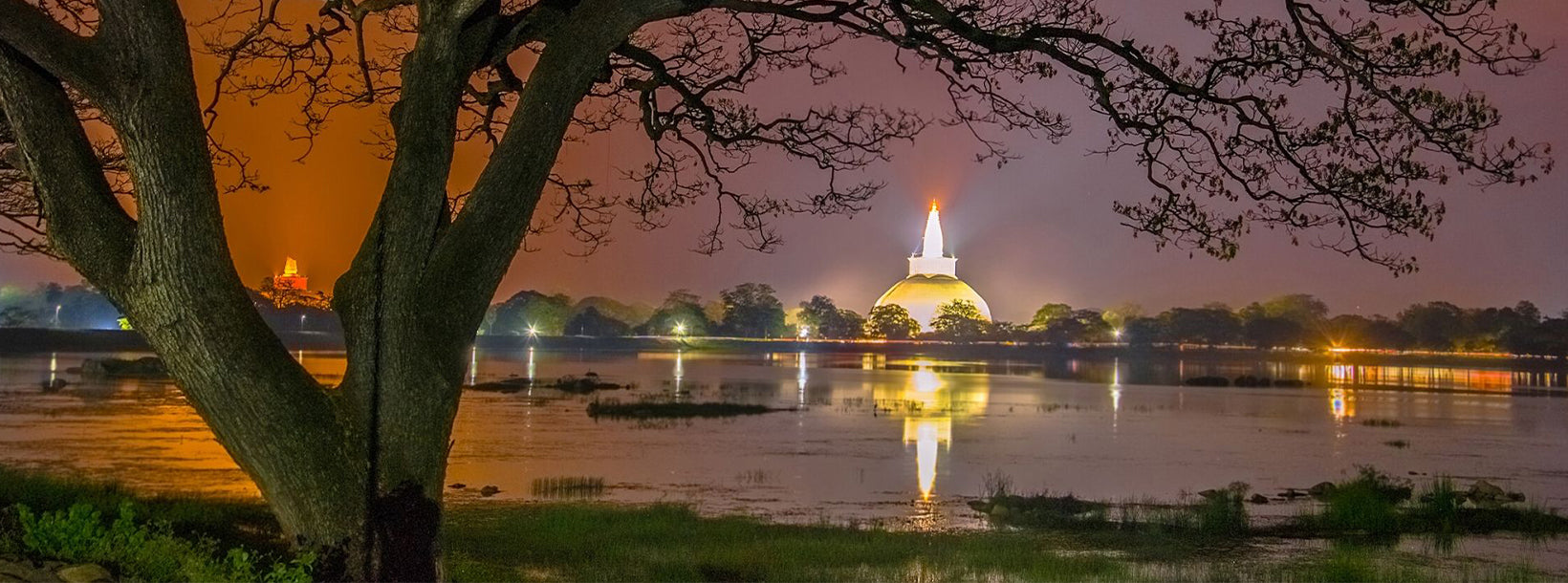
Construction of stupas — hemispherical relic monuments — began during this period and continued for centuries. The stupa became the defining architectural symbol of Sri Lankan Buddhism, and enormous examples such as the Ruwanwelisaya and Jetavanaramaya at Anuradhapura remain among the largest ancient structures in the world. Monasteries grew into centres of learning that attracted scholars from across Asia, reinforcing Sri Lanka's role as a guardian of Theravada orthodoxy.

Why is Mihintale significant to Sri Lankan Buddhism?

Mihintale, situated roughly twelve kilometres east of Anuradhapura, is considered the birthplace of Buddhism in Sri Lanka. The site comprises a series of rocky terraces connected by ancient stone staircases, leading to dagobas, meditation caves, and a hospital — one of the earliest documented medical facilities in the world. Pilgrims climb the steps barefoot as a mark of respect, a practice unchanged for many generations.

The Ambasthale Dagoba marks the precise spot where Mahinda is said to have met Devanampiyatissa. Nearby, the Kantaka Chetiya is among the oldest surviving stupas on the island. The site draws the largest crowds during Poson Poya, the June full-moon day that commemorates the arrival of Buddhism — a national holiday observed with lantern processions, religious observances, and pilgrimages that attract hundreds of thousands of devotees.

How did Buddhism shape Sri Lankan culture and society?

The influence of Buddhism reached far beyond temple walls. The Pali canon was committed to writing in Sri Lanka during the first century BCE at the Aluvihara Rock Temple in Matale — an act that preserved the Theravada scriptures for the entire world. Monastic education systems evolved into the precursor of formal schooling, and the tradition of Dhamma schools continues in Sri Lanka today, providing religious education to children on weekends.

Buddhist ethics permeated law, agriculture, and art. The principle of non-harm influenced attitudes toward wildlife and the environment; rulers were expected to maintain reservoirs and tend to the welfare of animals as well as people. Classical Sinhalese literature, painting, and sculpture drew overwhelmingly from Buddhist iconography and Jataka stories — tales of the Buddha's previous lives — creating a coherent visual and literary culture that is still recognisable in contemporary Sri Lankan art.

Festivals tied to the Buddhist calendar remain central to national identity. Vesak Poya in May marks the birth, enlightenment, and passing of the Buddha, and is celebrated across the island with illuminated pandals, free food stalls, and devotional processions. The Esala Perahera in Kandy, though incorporating pre-Buddhist ritual elements, is deeply intertwined with the veneration of the sacred Tooth Relic — the most important Buddhist relic in Sri Lanka.

What can visitors see related to early Buddhism in Sri Lanka?

The North Central Province holds the greatest concentration of early Buddhist heritage. Anuradhapura, a UNESCO World Heritage Site, preserves the physical legacy of the first centuries of the faith — vast stupas, the sacred Bodhi tree, carved moonstones at temple entrances, and the ruins of monastic hospitals and bathhouses. The city's scale reflects the sophistication of a civilisation organised around monastic patronage and royal piety.

Polonnaruwa, the medieval capital that succeeded Anuradhapura, offers a later but equally compelling chapter of Buddhist history. Its Gal Vihara — four enormous rock-cut Buddha figures carved from a single granite face — is among the finest examples of Buddhist sculpture anywhere in the world. The Rankoth Vehera stupa and the Lankatilaka image house give a sense of the architectural ambition of the Polonnaruwa period.

Beyond these major sites, smaller temples and rock caves scattered across the island preserve murals, inscriptions, and relic chambers that document the gradual spread of the faith into every corner of Sri Lanka. The Kiri Vehera stupa at Kataragama is another important example of early Buddhist construction that continues to attract pilgrims from across the country.

How has Theravada Buddhism in Sri Lanka influenced the wider world?

Sri Lanka's role in preserving and transmitting Theravada Buddhism cannot be overstated. When the tradition faced periods of decline, rulers brought monks from abroad to revive the ordination lineage; conversely, Sri Lankan monks carried texts and practices to Burma, Thailand, and Cambodia, where Theravada Buddhism became the dominant tradition. The Pali Text Society, founded in Britain in 1881, drew heavily on manuscripts preserved in Sri Lankan monasteries to produce the scholarly editions of the canon that underpin academic Buddhist studies worldwide.

The island's monasteries also contributed to the late nineteenth-century Buddhist revival that accompanied resistance to colonial rule. Figures such as Anagarika Dharmapala reframed Theravada Buddhism as a rational, reform-oriented tradition capable of engaging modernity — a movement that influenced Buddhist communities well beyond Sri Lanka's borders. That intellectual tradition continues in contemporary Sri Lanka through institutions dedicated to meditation, Pali scholarship, and interfaith dialogue.

When is the best time to visit Buddhist heritage sites in Sri Lanka?

Buddhist sites can be visited throughout the year, but the experience varies significantly by season and occasion. Poson Poya in June draws enormous crowds to Mihintale and Anuradhapura, offering an unparalleled sense of living tradition but also requiring patience with congestion. Vesak Poya in May fills cities with light installations and is best experienced in Colombo or Kandy. Outside these peak devotional days, the dry season between May and September is generally the most comfortable time to explore the North Central Province, where afternoon heat can be intense from March onward.

Travelling early in the morning — arriving at major sites by 6:00 or 7:00 am — rewards visitors with cooler temperatures, softer light, and the sight of monks making their rounds before the day-tour groups arrive. Dress codes at all sites require covered shoulders and legs; a light cotton sarong or shawl is a practical addition to any day bag.

Book this experience with Lakpura

Curated by our local team. Direct booking, instant confirmation.

Ask Lakpura® Agent