The Brahminy Blind Snake is one of Sri Lanka's least conspicuous reptiles — a slender, shiny, burrowing species that most people mistake for an earthworm at first glance. Despite its modest appearance, it is a ecologically important predator of soil invertebrates and a genuinely fascinating creature for anyone curious about the island's herpetofauna.
What is the Brahminy Blind Snake?
Classified within the family Typhlopidae, the Brahminy Blind Snake belongs to the group commonly called blind snakes or worm snakes. The species recorded in Sri Lanka is often cited under the scientific name Indotyphlops braminus, though the name Indotyphlus battersbyi appears in some regional checklists. It is entirely non-venomous and poses no threat to humans whatsoever.
The snake's common names — Brahminy Blind Snake, Battersby's Blind Snake, and Indian Blind Snake — reflect both its wide South Asian range and the superficial impression that it cannot see. In reality, its eyes exist but are vestigial: tiny, scale-covered structures that detect light and shadow rather than forming clear images. The animal navigates its underground world primarily through vibration and chemosensory cues.
What does the Brahminy Blind Snake look like?
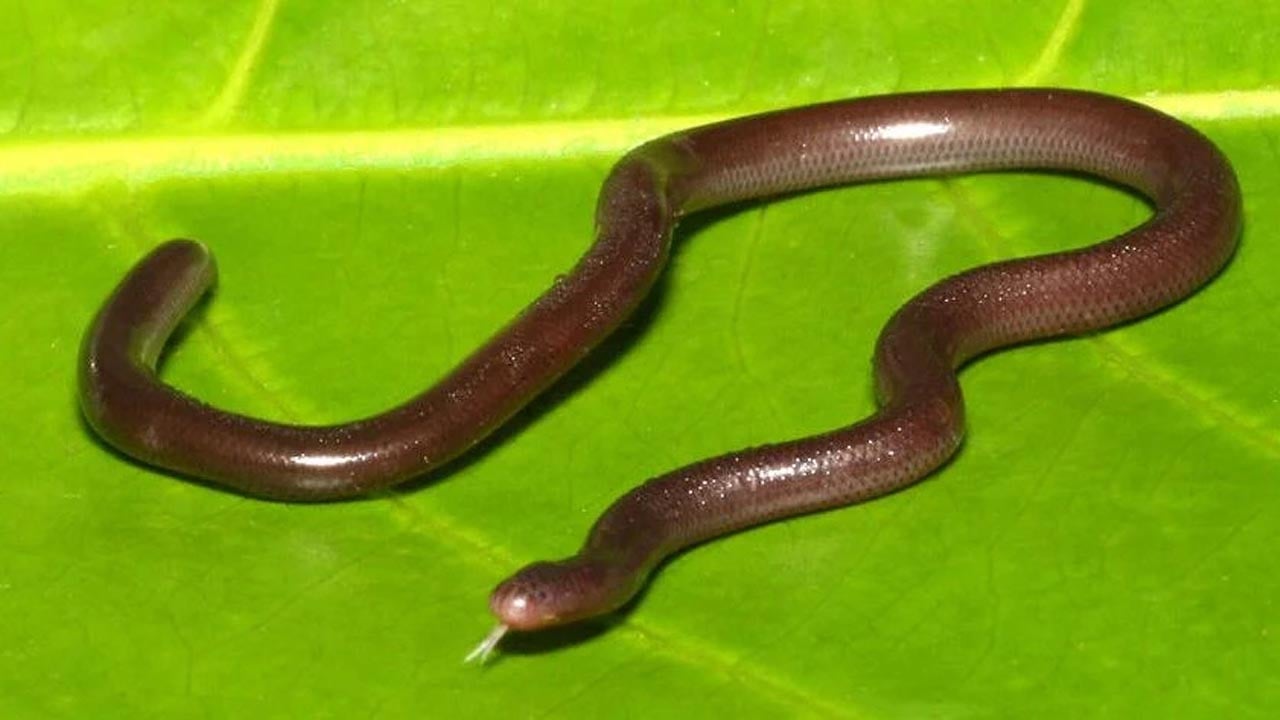
Adults typically measure between 15 cm and 25 cm in length, though occasional individuals approach 35 cm. The body is cylindrical throughout, with almost no taper from head to tail, which reinforces the earthworm resemblance. Key features include:
- Coloration: The dorsal surface is uniformly dark — deep brown, purplish-black, or near-black — with a slightly paler underside. The smooth, polished scales give the body a glossy sheen.
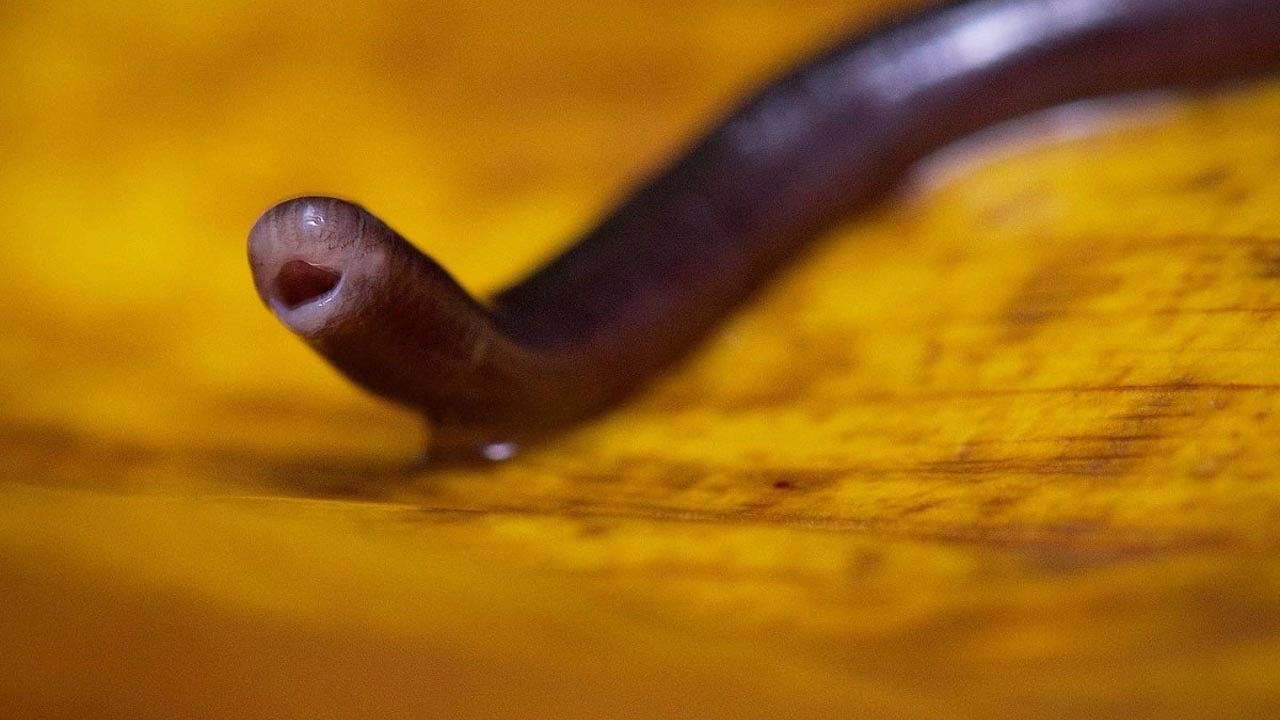
- Head: Small, blunt, and barely distinct from the neck. The vestigial eyes appear as tiny dark dots beneath translucent scales.
- Tail: Short and blunt, ending in a small spine. The snake uses this spine as a brace when pushing through compacted soil.
- Scales: Smooth and tightly overlapping, reducing friction as the snake moves through leaf litter and soil.
Where is the Brahminy Blind Snake found in Sri Lanka?
The species is distributed across the lowland and foothill zones of Sri Lanka, where loose, moist soil is available. It turns up regularly in home gardens, paddy-field margins, tropical forest floors, and agricultural plots. It is equally at home in the wet zone and the drier transitional areas, provided there is sufficient organic matter in the topsoil for both shelter and prey.
Habitats worth noting include the moist forest floors of the Sinharaja Forest Reserve, where deep leaf-litter layers offer ideal burrowing conditions, as well as garden soils across the coastal lowlands. The species is rarely seen in the open; encounters usually happen when gardeners dig or turn soil, or during rain when individuals briefly surface.
What does the Brahminy Blind Snake eat?
Diet consists almost entirely of the eggs, larvae, and pupae of ants and termites, supplemented by other small soil-dwelling invertebrates. The snake locates prey through vibration detection and chemoreception rather than sight. Its slender body allows it to follow pheromone trails into ant and termite colonies, where it feeds without triggering aggressive defence responses — a behaviour that researchers consider a form of chemical mimicry.
Because it targets soil insects, the Brahminy Blind Snake plays a small but genuine role in regulating insect populations in agricultural and garden soils. It is a useful, if invisible, presence in any managed garden.
How does the Brahminy Blind Snake reproduce?
One of the most remarkable facts about this species is that known populations outside its original range are entirely or predominantly female. The Brahminy Blind Snake is one of the few vertebrates capable of parthenogenesis — reproduction without fertilisation — which has allowed it to colonise new territories far beyond its South Asian homeland. In Sri Lanka, both sexual and parthenogenetic populations have been recorded, though the details of local population genetics remain a subject of ongoing herpetological study.
Females lay a small clutch of elongated eggs, typically in moist soil or rotting organic matter. The eggs are small relative to the adult body and hatch within a few weeks depending on soil temperature.
Is the Brahminy Blind Snake dangerous?
No. The species is completely harmless to humans. It carries no venom, its mouth is too small to bite effectively even if it tried, and it has no defensive mechanism beyond writhing and releasing a mild cloacal secretion when handled. Anyone who picks one up will find it moves constantly and purposefully, seeking to burrow rather than escape by speed.
In Sri Lanka, as in much of South Asia, small dark snakes are sometimes feared without distinction. Awareness that species like the Brahminy Blind Snake are entirely benign supports a broader culture of reptile conservation on the island.
How does the Brahminy Blind Snake compare to other Sri Lankan blind snakes?
Sri Lanka hosts several typhlopid species. The Brahminy Blind Snake is the smallest and most frequently encountered in human-modified habitats. Larger blind snakes in the family, such as those in the genus Typhlops, tend to occupy deeper forest soils and are seen far less often. All share the same fossorial lifestyle and similar dietary preferences, but differ in scale counts, body dimensions, and preferred microhabitat.
| Feature | Brahminy Blind Snake | Larger Sri Lankan Typhlopids |
|---|---|---|
| Typical length | 15–25 cm | 30–60 cm (varies by species) |
| Common habitat | Gardens, agricultural soils, forest edges | Deep forest soil and humus layers |
| Encounter frequency | Relatively common | Rarely seen |
| Reproduction | Parthenogenesis possible | Sexual reproduction typical |
Tips for spotting a Brahminy Blind Snake in Sri Lanka
- Turn over flat stones or rotting logs in garden areas after light rain — this is the most reliable method.
- Check the surface of moist soil beds in the early morning before the ground dries out.
- Look carefully at earthworms: a Brahminy Blind Snake has a distinct glossy sheen, a blunt tail tip with a small spine, and moves with a purposeful, non-annelid undulation.
- Forested areas like the lowland wet-zone reserves offer higher chances of a natural sighting away from gardens.
- If you find one, observe quietly and replace any stones or logs as you found them to protect the microhabitat.
Conservation status and threats
The Brahminy Blind Snake is not currently considered threatened at the global level, and its adaptability to human-modified habitats has kept populations stable across much of its range. In Sri Lanka, the primary concerns are habitat loss through urban expansion, the use of soil pesticides in intensive agriculture, and — to a lesser degree — incidental killing by people who misidentify it as a harmful species. Educational awareness remains the most effective conservation tool for this and similar cryptic reptiles.