Akuru Kiyaweema — literally "reading letters" in Sinhala — is the traditional practice of introducing young children to their first written characters. Far more than a classroom exercise, it is a culturally layered rite of passage that marks the formal beginning of a child's relationship with language, knowledge, and learning. In Sri Lankan society, this moment carries emotional and spiritual weight, observed with quiet ceremony and familial pride.
What does Akuru Kiyaweema mean?
The term combines akuru (letters or characters) and kiyaweema (the act of reading or reciting). Together, the phrase describes the guided repetition through which a child first learns to recognise, pronounce, and eventually reproduce the Sinhala alphabet. It is not simply a pedagogical method — it is a cultural compact between the learner and those who hold knowledge before them: parents, grandparents, and teachers.
The Sinhala script is an abugida derived from the Brahmi family, and its rounded, flowing characters require careful introduction. Akuru Kiyaweema provides the framework for that introduction, sequencing letters in a way that builds phonemic awareness gradually and systematically.
How is the Akuru Kiyaweema ceremony performed?
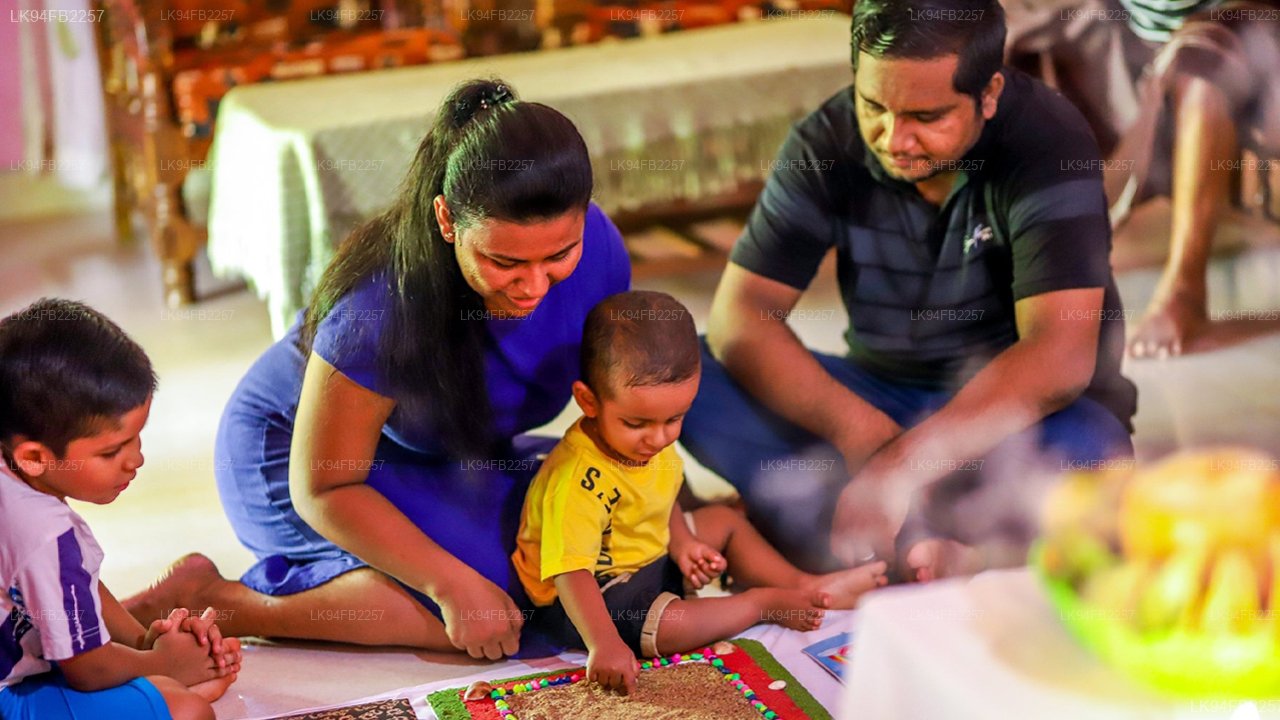
In its most ceremonial form, Akuru Kiyaweema takes place on an auspicious day chosen with reference to the traditional Sinhala almanac. An elder — often a grandparent, a respected teacher, or a Buddhist monk — guides the child's hand across a writing surface, tracing the first letters together. Historically, this surface was a sand tray or a palm leaf; today it is more commonly a small chalkboard or a sheet of paper, though the symbolic gesture of hand-over-hand guidance remains central.
The ceremony typically begins with a short invocation, acknowledging the sacred nature of learning. Offerings of flowers or betel leaves may be presented as a mark of respect. Some families conduct the ritual at a temple or Dhamma school, reinforcing the connection between spiritual life and literacy. The first letter written is usually the Sinhala character for "ශ්රී" (Sri) or the opening vowel, though practice varies by region and family tradition.
What is the connection between Akuru Kiyaweema and Sinhala New Year?
Many families choose to conduct or renew this tradition around the Sinhala and Tamil New Year in April, a period governed by specific auspicious timings known as Sinhala Avurudu Nakath. The New Year season is considered especially propitious for beginning new endeavours, and Akuru Kiyaweema aligns naturally with its themes of renewal and hopeful beginnings. Schools and community groups sometimes organise group ceremonies during this period, bringing together children of similar ages for a collective first-letter experience.
The ritual is also observed at other culturally significant moments — the start of a new academic year, a child's fifth birthday, or following a visit to a particularly revered temple.
What role does Akuru Kiyaweema play in formal education today?
Sri Lanka's formal school system begins at age five, and many children encounter some version of Akuru Kiyaweema during their first days in Grade One. Teachers guide pupils through the Sinhala vowels and consonants using repetition, song, and tracing exercises — methods that echo the traditional practice even when the ceremonial framing is absent. In Sinhala-medium schools, this structured introduction to the alphabet is a foundational pillar of the early curriculum.
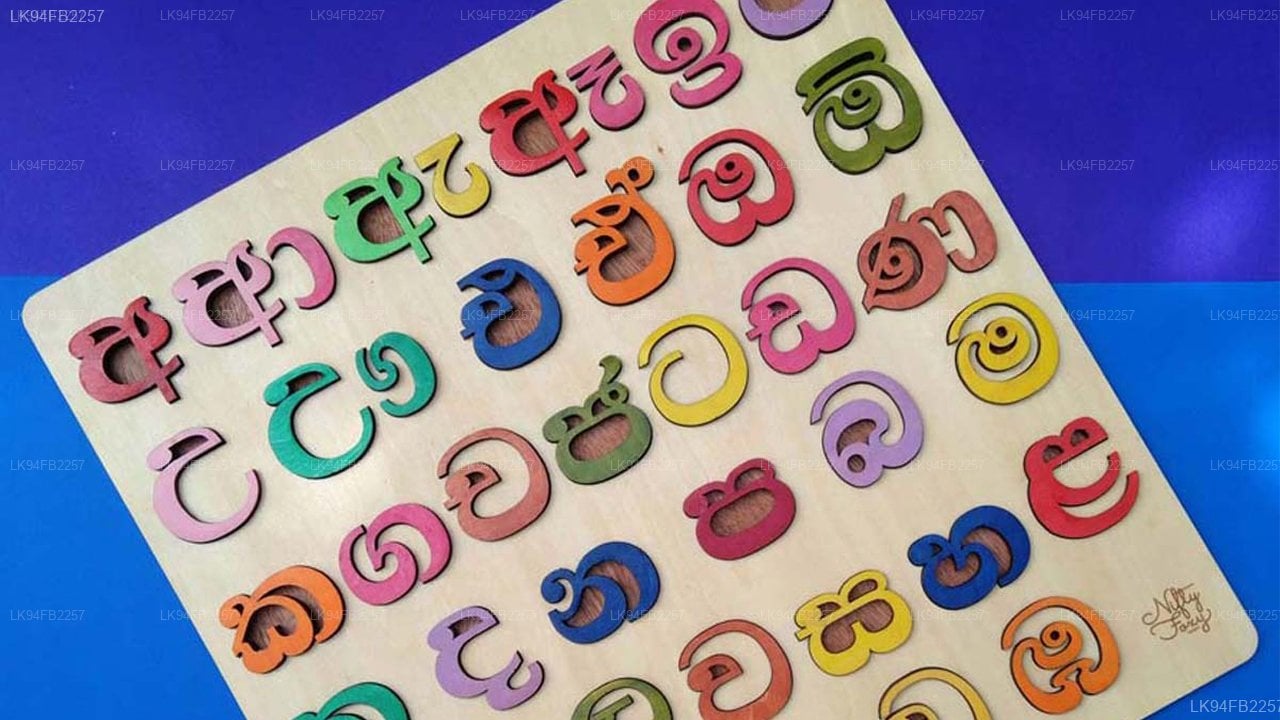
At home, parents often supplement classroom learning with the same repetitive, patient recitation that characterised the practice for generations. Workbooks, letter cards, and educational toys designed around the Sinhala script have modernised the tools without displacing the underlying philosophy: that learning letters is a deliberate, respected act deserving time and attention.
Why is literacy given such cultural importance in Sri Lanka?
Sri Lanka has one of the highest literacy rates in South Asia, a statistic that reflects centuries of emphasis on learning at both household and institutional levels. Buddhist monasteries historically served as centres of education, and the ability to read Pali and Sinhala texts was considered a mark of personal cultivation. That reverence for the written word flows directly into practices like Akuru Kiyaweema, which frames literacy not merely as a functional skill but as a form of self-development.
The written Sinhala language itself has a recorded history stretching back more than two millennia. Inscriptions found at ancient sites such as Polonnaruwa attest to the deep roots of written communication in Sri Lankan civilisation, giving the act of teaching a child to read those same characters a resonance that extends well beyond the classroom.
How has the practice evolved in modern Sri Lanka?
Contemporary Akuru Kiyaweema blends traditional ceremony with practical education in ways that reflect the country's broader cultural adaptability. Digital tools — tablet applications and phonics videos in Sinhala — now sit alongside sand trays and hand-held chalk. Yet families who use these tools frequently preserve the ceremonial dimension: a grandparent present, a short prayer spoken, a meaningful first moment acknowledged before the learning becomes routine.
In diaspora communities abroad, Sinhala language schools and cultural associations have adopted Akuru Kiyaweema as a way of anchoring children to their heritage. The ritual travels well precisely because its core requirement is minimal: a willing child, a knowledgeable elder, and the first letter of an ancient alphabet.
What materials are traditionally associated with Akuru Kiyaweema?
- Sand tray (vel poruwa): Fine sand spread in a flat tray allowed letters to be drawn with a finger and easily erased for practice.
- Palm leaf (ola leaf): Dried palm leaves were used as writing surfaces in monastic education for centuries, inscribed with a stylus.
- Slate and chalk: The introduced slate board became the dominant classroom tool through the colonial and post-independence eras.
- Exercise books: Modern grid-lined or lined paper workbooks designed specifically for Sinhala letter formation are now standard in schools.
- Letter cards and wooden tiles: Tactile learning aids that allow children to assemble and recognise characters through play.
Is Akuru Kiyaweema observed in Tamil communities as well?
Tamil communities in Sri Lanka have a parallel tradition called Vidyarambham (or Ezhuthinikal), which similarly marks a child's ceremonial introduction to letters — typically Tamil script — during the Navaratri festival. While the two practices are culturally distinct, they share a common reverence: that the act of learning to read deserves to be recognised as a meaningful beginning, not a purely mechanical one. Together, they reflect the importance placed on literacy across Sri Lanka's diverse communities.