Habarana is a small but strategically important town in the North Central Province of Sri Lanka, positioned almost exactly at the centre of the island's Cultural Triangle. Within an hour's drive in almost any direction, travellers can reach ancient royal capitals, boulder-top rock fortresses, and some of the country's finest wildlife reserves. That combination — cultural depth paired with genuine wildlife encounters — is what makes Habarana one of the most practical and rewarding bases for a Sri Lanka itinerary.
Where exactly is Habarana, and how do I get there?
Habarana sits at the junction of the A6 and A11 highways, roughly 180 km north-east of Colombo. Most visitors arrive by road: the drive from Colombo takes around three to four hours depending on traffic, and from Kandy it is typically under two hours. The town is also served by the Colombo–Batticaloa railway line; Habarana station receives a limited number of trains daily, and travel time from Colombo Fort is approximately four hours. Buses from Dambulla, Polonnaruwa, and Anuradhapura stop in the town centre regularly throughout the day.
Because Habarana is a true road junction, it functions as a natural stopping point rather than a destination in its own right — which is precisely why so many itineraries are built around it.
What can I see and do in and around Habarana?
The town's single greatest asset is its proximity to an exceptional concentration of attractions. The following sites are all reachable as day trips:
- Sigiriya Rock Fortress — around 20 km north-east. The 5th-century citadel built by King Kashyapa rises 200 m above the surrounding plain and is listed as a UNESCO World Heritage Site. Allow at least three hours for the climb and the frescoes.
- Polonnaruwa — roughly 55 km east. Sri Lanka's second ancient capital contains some of the best-preserved ruins on the island, including the Gal Vihara rock temple and the Royal Palace complex. Explore the site by bicycle to cover ground efficiently. Visit the Polonnaruwa city guide for detailed information.
- Dambulla Cave Temple — about 25 km south-west. Five cave temples with more than 150 statues of the Buddha and ceiling paintings spanning 2,000 years of Buddhist art.
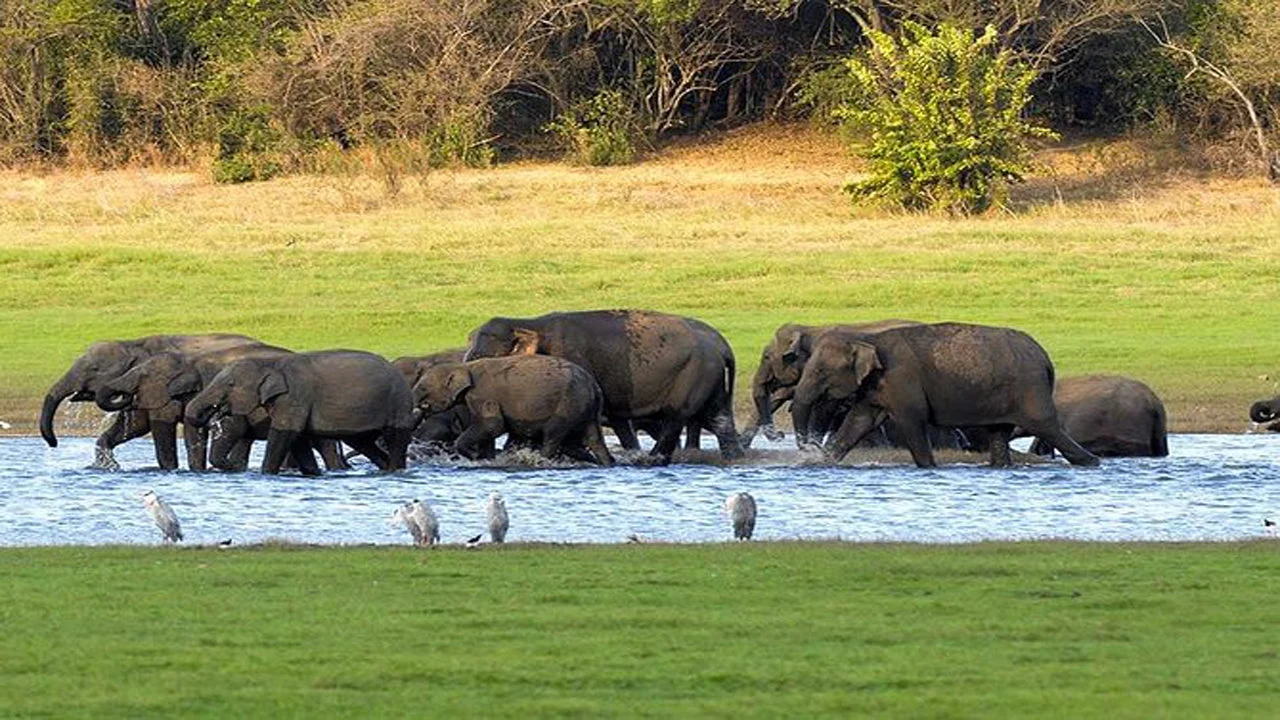
- Minneriya National Park — approximately 25 km east. Famous for the annual elephant gathering between July and October, when hundreds of Asian elephants converge on the reservoir's receding shoreline. Jeep safaris depart from Habarana.
- Kaudulla National Park — around 35 km north-east. A sister park to Minneriya, linked by the elephant corridor. When herds move between parks seasonally, Kaudulla can offer equally dramatic sightings with fewer vehicles.
- Ritigala Forest Monastery — roughly 35 km north-west. An atmospheric ruin set inside a strict nature reserve, largely unvisited and genuinely different in character from the better-known heritage sites.
- Namal Uyana — a rare ironwood (na) forest containing ancient stupas and a pink quartz mountain, seldom featured in mainstream itineraries but worth the detour.
Within the town itself, Habarana Lake is the defining natural feature — a calm irrigation tank fringed by trees that attract water birds at dusk. Walking or cycling the bund at dawn is a quiet way to start the day.
What wildlife can I encounter near Habarana?
The forests and wetlands surrounding Habarana support a wide range of fauna. Asian elephants are the headline act, but the ecosystem is richer than many visitors expect.
- Asian elephants — seen reliably in Minneriya and Kaudulla, and occasionally crossing the road near the Habarana forest reserve.
- Leopards and sloth bears — present in the forests around Ritigala and in Minneriya, though sightings require patience.
- Birds — the lake and surrounding scrub forest host painted storks, open-billed storks, grey herons, kingfishers, bee-eaters, and a variety of raptors. Ritigala's forest interior is particularly rewarding for birders.
- Mugger crocodiles — found in the lake and in tanks throughout the area.
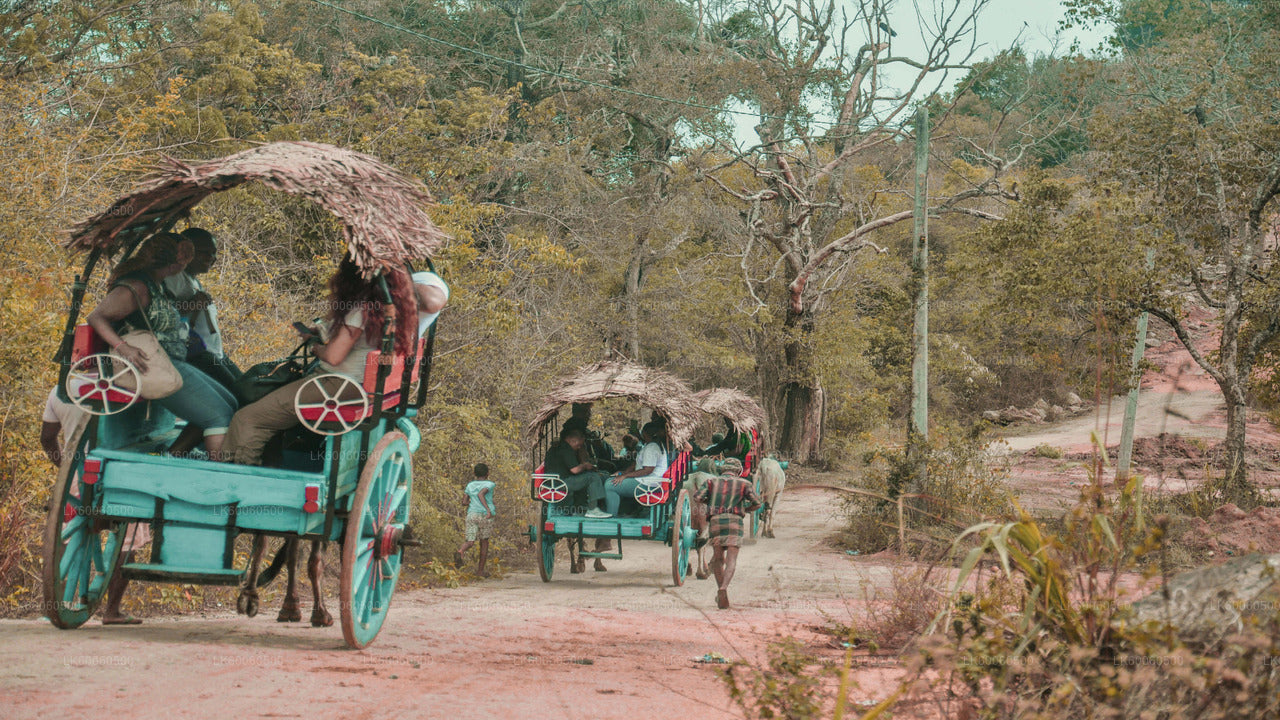
Village tours offer a gentler form of wildlife encounter: ox-cart rides through paddy fields, coracle boat trips on local tanks, and guided walks through forest edges where monkeys and monitor lizards are common.
When is the best time to visit Habarana?
The North Central Province receives its main rainfall between October and January, driven by the north-east monsoon. The driest and most comfortable period for sightseeing is December through April, when daytime temperatures are warm but manageable, and roads and paths at heritage sites are drier underfoot.
For wildlife, however, the calculus is slightly different. The elephant gathering at Minneriya peaks between July and October — the heart of the north-east monsoon — because the reservoir bed is exposed as water levels drop, drawing elephants to graze. Visitors during this period should expect occasional afternoon showers but will likely see far more elephants. Open safari vehicles are always exposed to weather, so packing a light rain layer is advisable year-round.
Where should I stay in Habarana?
Habarana has a broader range of accommodation than its size might suggest. Luxury eco-lodges sit alongside mid-range boutique properties and budget guesthouses, and many properties are set within forested grounds that buffer the heat and noise of the main road.
Properties range from large resort-style hotels with pools and ayurvedic spas to intimate village-style lodges where guests can interact directly with the surrounding rural landscape. Booking in advance is strongly advisable between December and April and during the Minneriya elephant season, when demand regularly outstrips supply.
What activities can I do beyond the standard heritage circuit?
Habarana has developed a meaningful range of active and experiential tours over the past decade, making it more than a simple sightseeing base.
- ATV and mud safaris — off-road routes through forest and paddy land; popular with travellers looking for something more physical than a jeep tour.
- Village tours — guided visits to communities around Hiriwadunna tank, including boat rides, cooking demonstrations, and farm walks.
- Hot-air ballooning — early-morning flights over the forests and tanks of the Cultural Triangle offer a perspective no ground-level tour can match. Weather-dependent and typically available between December and April.
- Cycling — the flat terrain between Habarana and Sigiriya village is well-suited to cycling, with rural roads passing temples, tanks, and small farms.
- Horse riding — available from several operators in the area for riders of varying experience levels.
- Birdwatching — guided morning walks in the Ritigala strict nature reserve and around Habarana lake are increasingly popular with visiting naturalists.
How many days should I spend in Habarana?
Two to three nights is the most common stay, and it allows enough time to visit Sigiriya, complete one or two wildlife safaris, explore Polonnaruwa, and take a village tour without feeling rushed. Travellers with a particular interest in archaeology or wildlife may find a fourth night worthwhile, especially if they want to visit both Minneriya and Kaudulla, or combine the heritage circuit with a day at Ritigala and Namal Uyana.
Habarana integrates naturally into a broader Sri Lanka itinerary: it is typically reached from Colombo or Kandy on the way in, and travellers continue on to the east coast (Trincomalee, Arugam Bay) or loop back south through the Hill Country.