Catamaran Sailing


What are Catamarans?
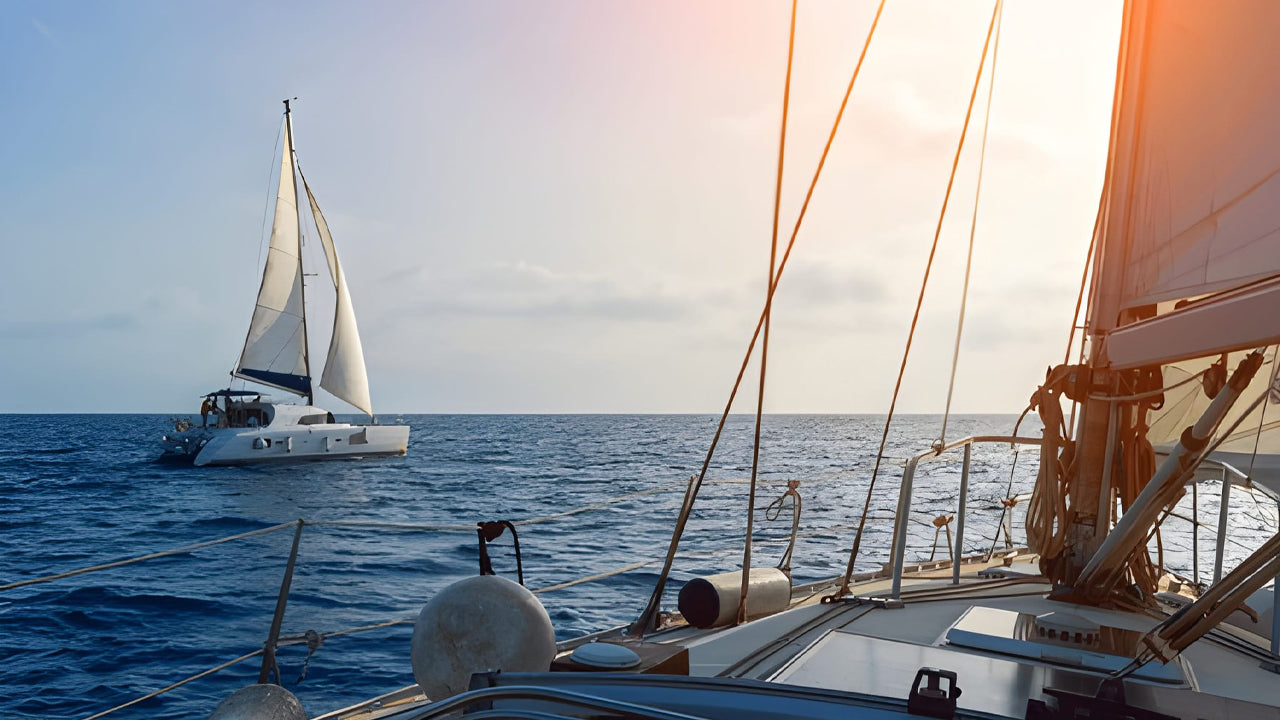
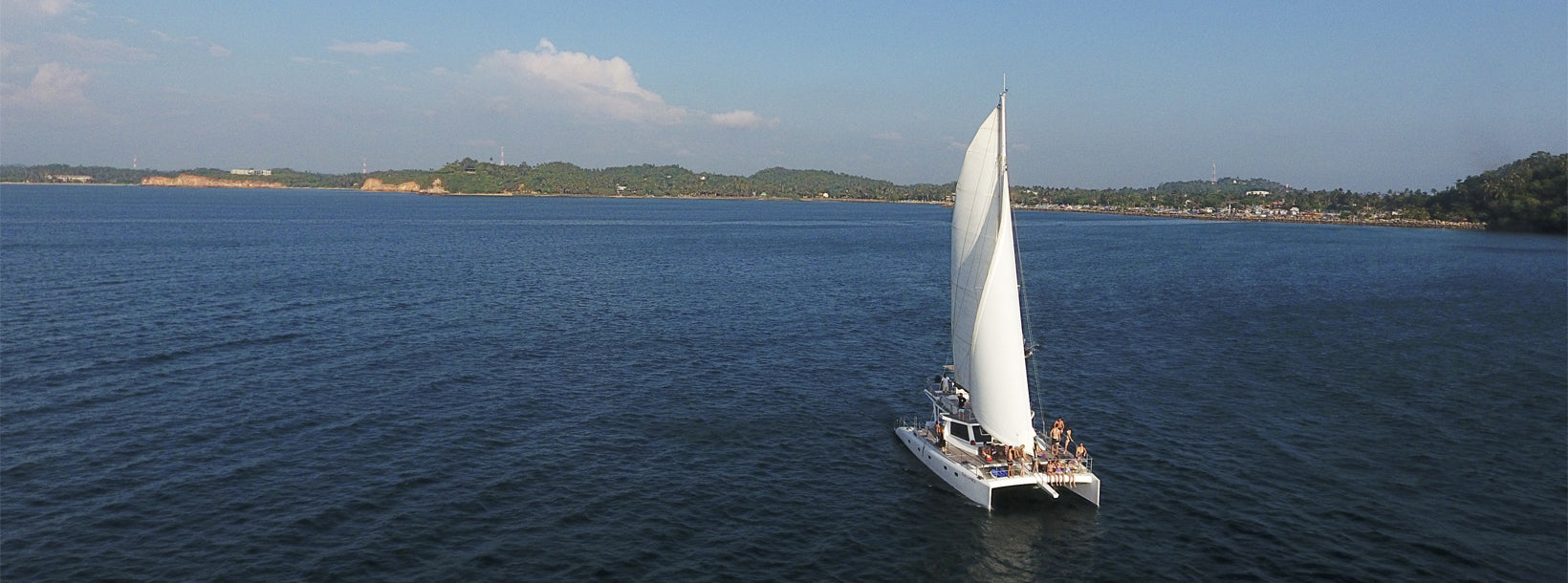
Catamarans are a type of multihued sailing vessel featuring two parallel hulls of equal size. The craft is geometry-stabilized; deriving its stability from its wide beam, rather than from a ballasted (weighted manually with sand, gravel or iron according to the load present on the boat) keel as with a monohull sailboat. The size of the catamaran can vary from small (sailing or rowing vessels) to large (naval ships and car ferries); while being either manually sailed or motorized. The structure connecting the two hulls can range from a simple frame strung with webbing to support the crew, to a bridging superstructure incorporating extensive cabins and/or cargo space.
The Advantages of a Catamaran
The History of Catamarans
Catamarans were first developed over 3500 years ago by the Polynesians. These early examples were likely related to outrigger canoes and consisted of two canoes bound together with a wooden frame, sometimes accompanied by a sail. Despite their simplicity they were nonetheless effective, allowing the seafaring Polynesians to voyage to the distant Pacific islands.
In the 5th century AD the Tamil kingdoms, of what is now known as, Tamil Nadu in South India had catamarans in wide use; though were different from those used by the Polynesians. As the Tamil word ‘kattumaram’ (from which the name catamaran was derived) suggests; these craft were made of shaped logs bound together with rope. These primitive catamarans served them well though and were soon adapted by the neighboring regions.
The first documentation of this craft in English happened when the 17th-century English adventurer and privateer William Dampier encountered the Tamil people of southeastern India during his first circumnavigation of the globe. He wrote about the primitive watercraft he observed in use there in the 1697 account of his trip, A New Voyage Round the World. Quoting his statement:
“…on the coast of Malabar they call them Catamarans. These are but one log, or two, sometimes of a sort of light wood … so small, that they carry but one man, whose legs and breech are always in the water.”
The first example of catamaran development in the West occurred in Europe when it was designed by William Petty in 1662 to sail faster, in shallower waters, in lighter wind, and with fewer crew than other vessels of the time. However, the unusual design met with skepticism and was not a commercial success. The design remained unused for