Polonnaruwa By
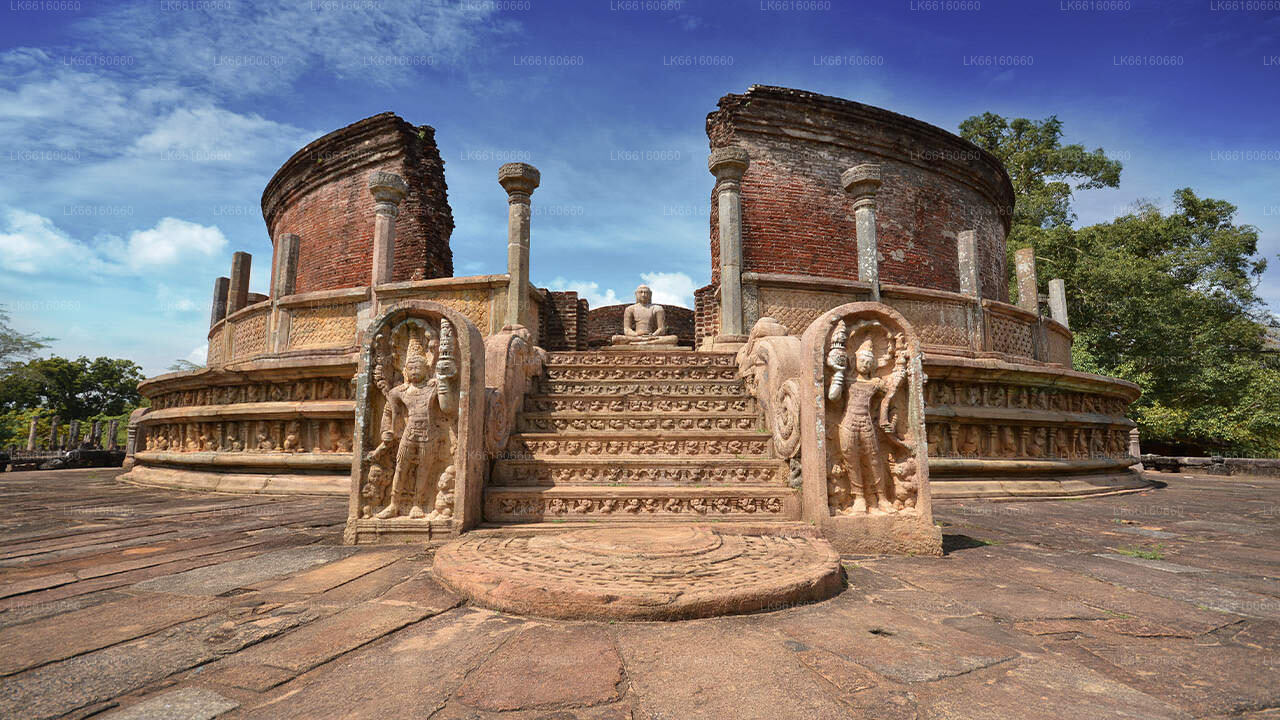
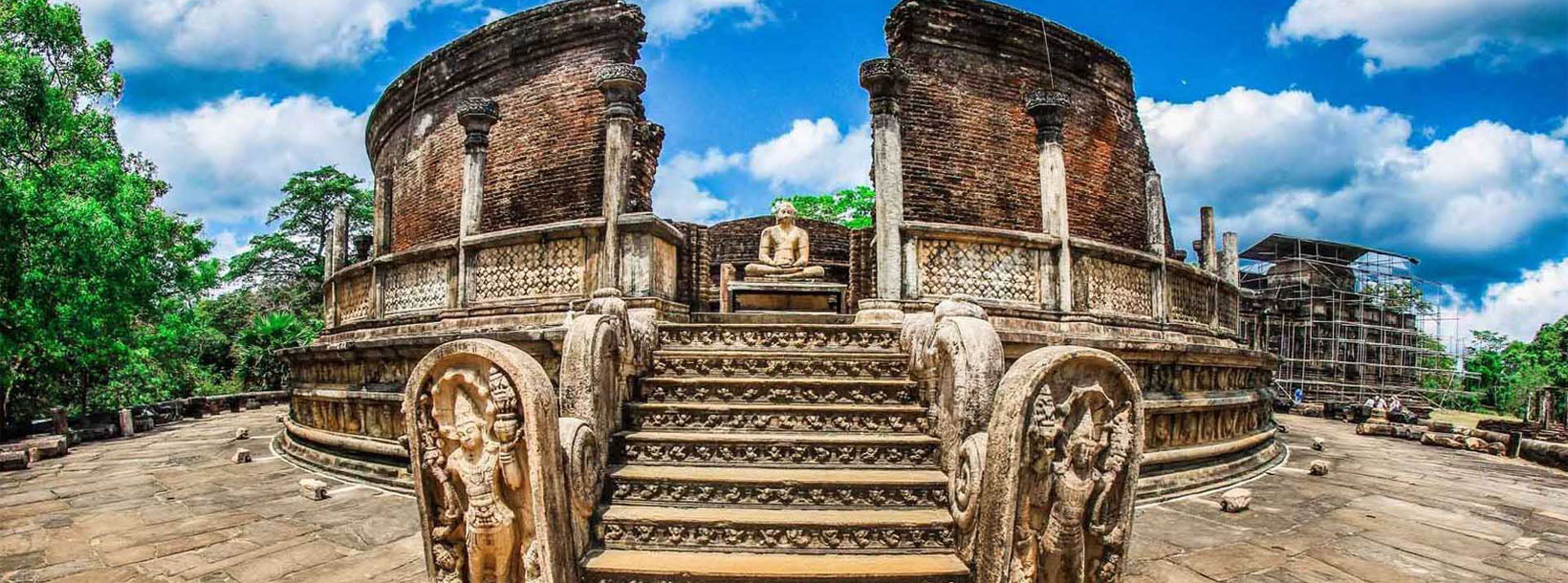
Polonnaruwa, a UNESCO World Heritage Site in Sri Lanka, was the country's medieval capital (11th-13th century). Renowned for its well-preserved ruins, including the iconic Gal Vihara statues, it showcases impressive architecture, reflecting the grandeur of the ancient Sinhalese civilization.
Lotus Pond (Ancient Nelum Pokuna)
The Lotus Pond, known in Sinhala as Nelum Pokuna, is an ancient stone bath located within the archaeological precincts of Polonnaruwa in Sri Lanka. Thought to date from the reign of King Parakramabahu I (12th century), it is an iconic example of the skilled stonework and aesthetic sensibility of the Polonnaruwa era.
This pond is carved from granite in the shape of a fully bloomed lotus flower. Its design consists of five concentric tiers, each forming eight petals that slope inward in concave form toward a central stamen. The dimensions are remarkable, with the outer diameter measuring about 24 feet and 9 inches, contracting toward a central circle of roughly 5 feet and 4 inches across.
The Lotus Pond is believed to have served as a bathing tank for monks associated with the nearby Jetavana Vihara. Its architectural refinement and symmetry reflect both functional utility and spiritual symbolism. Visitors can walk around its perimeter, gaze into the layered lotus design, and appreciate how light plays across the smooth stone and petal contours.
The site is accessible year-round via the paths within the Polonnaruwa Archaeological Park. It is best visited in the dry season, when the light accentuates the stone curves and pedestrian access is more comfortable. Morning or late afternoon visits offer the most serene atmosphere and soft lighting to admire the structure.
Om Polonnaruwa-distriktet
Polonnaruwa er den næststørste by i den nordlige centrale provins i Sri Lanka. Den gamle by Polonnaruwa er blevet erklæret som et verdensarvssted af UNESCO. Polonnaruwa har en lang historie med erobringer og kampe og udgør med rette det tredje element i den kulturelle trekant. Polonnaruwa, der ligger omkring 140 km nordøst for Kandy, tilbyder timevis af endeløs fornøjelse for historie- og kulturelskere, da der er mange betydningsfulde seværdigheder.
Mange af de fysiske ruiner, der står i dag, tilskrives Kong Parakrama Bahu I, som brugte mange kongelige ressourcer på byplanlægning, herunder parker, bygningsværker, kunstvandingssystemer og så videre. Perioden under hans regeringstid betragtes som en guldalder, hvor kongeriget trivedes og havde fremgang under en visionær hersker. Parakrama Samudra er en gigantisk tank og opkaldt efter dens beskytter. Det populære kongelige palads, audienshallen omgivet af smukt udskårne stenelefanter og badebassinet afspejler datidens overlegne ingeniørmæssige evner.
Om Nord-Centralprovinsen
North Central Province, som er den største provins i landet, dækker 16% af landets samlede landareal. North Central Province består af to distrikter kaldet Polonnaruwa og Anuradhapure. Anuradhapura er det største distrikt i Sri Lanka. Dets areal er 7.128 km².
North Central Province har adskillige potentialer for investorer til at starte deres virksomheder, især landbrug, agrobaserede industrier og husdyrsektoren. Mere end 65% af North Central Provinces befolkning er afhængig af basal landbrug og agrobaserede industrier. NCP kaldes også "Wew Bendi Rajje", fordi der er mere end 3.000 mellemstore og store tanke placeret i provinsen. Sri maha bodiya, Ruwanweli seya, Thuparama dageba, Abayagiri Monastry, Polonnaruwa Rankot wehera og Lankathilake er bange.