Lakpura
Lakpura®

Helicopter Transfers

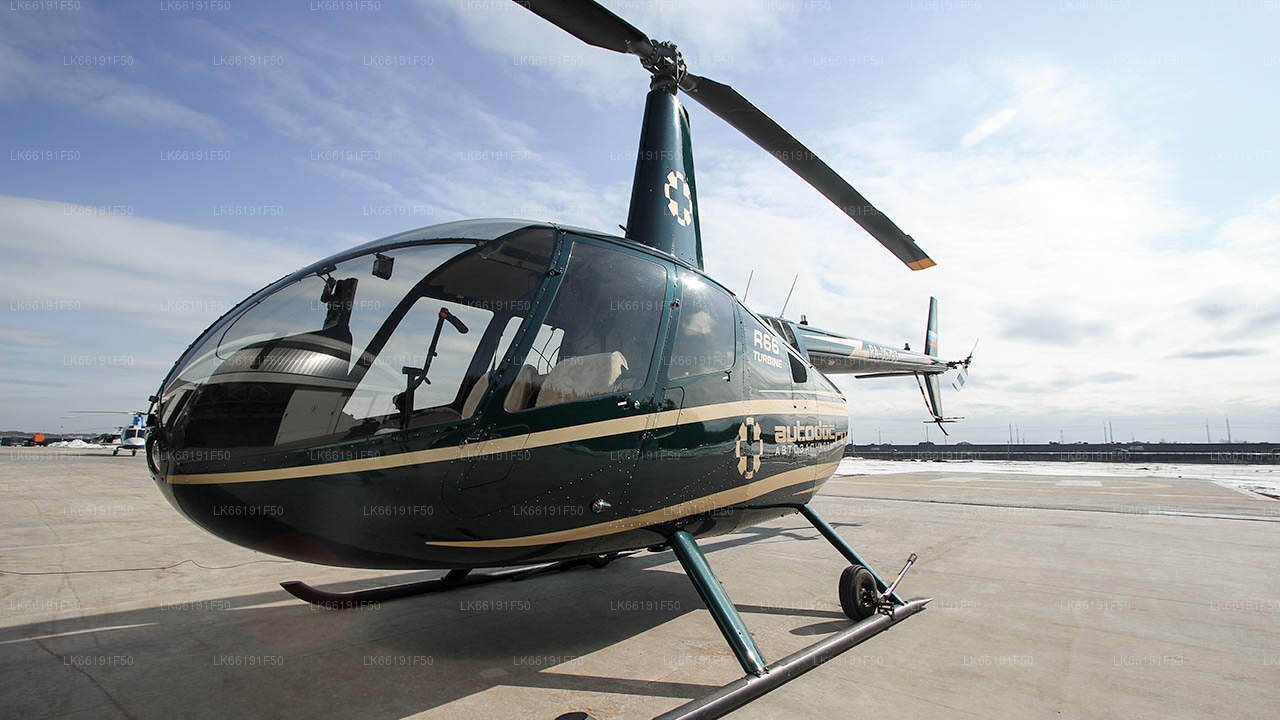
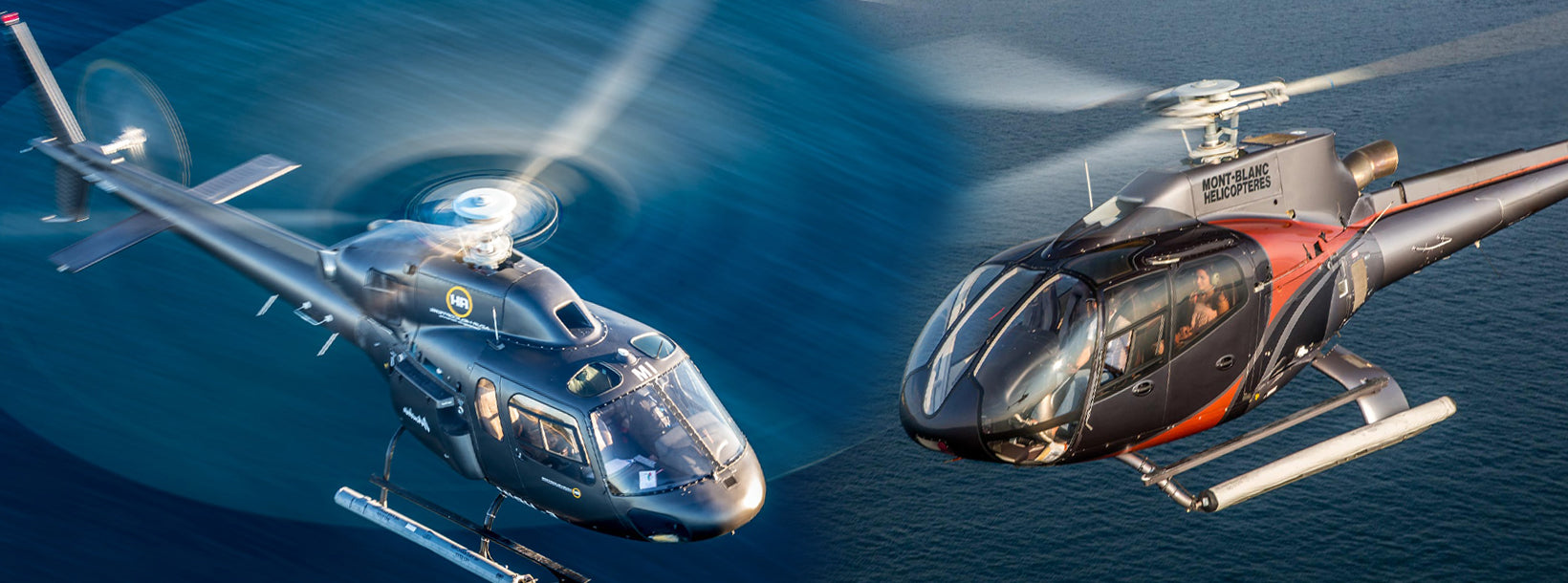
Sri Lanka is a compact island, but road travel between its major destinations can take three to five hours even on the best routes. Helicopter transfers cut that time dramatically — a journey from Colombo to Sigiriya that takes roughly four hours by car is covered in around 35 minutes by air. For travellers who want to protect their itinerary time, avoid traffic on congested highways, or simply experience the island from a different angle, helicopter travel is one of the most practical upgrades available.

Which routes can I fly by helicopter in Sri Lanka?

Scheduled and charter helicopter services connect a wide range of origin and destination pairs across the island. The most frequently requested routes include:

  • Colombo / Ratmalana / Negombo to Kandy — the hill capital and its surrounding tea country
  • Colombo / Negombo to Sigiriya — gateway to the ancient rock fortress and the Cultural Triangle
  • Colombo / Negombo to Anuradhapura — Sri Lanka's oldest royal city
  • Bentota / Koggala to Kandy or Sigiriya — ideal for travellers based on the southern or west coast
  • Hatton to Kandy or Sigiriya — a natural add-on after visiting Adam's Peak or the Hatton tea estates
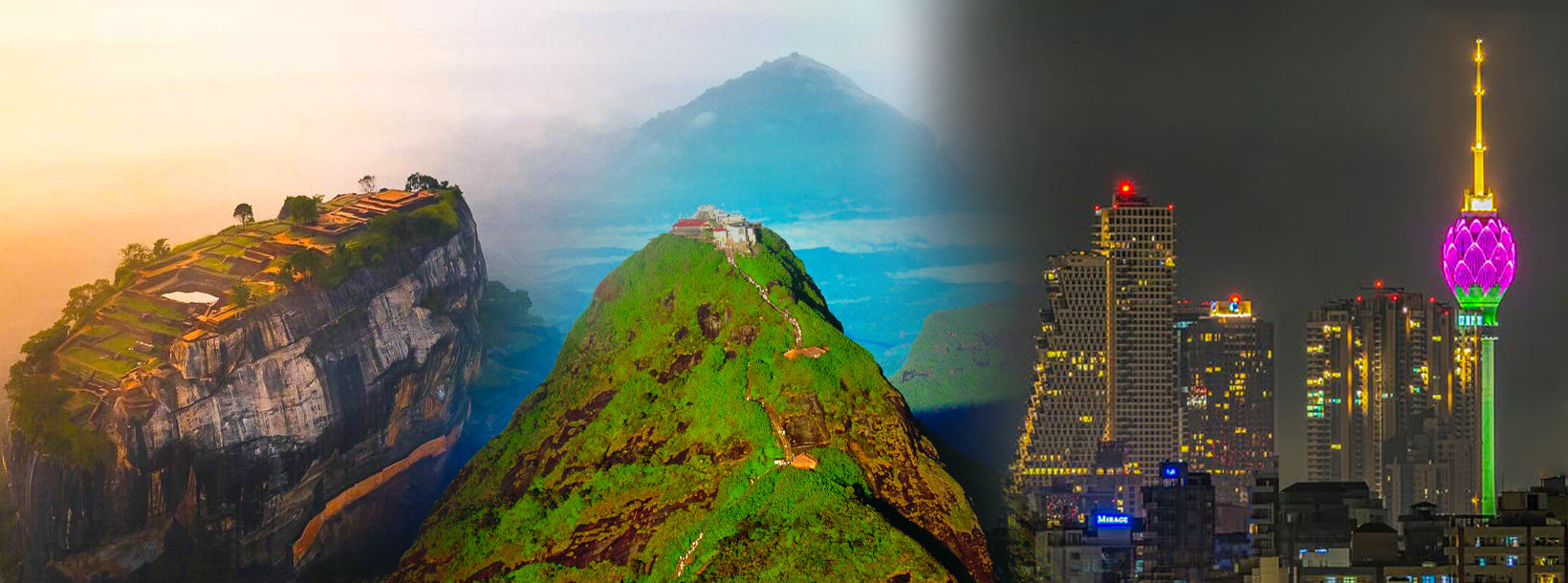
  • Scenic circuits — aerial tours over Colombo, Adam's Peak, and coastal stretches without a fixed destination transfer

Operators use helipads at Ratmalana Airport (RML) south of Colombo, Bandaranaike International Airport (CMB), and a network of regional landing pads at or near major hotels and attractions.

How long does a helicopter flight take between key destinations?

Route Approximate flight time Typical road time
Colombo → Kandy Around 25–30 minutes 3–4 hours
Colombo → Sigiriya Around 35–40 minutes 4–5 hours
Colombo → Anuradhapura Around 40–45 minutes 4–5 hours
Negombo → Kandy Around 25–30 minutes 3–4 hours
Bentota → Sigiriya Around 50–55 minutes 5–6 hours
Hatton → Sigiriya Around 35–40 minutes 4–5 hours

Flight times depend on the specific helipad used and weather conditions. Operators typically hold the option to reschedule if visibility is poor, particularly in the hill country during the south-west monsoon.

What will I see from the air?

The aerial perspective reveals Sri Lanka in a way that road travel simply cannot. Flying north from Colombo, the dense urban grid gives way quickly to a patchwork of paddy fields, rubber and coconut plantations, and the blue shimmer of inland reservoirs. As the terrain rises toward the Central Highlands, tea estates carpet the hillsides in rows of deep green, broken occasionally by waterfalls and the red-roofed bungalows of colonial-era plantation managers.

On routes toward the Cultural Triangle, the scattered ruins of ancient hydraulic civilisations — vast wewas (reservoirs) and the outlines of royal enclosures — come into sharp focus from altitude. Flying over Sigiriya, the rock fortress itself rises abruptly from the surrounding forest, offering a composition rarely seen in ground-level photography. Southern routes follow a coastline of lagoons, river mouths, and pale sand that stretches toward Galle and beyond.

Who typically uses helicopter transfers in Sri Lanka?

Helicopter transfers appeal to a fairly broad range of travellers, not only those on ultra-luxury itineraries. Common use cases include:

  • Short itineraries — travellers with seven days or fewer who want to cover Kandy, the Cultural Triangle, and the coast without spending a full day in a vehicle each time they move
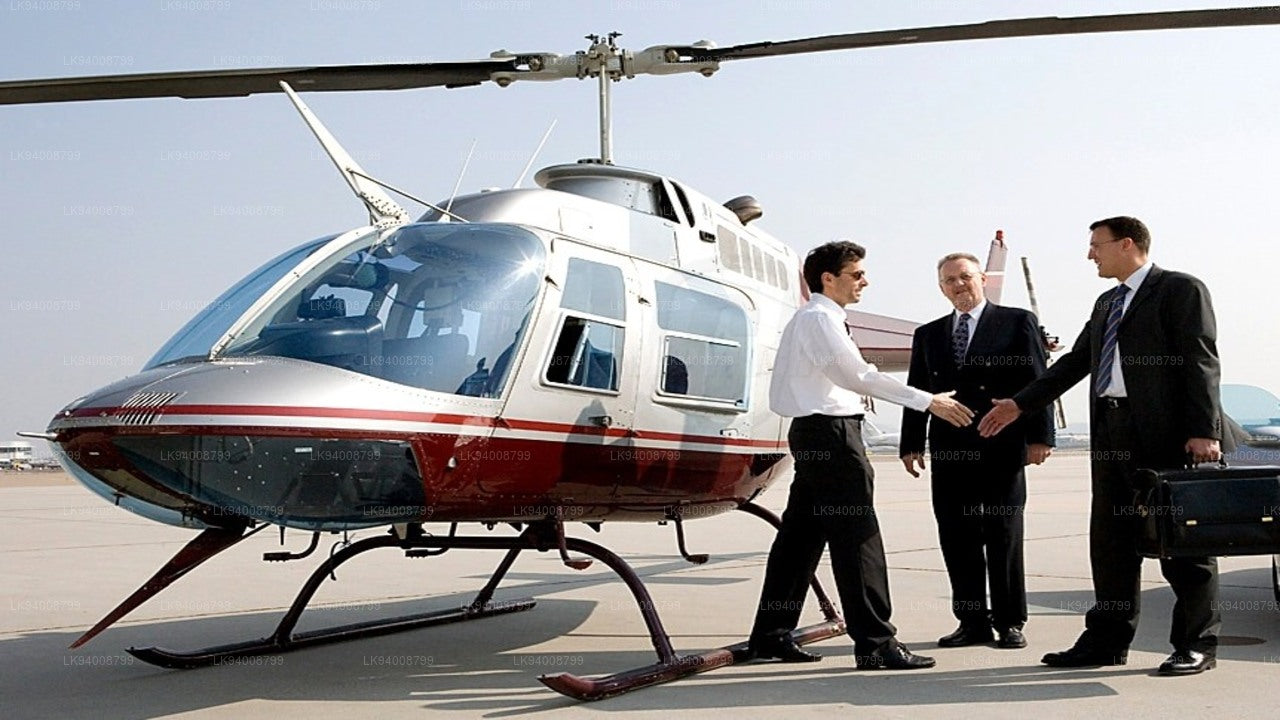
  • Business travel — executives arriving at Bandaranaike Airport who need to reach Colombo meetings or resort properties the same afternoon
  • Special occasions — honeymoons, milestone birthdays, and anniversary trips where the flight itself is part of the experience
  • Reduced-mobility travellers — those for whom long road journeys are physically uncomfortable and a 30-minute flight is a meaningful improvement
  • Photographers and content creators — who value the unrepeatable aerial angles over landscapes and heritage sites

How does a helicopter transfer work in practice?

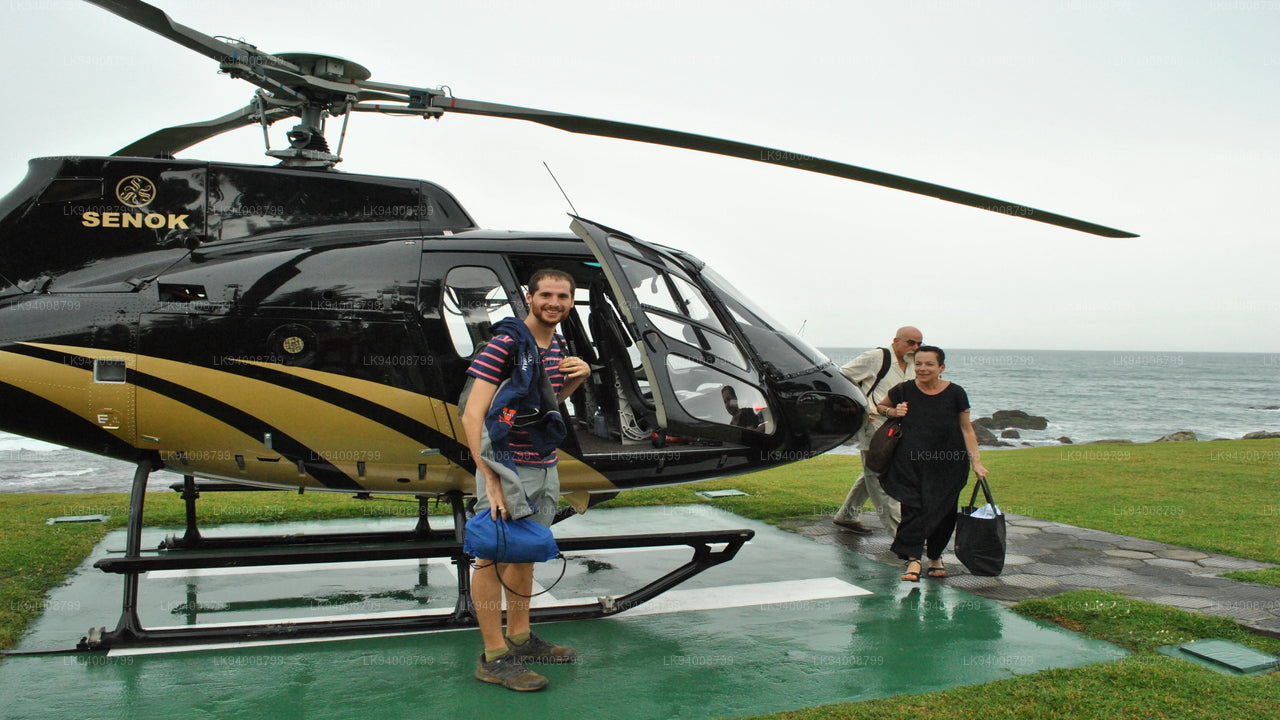
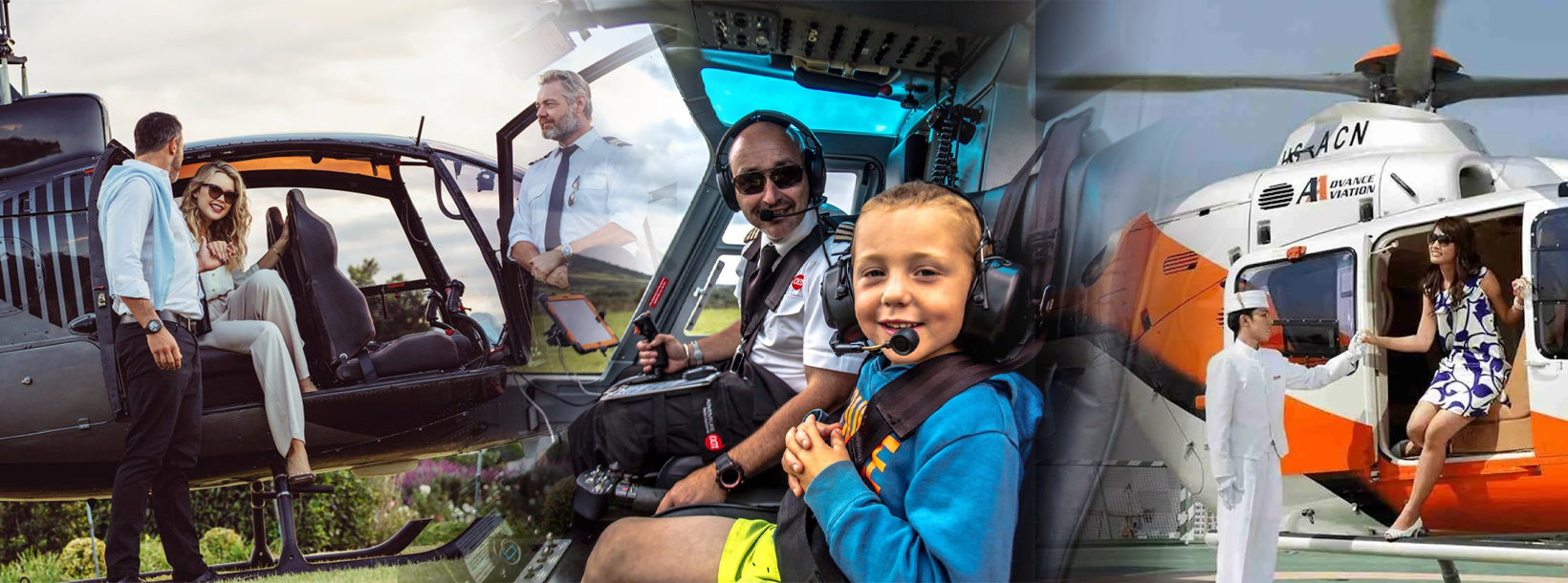
When Lakpura arranges a helicopter transfer, the process is coordinated end-to-end. A ground vehicle collects passengers from their hotel or the airport and drives them to the relevant helipad. Check-in at helipad facilities is straightforward — there is no terminal queue, no baggage carousel, and no lengthy security procedure comparable to a commercial airport. Luggage allowances are set by the operator and are typically modest; oversize bags travel separately by road vehicle.

Passengers board directly on the apron, are briefed on safety procedures, and take off within minutes. At the destination helipad, a second ground vehicle is waiting to complete the transfer to the final hotel or attraction. The entire process, from hotel door to hotel door, is often completed in under two hours for routes that would otherwise occupy the better part of a day.

Scheduling is subject to Civil Aviation Authority of Sri Lanka approvals and weather conditions. Early morning departures generally offer the clearest skies, especially in the hill country, where low cloud can form by mid-morning during parts of the year.

Can I combine a helicopter transfer with a scenic flight?

Several routes are designed as scenic experiences as much as practical transfers. A flight over Adam's Peak from Bentota or Negombo traces the ridge line of the Samanala range, with Sri Pada (Adam's Peak) visible as a conical summit above the surrounding cloud — an angle no road journey can replicate. Similarly, an aerial tour of Colombo from Ratmalana Airport lets travellers orient themselves in the city before a ground itinerary begins.

For travellers who have already seen Horton Plains or the tea highlands by road and want a different vantage point, a scenic circuit helicopter flight can be booked as a standalone activity rather than a point-to-point transfer.

Is hot-air ballooning a comparable experience?

Helicopter transfers and hot-air ballooning both offer elevated views, but they serve different purposes. Balloon flights are slow, wind-dependent, and typically operate at dawn over the Cultural Triangle — they are inherently a leisure experience with no flexibility in direction or timing. Helicopters are faster, fully controllable, and schedule-driven, making them practical for actual transfers as well as scenic flights. The two experiences are complementary rather than interchangeable.

What should I bring for a helicopter flight in Sri Lanka?

  • Valid passport or national ID (required for all passengers)
  • Lightweight luggage only — soft bags are easier to stow than rigid cases
  • Sun protection, particularly for open-door scenic flights where applicable
  • A camera or fully charged phone — the light during early morning flights is particularly good
  • Motion-sickness medication if you are susceptible, though most passengers find helicopter travel smoother than expected

Operators will provide a full passenger briefing and any required safety equipment at the helipad. Children are generally welcome subject to minimum weight and age requirements set by the operator.

Book this experience with Lakpura

Curated by our local team. Direct booking, instant confirmation.

Ask Lakpura® Agent