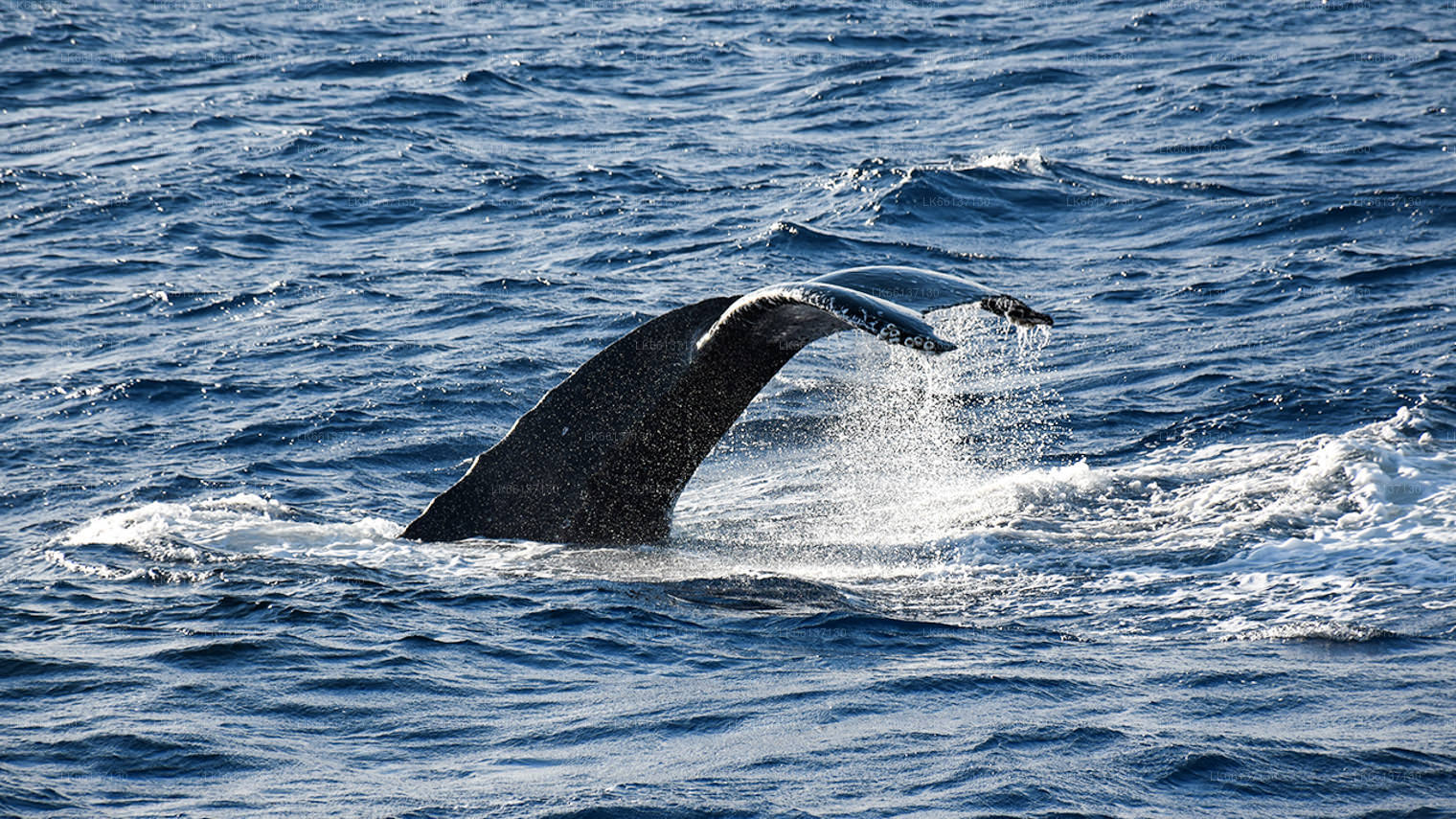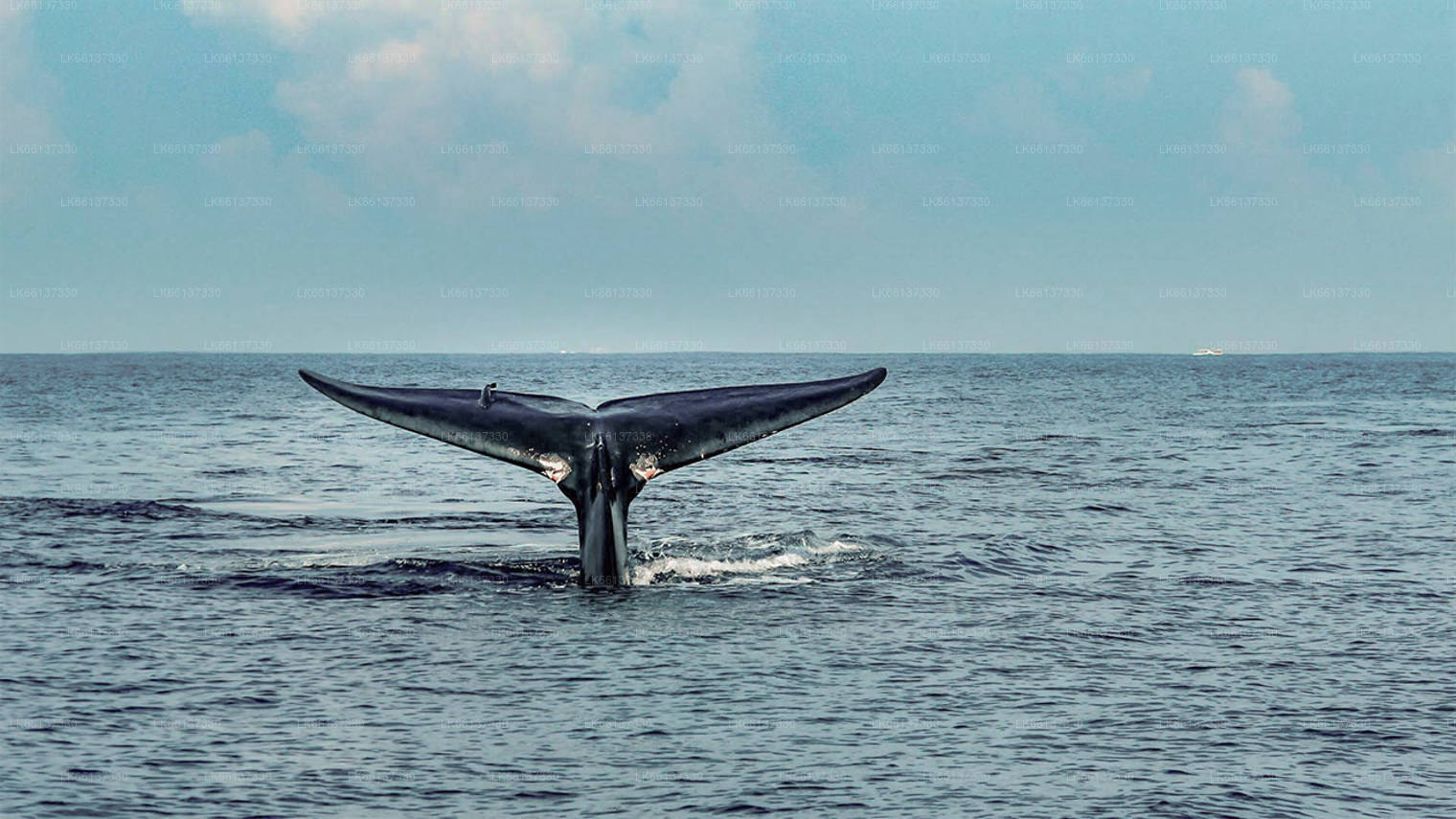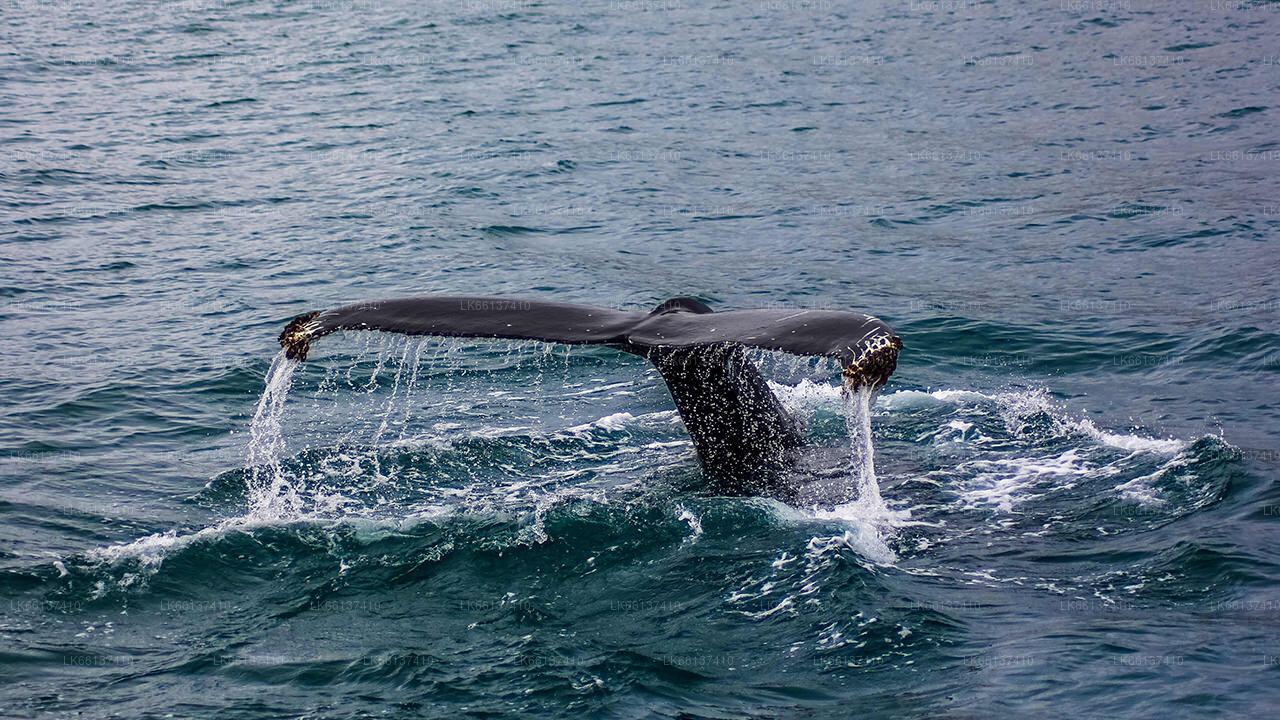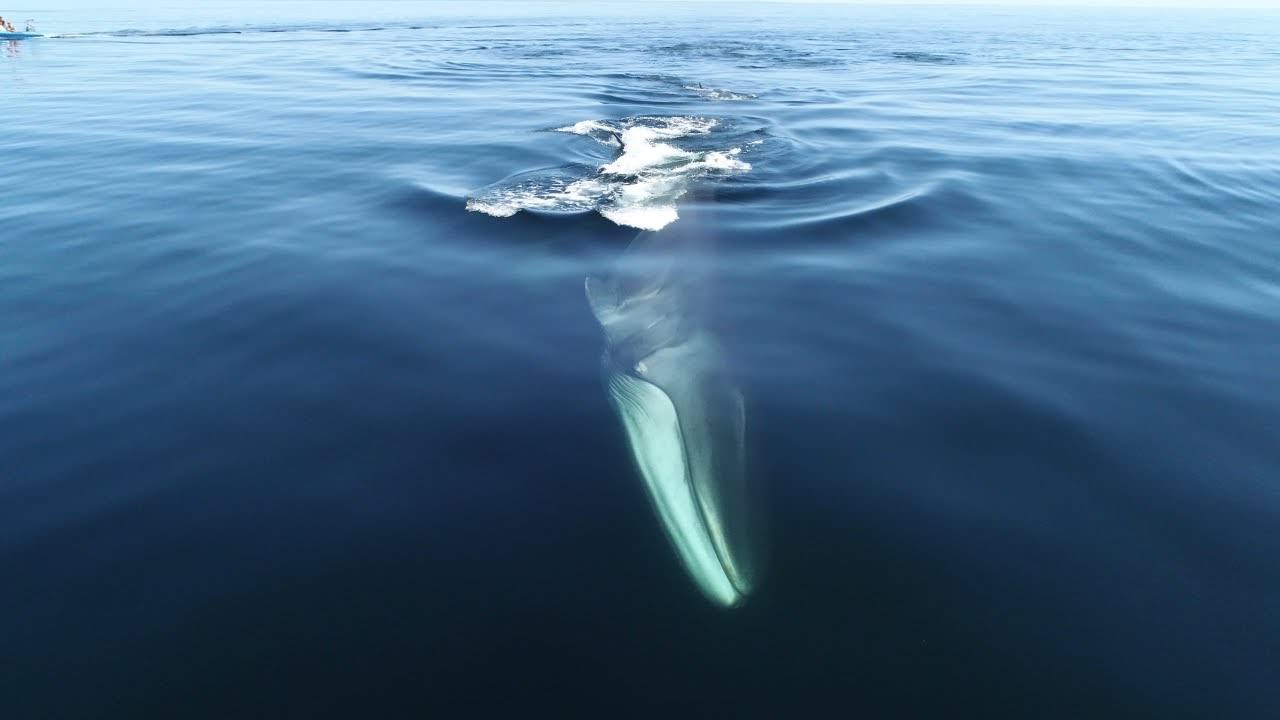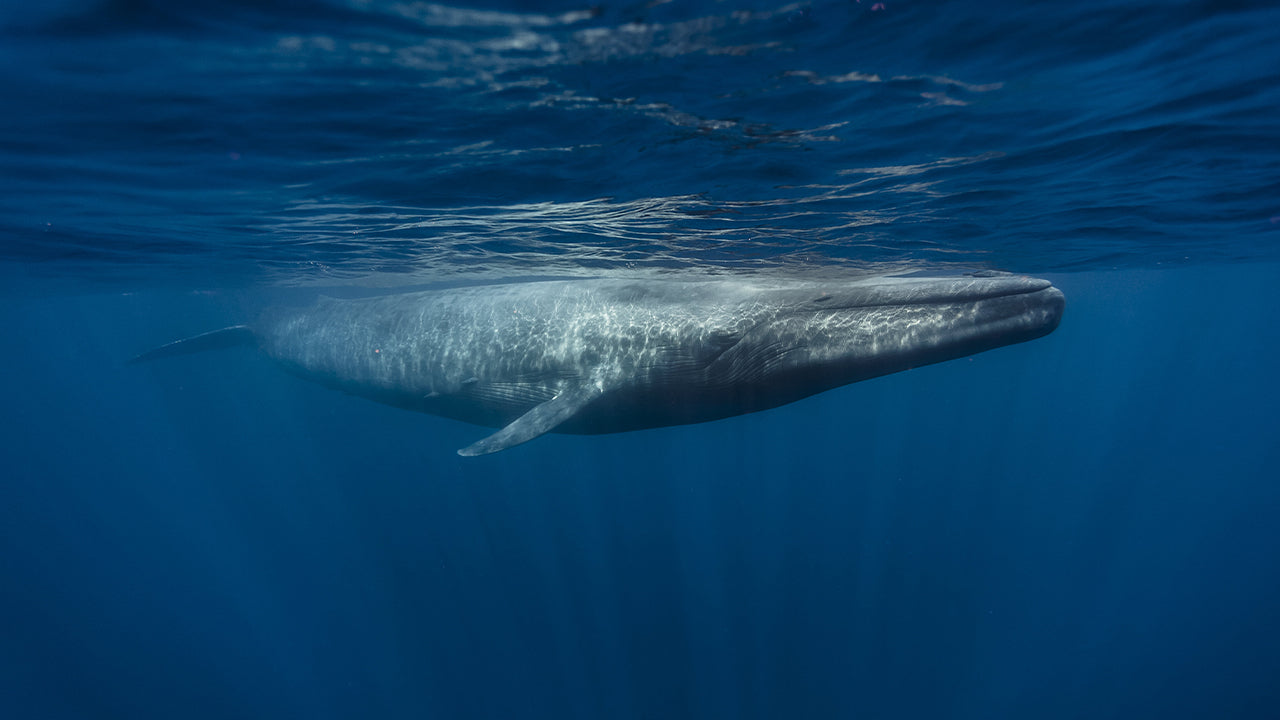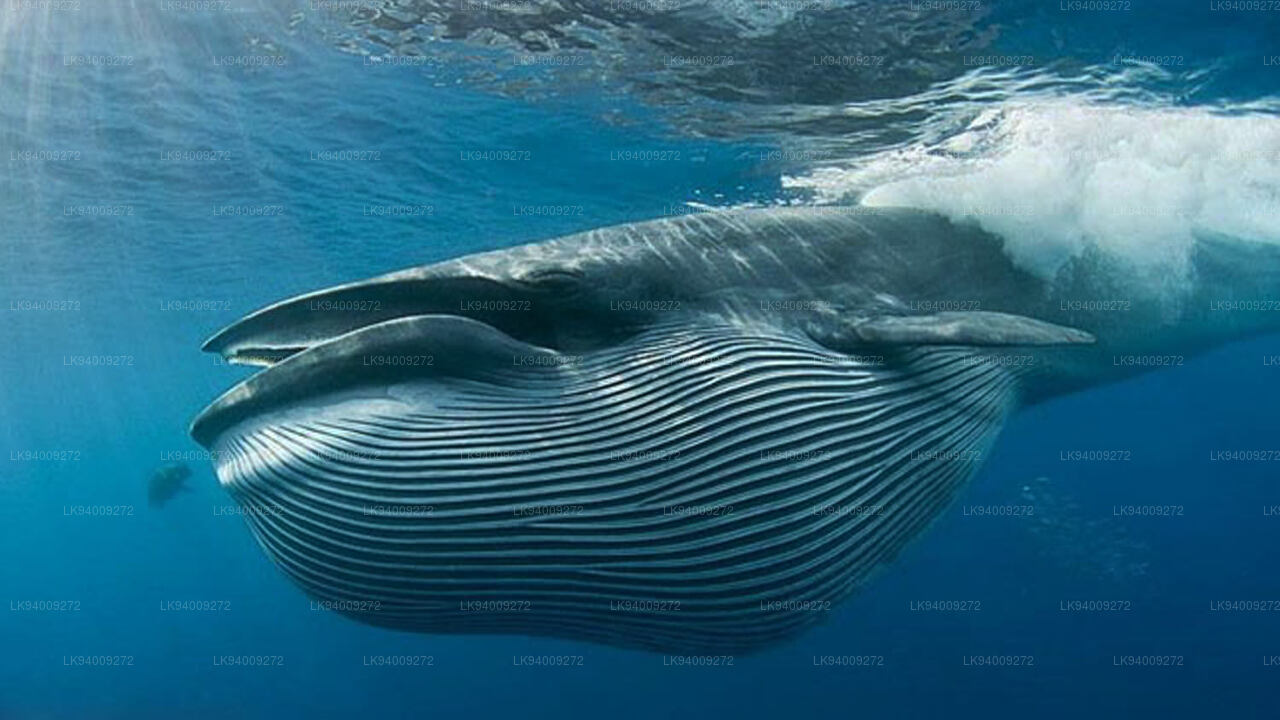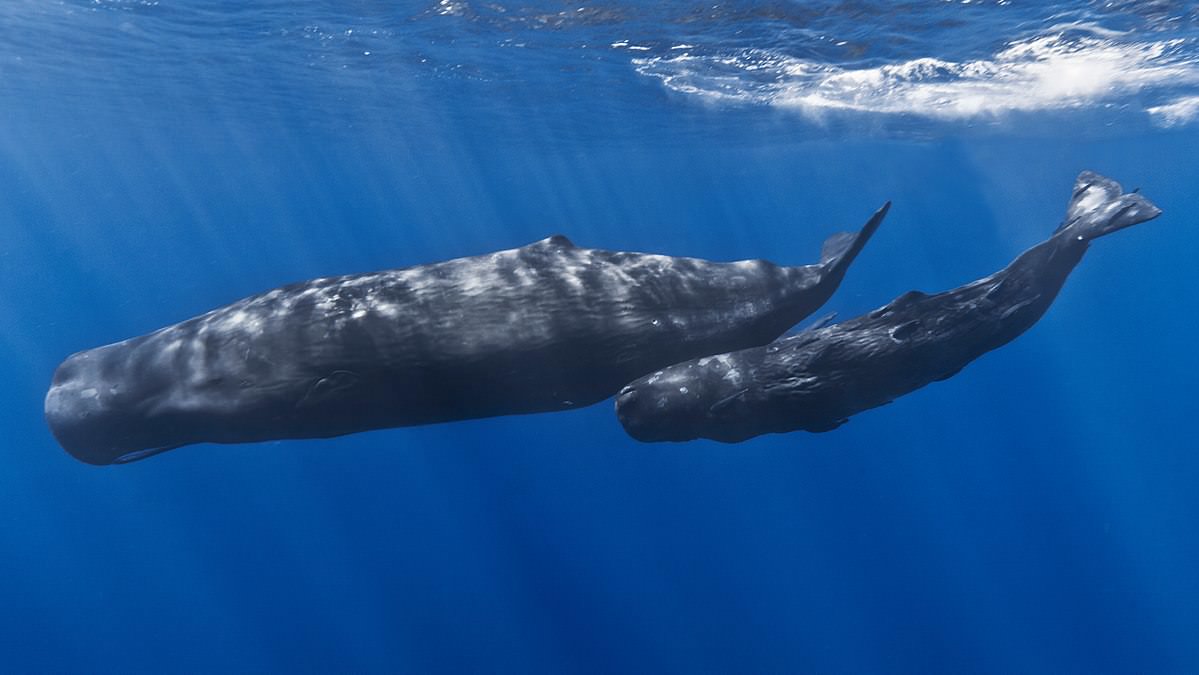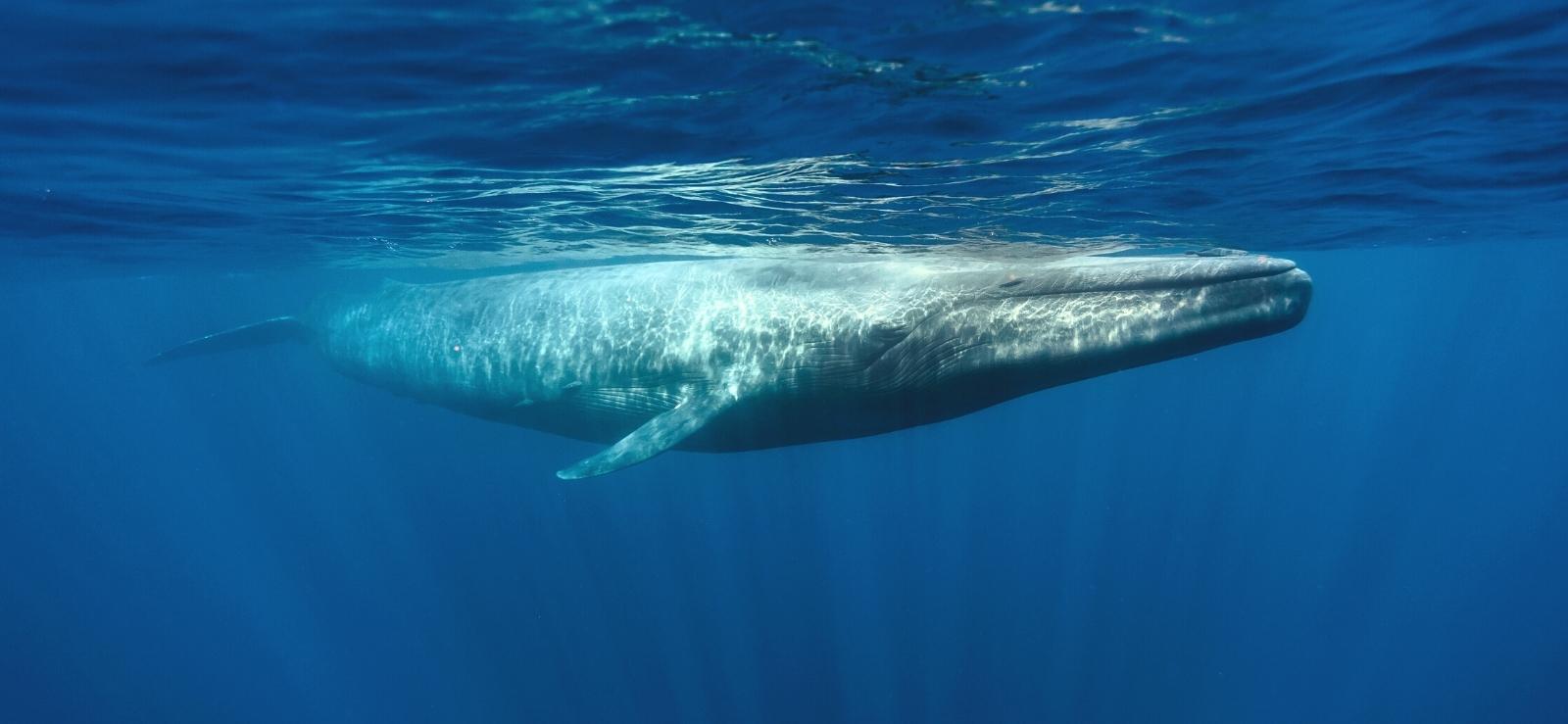
The fin whale (Balaenoptera physalus) is the second-largest animal on Earth, surpassed in size only by the blue whale. Known historically as the finback, herring whale, or razorback whale, it belongs to the baleen whale group — the filter-feeding giants that also include humpbacks and minkes. American naturalist Roy Chapman Andrews memorably described it as "the greyhound of the sea," a fitting image for an animal whose slender, tapered body is built for sustained speed through open ocean.
What does a fin whale look like?
The fin whale's body is long and laterally compressed, coloured brownish-grey on the dorsal side with a distinctly paler underside. One of its most distinctive features is an asymmetrical colouring on the head: the lower right jaw is white, while the lower left jaw is dark — a characteristic unique among large whales and useful for individual identification in the field.
Confirmed lengths reach up to 25.9 m (85 ft), with recorded weights approaching 74 tonnes, though some estimates for the largest individuals run considerably higher. A tall, prominent dorsal fin set well back on the body gives the species its common name.
Where do fin whales live?
Fin whales are found in every major ocean basin, from subarctic feeding grounds to tropical wintering areas. They avoid only the most ice-choked polar waters and small, enclosed seas. Population density is highest in temperate and cool-water zones, where prey concentrations are greatest.
At least two recognised subspecies exist: a North Atlantic form (B. p. physalus) and a Southern Hemisphere form (B. p. quoyi). A third subpopulation in the North Pacific is studied separately by some researchers. Seasonal migrations carry individuals across thousands of kilometres between feeding and breeding areas.
What do fin whales eat?
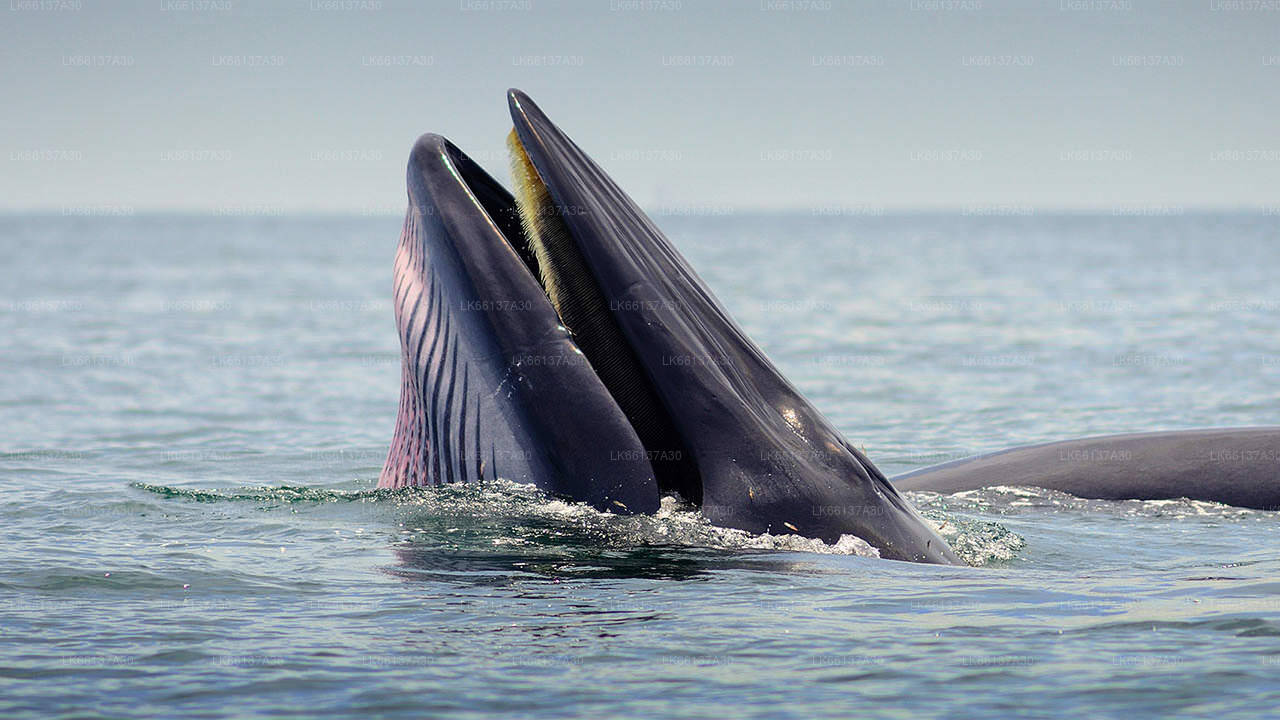
Like all baleen whales, fin whales are filter feeders. They lunge through dense aggregations of prey at speed, taking in enormous mouthfuls of water and forcing it out through their baleen plates. Their diet centres on small schooling fish, krill, copepods, and squid — the same productive patches of ocean that support many other marine predators. A single adult may consume around two tonnes of food per day during peak feeding periods.
Are fin whales endangered?
Fin whales are listed as Vulnerable on the IUCN Red List, having been reclassified from Endangered as some North Atlantic populations have shown recovery signs. Globally, however, their situation remains serious. Commercial whaling through most of the 20th century caused catastrophic declines: over 725,000 fin whales were taken from Southern Hemisphere waters alone between 1905 and 1976. By the late 1990s, only around 38,000 were estimated to survive in those waters.
The International Whaling Commission (IWC) moratorium on commercial whaling, in force since 1986, has allowed some recovery. Iceland and Japan have resumed limited hunts under objection or special-permit provisions, and Greenlandic hunters take a small quota under Aboriginal Subsistence Whaling rules. Current global population estimates range from roughly 100,000 to 119,000 individuals, though recovery of Southern Hemisphere populations is projected to remain below 50% of pre-whaling levels even by 2100.
Beyond hunting, fin whales face ongoing threats from ship strikes — their preference for deep, open channels puts them on collision course with major shipping lanes — as well as entanglement in fishing gear, ocean noise pollution, and the cascading effects of climate change on prey availability.
Can you see fin whales in Sri Lanka?
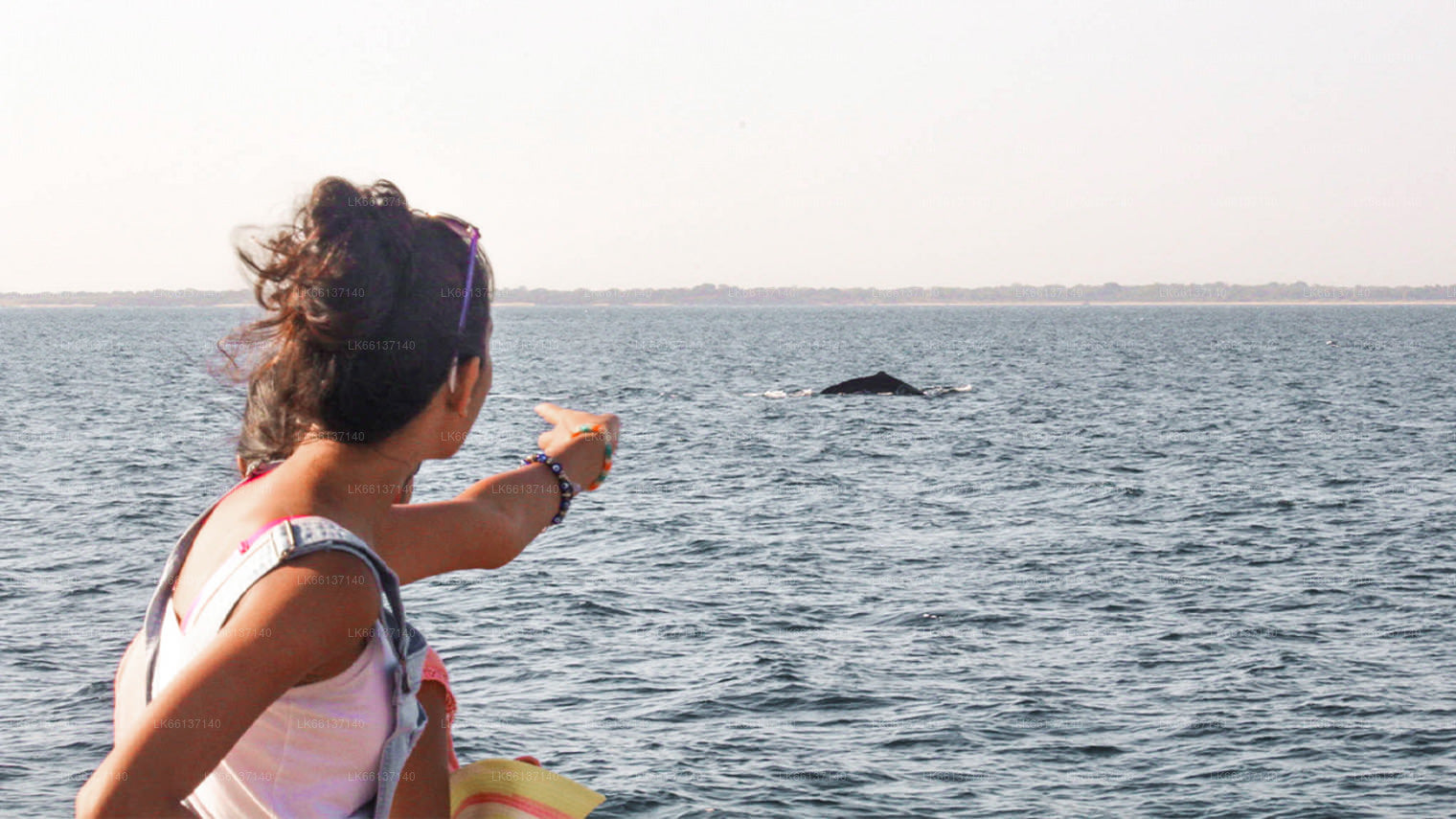
Sri Lanka's southern waters sit within one of the most productive whale-watching corridors in the Indian Ocean. The deep underwater canyon that runs close to the southern coastline — particularly near Mirissa and Dondra Head — channels nutrient-rich upwellings that attract large cetaceans year-round. Blue whales are the headline species here, but fin whales are recorded regularly in the same waters, often travelling alone or in small groups.
The primary season for large whale sightings off the south coast runs from roughly November through April, when sea conditions are generally calmer and cetacean activity peaks. Encounters with fin whales are most likely between January and March, when blue whale concentrations are also at their highest and experienced captains know where to search. The southwest coast also offers occasional sightings during the inter-monsoon windows.
For travellers combining whale watching with broader marine and wildlife experiences, a deep sea fishing trip into similar offshore waters can complement a cetacean-focused excursion — both activities share the same general departure points along the southern coast.
How fast can a fin whale swim?
Fin whales are among the fastest of the great whales. Short bursts can reach around 37 km/h (23 mph), which historically made them difficult targets for whalers using traditional methods and contributed to their relative survival until the advent of steam-powered catcher boats. Cruising speeds are considerably lower, typically in the range of 10–15 km/h during routine travel.
How do fin whales communicate?
Fin whales produce some of the lowest-frequency sounds of any animal — powerful, repetitive pulses in the 20 Hz range that can travel hundreds or potentially thousands of kilometres through deep ocean channels. The function of these calls, particularly the regular "20 Hz pulse" sequences produced mostly by males, is thought to include long-distance mate attraction. Ocean noise from shipping has measurably compressed the range over which these signals remain detectable, making acoustic pollution a genuine conservation concern.
What is the difference between a fin whale and a blue whale?
| Feature | Fin Whale | Blue Whale |
|---|---|---|
| Maximum length | Around 26 m | Around 30 m |
| Body colour | Brownish-grey, asymmetric head markings | Blue-grey, mottled |
| Dorsal fin | Prominent, well-defined | Small, set far back |
| Blow shape | Tall, columnar, up to 6 m | Very tall, narrow, up to 9 m |
| Behaviour | Rarely breaches; fast swimmer | Occasionally lunges at surface |
| IUCN status | Vulnerable | Endangered |
How to plan a responsible whale-watching trip
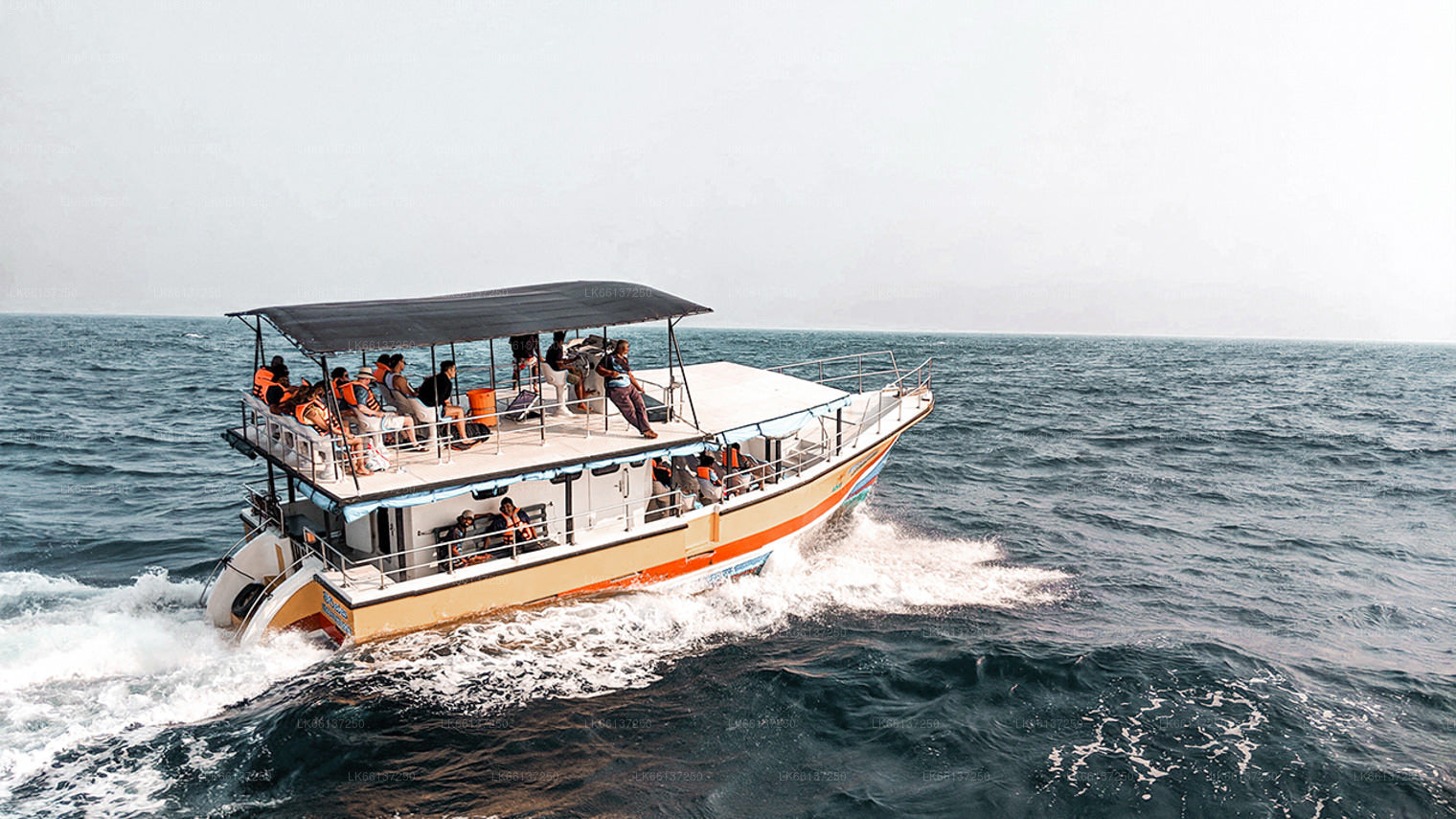
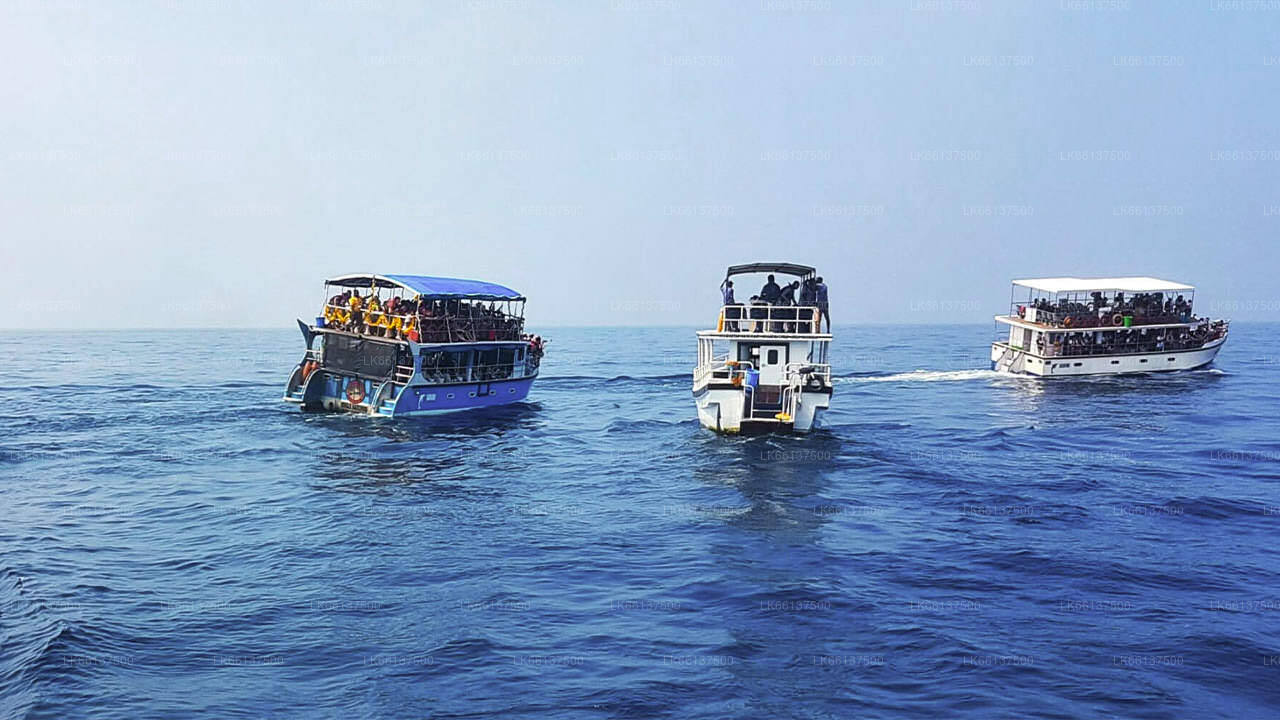
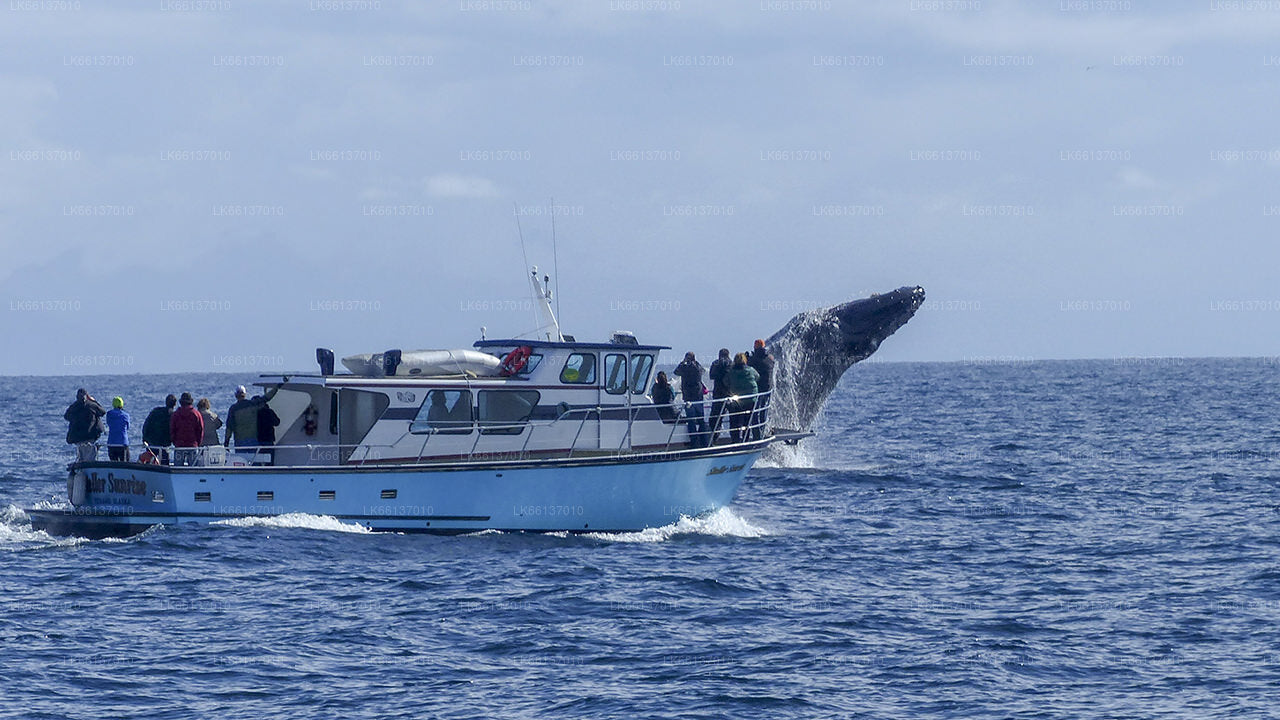
Responsible whale watching follows guidelines designed to minimise disturbance to cetaceans. Reputable operators maintain safe approach distances, avoid encircling individuals, and do not exceed the recommended time spent near any single animal. When booking, look for operators who brief passengers in advance, limit vessel numbers in the water simultaneously, and avoid high-speed manoeuvres near whales.
Mirissa harbour is the most established departure point for southern Sri Lanka whale-watching trips, with boats heading out before dawn to reach deep water by sunrise. Trincomalee on the east coast also offers seasonal sightings — typically between April and August — in calmer conditions during the northeast monsoon period. Both locations produce fin whale records alongside the more frequently encountered blue and sperm whales.