Lakpura
Lakpura®

Blue Water Lily (Nil Manel)

The Blue Water Lily — known in Sinhala as Nil Manel — is one of Sri Lanka's most recognisable natural symbols. Flowering from early morning until late afternoon across shallow tanks, irrigation canals, and wetlands, it connects the island's ancient landscape with its living Buddhist traditions. In 1986 it was officially declared Sri Lanka's national flower, a status later broadened in 2016 to encompass the full range of Manel (Water Lily) varieties found across the country.

What is the scientific classification of the Blue Water Lily?

Nymphaea stellata (synonym: Nymphaea nouchali) belongs to the family Nymphaeaceae. It is native to southern and eastern Asia and is listed as Vulnerable (VU) on Sri Lanka's National Red List 2020 — a reminder that even a national emblem can face ecological pressure from habitat loss and water pollution.

AttributeDetail
Scientific nameNymphaea stellata
FamilyNymphaeaceae
Common synonymsCastalia acutiloba, Castalia stellaris
Native statusNative to Sri Lanka
Conservation statusVulnerable (VU) – NRL 2020
Flowering hoursTypically 7 AM – 5 PM

What does the Blue Water Lily look like?

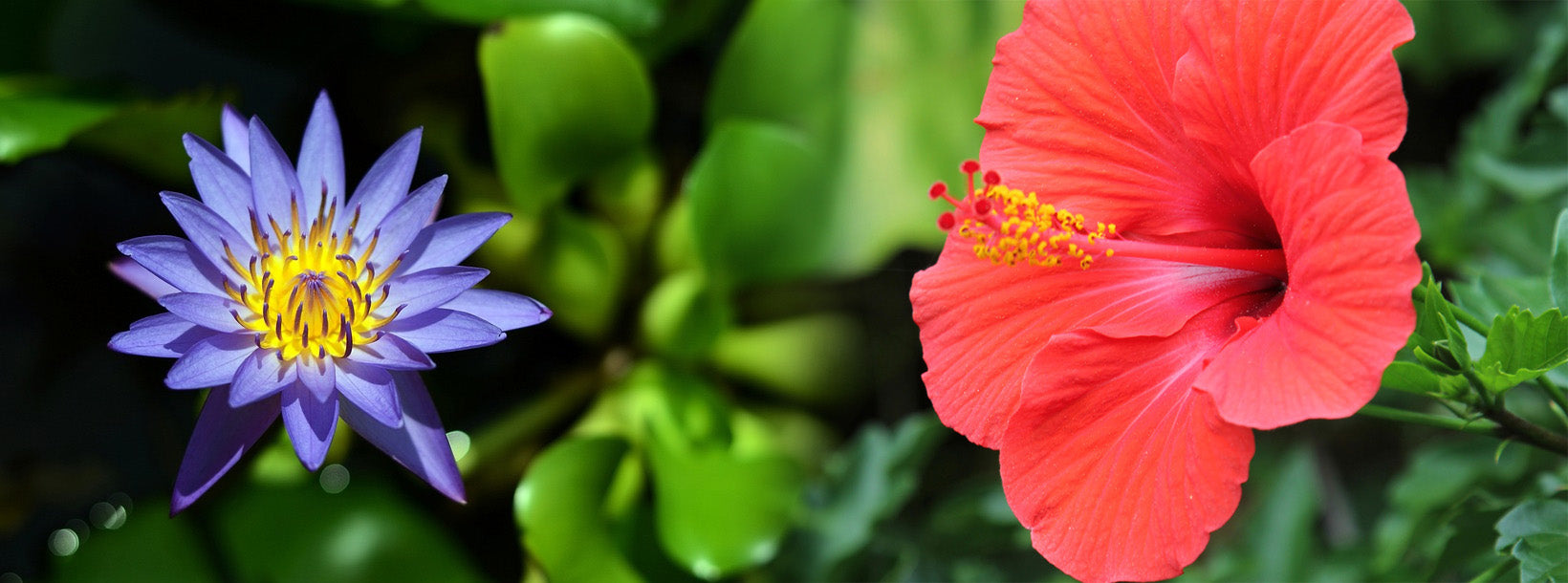
The plant grows from a short, erect, ovoid rootstock anchored in the mud below the waterline. Its floating leaves are broadly rounded, typically 12.5–20 cm across, with smooth surfaces and entire or coarsely wavy margins. The flowers are solitary and relatively large — 7.5–15 cm in diameter — displaying petals that range from violet-blue and pink to white or magenta, each centred on a cluster of bright yellow stamens.

Colour variation is common: some blooms carry reddish edges, others lean toward a soft mauve or pale fuchsia. The fruit is a spongy, globular berry containing many small seeds, which disperse through water. This aquatic habit makes the plant a natural fit for Sri Lanka's extensive network of ancient irrigation tanks (wewa), many of which date back over two millennia.

Where does the Blue Water Lily grow in Sri Lanka?

The Nil Manel is most commonly found in the dry zone, where shallow tanks and slow-moving waterways provide ideal growing conditions. It appears across the North Central, Northern, and Eastern provinces — environments shaped by the ancient hydraulic civilisations centred around cities such as Polonnaruwa. Beyond the dry zone, it also colonises wetland margins and paddy-field bunds in wetter parts of the island.

Sightings are common at dawn in rural tank landscapes and along the edges of wildlife reserves. Visitors exploring wetland ecosystems — for example on a Madu River Safari — occasionally encounter water lilies alongside other aquatic flora, though the Nil Manel is more characteristic of still, shallow freshwater than slow tidal backwaters.

What is the cultural and religious significance of Nil Manel in Sri Lanka?

The Water Lily occupies a central place in Buddhist iconography across South and Southeast Asia. In Sri Lanka's Theravada tradition, the flower is one of the 108 auspicious symbols said to appear on Prince Siddhartha's footprint, and legend holds that lotus and water lily flowers bloomed wherever the Buddha walked. The Manel therefore appears frequently in temple offerings, festival decorations, and Ayurvedic ritual contexts.

Its presence in ancient stonework, manuscript illustrations, and the ornamental pools of royal palace gardens reflects how deeply the flower is woven into the island's artistic heritage. The Colombo Lotus Tower — the island's tallest structure — takes direct visual inspiration from this same family of aquatic flowers, demonstrating that the symbolism remains very much alive in contemporary Sri Lanka.

What are the traditional and medicinal uses of the Blue Water Lily?

Ayurvedic practitioners have long drawn on different parts of Nymphaea stellata for therapeutic purposes. The stem and rhizome are traditionally used in formulations targeting liver complaints, piles, and urinary tract disorders. The plant is attributed with diuretic, aphrodisiac, and mild sedative properties in classical Ayurvedic texts.

  • Stem and rhizome: used in preparations for liver support and urinary health
  • Flowers: dried and used in calming herbal teas and ritual preparations
  • Seeds (olu haal): consumed as a traditional food, particularly in rice-based preparations
  • Floral water (hydrosol): used in skincare and aromatherapy as a gentle toner

Modern botanical research has begun to explore the pharmacological basis for some of these traditional uses, though the plant's Vulnerable conservation status means that wild harvesting is a concern. Commercially cultivated extracts and dried flowers are the sustainable alternative.

What are the local and regional names for the Blue Water Lily?

LanguageName
SinhalaManel / Nil Manel (නිල් මානෙල්)
TamilNeelambal (நீலாம்பல்)
SanskritUtpala
EnglishBlue Water Lily, Blue Star Water Lily, Star Lotus, Blue Lotus

How is the Blue Water Lily used in Sri Lankan products today?

Beyond its ecological and ceremonial roles, the Blue Water Lily has found a place in Sri Lanka's wellness and artisan economy. Dehydrated flowers are used in herbal teas, floral arrangements, and spa treatments. Floral hydrosols — a by-product of steam distillation — are marketed as gentle skincare tonics. Several Sri Lankan wellness brands, including Spa Ceylon, have built product lines around the flower's calming aromatic profile, pairing it with complementary botanicals such as ylang-ylang and almond.

Water lily seeds (olu haal) are a lesser-known but nutritious traditional food. Ground or soaked, they have been incorporated into rice dishes and sweet preparations for generations, representing yet another way Sri Lankans have found practical value in this aquatic plant.

Is the Blue Water Lily endangered in Sri Lanka?

The species is classified as Vulnerable on Sri Lanka's National Red List, primarily due to the degradation and drainage of its freshwater wetland habitats. Agricultural expansion, water pollution from agrochemicals, and the introduction of invasive aquatic plants all pose ongoing threats. Conservation efforts are generally tied to broader wetland protection programmes, and protected areas such as Wilpattu National Park — which contains numerous seasonal tanks — provide some incidental refuge for the species.

Gardeners and hotel horticulturalists across Sri Lanka cultivate the plant in ornamental ponds, which helps maintain familiarity with the flower even as wild populations face pressure. Responsible sourcing of any commercial product derived from the plant — flowers, seeds, or extracts — remains important for long-term conservation.

Book this experience with Lakpura

Curated by our local team. Direct booking, instant confirmation.

Ask Lakpura® Agent