Vesak Poya, observed on the full-moon day of May, is the most sacred day in the Sri Lankan Buddhist calendar. It is the single day on which three defining moments in the life of Siddhartha Gautama are believed to have occurred: his birth, his attainment of enlightenment, and his final passing — Parinibbana. Across the island, the festival transforms towns and villages with light, generosity, and quiet devotion for an entire week.
What three events does Vesak commemorate?
Vesak holds its profound significance because it marks not one but three milestones, each associated with the same full-moon date in different years of the Buddha's life.
- The Birth of Siddhartha Gautama. Prince Siddhartha was born to Queen Mahamaya and King Suddhodana in Lumbini, in present-day Nepal, under a grove of Sal trees. His name, meaning "one who has found the meaning of existence," was given at birth. Tradition records that the queen passed away seven days after his birth.
- The Attainment of Enlightenment. After years of study and meditation under various teachers, Siddhartha turned inward and directed his mind entirely toward meditation. On a Vesak Poya night, he reached full enlightenment — becoming the Buddha, the Awakened One — and transcended the cycle of suffering.
- Parinibbana — the Final Passing. At the age of eighty, the Buddha announced that his passing would take place during the third watch of the night at the Sal grove of the Malla royal family at Kusinagar (in present-day India). That night, too, fell on a Vesak Poya day.
How is Vesak celebrated in Sri Lanka?
Sri Lanka's Vesak observances weave together personal piety, communal generosity, and public spectacle in a way that is distinctive even among Buddhist nations. The festival typically spans a full week rather than a single day, and its character shifts between the quiet sanctity of temple life and the festive energy of illuminated streets.
Devotees, dressed in white, make their way to temples at dawn and throughout the day. Inside, they offer flowers, light oil lamps, burn incense, and observe sil — a stricter set of precepts taken for the day. Many spend the entire day at the temple, listening to Dhamma sermons and renewing their commitment to the Buddha's teachings.
Dansalas — roadside stalls giving away free food and drink — spring up along major roads and in town centres. Run by households, businesses, and community groups, they offer everything from rice meals to plain tea, and accepting from a dansala is considered as meritorious as giving from one. The custom embodies dana (generosity), which sits at the heart of Vesak's spirit.
The sale of alcohol and meat is typically suspended during the Vesak period, and abattoirs are closed. The atmosphere across most towns is noticeably calmer and more reflective than on ordinary public holidays.
What are Vesak pandols (thorana)?
Pandols — known locally as thorana — are among the most visually arresting features of Vesak in Sri Lanka. These large illuminated structures, sometimes several storeys tall, are erected at prominent public spaces in cities and towns across the island. Each pandol depicts an episode from the Jataka Katha, the collection of around 550 stories recounting the previous lives of the Buddha. Donors, religious societies, and welfare organisations typically fund their construction.
After dark, streets around the major pandols fill with crowds who come to read the illustrated stories panel by panel, accompanied by recorded devotional music. In Colombo, the pandols along main routes such as Baseline Road and Maradana draw particularly large gatherings. Visiting several pandols on foot on the night of the full moon is one of the most atmospheric ways to experience Vesak.
What are Vesak lanterns and how are they made?
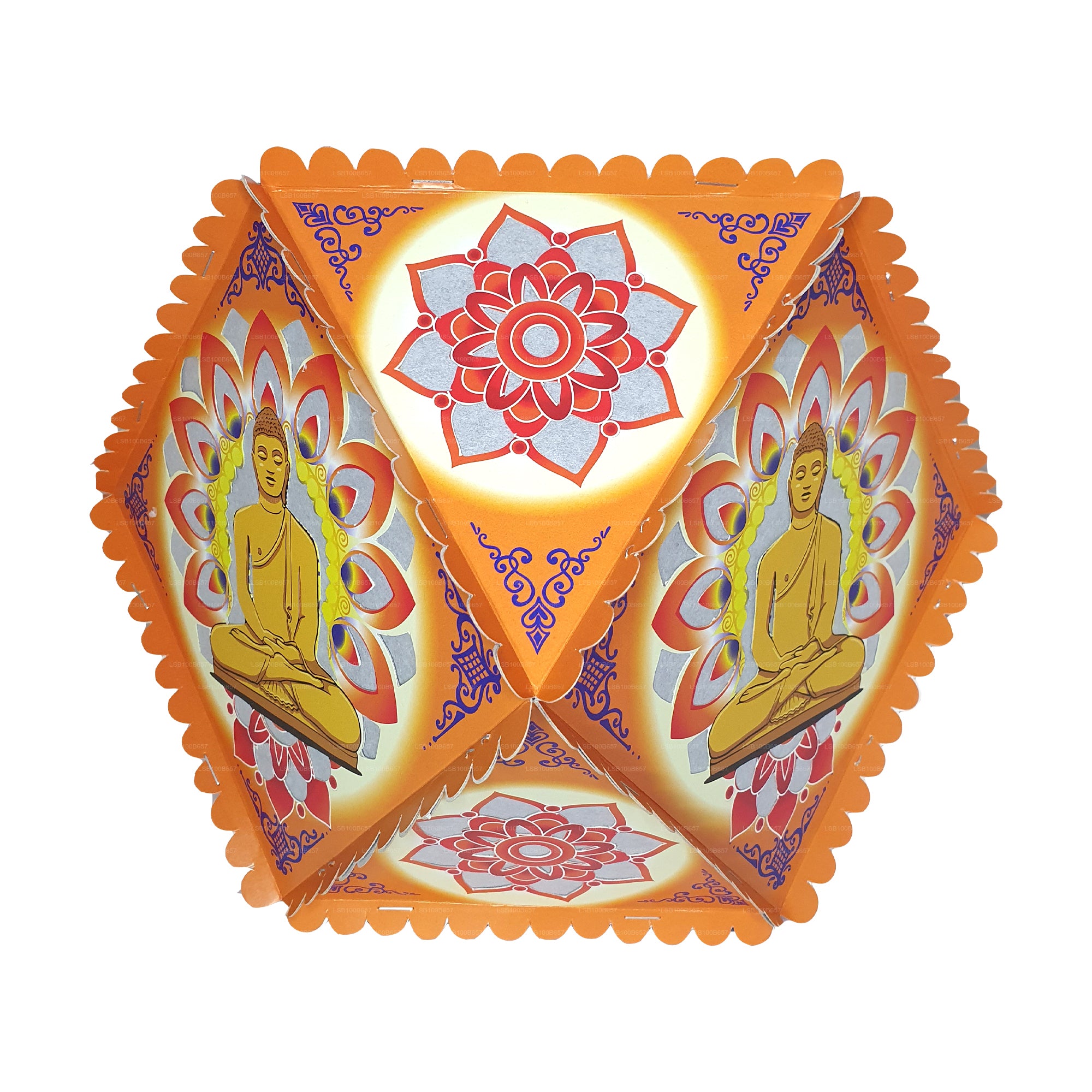
Vesak lanterns — called Vesak koodu — are handmade paper lanterns hung outside homes, temples, and shops throughout the festival week. Crafting them is a tradition that families, schools, and community groups take up weeks in advance. The most common form is the atapattam koodu, an octagonal structure built around a bamboo or cardboard frame and covered with translucent coloured paper.
Designs range from simple geometric shapes to elaborate multi-tiered constructions. When lit from within by a small candle or bulb, the coloured paper glows warmly against the night sky. Streets and lane entrances strung with dozens of koodu create an effect that is quiet and contemplative rather than loud — very much in keeping with the festival's tone.
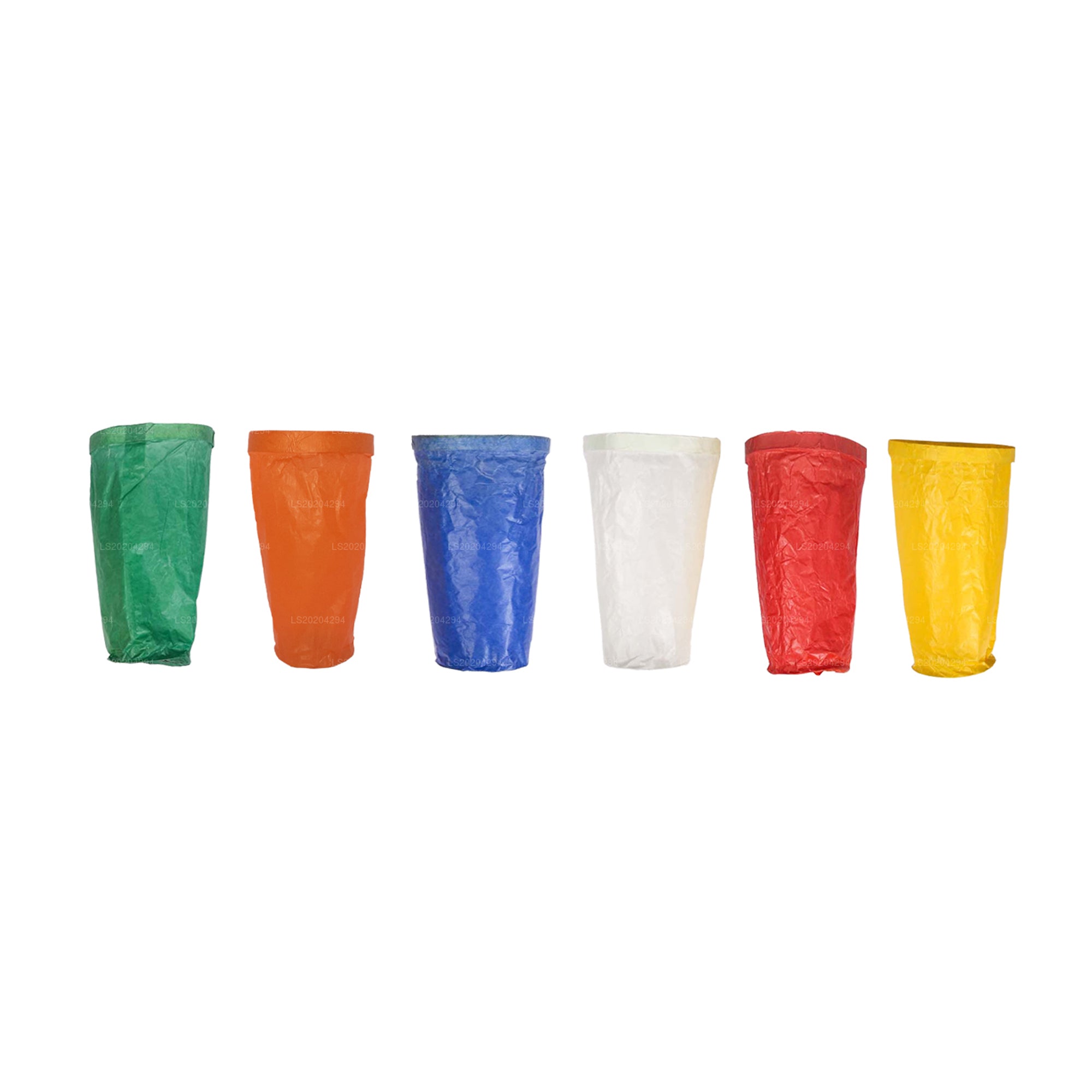
Lakpura stocks traditional atapattam koodu kits, lantern papers, and Vesak buckets so that travellers and members of the Sri Lankan diaspora can participate in the craft tradition themselves.
What other religious activities take place during Vesak?
- Bodhi Poojas: Offerings and prayers made at the sacred Bo tree found in most temple compounds, honouring the Bodhi tree under which the Buddha attained enlightenment.
- Sil campaigns: Organised retreats at temples where lay devotees undertake the Eight or Ten Precepts for the day or the week.
- Bakthi Gee: Devotional songs broadcast over temple loudspeakers and on radio stations throughout the festival period.
- Processions and peraheras: Smaller temple processions take place in some towns, particularly in the Kandy region.
Is Vesak celebrated outside Sri Lanka?
Vesak is recognised as a significant occasion across much of Asia and is observed as a public holiday in countries including India, Singapore, Thailand, Malaysia, Myanmar, and South Korea, among others. The United Nations has officially recognised Vesak Day since 1999, reflecting its status as one of the most widely observed Buddhist festivals in the world. The Sri Lankan celebration is widely regarded as one of the most elaborate, in part because Buddhism has been central to the island's cultural identity for over two thousand years.
When is Vesak Poya in Sri Lanka?
The date changes each year because it is tied to the lunar calendar. It typically falls between late April and late May. Sri Lanka observes all twelve poya (full-moon) days as public holidays, but Vesak Poya carries the greatest religious weight. Visitors planning to be in Sri Lanka during Vesak should book accommodation and transport well in advance, particularly in Colombo and Kandy, where celebrations are most concentrated.
Where are the best places to experience Vesak in Sri Lanka?
- Colombo: The capital hosts some of the largest pandols in the country, and the streets around Kelaniya Raja Maha Vihara — one of the most sacred temples on the island — draw huge crowds during the full-moon night.
- Kandy: The city of the Temple of the Tooth Relic holds particular spiritual importance, and its pandols and temple ceremonies attract pilgrims from across the country.
- Anuradhapura: Sri Lanka's ancient capital, home to some of the oldest Buddhist monuments in the world, sees mass pilgrimages during Vesak.
- Negombo: The coastal town is known for its well-organised and warmly attended Vesak decorations and dansalas.
Related reading
5 pages on closely related subjects.