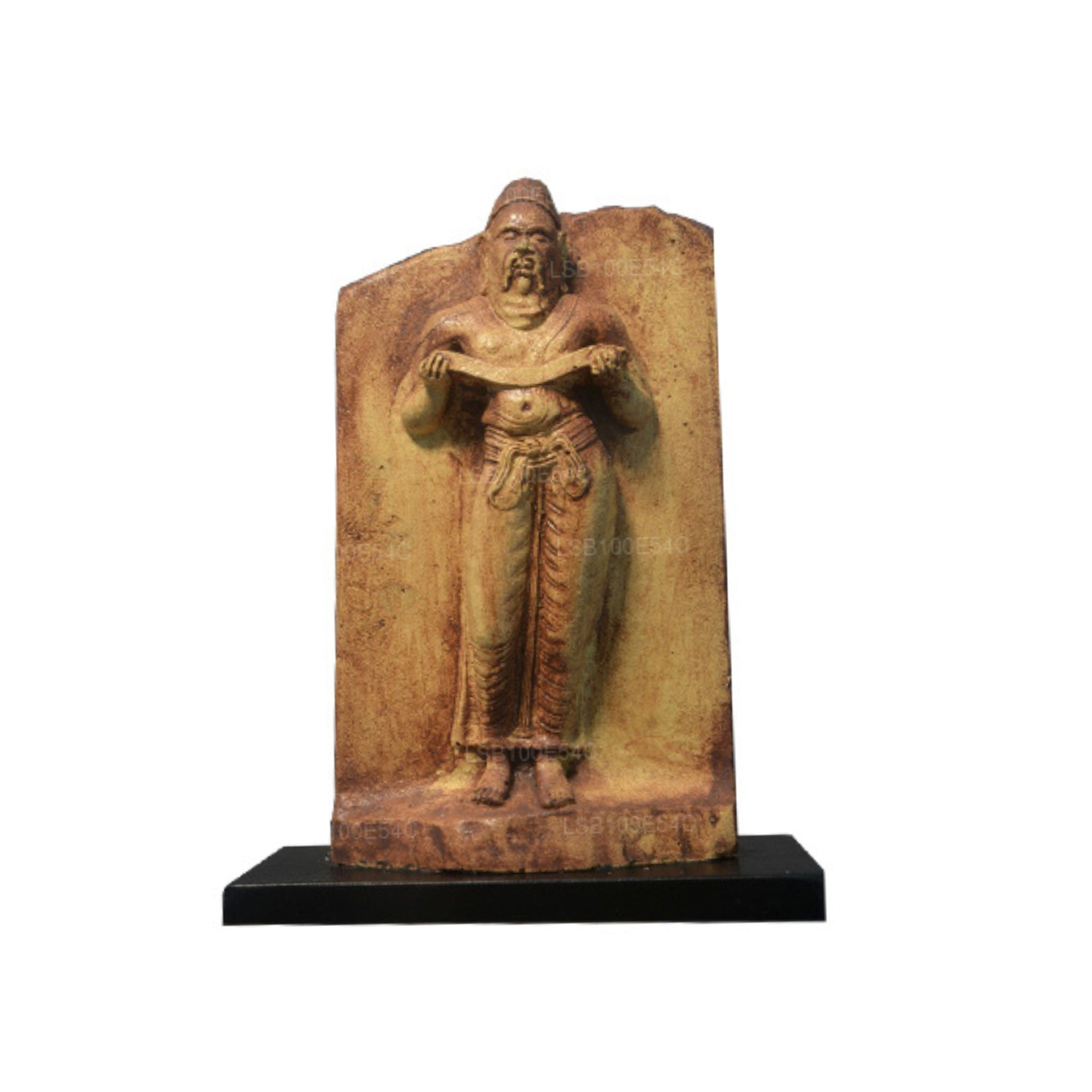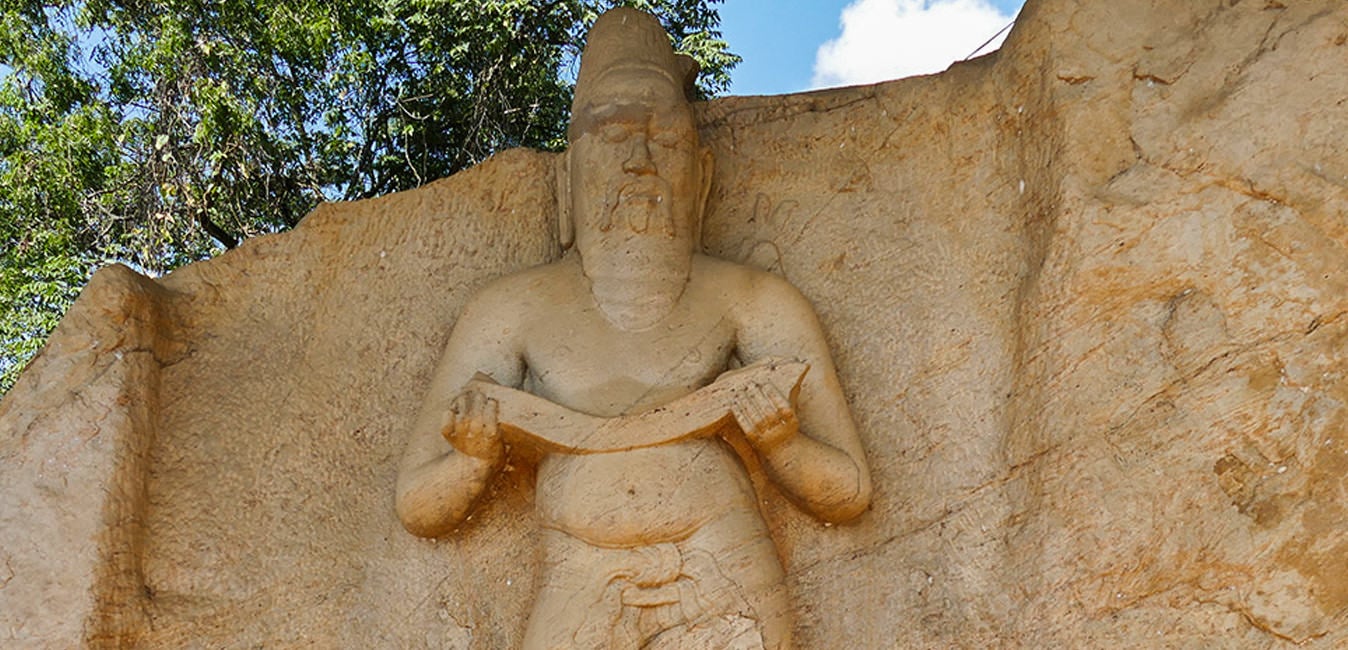
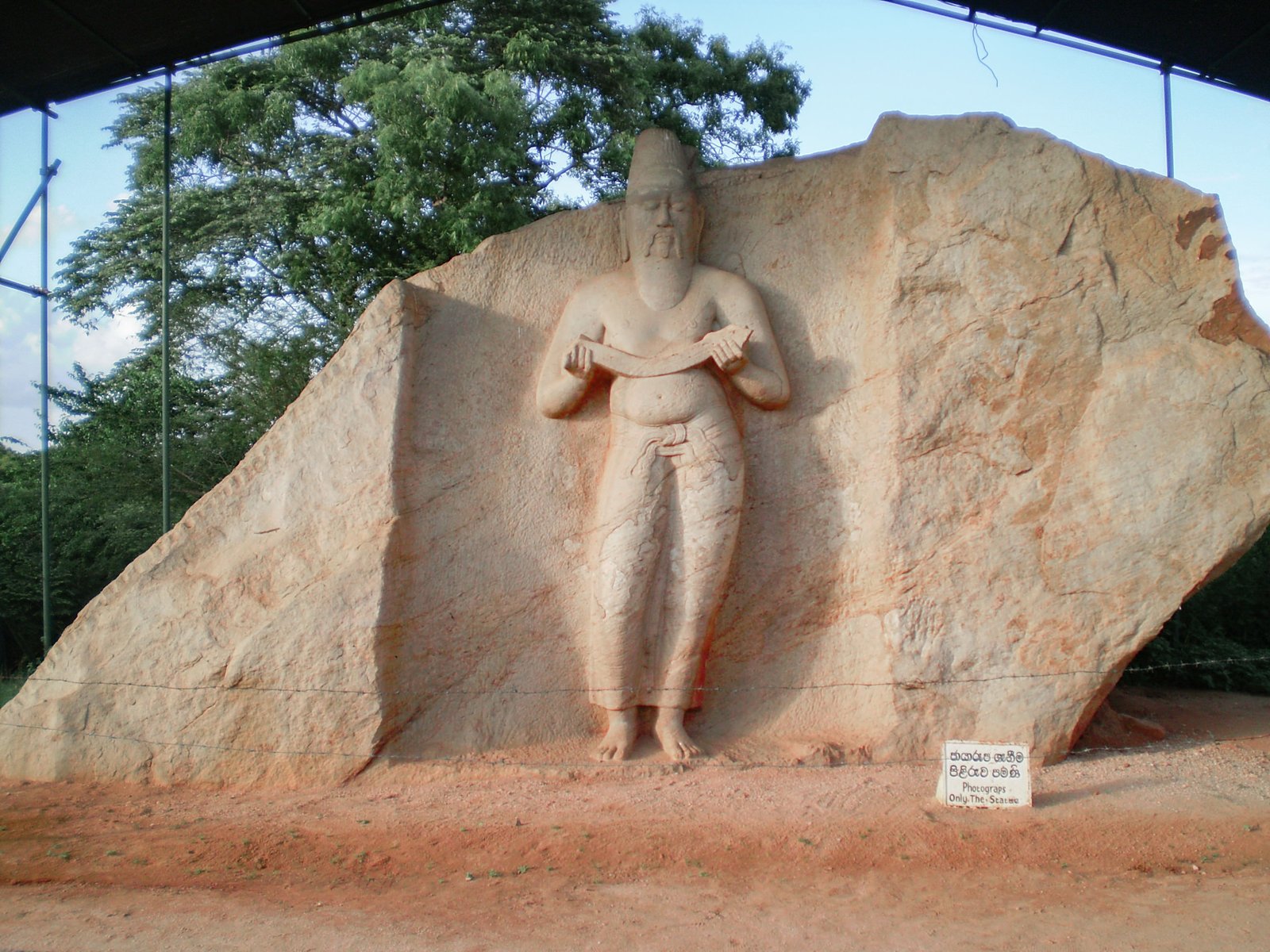
Standing roughly 3.4 metres tall against a weathered granite boulder on the northern edge of ancient Polonnaruwa, this figure is one of the finest examples of medieval Sri Lankan stone carving to have survived intact. Carved in high relief during what scholars believe was the 12th century, the statue commands attention not through decoration but through its quiet intensity — a quality that has fuelled debate about its identity for over a century.
Where exactly is the Pulasthi Statue located?
The statue stands on the eastern bank of the Parakrama Samudra, the vast reservoir commissioned by King Parakramabahu I, who ruled Polonnaruwa from 1153 to 1186. It sits approximately 100 metres north of Potgul Vehera, a monastic complex that ancient chronicles suggest served as a library and centre of learning. That proximity to a repository of knowledge is, as scholars have noted, unlikely to be coincidental.
The surrounding area is quieter than the main ruins of the Polonnaruwa Archaeological Park, which makes a visit here feel more contemplative — particularly in the early morning, when the light from the reservoir catches the carved planes of the figure's face.
What does the statue look like?
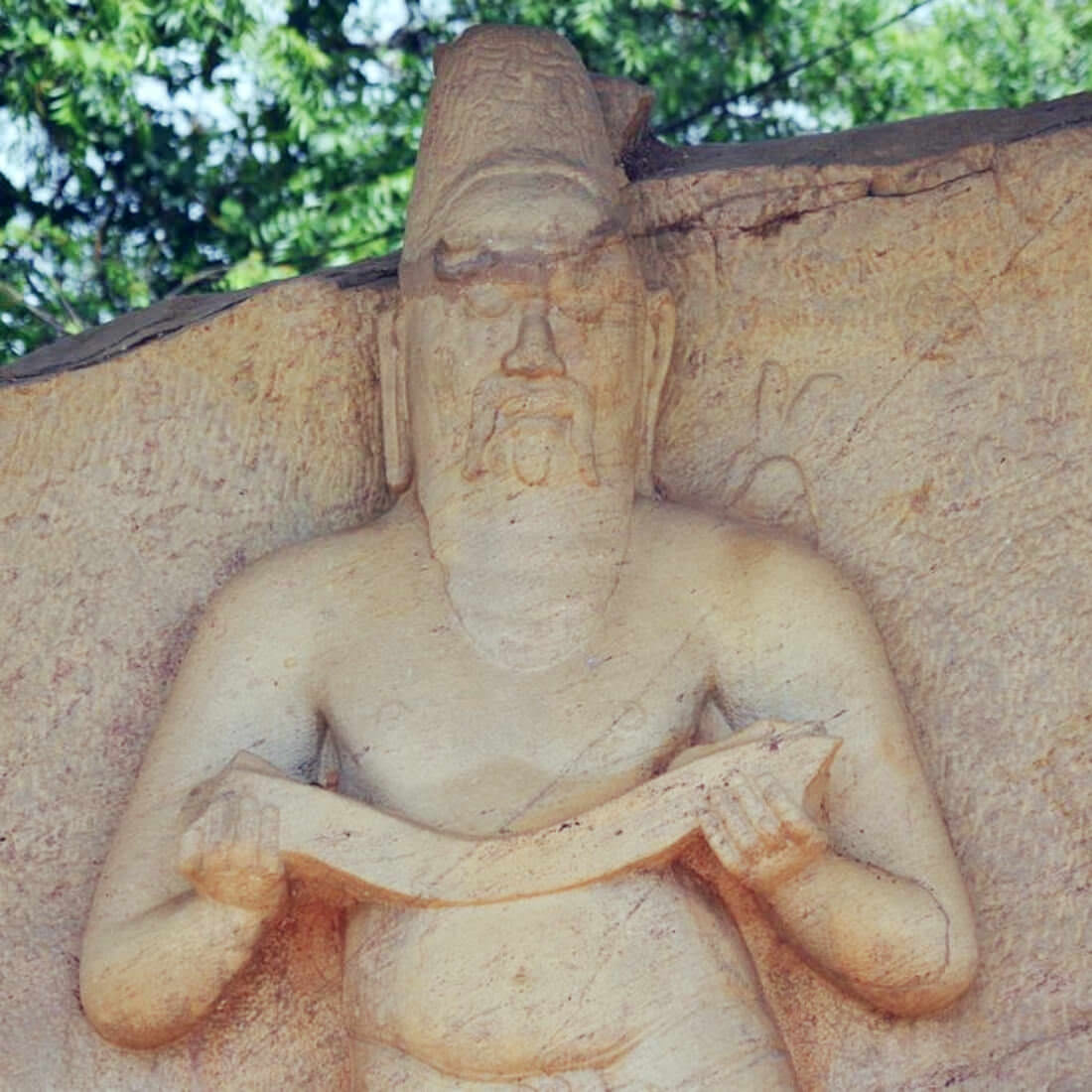
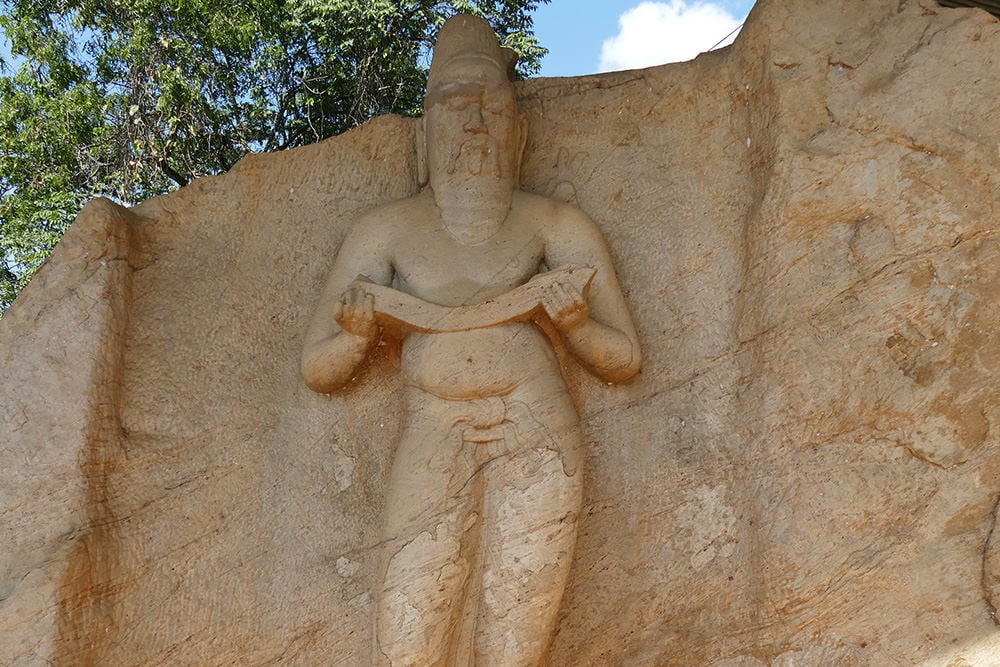
The sculpture is carved directly into a large natural boulder, making full use of the rock's height. The figure stands at 11 feet 2 inches (3.40 m). Its upper body is bare apart from a single sacred thread, worn over the left shoulder in the manner associated with high-born men of the period. The shoulders are broad and rounded — what one prominent archaeologist described as suggesting "extraordinary strength" — while the posture is composed: the left leg bears the body's weight, the hip inclines slightly to the left, and the right knee bends forward just enough to suggest ease rather than rigidity.
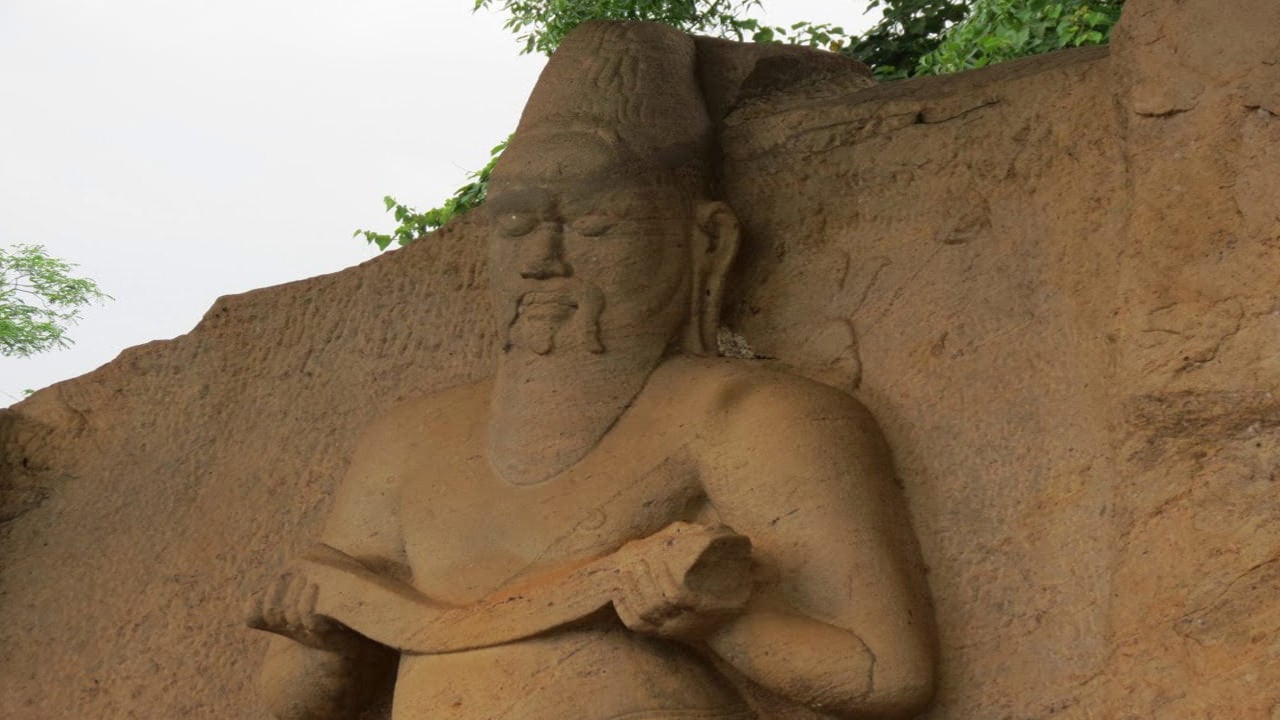
The face is perhaps the most arresting element. Half-closed eyes, a high forehead, a long beard, and a moustache combine to give the figure an expression that reads simultaneously as meditative and authoritative. The hands hold a long object at waist height — the identity of which sits at the centre of the debate over who is depicted.
Who does the statue represent — Parakramabahu, Pulasthi, or a sage?
No inscription accompanies the statue, and scholars have not reached a definitive conclusion. Three main theories circulate:
- King Parakramabahu I. The most widely accepted view. Historian Mendis Rohanadeera has pointed to a small hare carved above the statue's left shoulder — a symbol associated with the Lambakanna royal clan, to which Parakramabahu I belonged. The object in the hands would then represent the "yoke of kingship", a ceremonial symbol of royal authority.
- The sage Pulasthi (Pulastya). Pulasthi was a revered Brahminical sage of Vedic tradition, said in legend to have a strong association with the region around Polonnaruwa. Under this reading, the object held by the figure is an ola manuscript — a book made of cured palm leaves — consistent with a man of learning. The statue's location beside what was apparently a library complex strengthens this interpretation.
- The sage Agastya. A less common but not insignificant theory, given Agastya's importance in South Asian religious and literary tradition. The iconography is broadly compatible.
The site takes its popular name from the second theory, even though the royal interpretation remains the most commonly cited in mainstream archaeological literature. Archaeologist Senarath Paranavitana, one of the leading authorities on Polonnaruwa's monuments, described the figure as "the very embodiment of strength, majesty and dignity" — a characterisation that arguably suits a king and a sage equally well.
How does the statue fit into the wider Polonnaruwa Archaeological Park?
Polonnaruwa served as Sri Lanka's second great capital, flourishing between roughly the 10th and 13th centuries after the decline of Anuradhapura. The Archaeological Park — a UNESCO World Heritage Site — encompasses palaces, dagobas, moonstones, and the celebrated Gal Vihara rock sculptures. The Pulasthi Statue lies at the southern periphery of the site's main complex, near the reservoir embankment.
Most visitors combine a viewing of the statue with Potgul Vehera, a circular library building with an unusual design, and then continue north into the main city ruins. The walk from the statue to the Gal Vihara rock temple takes around 20 to 30 minutes on foot, passing several smaller monuments along the way.
When is the best time to visit Polonnaruwa and the Pulasthi Statue?
The dry season from May to September generally offers the most reliable weather for exploring the open-air ruins, with lower humidity and manageable temperatures. The months of January and February are also popular, benefiting from post-monsoon greenery without heavy rainfall. Visits early in the morning — before 9 a.m. — are strongly recommended: the angle of the light is more flattering for photography, and the site is considerably less crowded than it becomes by mid-morning.
Polonnaruwa sits in Sri Lanka's North Central Province. Temperatures are typically warm year-round, so light, breathable clothing and sun protection are practical necessities regardless of season.
How do I get to the Pulasthi Statue from Colombo?
Polonnaruwa is around 215 kilometres northeast of Colombo, with the journey taking roughly four to five hours by road depending on traffic and route. Trains from Colombo's Maradana or Fort stations run to Polonnaruwa, though this journey is considerably longer. Most travellers visiting on a private itinerary drive via Dambulla, allowing a stop at the Dambulla Cave Temple en route. The statue itself is accessible by bicycle, tuk-tuk, or on foot from Polonnaruwa town — cycling is a particularly popular way to cover the broader archaeological park at a comfortable pace.
What should I know before visiting?
- The Pulasthi Statue is within the Polonnaruwa Archaeological Park; a single entry ticket covers most of the major sites within the complex.
- Removing shoes before approaching religious or culturally significant monuments is customary and, in many areas, required.
- Photography is generally permitted at the statue, but avoid using flash on carved surfaces.
- There is limited shade at the statue itself; a hat and water are advisable, especially during midday hours.
- A knowledgeable guide can significantly enrich a visit, given how much of the statue's meaning hinges on iconographic detail that is easy to miss.